Do You Need To Know How To Swim To Kayak On Sydney Harbour?
No Australian rule requires you to be a swimmer to kayak on Sydney Harbour, but lifejacket rules, operator briefings and capsize plans matter. Here is what a non-swimmer should know before booking.
In short: no law or Australian guidance read for this piece states that you must be able to swim to paddle a kayak on Sydney Harbour. What the rules do say is that vessels must carry enough approved lifejackets for everyone on board, that lifejackets must be worn in certain situations on enclosed waters, and that a skipper can require a lifejacket for non-swimmers. Guided tours issue lifejackets and brief you before launch. Swimming ability still matters, and disclosing it honestly to your operator matters more.
The question behind the question is usually fear, not rules. Someone asking whether they need to swim is really asking whether they will end up in the water, whether anyone will help them if they do, and whether a guided tour is a safe place to be a cautious beginner. Those are answerable questions with real sources behind them, and this piece works through each one: the NSW lifejacket rules in the authority's own words, what actually happens in a capsize on a sit-on-top versus a sit-in kayak, and how the Sydney Harbour tours covered here handle briefings, group sizes and minimum ages. If licensing is the next rule you are unsure about, the plain-English guide to kayak licensing on Sydney Harbour confirms no licence is needed while other requirements still apply.
The short version of the practical advice is this: pick a guided tour rather than a bare rental, wear the lifejacket the operator hands you for the whole paddle, tell the guide before launch that you are not a confident swimmer, and choose a stable double or a wide sit-on-top where the operator offers one. Beyond the rules, for a fuller run at the whole harbour paddle question, start with Sydney Harbour Kayak Tours and the areas and launch points it covers.
No, you do not need to know how to swim to kayak on Sydney Harbour. Neither NSW lifejacket rules nor the harbour's boating rules make swimming ability a condition of kayaking, but they do insist on equipment: you must carry and, in defined situations, wear an approved lifejacket, and a skipper can require one for non-swimmers.
Start with what the authority actually says, because the wording is more protective than most people expect. Under NSW lifejacket rules, vessels must carry enough approved lifejackets for everyone on board at all times. For canoes and kayaks in enclosed waters, which includes Sydney Harbour, a lifejacket of Level 50S or above must be worn when the paddler is alone on the vessel, including when paddling with children under 12, and at night, meaning sunset to sunrise. In open waters and when crossing coastal bars, it must be worn at all times. The NSW guidance adds a plain recommendation: "We recommend you wear one at all times."
“This was a very enjoyable experience, I have never kayaked before and I found it easy and Shannon our tour guide took care of everything! Would highly recommend!”
That last sentence is the practical answer for a non-swimmer. The rule sets a floor, and the recommendation sets the sensible standard. Guided-tour operators on the harbour issue lifejackets as a matter of course: Sydney Harbour Kayaks, the operator of the Middle Harbour tours, includes an approved lifejacket in every rental and says lifejackets are always worn by children. There is no gap in which a non-swimmer on a guided tour is floating around the harbour unjacketed by choice; the equipment is there, the guide hands it over, and wearing it the whole time is the reasonable read of the NSW recommendation.
Why does the guidance lean on lifejackets rather than swimming tests? Because the water does not grade on swimming ability. Royal Life Saving Society Australia's lifejacket guidance for paddlecraft makes the point directly: capable swimmers get into trouble too, and the jacket is the thing that buys time. A lifejacket keeps an unconscious or exhausted person at the surface, which no amount of swim training guarantees.
So the honest framing is not "you do not need to swim, so do not worry." It is "no rule demands a swimming test, the equipment and the guide cover a large part of the risk, and your job is to wear the jacket, disclose your swimming ability, and pick a tour format that suits a cautious paddler." The sections below take each of those in turn.
If you are already weighing specific sunrise options, these three are the formats most often compared for first-timers on the city harbour:
What The NSW Lifejacket Rules Actually Say
NSW rules work in three layers: every kayak must carry an approved lifejacket for each person on board at all times on any water, and on enclosed waters like Sydney Harbour a Level 50S or above must be worn when paddling alone, with children under 12, or between sunset and sunrise. A skipper can also require lifejackets in heightened-risk situations such as non-swimmers, cold water, severe weather warnings or danger of swamping.
That third layer deserves emphasis for this article's reader. The when-to-wear page on the NSW government site gives the skipper explicit authority to make jacket-wearing compulsory when risk is elevated, and non-swimmers are named in that list. On a guided tour, the guide is effectively the skipper of the group. Telling your guide you cannot swim does not get you removed from the tour; it gets you a jacket firmly fastened for the whole session and a guide who keeps you closer.
| Situation | What the NSW rule requires |
|---|---|
| Any kayak, any water, any time | Enough approved lifejackets carried on board for everyone |
| Paddling alone on enclosed waters, including Sydney Harbour | Lifejacket Level 50S or above worn |
| Paddling with children under 12 on enclosed waters | Lifejacket Level 50S or above worn |
| Paddling at night, sunset to sunrise, on enclosed waters | Lifejacket Level 50S or above worn |
| Open waters, or crossing a coastal bar | Lifejacket worn at all times |
| Heightened risk: non-swimmers, cold water, severe weather warning, danger of swamping | Skipper can require a lifejacket to be worn |
| Everything else on enclosed waters | NSW recommends wearing one at all times |
Two outdated or wrong ideas circulate in casual advice and should be dropped. One is the claim that lifejackets are only needed some distance from shore, which traces to a 2013 Maritime NSW brochure whose distance rule no longer matches the current government page; the current wording is what counts. The other is the vague reassurance that Sydney Harbour is calm and sheltered, so jackets are optional. The harbour is classified as enclosed waters for lifejacket purposes, and that classification changes which wear-rules apply, not whether the rules exist.
The torch rule matters here too, mainly for anyone considering a sunset or LED-lit paddle. NSW rules for paddlecraft require a torch or lantern displaying a white light, ready in time to prevent a collision, and a head torch is recommended. Night paddles sit inside the wear-the-jacket window by definition, so if a lit-water tour appeals, plan on the jacket being on for the entire session. The LED Sunset Kayak run by Sydney Kayak Experience from Lavender Bay is exactly that kind of trip: 1.5 hours, rated 4.9 across 139 reviews, minimum age 12, group capped at 14, with the night rule applying throughout.
For paddlers who want the night rules and the sunrise rules in one practical frame, the same logic applies at dawn's edge: a tour that launches before first light ends in daylight, but the wear window runs from sunset to sunrise, so an hour of it may fall inside the night rule depending on the season. Operators handle this; you do not need to compute it. Wear the jacket regardless.
What Happens If You Fall Out Of A Kayak On Sydney Harbour?
What happens depends on the craft: in a sit-on-top kayak you end up in the water beside a boat you can climb back onto using the technique your guide demonstrates, with no flooded cockpit, while in a sit-in kayak a wet exit means releasing the spray skirt upside down and pushing clear before surfacing, and on a guided tour the guide attends a capsized paddler and runs the rescue.
That is the third of the "three golden rules of recreational kayaking" as published on Paddling.com by Ken Whiting: use torso rotation for your strokes, choose an appropriate location, and have a plan for a capsize. None of the three requires swimming prowess. Rotation is technique, location is the operator's job on a guided tour, and a capsize plan is a rehearsed sequence, not a swim to shore. A deeper walk-through of the capsize sequence, the self-rescue options and the guide's role is in what happens if you fall out on Sydney Harbour.
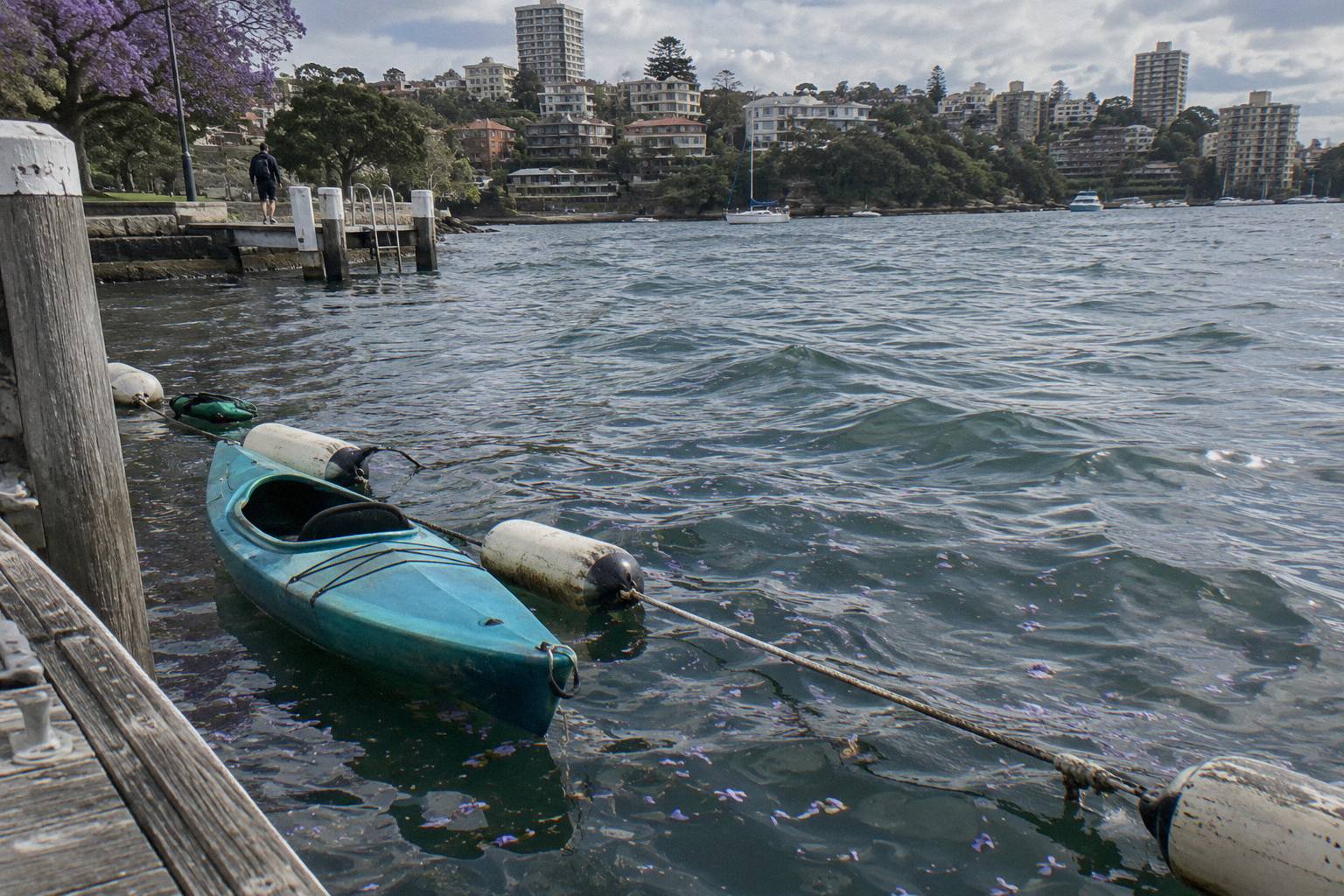
How often does a capsize actually happen on a guided flat-water tour? No published statistic exists, and any confident percentage you read on a commercial page should be treated as marketing. What published guidance does identify as the factors behind capsizes is a short, sensible list: the width and type of kayak, wind, wake from passing boats, and the paddler's experience and instruction level. A wide double kayak in sheltered water with a briefed beginner is at the forgiving end of that list, and several of the tours covered here use exactly that setup. The 4-Hour Middle Harbour Eco Paddle run by Sydney Harbour Kayaks from The Spit uses stable double sea kayaks, needs no prior experience, and spends twenty minutes on a paddling and safety briefing before anyone leaves the beach. For a fuller picture of what actually tips a kayak over, the guide to how likely a kayak is to flip explains the main capsize triggers and the precautions guided tours take to keep beginners upright.
The craft comparison, at a glance:
| Craft type | On capsize | Re-entry | Suitability for a non-swimmer |
|---|---|---|---|
| Wide sit-on-top single | You fall off, boat stays on the surface | Climb back on from the water, as demonstrated in the briefing | Good initial stability, no flooded cockpit |
| Stable double kayak | Very hard to tip in sheltered water | Guide-assisted re-entry, or paddle the double to shore | The format used on several guided tours here |
| Sit-in sea kayak with spray skirt | Cockpit floods; wet exit required | Releasing the skirt upside down, then a guide-assisted rescue | Needs the most instruction before a non-swimmer is comfortable |
None of that row three scenario should scare anyone off guided tours, because guided tours on this harbour do not put nervous beginners in skirted solo sea kayaks and wave them goodbye. They put them in stable doubles and wide singles, brief them, and keep them within reach. That is the whole argument for choosing a guided tour over a bare rental if swimming is the worry: the rental gives you the boat and the briefing, while the tour gives you the boat, the briefing, a guide on the water and a group cap.
Which Sydney Harbour Tours Work For A Cautious First-Timer?
Format matters more than brand. Look for a stable double or wide single, a stated group maximum, a briefing before launch, a minimum age that fits your group, and free cancellation so weather nerves do not cost you the booking. The sunrise tours compared below all cap their groups at 12, all state free cancellation up to 24 hours before the start with a full refund, and all launch from sheltered city-side points rather than open water.
The 3-Hour Sunrise Kayak, Breakfast Included launches from Quibaree Park at Lavender Bay, caps the group at 12, and is rated 5.0 across 365 reviews. You can check availability alongside the fuller sunrise tour rundown.
“It was an awesone tour around the habour with the added brekkie. Guide knew when we wanted our moments as well as coming in to give us information of the places around the habour. Roughly an hour to and from the brekkie spot. View was amazing, lots of opportunity to take photos and take in the atmosphere”
The Sunrise Kayak From Rushcutters Bay is the volume leader of the group in review terms: 2 hours from the eastern side of the city, rated 4.9 across 2,776 reviews, minimum age 12, group max 12, meeting at Rushcutters Bay with the marina point used for its sister departure. A large review pool is a modest but real signal: thousands of people, most of them first-time visitors rather than paddling club members, have come through this format and left public feedback.
The Sunrise Paddle Under Harbour Bridge, run by Sydney Kayak Experience from Milsons Park at Kirribilli, is 2 hours, rated 5.0 across 998 reviews, minimum age 12. Its route description includes passing under the harbour bridge, and the honest note that belongs with any such description is the harbour's own transit rule: vessels must not stop, anchor or drift under the bridge, so under-bridge moments are pass-through, weather permitting, never a photo stop.
For a completely different waterway experience, the Middle Harbour tours from The Spit are worth knowing about because of what they are not: the operator states plainly that its Middle Harbour paddles do not go looking for the Opera House or the Harbour Bridge. What they offer instead is sheltered bush-lined water, a qualified guide, morning tea on a beach, and that stable-double, no-experience-needed format. The public Eco Tour departs every Saturday and Sunday at 8:30am with check-in at 8:10am, minimum age 14.
How To Tell Your Operator You Cannot Swim
Say it at booking and say it again at the briefing, in plain words, before your feet leave dry land. The booking questionnaire some operators use asks about paddling experience; if there is a notes field, use it. At the beach, tell the guide directly. Guides cannot adjust what they do not know, and the NSW rules specifically hand the skipper the power to require lifejackets for non-swimmers, which only works if the skipper knows who they are.
“Isaac was a great guide and made sure everyone in the group was confident and comfortable throughout the activity! It was a great experience kayaking under the harbour bridge and we had a good laugh and got some great photographs!”
This is the step people skip, out of embarrassment, and it is the cheapest risk reduction available. A guide who knows a non-swimmer is in the group can do several small things: seat that paddler in a double with a confident partner, fasten and check the lifejacket personally, keep the paddler inside the group rather than at the tail, and choose the more sheltered line when the group splits around a headland. None of that is dramatic. All of it is invisible unless someone speaks up.
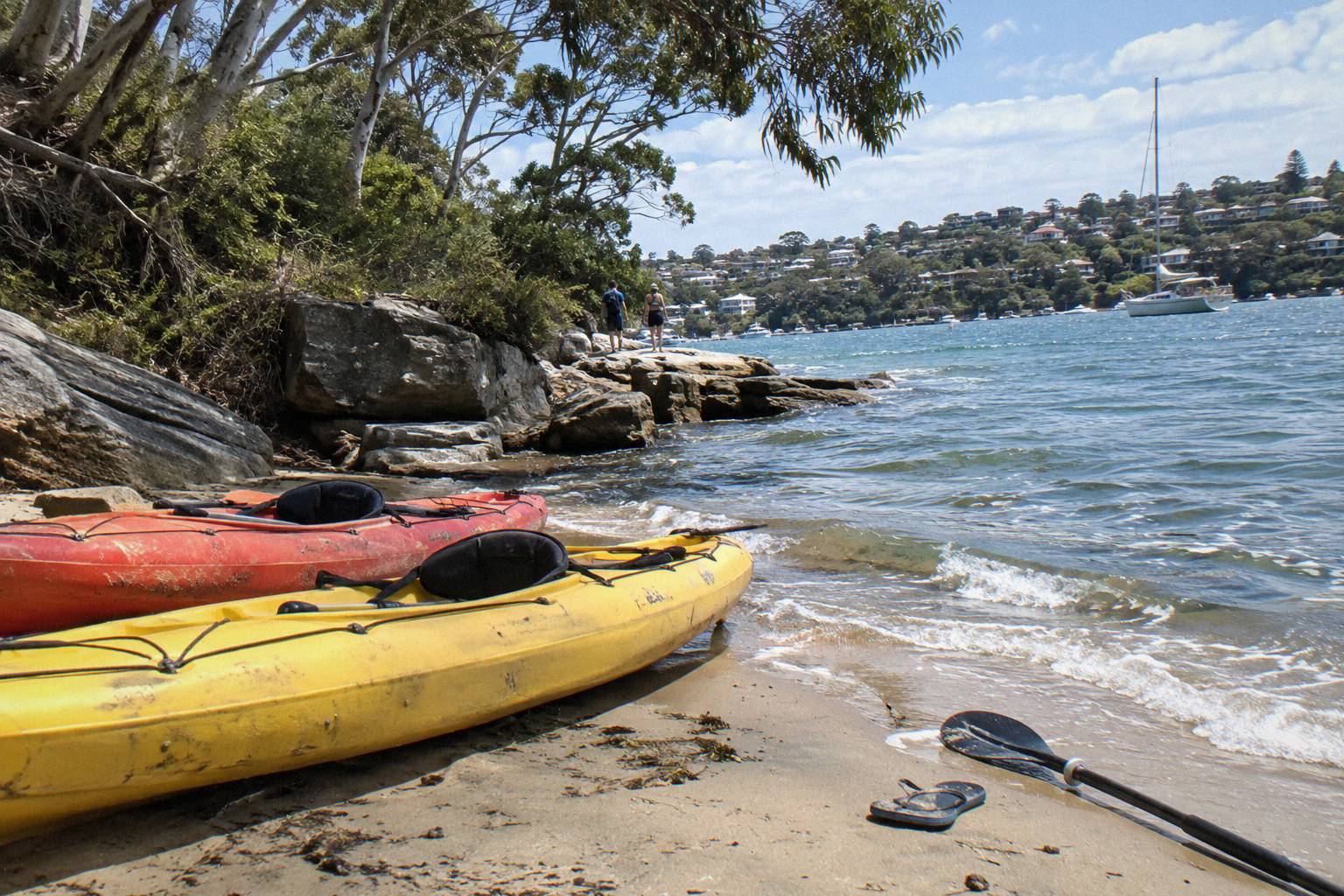
A worked example shows how the pieces fit together. Take a visitor who cannot swim, books the 3-Hour Sunrise Kayak, Breakfast Included, notes "non-swimmer" in the booking, and repeats it at the Quibaree Park briefing. The guide issues the lifejacket, checks the fit, seats the visitor in a stable double, and runs the twenty-minute style briefing that the harbour operators use before launch. The visitor paddles inside the group of at most 12, gets breakfast on the beach at the end, and free cancellation up to 24 hours before covered the booking if nerves won. Every element in that paragraph comes from the operator's stated terms or the NSW rules; none of it depends on swimming ability.
One more disclosure worth making, even to a sympathetic guide: mention it once, clearly, and then relax. Guides hear it constantly. Nobody on a Sydney Harbour tour deck has ever been turned away for being honest about swimming; the problems come from the opposite case, the confident guest who says nothing and then discovers that paddle drip and ferry wake are part of the experience. Which raises the honest wetness question, covered in whether you get wet on a harbour tour: you will, a little, from drip and splash, more in a sit-on-top, and that is normal rather than a sign of trouble.
Common Mistakes Non-Swimmers Make Before Booking
The recurring mistakes are skipping the lifejacket once the tour is underway, staying quiet about swimming ability, choosing a bare rental over a guided tour because it looks cheaper, fixating on capsize risk while ignoring the boring mitigations, and reading water-temperature formulas from commercial blogs as safety rules. Each one is avoidable with a single decision made before the booking is paid for.
“Great experience Generous amount of time with a lovely relaxed guide around some beautiful spots and hidden beaches”
Take them in order of how much they actually cost you. Skipping the jacket is the big one. The NSW floor says when a jacket must be worn, the recommendation says always, and a non-swimmer wearing a jacket for the full session is simply reading the rules in the spirit they were written. Staying quiet costs nothing to fix and changes how the guide runs the group. Choosing a rental over a tour saves money and removes the guide, the group and the rescue cover at a stroke; if swimming is the worry, that trade runs the wrong way, and the guided tour versus hire question is worth a separate read.
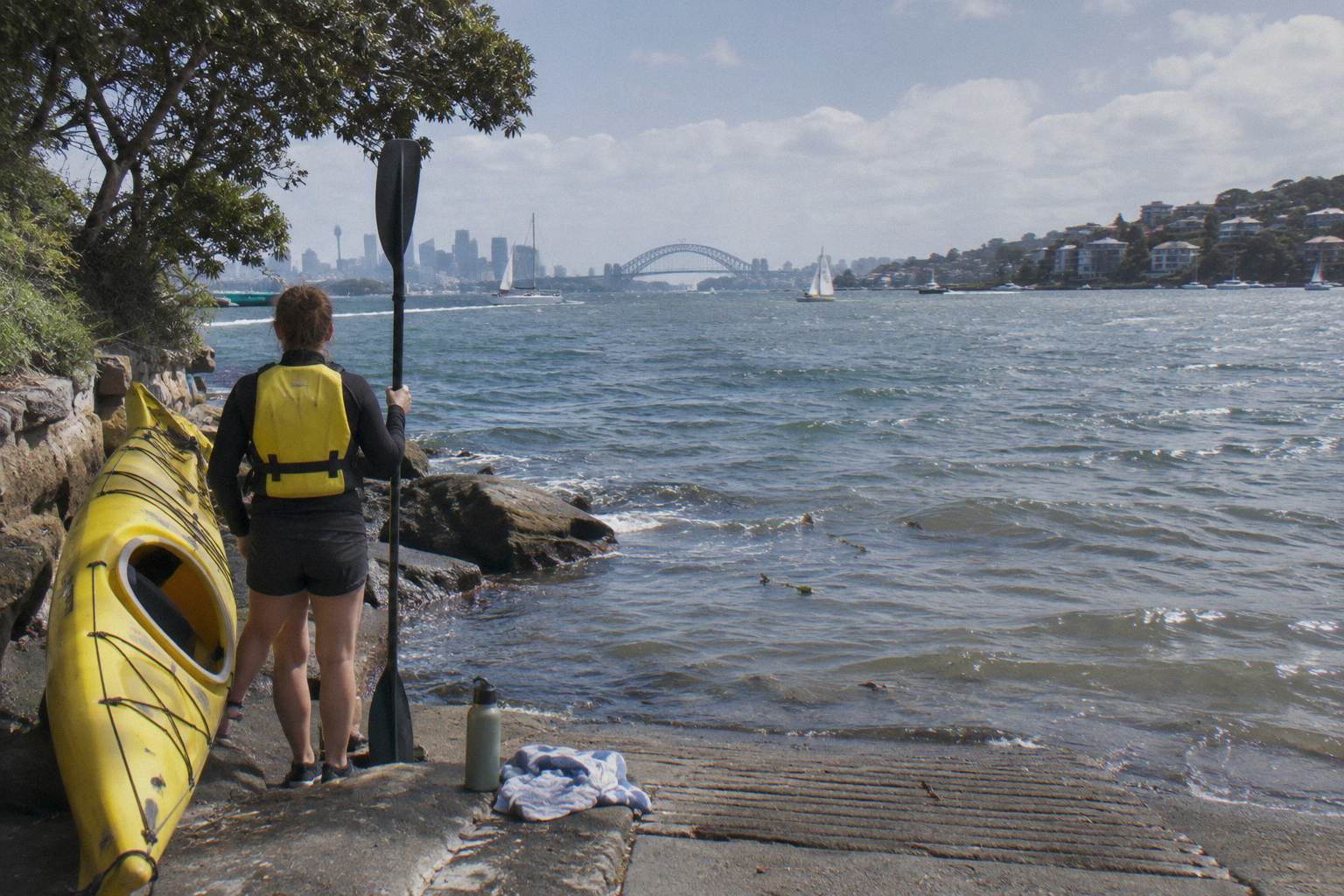
The formulas deserve a specific warning because they circulate every summer. The so-called 120 rule, adding air and water temperature in Fahrenheit and treating a sum above 120 as safe, is repeated by commercial blogs and criticised as lacking scientific basis; no official body states it, and no reader should plan around it. The 50/90 rule sounds similar and is entirely different: it is a tidal-stream estimate used in sea-kayak navigation, describing how current speed builds after slack water, roughly 50 percent of maximum after the first hour and 90 percent after the second. It is a navigation teaching tool, not a safety rule about cold water, and it has nothing to do with whether you can swim. Both get garbled in social media versions, and what the 50/90 rule actually means untangles it properly.
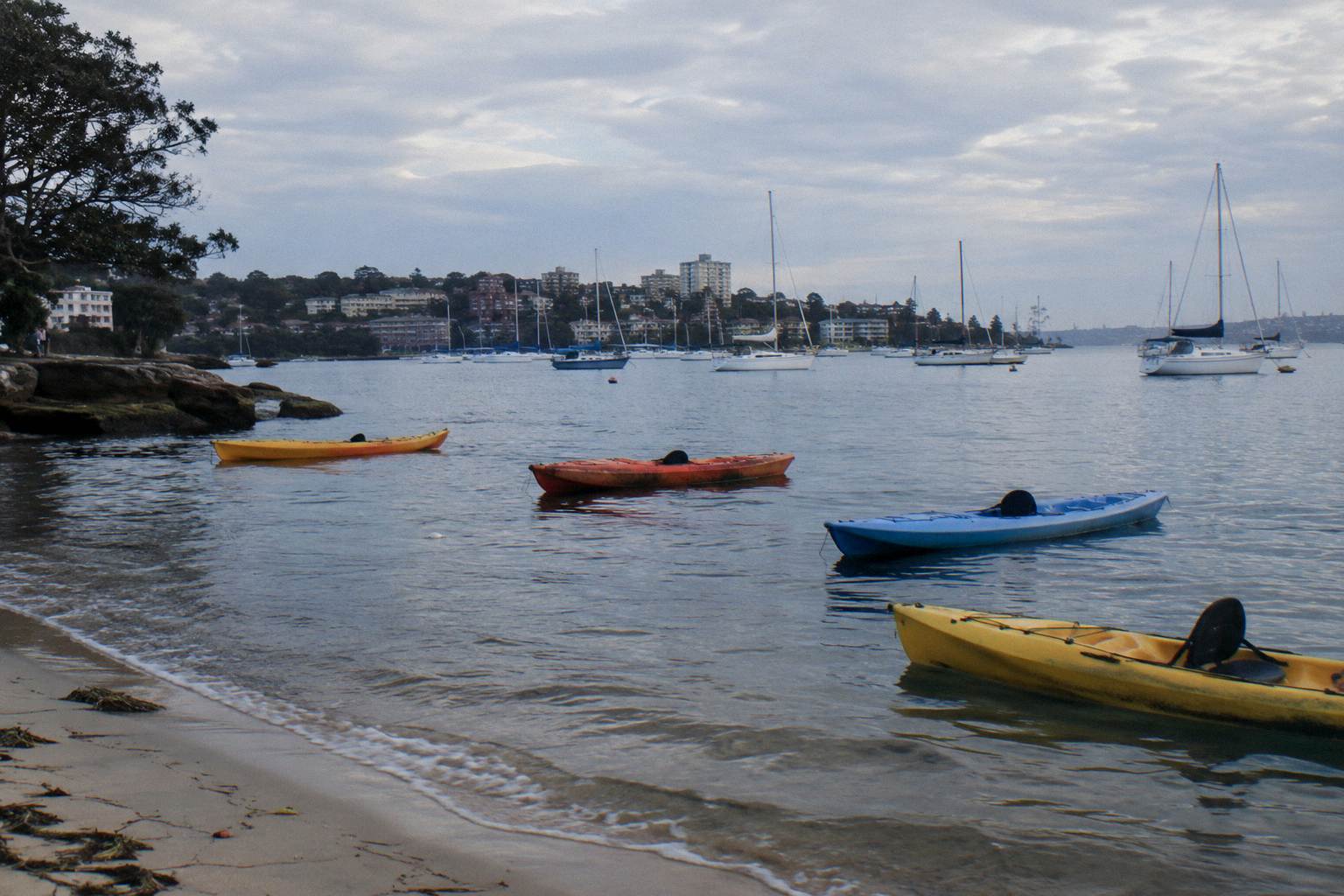
The beginner-craft point is the constructive counterpart to all the warnings. The American Canoe Association's beginner guide describes sit-on-top kayaks as suitable entry-level craft on calm, protected water, with easy re-entry and no flooding on capsize, and its Essentials course limits sit around wind under 10 knots, waves under one foot and current under one knot. Wide sit-on-tops and doubles give good initial stability. That is the craft profile the harbour's guided tours use, and it is why a non-swimmer on one of them is not taking an unusual risk.
Common Questions About Swimming And Kayaking On Sydney Harbour
Do You Need To Know How To Swim To Kayak On Sydney Harbour?
No must-swim rule was found in the Australian guidance read. NSW rules are equipment-based: lifejackets are carried for everyone, worn in the situations the rules list, and recommended at all times. Tell your operator your swimming ability and wear the jacket for the whole paddle.
Do Operators Provide Lifejackets On Sydney Harbour Kayak Tours?
Yes. Guided and rental operators on the harbour issue lifejackets; Sydney Harbour Kayaks includes an approved lifejacket in every rental and says lifejackets are always worn by children. The NSW recommendation is to wear one at all times, which is the sensible default for any paddler, swimmer or not.
Can You Fall Out Of A Kayak Without Knowing How To Swim?
Yes, and the sequence does not require swimming. In a sit-on-top you climb back on as demonstrated in the briefing. In a sit-in kayak a wet exit means releasing the spray skirt upside down and pushing clear. On a guided tour the guide attends you and runs the rescue, which is why the capsize plan is rehearsed before launch.
Should You Tell The Guide You Cannot Swim?
Yes, at booking and again at the briefing. The NSW rules let the skipper require a lifejacket in heightened-risk situations, and non-swimmers are named on that list. A guide who knows can also seat you in a stable double and keep you inside the group.
Do You Get Wet On A Kayak Tour Even If You Never Capsize?
Yes, a little. Paddle drip and splash happen on calm water, more in a sit-on-top, per the American Canoe Association's beginner guidance. No figure exists for how wet; it is normal and not a sign the trip is going wrong.
Is A Guided Tour Safer Than Hiring A Kayak For A Non-Swimmer?
A guided tour adds a qualified guide on the water, a group, a safety briefing and rescue cover, while hire gives you the boat, the briefing and the lifejacket without the accompanying guide. If swimming is your worry, the guided format is the better fit, and several tours here use stable doubles suited to beginners.