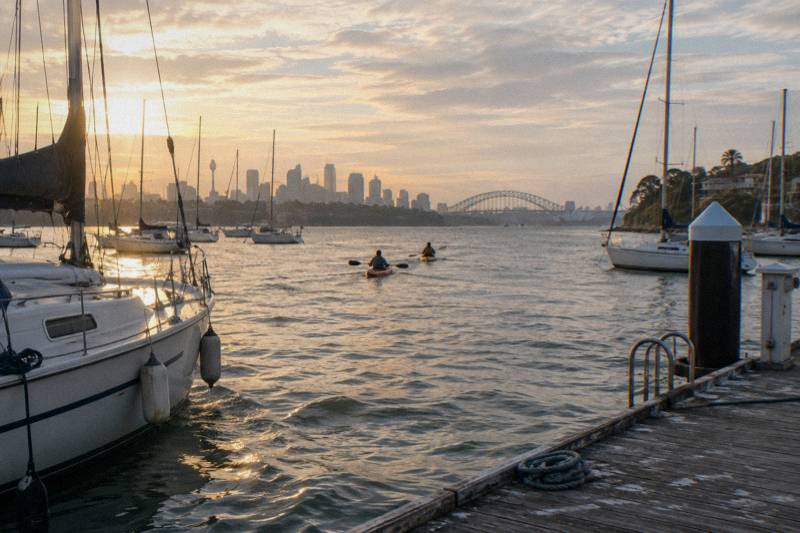
What Happens If You Fall Out Of A Kayak On Sydney Harbour?
Falling out of a kayak on Sydney Harbour is a planned-for event, not an emergency: here is what happens, what the NSW lifejacket rules say, and how guides respond.
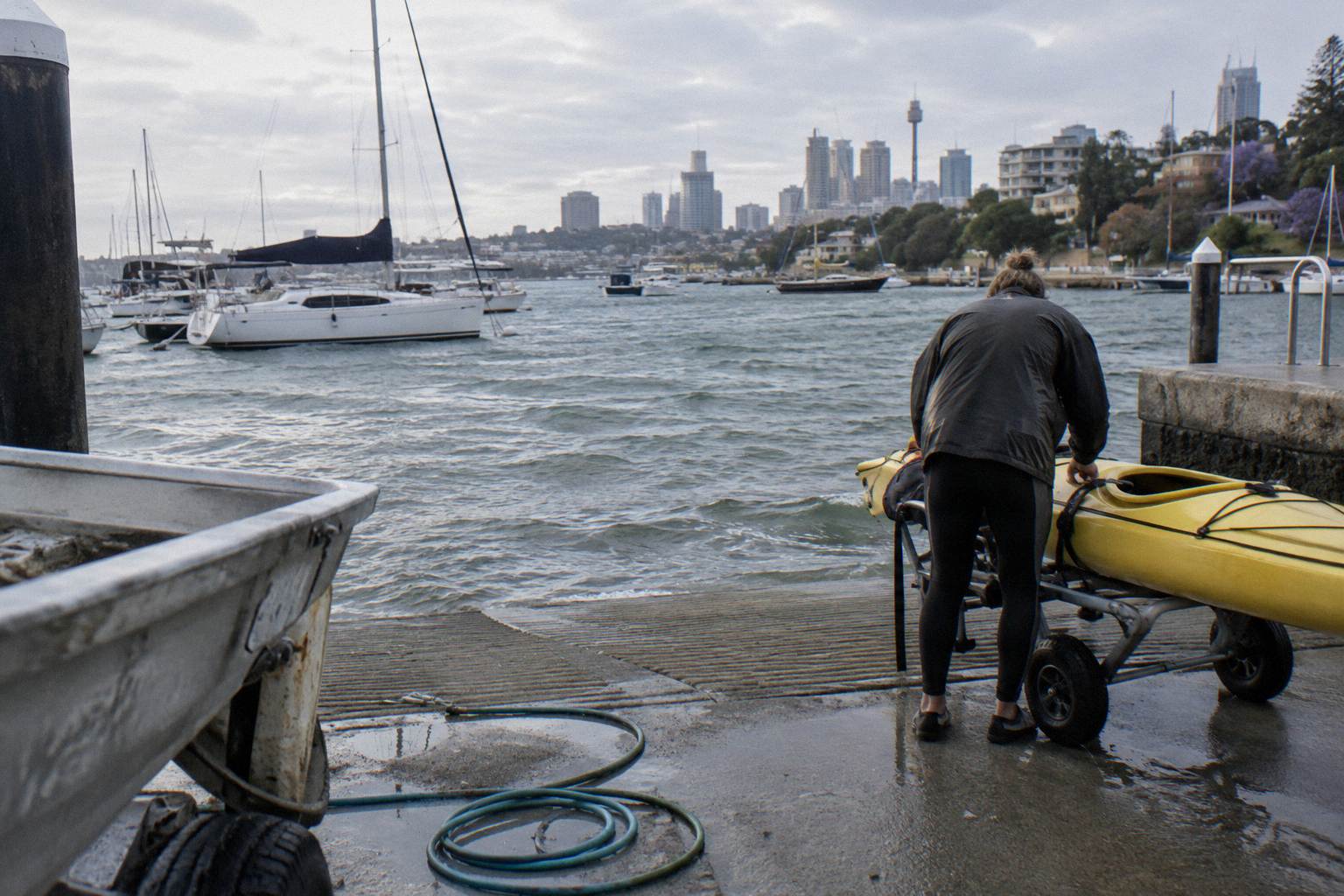
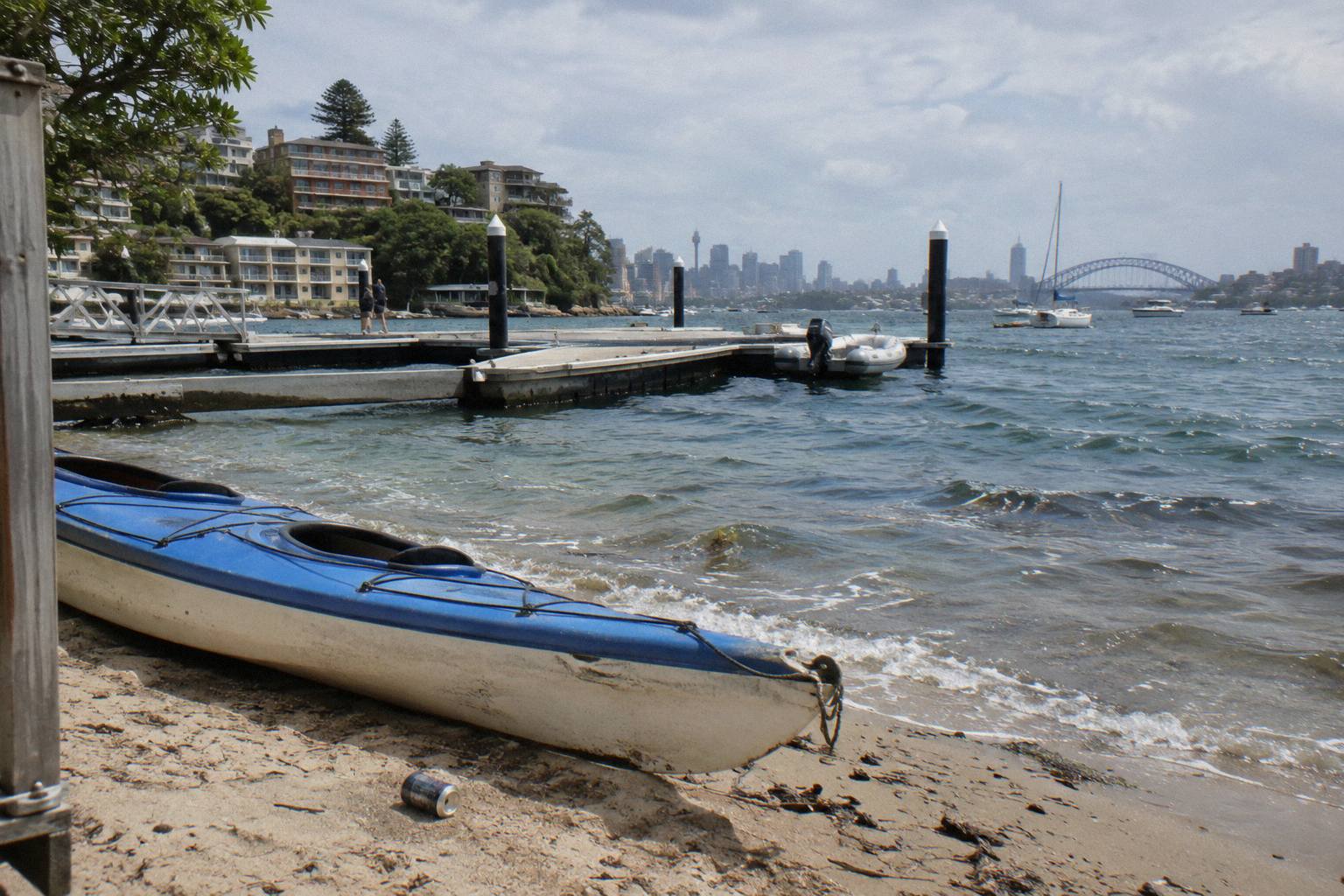
If you fall out of a kayak on Sydney Harbour you end up in the water beside your boat, held up by an approved lifejacket, and on a guided tour the guide paddles over and runs a rescue. A capsize on flat water is a wet, undignified, routine event that trained guides practice for. There is no published statistic for how often a guided flat-water tour capsizes, so the right preparation is equipment and instruction, not a probability estimate.
The mechanics depend on the craft. In a sit-in sea kayak you would be upside down underwater, and the standard response taught in American Canoe Association and REI guidance is a wet exit: release the spray skirt grab loop, push out of the cockpit, and surface beside the boat. In a sit-on-top kayak, which the ACA describes as an entry-level craft on calm, protected water, there is no cockpit to flood and no skirt to release: you fall off, the boat stays roughly where it was, and you climb back on. The Middle Harbour tours covered here, run by Sydney Harbour Kayaks, use stable double sea kayaks, which are harder to flip than singles and easier to re-board with help.
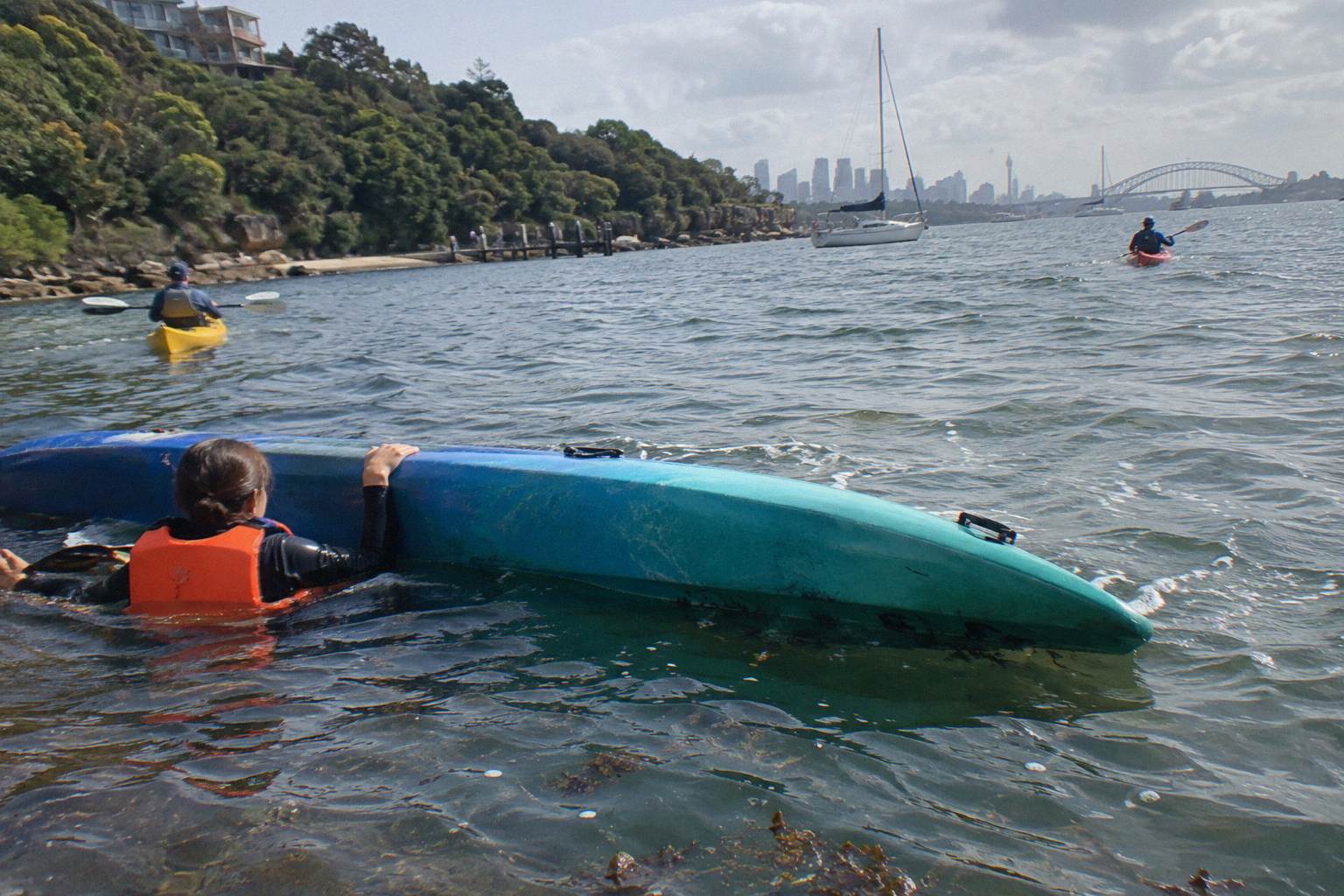
Two things happen immediately on a guided tour. First, your lifejacket keeps you at the surface without any effort from you; NSW rules require one to be carried for everyone on board, and guided and rental operators issue them. Second, your guide comes to you. Tour guides are trained in assisted rescues, and they attend a capsized paddler rather than expecting the paddler to manage alone. Sydney by Kayak, which paddles from Lavender Bay on the city side of the harbour, says its guides can also tow tired paddlers, so even exhaustion short of a capsize has a written answer on the operator's own pages.
“It was all excellent there was just my wife and I with the tour operator and we had a fantastic time with him and the whole experience was fantastic”
What the harbour adds is context, not danger of a different kind. Sydney Harbour is what Transport for NSW calls an extremely busy waterway, so the practical rules around a capsize are about traffic: stay out of shipping channels, keep to the starboard side, cross behind ferries rather than in front of them, and let the guide position the group. If the question holding you back from booking is "what if I end up in the water," the honest reply is that the whole system, lifejackets, briefings, stable doubles, trained guides, exists because capsizing is a normal part of the sport. The 4-Hour Middle Harbour Eco Paddle from The Spit is a good example of the format: no experience needed, double kayaks, a 20-minute paddling and safety briefing before launch.
If you want the reassurance laid out by question rather than in one block, the sections below cover the rescue sequence, the lifejacket law in plain words, the traffic picture, the difference between kayak types, and the mistakes people make in their worrying.
How A Guide Handles A Capsize On A Guided Tour
On a guided tour the sequence after a capsize is: you surface, you stay with the boat, the guide paddles to you, and the group stops while the rescue runs. Guides on Sydney Harbour tours are trained in assisted re-entry, and they attend a capsized paddler as a standard procedure, not a crisis. The American Canoe Association's beginner guidance frames having a capsize plan as one of the golden rules of recreational kayaking.
The three golden rules, published on Paddling.com by Ken Whiting, are worth knowing because tours are built on all three: use torso rotation rather than arm strength, choose a paddling location appropriate to your skill, and have a plan for capsize before you launch. A guided harbour tour outsources the second and third to the operator. Sydney Harbour Kayaks, for example, briefs every Eco Tour group for 20 minutes on paddling and safety before anyone touches the water, and its route follows tides and weather rather than a fixed path, with routes that the operator says cannot be guaranteed. That flexibility is the capsize plan working in the background: if conditions are wrong, the route changes.
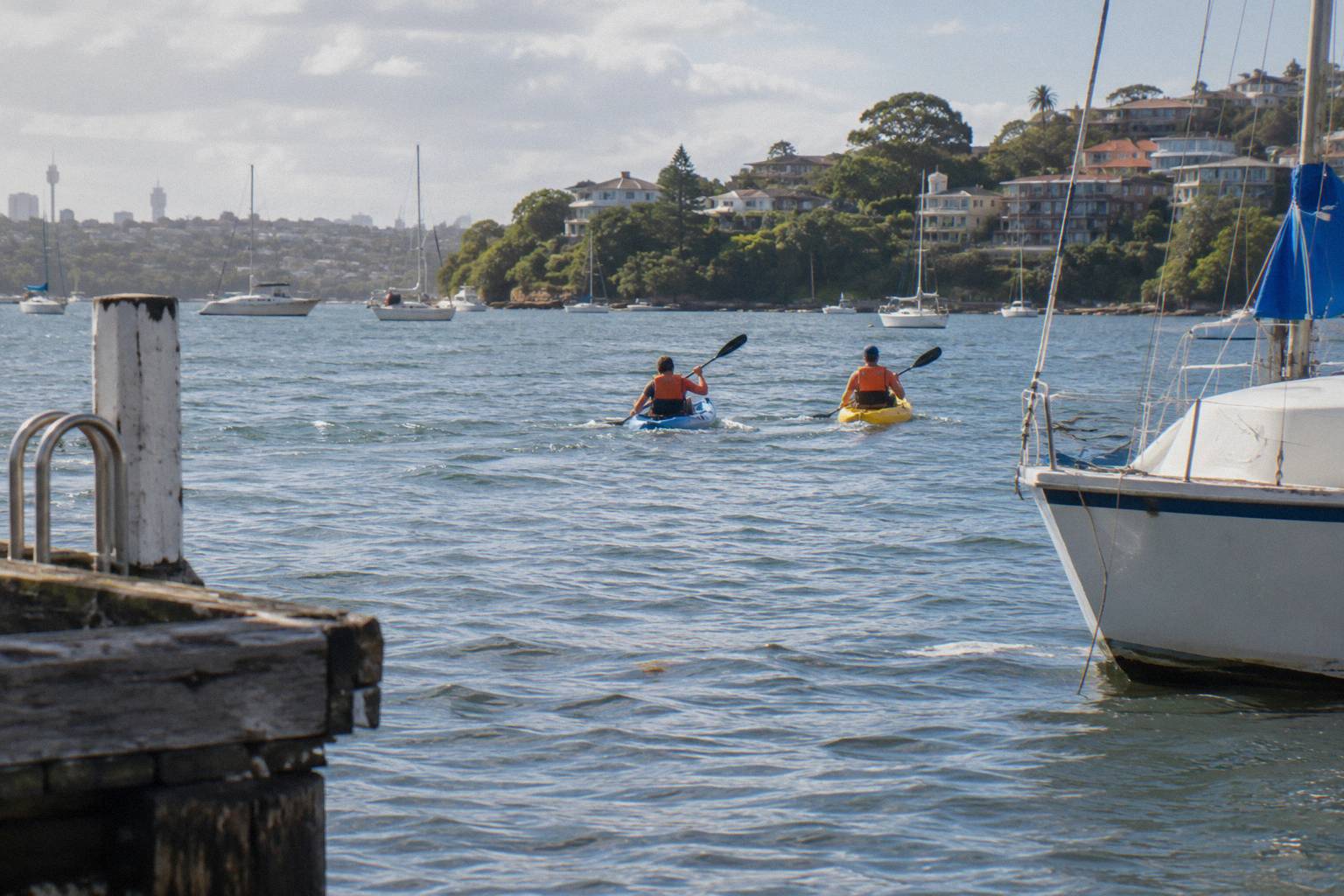
The rescue itself, on flat water with a guide, usually looks like this. The guide holds your kayak alongside theirs, empties it if needed, stabilises it, and gets you back into the cockpit or onto the deck from the water. In a double, the second paddler often stays in place and acts as ballast, which is one reason guided tours favour doubles for beginners. The American Canoe Association describes sit-on-top craft as offering easy re-entry and no flooding on capsize, and the same logic, more stability and simpler recovery, is why guided flat-water tours lean on wide, stable craft.
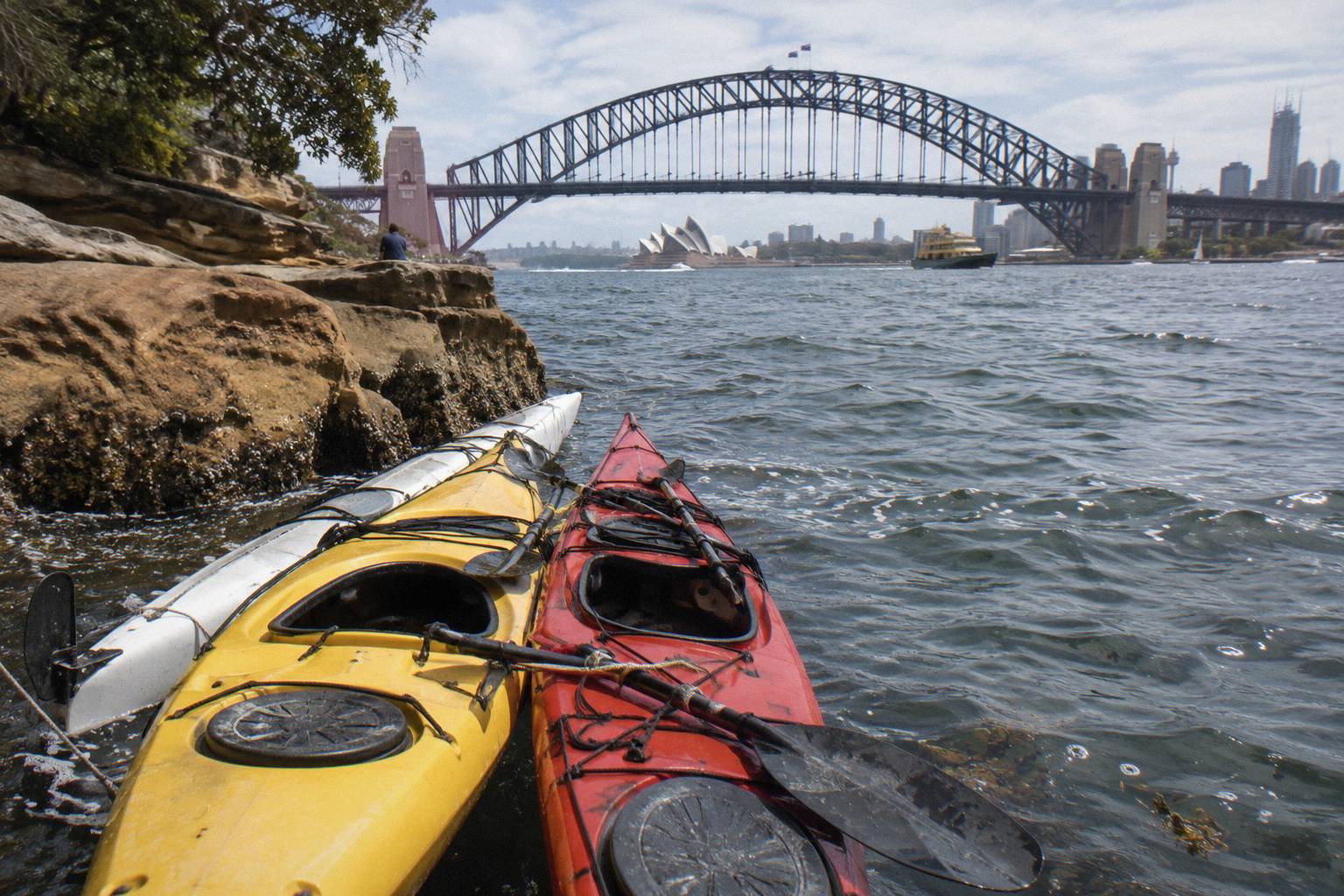
Exhaustion is handled before it becomes a capsize. Sydney by Kayak, operating from the Lavender Bay boat ramp at 1 Railway Avenue, states that its guides can tow tired paddlers, and that beginners are welcome, with a paddler questionnaire at booking so the operator knows who is in the group. That is the quiet answer to a lot of anxiety: the guide's job includes noticing you flagging and taking the load before anything goes wrong.
What The NSW Lifejacket Rules Actually Say
NSW rules say a vessel, and that includes a kayak, must carry enough approved lifejackets for everyone on board at all times. In enclosed waters, which includes Sydney Harbour, a lifejacket rated Level 50S or above must be worn when you paddle alone, including with children under 12, and at night between sunset and sunrise. NSW also recommends wearing one at all times.
The wording matters because an old brochure, a 2013 Maritime NSW paddle-safety map, carried a "more than 100 metres from shore" rule that no longer applies. The current page on the NSW government site is the authority, and it is simpler than the myth: carry for everyone always, wear when alone or at night, wear always in open waters and when crossing coastal bars, and NSW recommends wearing one at all times regardless. Royal Life Saving Society Australia makes the same point from the swimming side: even competent swimmers can need a lifejacket, which is why Australian guidance does not set a must-swim rule for paddling.
| Situation on Sydney Harbour | What NSW rules require | Notes |
|---|---|---|
| Kayaking with others, daytime | Approved lifejacket carried for every person | Level 50S or above is the standard for paddlecraft |
| Paddling alone, any time | Lifejacket worn | Includes an adult paddling with children under 12 |
| Any paddle between sunset and sunrise | Lifejacket worn | Night paddles are covered by the same rule |
| Open waters, coastal bars | Lifejacket worn at all times | Beyond the enclosed harbour |
| Heightened risk conditions | Skipper may require wearing | Severe weather warning, non-swimmers, cold water, swamping risk |
Guided and rental operators issue lifejackets as part of the package. Sydney Harbour Kayaks includes an approved lifejacket in every rental and says lifejackets are always worn by children; its Eco Tour includes kayak and safety gear with the guided format. If you want the full rules in the government's own words, the NSW lifejacket requirements page sets them out, and the Royal Life Saving lifejacket guidance covers the swimming-ability question.
A lifejacket changes what falling in means. Without one, you are a swimmer in a busy waterway. With one, you are a floating person waiting beside your boat, which is exactly the situation guides are trained to manage. That is the entire argument for the "recommended at all times" line, and it is why operators build it into the briefing.
Ferries, Wake And Give-Way: The Traffic Picture
Sydney Harbour is an extremely busy waterway by the government's own description, and the rules that matter to a capsized paddler are about staying out of the way of big craft: keep to the starboard side of shipping channels, stay well clear of ships, and cross behind ferries rather than in front. High-speed ferries display an all-round yellow flashing light.
The reason this belongs in an article about falling in is simple: most of the worry about a capsize on Sydney Harbour is really a worry about being in the water near traffic. The harbour rules page addresses that directly. No vessel may cross in front of a large vessel or obstruct a channel, Sydney VTS broadcasts traffic information on VHF 16 and 13, and Transport for NSW Maritime can be reached on 13 12 36. Personal watercraft and kiteboards are banned on the harbour including Middle Harbour, which removes two of the more chaotic users; kayaks are unaffected by that ban. The rest of the planning pages sit on Sydney Harbour Kayak Tours.
Wake, not collision, is the realistic capsizing mechanism on a guided flat-water tour, and no published figure exists for how often that happens. Guidance on capsize risk factors names kayak width and type, wind, wake, experience and instruction, which is why tours choose wide stable doubles, brief before launch, and route away from channels. The Bridge Transit Zone, the water directly under the Harbour Bridge between Bennelong Point and Blues Point, forbids stopping, anchoring or drifting, with transit only and a 15-knot limit, so a group never loiters in the busiest strip. The rules for boating on Sydney Harbour page carries the full detail.
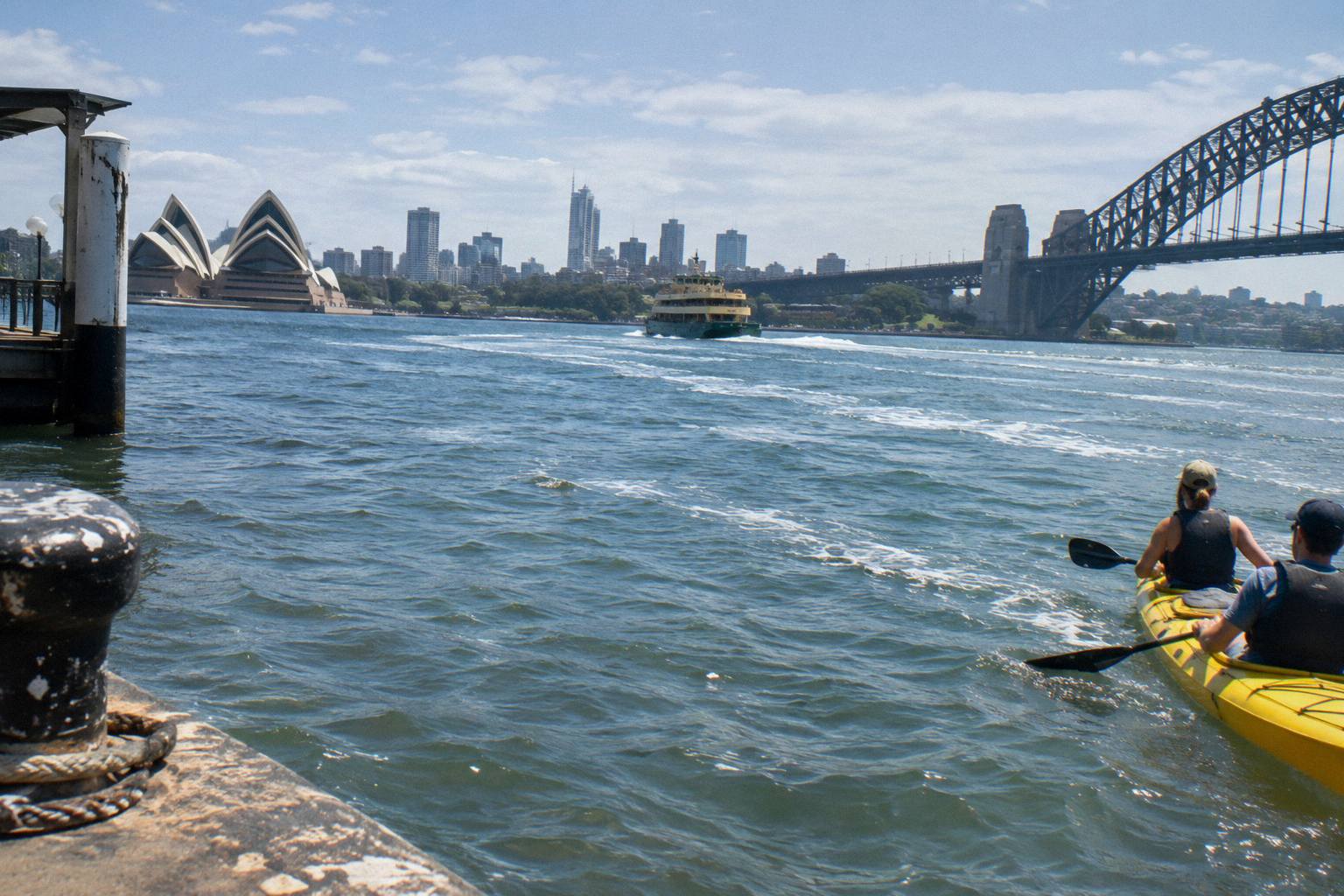
Guided tours also manage traffic by choosing where they paddle at all. The Middle Harbour tours from The Spit never enter the city harbour: the operator's own Sunriser page states that its tours do not paddle around to the Harbour Bridge or Opera House. City-side paddles from Lavender Bay or Kirribilli share water with ferries by geography, and their operators route and brief accordingly. If traffic is your main fear, a Middle Harbour launch answers it by geography rather than by reassurance.
Kayak Type Changes What Falling In Means
The type of kayak decides what a capsize physically involves. In a sit-in kayak you are upside down underwater and a wet exit means releasing the spray skirt and pushing clear before surfacing. On a sit-on-top you fall off the hull and climb back on, and the American Canoe Association describes sit-on-tops as entry-level craft for calm, protected water because they re-enter easily and do not flood.
The distinction is worth a paragraph because it is the single biggest lever on how scary the water feels. The ACA's Level 2 Essentials course frames beginner conditions as wind under 10 knots, waves under one foot and current under one knot, and describes sit-on-top singles and wider doubles as giving good initial stability. Rentals around Manly, for instance, are sit-on-top singles and doubles. Sydney Harbour Kayaks' Middle Harbour Eco Tour uses stable double sea kayaks, a sit-in design but a very wide, forgiving one, paired with a guide and a briefing; Sydney by Kayak on the city side uses single kayaks only, with a 110 kg weight limit, and asks beginners to complete a paddler questionnaire at booking.
Re-entry technique is taught, not instinctive, and that is the argument for taking a guided first paddle rather than hiring straight away. REI and ACA guidance covers both the wet exit and the assisted re-entry, and a guide on the water is doing the assisted version with you. If you want the technique background before you go, the three golden rules of kayaking include having a capsize plan, and the beginner difficulty of kayaking piece covers how much skill the first hour actually demands.
One caveat belongs here: the "120 rule," the idea that air plus water temperature in Fahrenheit above 120 means no immersion protection is needed, circulates on commercial blogs, is criticised as lacking scientific basis, and is stated by no official body. Do not use it to talk yourself out of a lifejacket or a wetsuit. Related to navigation rather than safety, the 50/90 rule is a tidal-stream estimate, not a water-temperature rule, despite the similar-sounding name.
Do You Even Need To Swim?
No Australian rule says you must be able to swim to paddle a kayak, and Royal Life Saving Society Australia and NSW both push the opposite emphasis: wear a lifejacket because even competent swimmers can need one. Falling in while wearing a lifejacket does not require swimming to survive, only staying calm beside the boat until the guide arrives. Operators ask about experience, not pool laps.
This is the question under the question for many nervous bookers, and the sourced answer is reassuring without being a promise. The lifejacket does the floating. The guide does the retrieval. Your job in the water is to stay with the kayak, which is a floating object, and wait. The detail on what getting wet actually involves day to day, paddle drip and splash on even calm water, more on a sit-on-top, is covered in the do you get wet on a Sydney Harbour kayak tour piece, and the question of whether a tour can capsize outright is not answerable with a statistic because none exists.
| Worry | What the sourced facts say |
|---|---|
| "I will sink if I fall in" | An approved lifejacket holds you at the surface; NSW recommends wearing one at all times |
| "I cannot swim, so I cannot go" | No must-swim rule exists in Australian guidance; operators ask about experience, not swim ability |
| "The guide will not notice" | Guides attend capsized paddlers as a trained procedure; Sydney by Kayak says guides can tow tired paddlers |
| "Ferry wake will swamp us" | Tours brief on channels, keep clear of shipping lanes and cross behind ferries; routes follow conditions |
| "Capsizing is common on tours" | No published statistic exists either way; risk factors cited in guidance are craft type, wind, wake, experience and instruction |
Honesty requires one more line: no source can promise you will not fall in, and no article should. What the sourced facts support is that falling in is planned for at every level, by the rules, by the equipment and by the people whose job it is to fetch you.
What Trips People Up About Falling In
Three mistakes dominate. People treat the lifejacket as optional because they can swim, which the rules and Royal Life Saving both reject. People imagine the capsize itself as the danger, when the guide, the stable double and the briefing are all aimed at it, and traffic awareness is the part that actually needs their attention. And people grab at rules they half remember instead of the plain current requirements.
The first mistake has a clean fix: the lifejacket is worn or carried under NSW rules in every case, and operators issue them. The second mistake shows up as anxiety about the wrong thing. A nervous paddler who spends the week before a tour worrying about the water, and then ignores the guide's briefing about crossing behind ferries, has the emphasis backwards. The third mistake is trusting numbers that sound official. The 2013 brochure's 100-metre line is outdated; the 120 rule is commercially repeated, scientifically criticised and officially unstated. When a number about water safety cannot be traced to a government page or a standards body, treat it as folklore.
A fourth, quieter error: assuming that the operator's cancellation or weather terms follow some industry standard. They do not. Every operator sets its own, the Sydney by Kayak weather terms even conflict between its own pages, so the terms sit on the operator page for each tour, and cancellation windows differ tour by tour on the booking pages. Check before you book rather than after the forecast turns.
| Claim you may have heard | Status | What to use instead |
|---|---|---|
| "No lifejacket needed within 100 m of shore" | Outdated 2013 brochure rule | Current NSW page: carry always, wear alone or at night |
| "Air plus water above 120 F means no protection needed" | Commercial blog formula, no official backing, criticised | Wear what the operator and conditions call for |
| "Sit-on-tops cannot capsize" | Not stated by any source | Easy re-entry and no flooding, per ACA; capsizing is still possible |
| "Guided tours never capsize" | No statistic exists either way | Guides are trained for assisted rescue; capsize is possible on any paddle |
Common Questions About Falling Out Of A Kayak On Sydney Harbour
What Happens If You Fall Out Of A Kayak On Sydney Harbour?
You surface beside your boat, held up by an approved lifejacket, and on a guided tour the guide paddles over and runs an assisted rescue. In a sit-in kayak you first complete a wet exit by releasing the spray skirt; on a sit-on-top you simply climb back onto the hull. No published statistic exists for how often guided flat-water tours capsize.
Do I Need To Be Able To Swim To Kayak On Sydney Harbour?
No Australian rule requires swimming ability, and operators ask about paddling experience rather than swim times. Royal Life Saving Society Australia and NSW both recommend lifejackets because even competent swimmers can need them, and operators issue them with every tour and rental.
Will The Guide Come And Get Me?
Guides on tours attend a capsized paddler and run the rescue as a trained procedure. Sydney by Kayak also states its guides can tow tired paddlers before exhaustion becomes a capsize. Tours brief on safety before launch, including a 20-minute paddling and safety briefing on the Middle Harbour Eco Tour.
Is A Lifejacket Legally Required On Sydney Harbour?
Yes, in the ways that matter. NSW rules require every kayak to carry an approved lifejacket for each person at all times, and in enclosed waters such as Sydney Harbour a Level 50S or above lifejacket must be worn when paddling alone or at night. NSW recommends wearing one at all times, and operators issue them.
What About Ferries And Wake?
Sydney Harbour is an extremely busy waterway. Groups keep to the starboard side of channels, stay well clear of ships and cross behind ferries; high-speed ferries show an all-round yellow flashing light. The Bridge Transit Zone forbids stopping, anchoring or drifting under the Harbour Bridge, so tours only transit that strip.
Which Kayak Is Easiest To Get Back Into?
Sit-on-top kayaks re-enter easily and do not flood on capsize, which is why the American Canoe Association describes them as entry-level craft for calm protected water. Stable double sea kayaks, used on the Middle Harbour Eco Tour, are harder to capsize in the first place and are re-boarded with the guide's help.