How Hard Is Kayaking For Beginners?
How hard kayaking really is for a beginner, what the operators on Sydney Harbour say about first timers, and what makes it easier or harder.
Kayaking has a reputation for being either trivially easy or genuinely dangerous, and neither framing survives contact with the details. The short answer for a beginner booking a guided tour on sheltered water: it is a manageable, low-impact activity that most people can do on their first attempt, provided the craft is stable, the water is protected and somebody experienced is making the calls. Difficulty in kayaking is mostly a function of equipment choice and conditions, not of strength or talent, and a guided tour removes most of the decisions that make the sport hard for people who start alone.
The paddling world even has a compact teaching framework for keeping it easy. The "three golden rules of recreational kayaking" published on Paddling.com by kayaking instructor Ken Whiting are: use torso rotation rather than arm strength for your strokes, choose an appropriate paddling location, and have a plan in case you capsize. Two of those three rules are decisions a guided tour makes for you before you ever lift a paddle, which is why the beginner question answers differently on a tour than on a solo rental.
On calm, sheltered water in a stable sit-on-top or double kayak, kayaking is genuinely easy for beginners, demanding no prior skill, no unusual fitness and no swimming background; the American Canoe Association calls sit-on-top kayaks suitable entry-level craft on protected water because they re-enter easily after a capsize and the open hull sheds water instead of flooding. Difficulty only climbs when wind, waves, current or a tippy boat enters the picture.
The American Canoe Association's beginner guidance is the clearest published benchmark for what "appropriate" water means. Its Level 2 Essentials course sets limits of wind under 10 knots, waves under one foot and current under one knot: those are the conditions in which entry-level paddling is taught, and they describe the kind of bay, marina and river-mouth water that guided harbour tours use. A beginner inside those limits on a wide, stable craft is doing something closer to a brisk walk than to a sport. A beginner outside them, in a narrow sea kayak, is doing something genuinely difficult.
What surprises most first timers is how little the arms do. Effective paddling comes from rotating the torso and letting the bigger muscles of the back and core drive the blade, which is the first of the three golden rules on Paddling.com. People who paddle with their arms alone tire in twenty minutes and conclude the activity is hard. People who rotate, as a guide will demonstrate in the on-water briefing before most Sydney tours, can paddle for a couple of hours at conversation pace. Technique, not conditioning, is the gate.
The honest gap in the data: no published statistic exists for how often a guided flat-water kayak tour capsizes, and none should be invented here. What the instructional guidance does say is that capsize risk depends on the width and type of kayak, wind, wake from passing boats, the paddler's experience and the quality of instruction. A guided tour stacks all five of those in your favour, since the operator picks the craft, picks the water, times the paddle around the boat traffic and briefs you before launch.
“Best thing I have done in Sydney. Views were amazing, guides Moss and Charlie so knowledgeable and friendly, felt really safe with them. Definitely do this if going to Sydney.”
If the question behind the question is whether to book a guided Sydney Harbour paddle or read another fifty articles first, the comparison piece on kayak hire versus a guided tour works through that decision in detail.
What Do Sydney Operators Say About First-Time Paddlers?
Every major operator running tours on Sydney Harbour states, on its own pages, that no experience is needed for its entry-level trips. Sydney Harbour Kayaks says no experience is needed for its four-hour Middle Harbour Eco Tour, paddled in stable double sea kayaks after a 20-minute briefing. Sydney by Kayak states beginners are welcome, uses a questionnaire at booking and notes its guides can tow tired paddlers. These are operator statements, not marketing guesses.
That uniformity matters because it answers a question beginners are often too shy to ask directly: am I going to hold the group up? The design of these tours assumes the answer is no. The Eco Tour puts first timers in doubles, where stability is high and a stronger partner or guide can share the work. Sydney by Kayak's questionnaire exists precisely so the guide knows who is new before anyone reaches the water, and its tow capability means a paddler who runs out of steam is towed, not abandoned.
| Operator | Beginner statement | Craft and support stated by the operator |
|---|---|---|
| Sydney Harbour Kayaks | No experience needed on the Middle Harbour Eco Tour | Stable double sea kayaks, 20-minute paddling and safety briefing, qualified guide |
| Sydney by Kayak | Beginners welcome | Paddler questionnaire at booking, guides can tow tired paddlers, singles only |
| Roster tours covered here | Free cancellation up to 24 hours before the start | Group caps of 5 to 14 on tours that state them, guided throughout |
The roster tours tell the same story through their design. The 3-Hour Sunrise Kayak, Breakfast Included tour from Lavender Bay and which only makes sense as a product if a complete novice can complete it, and it runs with a group cap of 12. The Small-Group Sunrise, Couples Paddle restricts itself to paddlers 18 and over with a cap that keeps the guide close. A tour built for beginners does not advertise a 12-person cap and a breakfast stop if it expects people to struggle.
The featured 2-Hour Sunrise To Opera House paddle from Elizabeth Bay is another beginner-appropriate option: two hours is long enough to see the harbour properly and short enough that fatigue is rarely the story, and its rating and review count sit on the booking page.
Which Kayak Is Easiest For A Beginner?
A wide sit-on-top kayak, or any double, is the easiest craft for a beginner, and the American Canoe Association's beginner guide treats sit-on-tops as the entry-level choice exactly for that reason: stable, no flooding when capsized, and you can climb back on without knowing a rescue technique. A narrow sit-inside sea kayak with a spray skirt is harder to balance, harder to re-enter and, in the wind, harder to steer.
The capsize difference is the big one. In a sit-inside kayak, a wet exit means releasing the spray skirt while upside down underwater and pushing out of the cockpit, then dealing with a boat full of water: a learnable skill, but not a first-minute skill. On a sit-on-top you simply fall off and climb back on, which is why hire fleets and beginner tours lean on them. The ACA beginner guide walks through both scenarios, and its treatment of the sit-on-top re-entry is roughly a paragraph, which tells you how simple it is.
Doubles deserve their own mention. Sydney Harbour Kayaks runs its Middle Harbour Eco Tour in stable double sea kayaks and says no experience is needed, and that is not a coincidence: a double is wide, forgiving and, critically, has a second person's stability in it. Sydney by Kayak goes the other way, running singles only, which its paddler questionnaire and tow policy are designed to manage. Neither choice is wrong; the double removes the difficulty, the single removes the passenger seat. The trade-offs are unpacked further in choosing a double or single kayak.
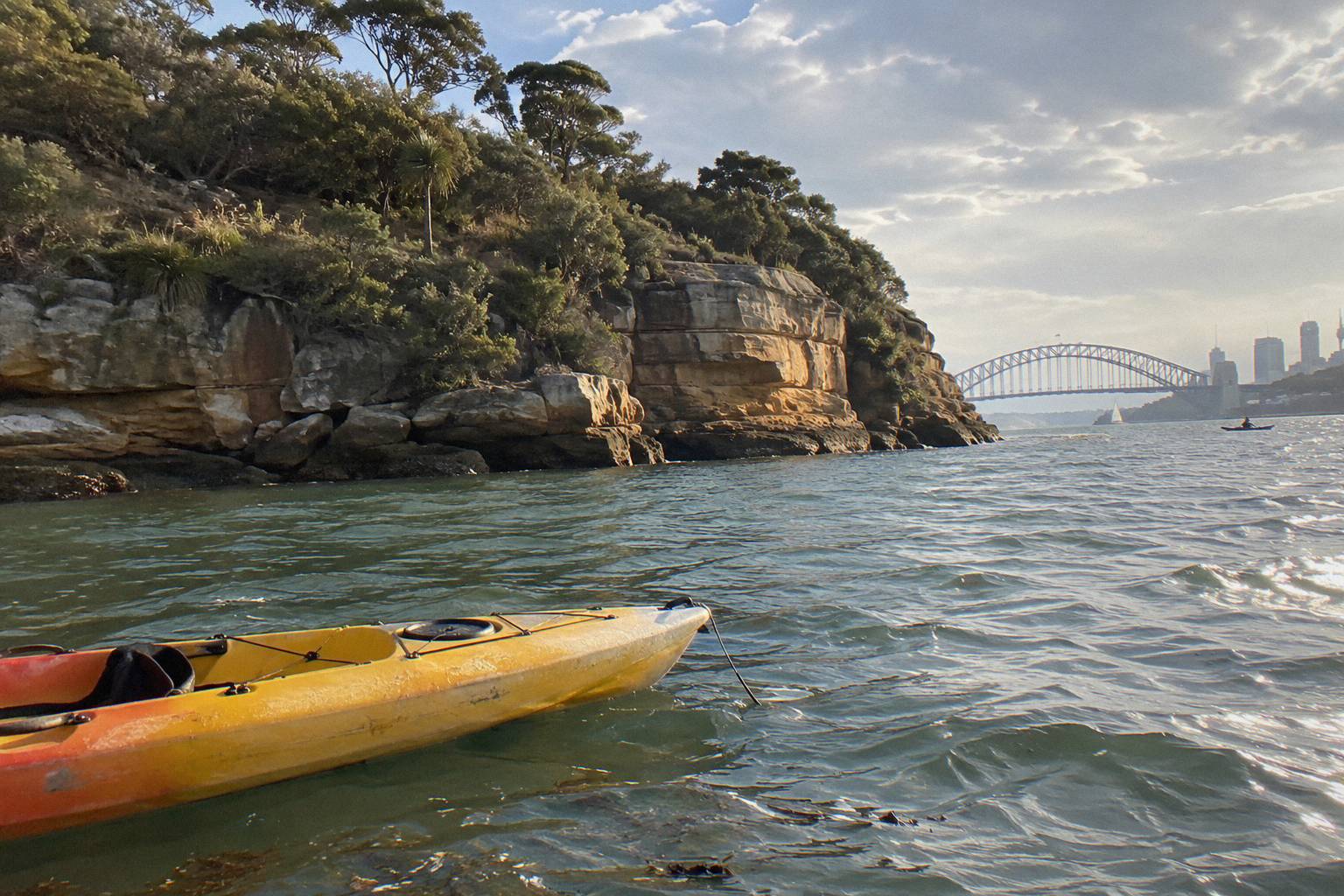
Stability also explains why the "which tour is easiest" question is really a "which craft" question. The 1.5-Hour Guided Opera House Paddle and the Shortest Sunrise Launch Beside Bridge are both short, guided paddles, but the craft you sit in, wide and plastic or narrower and faster, does more for your comfort than the length of the tour does. When in doubt, ask the operator what boat a first timer gets.
What Makes Kayaking Harder Than It Needs To Be?
Four factors do most of the work: wind and waves above the beginner limits, wake from passing boats, a craft too narrow for your experience, and skipping the briefing. The ACA Level 2 teaching limits, wind under 10 knots, waves under one foot and current under one knot, define the envelope in which beginner paddling is taught. Every factor pushing beyond it pushes the difficulty up sharply.
Wind is the first one. A wind that feels like nothing on shore produces a real force on a kayak with a paddler sitting high out of the water, and a beginner fighting a crosswind tires quickly and steers badly. This is the second of the three golden rules of recreational kayaking: choose an appropriate location. Guided tours handle it by route and timing choice, which is a better solution than any amount of beginner grit.
Wake is the Sydney-specific one. The harbour is, in the words of the NSW rules page, an extremely busy waterway, and ferry and motor-boat wake reaches sheltered bays. The instruction is to take wake on the bow rather than beam, and a guide will call it. The rules for paddling near powered vessels are covered properly in the piece on kayaking near ferries and ships.
| Factor | Why it makes paddling harder | What a guided tour does about it |
|---|---|---|
| Wind above the ACA beginner limits | Blows you off course, tires the arms, raises chop | Operator picks route and start time; Sydney Harbour Kayaks cancels for strong winds, thunderstorms or poor visibility |
| Boat wake | Can rock or capsize an unprepared paddler | Guide positions the group and calls the turn into wake |
| Narrow or unfamiliar craft | Lower stability, harder re-entry | Beginner tours use stable doubles or sit-on-tops |
| No briefing | Poor stroke technique, no capsize plan | Roster tours are guided; the Eco Tour runs a 20-minute briefing before launch |
The fourth factor, skipped instruction, is the quietest. Twenty minutes of briefing, the standard Sydney Harbour Kayaks gives its Eco Tour, covers the stroke, the steering and the capsize plan, which is the third golden rule. Paddlers who launch alone without one spend the first hour reinventing bad technique. The practical fix is simple: book guided for paddle number one, and read up on what to wear kayaking beforehand.
“We were very lucky to do the kayak trip with Tim, just the two of us. We found him very passionate and knowledgeable and in safe hands. Highly recommend booking a trip with Tim.”
How Fit Do You Need To Be?
No published, authoritative source gives a calorie, muscle-activation or fitness benchmark for recreational kayaking, so any specific figure would be invented. What the tours themselves show is that typical guided paddles run 1.5 to 3 hours at a pace a guide sets, with breaks, in craft chosen for stability rather than speed, within the capability of an ordinary active adult. Injury studies cover elite paddlers, not tour participants.
The honest way to answer the fitness question is to look at the durations on offer and match them to your day. A 1.5-hour sunset paddle is a different ask from the 4 hours 30 minutes of the Pittwater Discovery tour, and the roster spans both. There is no shame in starting short: the Shortest Sunrise Launch Beside Bridge runs 1.5 to 2 hours and is rated 4.9 across 52 reviews, and the 1.5-hour Guided Opera House Paddle is rated 5.0 across 29 reviews. Both are real guided products designed around a short, achievable paddle.
Two fitness realities are worth naming. First, tiredness on the water is usually a technique problem, arms instead of torso, and a guide will correct it mid-paddle. Second, operators plan for it: Sydney by Kayak states its guides can tow tired paddlers, which converts a fitness ceiling from a safety problem into an inconvenience. The remaining question, what happens if you actually fall in, is handled below.
One more caution from the sourced guidance: the "120 rule" (air temperature plus water temperature in Fahrenheit above 120 means no immersion protection needed) circulates on commercial blogs, is criticised as lacking any scientific basis, and is not stated by any official body. Do not use it to decide what to wear on the water in any month.
What Happens If You Capsize Or Fall Out?
On a sit-on-top you fall off and climb back on, a self-rescue the American Canoe Association describes as straightforward for beginners. In a sit-inside kayak a wet exit means releasing the spray skirt upside down and pushing clear, which is a taught skill. On any guided tour the guide attends a capsized paddler and runs the rescue, and no published statistic exists for how often capsizes happen on guided flat-water tours.
The guided-tour part of that answer is the part that matters for a first timer. Rescue training is part of what a qualified guide carries: you are not expected to execute a solo re-entry in moving water on day one. The third golden rule, have a plan in case you capsize, is satisfied on a tour by the guide's plan rather than yours. What you bring to it is the ability to stay calm, float in your lifejacket and hold onto your paddle, all of which a briefing covers.
“Such a fantastic experience. Extremely helpful and knowledgeable guides. Very well organised. Such good value for money, experienced an amazing sunrise, photos were incredible and got to see the main Syndey sites.”
The lifejacket is not optional garnish. NSW rules require kayaks to carry an approved lifejacket for every person on board at all times, and on enclosed waters such as Sydney Harbour a lifejacket must be worn when paddling alone or between sunset and sunrise, with the official advice being to wear one at all times regardless. Royal Life Saving Society Australia makes the same point: even competent swimmers can need one, which is why lifejackets are recommended for all paddlers. Operators issue them; the roster tours run at dawn and dusk, when wearing one is required anyway.
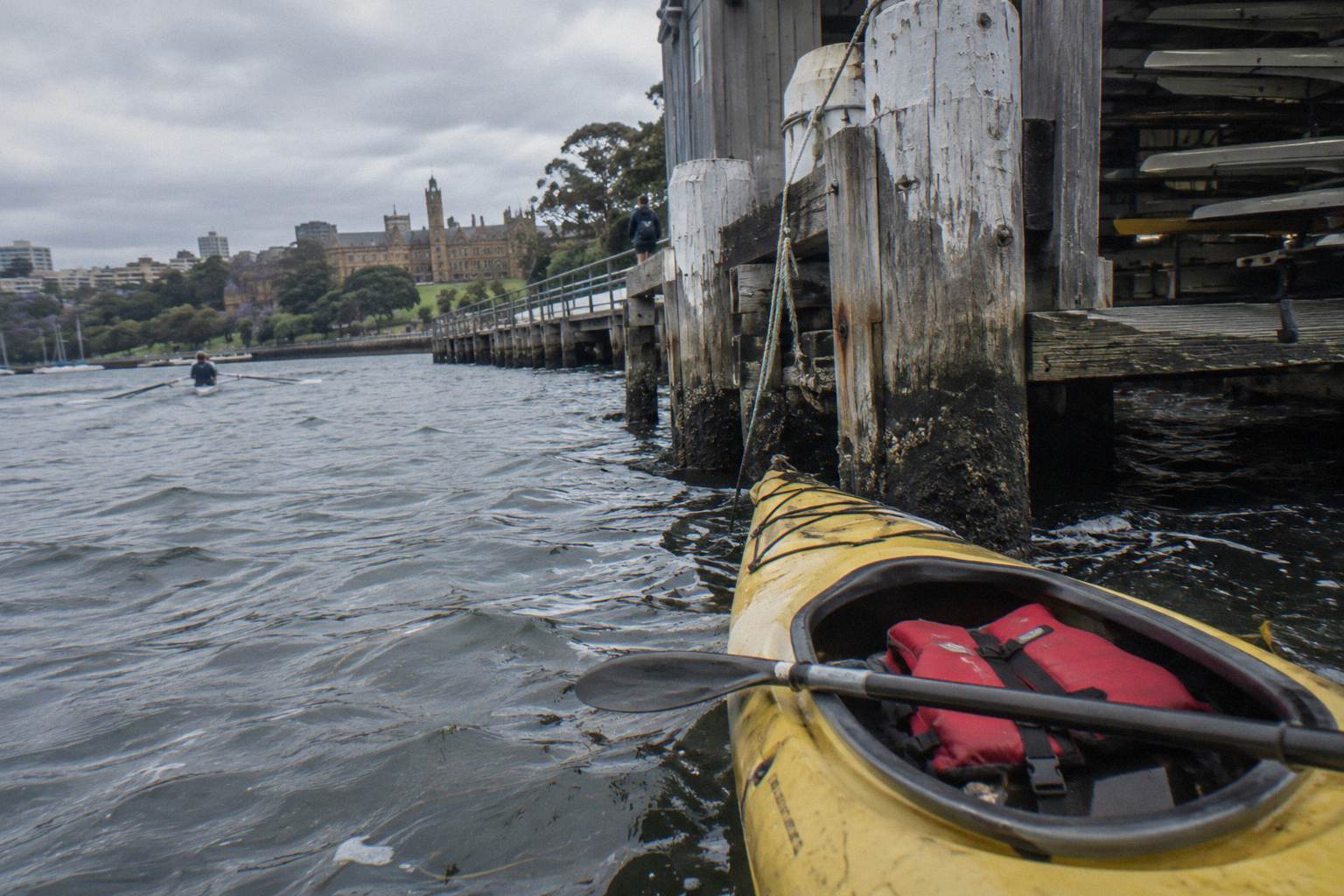
Will you get wet even without a capsize? Yes. Paddle drip and splash happen on calm water, and the ACA beginner guide notes more of it reaches you on a sit-on-top, since you sit closer to the waterline with no cockpit rim. That is a comfort question rather than a difficulty one, and it is the reason operators ask for water shoes and quick-drying clothes rather than denim. Details on clothing, phones and dry storage are in the what-to-wear guide linked above.
Do You Need To Be Able To Swim?
Australian guidance sets no must-swim rule for kayaking, and no Sydney operator listed here requires a swimming test. What the official and lifesaving bodies say instead is that a lifejacket matters because even competent swimmers can need one, and NSW requires lifejackets to be carried at all times and worn when paddling alone or at night. Confidence in deep water helps; the lifejacket and the guide are the safety mechanism.
That distinction reframes the beginner question usefully. A non-swimmer who is anxious about deep water will not enjoy a tour, and should say so on the booking questionnaire or to the operator before the day. But the safety case does not rest on your freestyle. It rests on a flotation device you are wearing, a craft that floats even when swamped or overturned, and a guide whose job includes attending you in the water. The deeper treatment is in whether you need to swim to kayak on Sydney Harbour.
The same logic answers the flip-question people ask next: how likely am I to flip? The mechanics of capsize risk are covered above, and the honest summary is that no broad statistic exists, the factors are known, and every one of them is managed by choosing stable craft, sheltered water and a guide. If flipping itself is the worry, read how likely it is that a kayak flips; if falling in is the worry, what happens when you fall out covers the sequence step by step.
Common Mistakes When Starting Kayaking
The recurring first-timer mistakes are paddling with the arms instead of the torso, dressing for the air rather than the water, choosing a tippy or unfamiliar craft, launching without a capsize plan, and misjudging the conditions by the shoreline rather than the water. Each one is a decision error rather than a skill gap, which is why a guided tour, a briefing and stable craft prevent nearly all of them before launch.
Dressing wrong is the most common. Denim, cotton and sneakers ruin more first paddles than wind does: paddle drip guarantees some water contact, and the wrong fabric turns that into misery. The second is grip and effort: white-knuckling the paddle and hauling with the arms produces the "kayaking is hard" verdict within the hour, when rotation would have carried the same paddler comfortably for two.
The third is ignoring the plan question. The three golden rules exist because each addresses a real failure mode: no rotation means fatigue, wrong location means conditions beyond your ability, no capsize plan means panic. Booking a guided tour with a qualified guide, like the ones Sydney Harbour Kayak Tours covers, converts all three rules into somebody else's checklist while you learn them by observation. The fourth is overreaching on duration: the Pittwater Discovery tour, at 4 hours 30 minutes, is a wonderful second or third paddle and an ambitious first one.
“Really fun!!! The guide was very helpful and kind, my brother and I had a great time”
The fifth is quiet and specific to the harbour: assuming the tour will pass under, or stop under, the Harbour Bridge. The bridge transit zone forbids stopping, anchoring or drifting under the bridge, and only some tours pass under it, on some departures. Sydney by Kayak states its sunrise tour passes under the bridge on peak-season and weekend departures only, and no operator promises a stop or photos under it. Expect views, and treat anything more as a bonus the guide announces on the day.
Common Questions About Kayaking For Beginners
How Hard Is Kayaking For Beginners?
On calm, sheltered water in a stable sit-on-top or double kayak, kayaking is manageable for most people on their first attempt. The American Canoe Association describes sit-on-tops as suitable entry-level craft on protected water, and Sydney operators state that no experience is needed on their beginner tours. Difficulty rises with wind, waves, current and tippy craft, not with age or strength.
Do You Need Strength To Kayak?
No unusual strength is needed for a guided flat-water paddle. Effective strokes come from torso rotation, using the muscles of the back and core, rather than from the arms, and guides demonstrate this in the briefing. Sydney by Kayak also states its guides can tow tired paddlers, so a strength shortfall becomes an inconvenience rather than a safety issue.
What Is The Best Kayak For A Beginner?
A wide sit-on-top single or a stable double. Sit-on-tops are stable, do not flood when capsized and allow a simple climb-back-on re-entry, which is why the ACA treats them as entry-level craft. Sydney Harbour Kayaks runs its no-experience-needed Middle Harbour Eco Tour in stable double sea kayaks.
Can You Kayak If You Cannot Swim?
Australian guidance sets no must-swim rule, and no operator listed here requires a swimming test. You wear an approved lifejacket, NSW requires one to be carried at all times and worn when paddling alone or at night, and a guide attends a capsized paddler. Tell the operator about water anxiety before booking so they can advise honestly.
How Likely Is A Beginner To Capsize?
No published statistic exists for capsizes on guided flat-water tours. The factors cited in instructional guidance are kayak width and type, wind, wake, experience and instruction, and a guided tour on sheltered water in a stable craft manages all five. If a capsize does happen, a guide runs the rescue.
How Long Should A First Kayak Tour Be?
Between 1.5 and 2 hours on the water is a comfortable first paddle. The roster includes short guided options such as a 1.5-hour opera house paddle and a 1.5 to 2 hour sunrise launch beside the bridge, both designed around a first-timer's stamina, with longer tours of three hours and up better saved for a second or third outing.