Can You Kayak Near Ferries And Ships On Sydney Harbour?
What NSW harbour rules say about kayaking near ferries and ships, how guided tours manage traffic, and what to watch for around shipping channels and ferry wash.
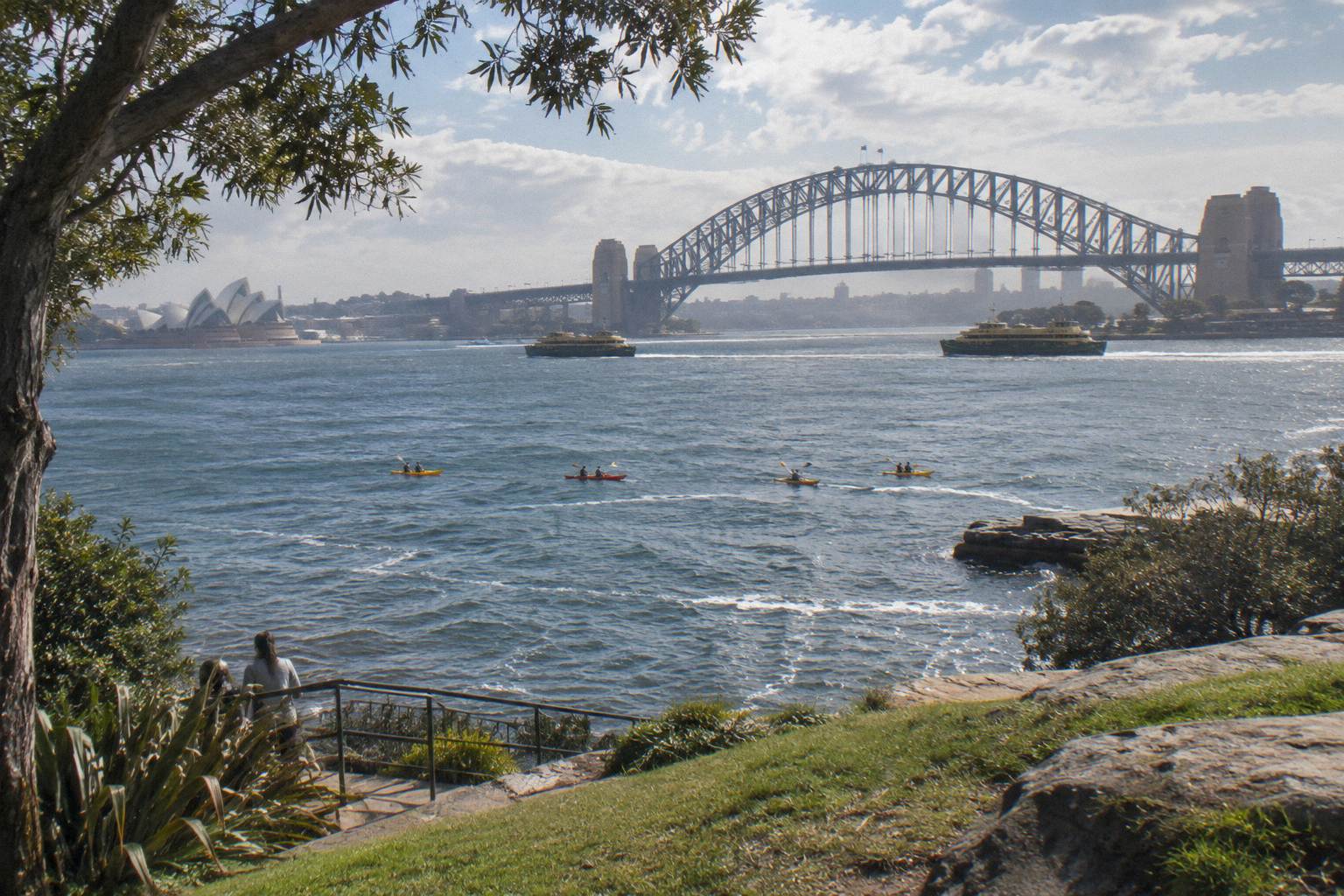
Sydney Harbour moves. Ferries cross between the city and the northern suburbs, Manly and Parramatta, big ships come and go under the bridge, and on any given morning hundreds of small craft share the same water. The short answer for a paddler is yes, kayaking happens on this harbour every day, including right beside ferry routes, but the official rules treat it as an extremely busy waterway and put real obligations on anyone in a low, hard-to-see boat. Knowing what those rules say, and how guided tours apply them, is what separates a relaxed paddle from a risky one. For a fuller picture of the boats, gear and weather calls involved, the guide to sea kayaking Sydney Harbour covers what changes when a short recreational paddle gives way to open harbour conditions.
The harbour rules published by NSW transport authorities describe the water as extremely busy, direct paddlecraft to keep to the starboard side of shipping channels and well clear of big ships, and ban stopping, anchoring or drifting under the Sydney Harbour Bridge. None of that keeps kayaks off the water. It shapes where you paddle, when you go and who you go with, which is why so many first-time visitors book a guided tour rather than setting out alone past a ferry lane. Guided options like the Sydney Harbour Kayak Tours selection run daily around these constraints, and the guides carry the local knowledge of which channels matter at which hour.
“Best thing I have done in Sydney. Views were amazing, guides Moss and Charlie so knowledgeable and friendly, felt really safe with them. Definitely do this if going to Sydney.”
Yes, kayaking near ferries and ships on Sydney Harbour is legal and common, but the official rules treat the harbour as an extremely busy waterway and give paddlecraft specific duties: keep to the starboard side of shipping channels, stay well clear of big ships, never cross in front of a large vessel, and never stop, anchor or drift under the Harbour Bridge. Powered vessels are recommended to give way to paddlecraft, but kayaks sit low and are hard to see. Visibility is one worry, but if you're curious about what actually tends to hurt paddlers, the guide to the most common kayaking injuries covers the evidence.
The key point in the rules is not a ban, it is a relationship. The NSW giving-way guidance recommends that powered and sailing vessels keep a proper lookout and give way to paddlecraft, and that recommendation works in the kayaker's favour when a skipper is paying attention. The same page, though, is blunt about why a paddler cannot rely on it: paddlecraft sit low in the water and are difficult to see. That is why the guidance tells kayakers to take extra care near powered vessels and when crossing channels, and why no vessel, kayaks included, may cross in front of a large vessel or obstruct a large vessel in a channel.
For someone choosing a tour, this all lands in the guide's hands. A guided group paddles as a visible cluster, the guide watches the traffic, and the routes are chosen with the ferry pattern in mind. Sunrise departures exist partly because of this: the earlier a group is on the water, the less traffic there is to manage. The 3-Hour Sunrise Kayak, Breakfast Included from Lavender Bay, the 2-Hour Sunrise To Opera House from Elizabeth Bay and the Sunrise Paddle Under Harbour Bridge from Kirribilli all use the quiet end of the day, and each carries free cancellation up to 24 hours before the start.
What The Harbour Rules Say About Shipping Channels?
NSW rules require kayaks to keep to the starboard side of shipping channels and stay well clear of big ships, and they ban any vessel from crossing in front of a large vessel or obstructing one in a channel. High-speed ferries display an all-round yellow flashing light, Sydney VTS broadcasts shipping information on VHF 16 and 13 every two hours, and personal watercraft and kiteboards are banned on the harbour entirely. Kayaks are not banned.
The full set of harbour rules lives on the official NSW rules for boating on Sydney Harbour page, and it rewards a slow read. The starboard rule mirrors road logic: keep to the right side of a channel, like every other vessel, so opposing traffic passes predictably. The big-ship rule is absolute, because a loaded vessel in a channel cannot swerve or stop for a kayak. Ferry traffic is the everyday version of the same problem, and the yellow flashing light on a high-speed ferry is the signal to treat that vessel as the priority traffic in the area.
“Really fun!!! The guide was very helpful and kind, my brother and I had a great time”
Two things the rules page does not do are worth knowing. It does not ban kayaks from any part of the harbour, and it does not publish a paddler-specific exclusion list around the Opera House or Circular Quay. What it does instead is give rules that apply everywhere on this water, including Middle Harbour. Personal watercraft and kiteboards are banned, kayaks are not, and the difference matters if you have read headlines about "banned craft" and assumed they covered paddling.
| Vessel | What the NSW harbour rules say for a kayaker |
|---|---|
| Large ships | Never cross in front of one or obstruct it in a channel; keep well clear |
| High-speed ferries | All-round yellow flashing light; treat as priority traffic |
| Other powered vessels | Recommended to keep a lookout and give way to paddlecraft, but kayaks sit low and are hard to see |
| Sailing vessels | Same give-way recommendation as powered vessels |
| Other paddlecraft | Same rules apply; no special exemption for kayaks |
| Personal watercraft and kiteboards | Banned on the harbour, including Middle Harbour; does not apply to kayaks |
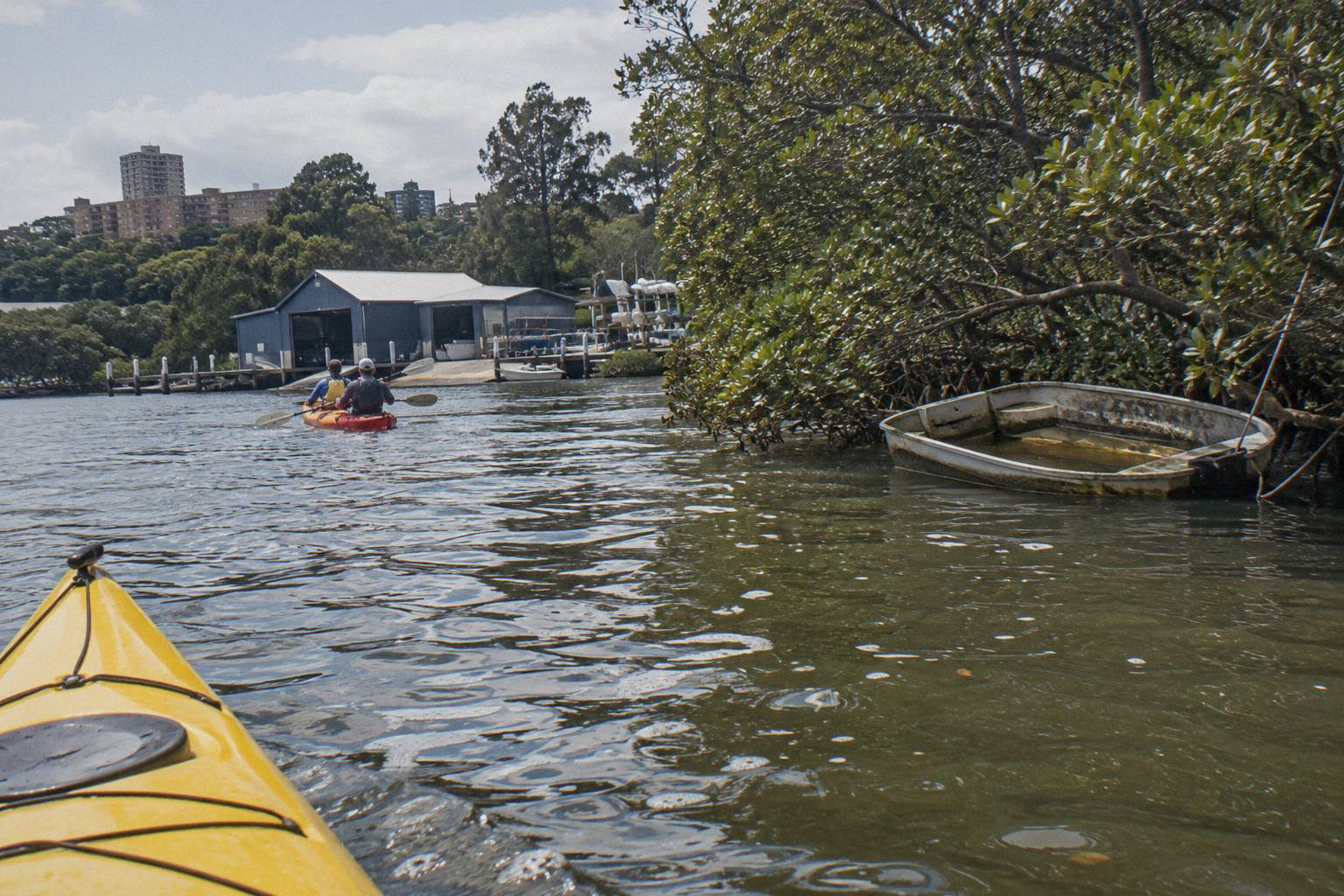
If the question behind the question is whether a nervous beginner can do this, the honest answer is that a guided tour absorbs most of the risk that the rules describe. The Sunrise Kayak From Rushcutters Bay is rated 4.9 across 2,776 reviews, runs two hours from a meeting point at d'Albora Marinas on New Beach Road, and takes paddlers out under a guide's supervision with a minimum age of 12 and a group maximum of 12. The traffic awareness is the guide's job; the paddler's job is to stay with the group.
How Do Guided Tours Handle Ferry Traffic?
Guided tours manage ferry traffic by choosing launch points and times where the exposure is lowest, keeping groups tight and visible, and leaving the traffic reading to a guide who knows the patterns. Sunrise departures, small group caps and calm bays away from the main channels are the standard tools, and the group maximums on the tours covered here range from 5 up to 14 depending on the tour, because a tight group is easier for other skippers to see.
The tours covered here show the strategy in the numbers. The Small-Group Opera And Bridge Paddle takes a maximum of 5 paddlers from Quibaree Park at Lavender Bay, with a minimum age of 16 and a stated weight limit of 110 kg. The Sunset Kayak, Free Photos, also from Quibaree Park, caps at 9 paddlers. The LED Sunset Kayak allows up to 14. None of these caps is about comfort alone; a guide responsible for five people near a ferry lane is managing a different problem than one responsible for twenty, and the operators size their groups to what a guide can safely shepherd past traffic.
| Tour (decision name) | Start point | Group max | Minimum age | Rating |
|---|---|---|---|---|
| Small-Group Opera And Bridge Paddle | Quibaree Park, Lavender Bay | 5 | 16 | 4.9 across 105 reviews |
| Sunset Kayak, Free Photos | Quibaree Park, Lavender Bay | 9 | 12 | 4.8 across 162 reviews |
| LED Sunset Kayak | Prue's Beach, Lavender Bay | 14 | 12 | 4.9 across 139 reviews |
| 3-Hour Sunrise Kayak, Breakfast Included | Quibaree Park, Lavender Bay | 12 | 8 | 5.0 across 365 reviews |
| Sunrise Kayak From Rushcutters Bay | Rushcutters Bay | 12 | 12 | 4.9 across 2,776 reviews |
Timing does the other half of the work. Ferries run to a timetable, and the earliest departures get paddlers onto the water before the daytime pattern builds. That logic sits behind the whole sunrise category, and it is why the question of traffic and the question of timing are really one question. The deeper background on picking a time is in the best time to paddle Sydney Harbour guide, and the specific mechanics of a dawn departure are covered in what to expect on a Sydney Harbour sunrise kayak.
The most detailed public example of a tour operator working around ferries comes from Sydney by Kayak, an operator based at the Lavender Bay boat ramp at 1 Railway Avenue. Its frequently asked questions say a pass under the bridge is only guaranteed on its warm-month sunrise tour, before ferries run, and that off-peak sunrise tours route to Berry's Bay instead. That is a tour company openly rebuilding its route around the ferry timetable, and it is the clearest illustration of how the industry treats harbour traffic: not as an obstacle to powering through, but as a schedule to plan around.
Where Does The Manly Ferry Route Fit In?
At Manly, the ferry route itself functions as the boundary operators work around: Manly Kayak Centre's frequently asked questions say its hire paddlers may go to the beaches east of the Manly ferry route, about 30 minutes' paddle to the furthest point, which keeps small craft out of the lane the ferries use. It is a practical demonstration that the way to coexist with ferries is to stay on your side of the water they need.
Manly Kayak Centre is a hire and tour operator rather than one of the tours covered here, but its boundary rule is a useful model for understanding how locals think about the harbour. The ferry between Manly and the city is a fast, large vessel on a fixed line, and the operator simply keeps its beginners away from that line. The same instinct shows up on the guided side of the Manly area: the Manly Cove Beaches Kayak runs from Manly Yacht Club on the Esplanade with a group maximum of 8, and the Pittwater options, the Pittwater Discovery, 4 Hours 30 Minutes tour and the Pittwater Paddle, Lunch And Waterfall, operate on a completely different body of water with no city ferry traffic at all. More of these guides are collected on Sydney Harbour Kayak Tours.
“Fantastic morning on the water. Well worth it! Jack was fabulous!! Suitable for all levels. Met some lovely people.”
The broader geography helps too. The harbour is really a drowned river system, and most of its arms, Middle Harbour, the Lane Cove River, the Parramatta River upstream, carry far less commercial traffic than the main channel between the heads and the bridge. Background on one of those quieter arms is in the Middle Harbour kayak tours guide. For a paddler whose real worry is the ferry question, choosing an arm of the harbour without ferries is a legitimate answer, though it is not the only one.
What Is The Bridge Transit Zone Rule?
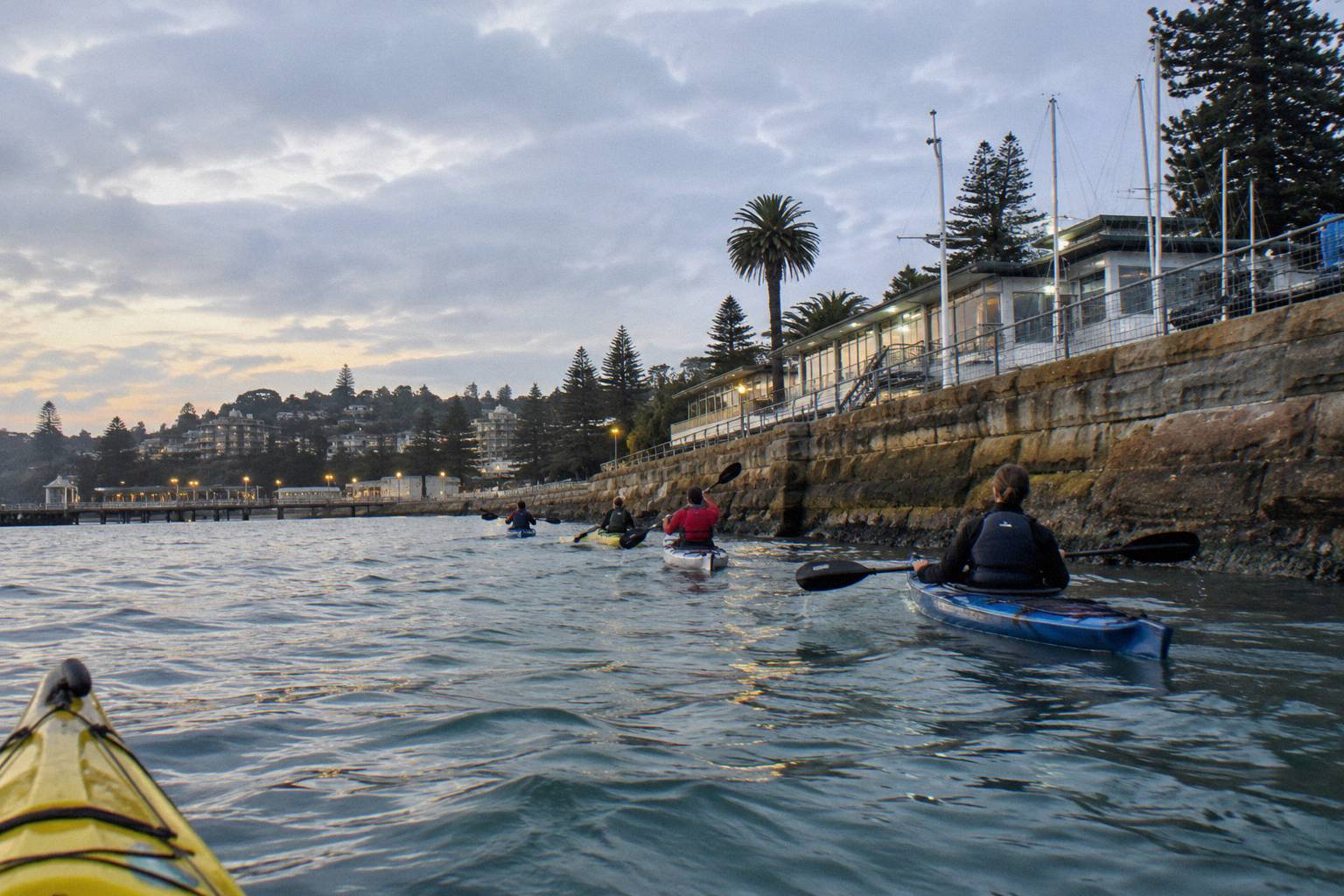
Under the Sydney Harbour Bridge, between Bennelong Point and Kirribilli Point on one side and Millers Point and Blues Point on the other, sits a formal Transit Zone where no vessel may stop, anchor or drift except in an emergency, with a 15-knot limit for transiting craft. For kayaks this means the bridge is a place you pass through, never a place you linger, which is why no tour promises a photo stop underneath it.
The zone's edges matter for planning. The official description excludes Walsh Bay, Sydney Cove, Lavender Bay north of Blues Point and the southern end of Milsons Point wharf, so several of the bays tours launch from sit beside the zone rather than inside it. That is no accident: the guided tours that advertise bridge views launch from Lavender Bay, McMahons Point, Kirribilli or Rushcutters Bay, all close enough to see and pass the structure without camping under it. Background on the landmark itself is on the Sydney Harbour Bridge page, and the paddling-specific detail is in the kayaking under the Sydney Harbour Bridge guide.
The roster wording reflects the rule carefully. The Sunrise Paddle Under Harbour Bridge, rated 5.0 across 998 reviews from its Kirribilli start at 1 Bradly Avenue, carries a flag on its own booking terms that no stop under the bridge is promised: the tour paddles past and passes under, weather and traffic permitting, and that is all any operator can honestly offer. The 3-Hour Sunrise Kayak, Breakfast Included carries the same flag. When you read "under the bridge" in a tour title, read "transits the bridge span, under supervision", not "hangs out under the deck".
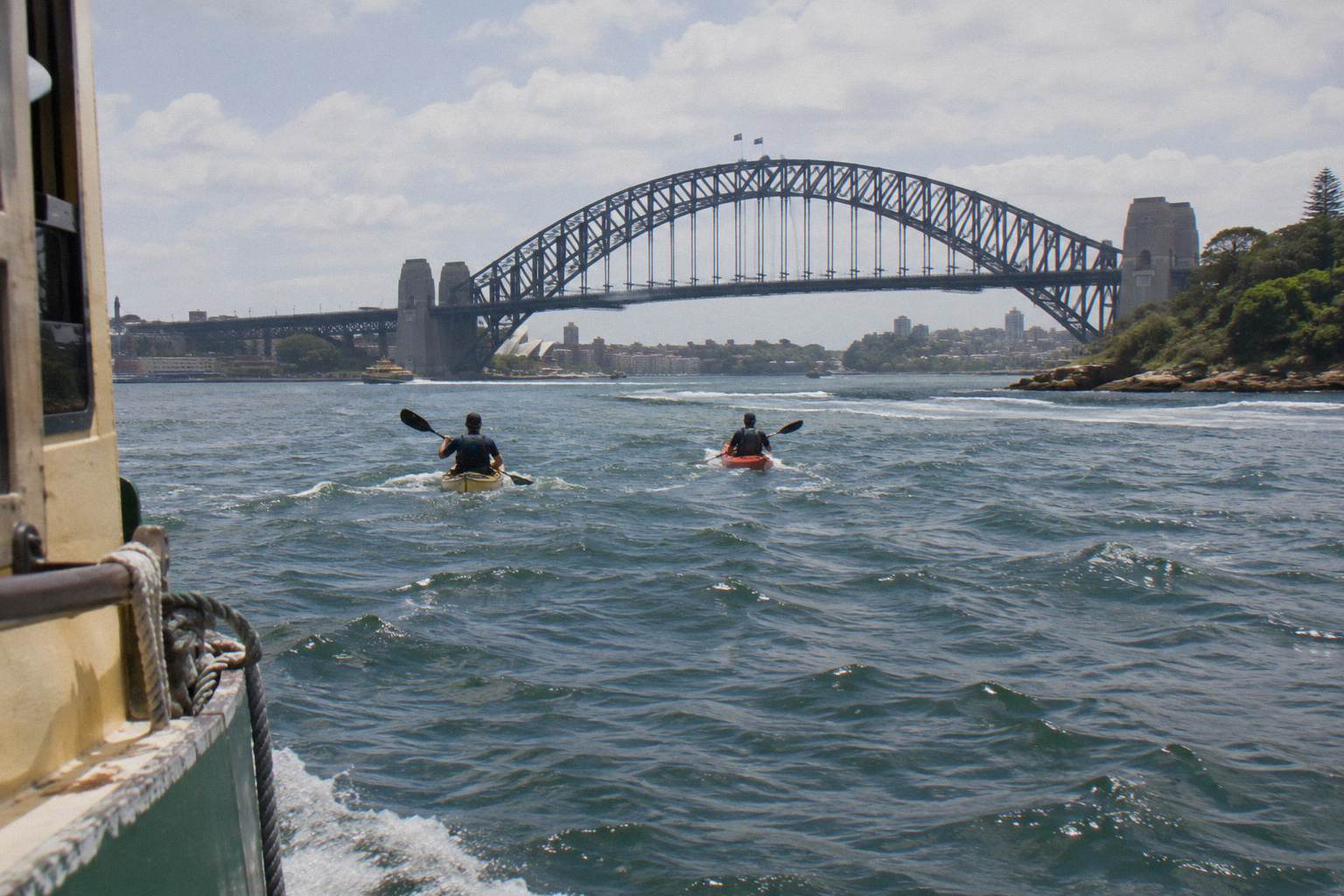
What About Ferry Wash And Night Paddling?
Ferry wash is a real hazard for small craft, and the NSW guidance addresses it indirectly: paddlecraft sit low, are hard to see, and should take extra care near powered vessels and when crossing channels, and no vessel may cross in front of a large one. After sunset, paddlecraft must show a white torch or lantern ready to prevent a collision, and a lifejacket must be worn when paddling at night or when alone on enclosed waters.
Wash, the wake a fast ferry throws up as it moves, is the everyday version of the large-vessel problem. The older maritime safety advice for this harbour tells small craft to paddle outside the channels and cross behind other vessels rather than in front, and while that brochure predates the current rules pages, the logic still holds: a kayak crossing behind a ferry meets its wash, which is uncomfortable, rather than its bow, which is dangerous. The current giving-way guidance carries the same message in modern form, extra care near powered vessels and when crossing channels.
“Kayak tour was amazing! Great way to see Sydney up close. Chad and Fernando were excellent guides and took great photos. Highly recommend!”
Night paddling changes the legal position too. The NSW lights rules require kayaks and canoes to carry a torch or lantern showing a white light, ready in time to prevent a collision, with a head torch recommended, and the lifejacket rules require a Level 50S or above lifejacket to be worn on enclosed waters, which includes Sydney Harbour, when paddling alone or between sunset and sunrise, with a general recommendation to wear one at all times. The roster's evening options, the LED Sunset Kayak rated 4.9 across 139 reviews and the Sunset Kayak, Free Photos rated 4.8 across 162 reviews, both launch around 90 minutes before sunset, and guided tours supply the lights and lifejackets the rules require. More on the evening side of the harbour is in the sunset kayak Sydney guide. If capsizing after dark is a worry, the guide to how likely a kayak is to flip and what tours do about it explains what drives capsize risk and keeps paddlers upright.
Common Mistakes When Paddling Near Harbour Traffic
The mistakes that trip paddlers up are crossing a channel in front of a ferry, scattering a group so no skipper can read it, assuming a ferry skipper has seen a low kayak, and lingering under the bridge where stopping is banned outright. Each one is avoidable with the same habit: stay starboard, stay tight, stay visible, and on a guided tour let the guide read the traffic.
“Matt, our guide, was super informative and had top-notch kayaking equipment; he's a true adventure kayaker. He also gave awesome recommendations for nearby places to eat and things to do after the paddle. Thanks Matt for the amazing experience and cool photos!”
The first mistake is the channel crossing. A ferry on its line cannot stop for a kayak, and the rules make the crossing rule explicit, never in front of a large vessel and never in a way that obstructs one in a channel. Wait, let the ferry pass, cross behind it, and accept the wash as the cheaper option. The second is group discipline: a guided group that strings out over fifty metres is invisible as a unit, while the same group bunched is a shape a skipper can see and avoid. Operators cap groups at sizes a guide can keep together for exactly this reason.
The third mistake is assuming visibility. The rules say powered vessels are recommended to give way to paddlecraft, and the same rules explain why that recommendation fails: kayaks sit low. Bright clothing, a tight group and crossing at the narrowest point are the paddler's countermeasures. The fourth is the bridge. Stopping, anchoring or drifting under the span is banned except in an emergency, so any plan that involves pausing under the bridge for a photo is not a plan, it is a breach of the Transit Zone rule, and no tour operator on this harbour offers one. If your heart is set on bridge proximity, pick a tour that launches beside it, like the Shortest Sunrise Launch Beside Bridge from McMahons Point, rated 4.9 across 52 reviews, and take your photos from the bay either side of the span.
For a nervous first-timer, the summary is simple. The harbour is busy but rule-governed, the tours that run on it are built around the rules, and the quietest window is dawn.
Common Questions About Kayaking Near Ferries And Ships On Sydney Harbour
Can You Kayak Near Ferries And Ships On Sydney Harbour?
Yes. Kayaking is legal on Sydney Harbour, which the official rules describe as an extremely busy waterway. Paddlers must keep to the starboard side of shipping channels, stay well clear of big ships, never cross in front of a large vessel, and never stop, anchor or drift under the Harbour Bridge. Guided tours run daily under these rules.
Do Ferries Give Way To Kayaks?
Powered and sailing vessels are recommended to keep a proper lookout and give way to paddlecraft under the NSW giving-way guidance. But the same guidance notes paddlecraft sit low and are hard to see, so kayakers are told to take extra care near powered vessels and when crossing channels. Never rely on a ferry changing course for you.
Can You Stop For Photos Under The Sydney Harbour Bridge?
No. The Bridge Transit Zone bans stopping, anchoring and drifting under the bridge except in an emergency, with transit only and a 15-knot limit. Tours can paddle past and pass under the span, and some titles say exactly that, but no tour promises a stop or photo pause underneath.
What Does A Yellow Flashing Light On A Ferry Mean?
An all-round yellow flashing light marks a high-speed ferry under the NSW harbour rules. For a paddler it is the signal to treat that vessel as the priority traffic in the area, stay well clear and let it pass before crossing anywhere near its line.
Are Kayaks Allowed Everywhere On The Harbour?
Kayaks are not banned from any part of Sydney Harbour the rules page names, unlike personal watercraft and kiteboards, which are banned outright including on Middle Harbour. The limits on kayaks are behavioural: keep starboard in channels, keep clear of large vessels, do not stop in the Bridge Transit Zone, and carry lights after dark.
Which Tour Is Best If I Am Nervous About Traffic?
Choose a sunrise departure from a calm bay, ideally with a small group cap. The 3-Hour Sunrise Kayak, Breakfast Included runs from Lavender Bay with a group maximum of 12, and the Sunrise Paddle Under Harbour Bridge runs from Kirribilli with free cancellation up to 24 hours before the start. Dawn is when the ferry pattern is at its lightest, which is why the category exists.