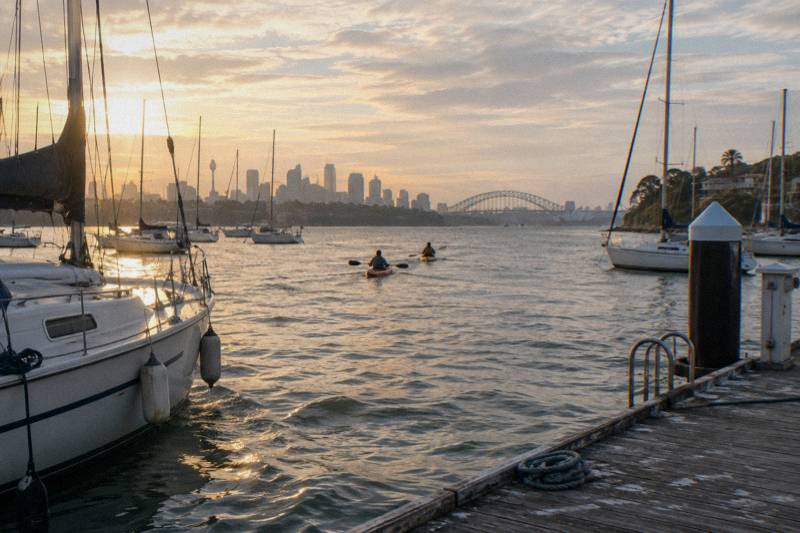
What Is The Most Common Injury In Kayaking?
Shoulder and lower-back problems top the injury studies of competitive paddlers, but what does that mean for a guided kayak tour? A plain look at the evidence, the capsizing question and how Sydney operators manage risk.
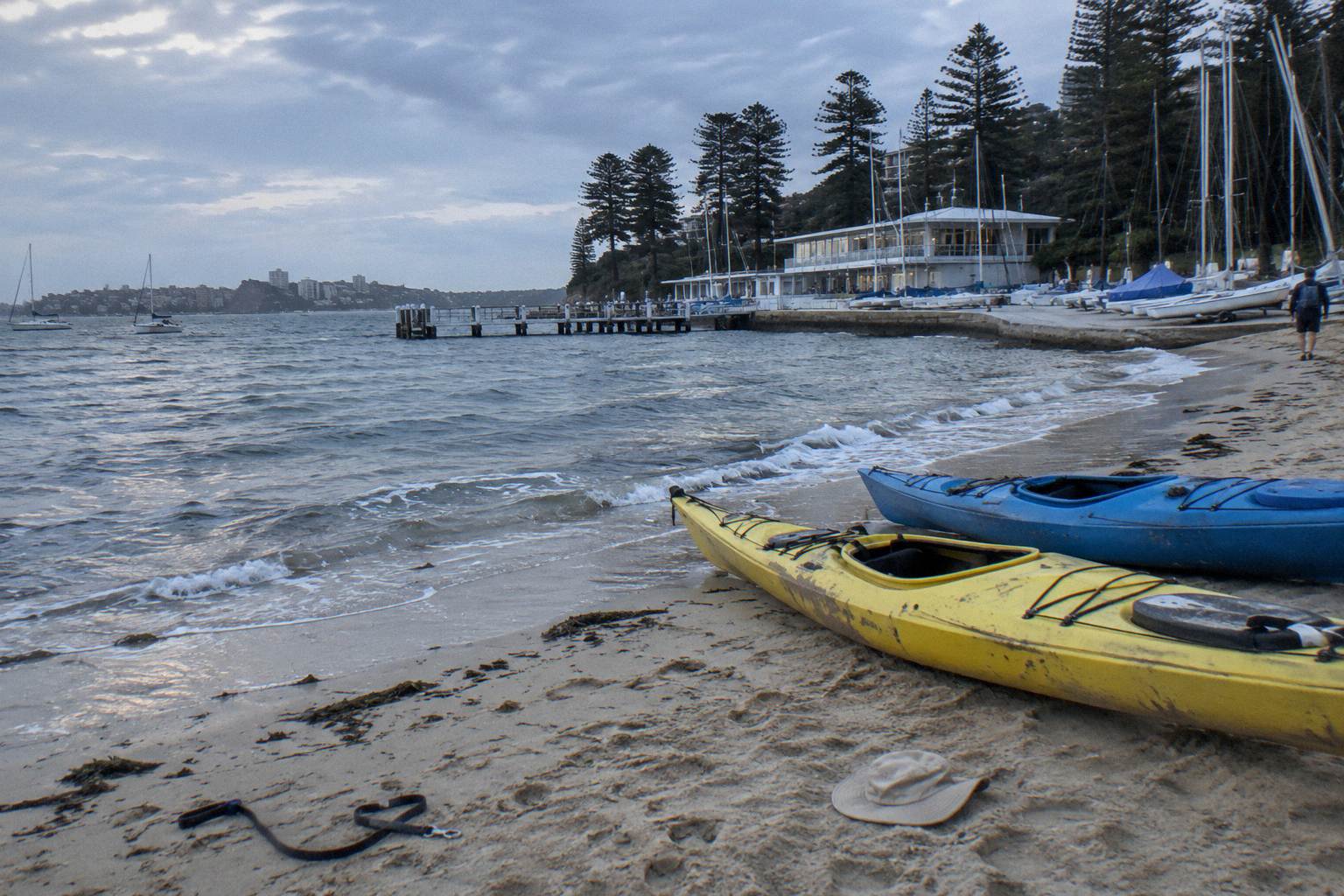
The short, honest answer is that shoulder and lower-back problems are what peer-reviewed studies of competitive paddlers report most often, in journals such as the Journal of Science and Medicine in Sport and the Clinical Journal of Sport Medicine. Those studies follow athletes with heavy training volumes, not people on a two-hour guided harbour tour, and no broad injury statistic exists for recreational kayaking. So the honest framing is two-part: what the research on athletes found, and what that does and does not mean for a first-time paddler.
That distinction matters because almost every alarming kayaking headline borrows a number from sport studies and applies it to a casual morning on sheltered water. A guided tour is a different activity: short duration, stable boats, a briefing before launch and a guide watching the group. This article works through the evidence, the capsize question people actually worry about, and the practical steps operators in Sydney take. Nothing here is medical advice; if you carry an existing shoulder or back injury, ask your doctor before booking.
Shoulder and lower-back problems are the injuries most often reported in peer-reviewed studies of kayakers, but those studies examine elite and competitive paddlers, not tour guests. The volumes athletes train at, year after year, are what load their shoulders and spines. No study follows guided-tour paddlers, so no percentage for tour injuries can be stated, and anyone quoting one for a casual harbour paddle is stretching the data well past its source.
The journal studies behind that answer look at sprint and marathon paddlers who train many hours a week. Their shoulder troubles come from repeated powerful rotation under load, and their back complaints from long hours in a fixed flexed position. A tourist paddling for ninety minutes on flat water loads the same joints, but at a fraction of the magnitude and frequency. The mechanism transfers in a weak, general sense: if your shoulder already grumbles when you reach overhead, hours of paddling can aggravate it. The statistics do not.
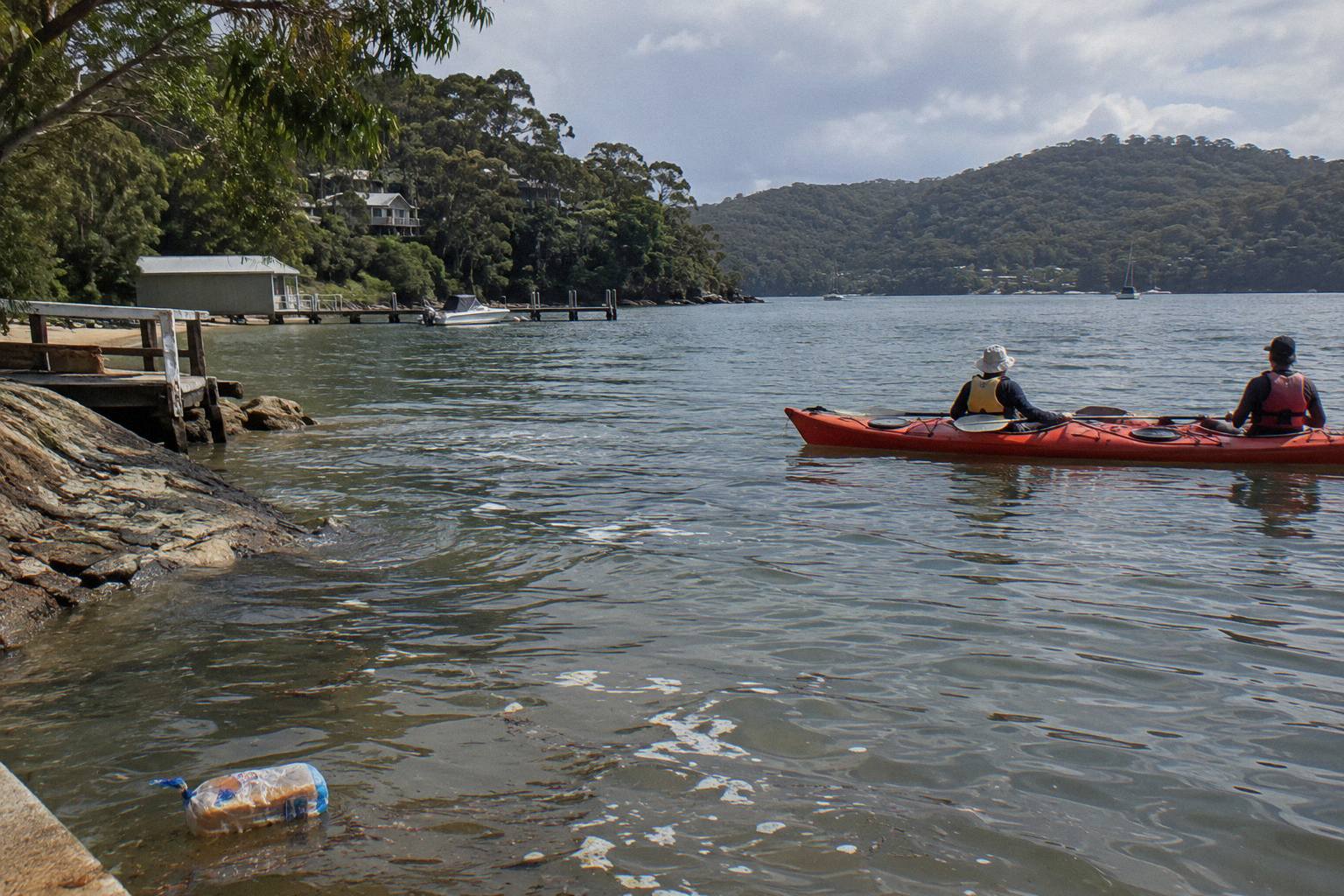
What the sport literature does usefully tell a casual paddler is where the weak points are. The shoulder is the joint most at risk in a capsize or an awkward brace, because the arm acts as a long lever on a shallow socket. The lower back takes the strain of poor posture in the seat and of twisting to power each stroke instead of rotating from the torso. Both risks are technique and equipment problems, which is exactly what a decent tour briefing addresses before you launch. The American Canoe Association's beginner guidance frames the recreational version of the sport as a calm-water activity, and its beginner guide is a fair starting point if you want the full primer.
The practical takeaway for someone booking a tour: the most common kayaking injuries in the research are overuse injuries of athletes, while the injuries a tour paddler plausibly faces are the small ones, a strained shoulder from a badly set grip, a tweaked back from slouching in the seat, or a wrist aggravated by a death-grip on the paddle. All three are preventable with a two-minute adjustment and a reminder to relax your hands.
It helps to see the two worlds side by side. The table below sets the competitive-paddling picture against the guided-tour picture, mechanism by mechanism, so the difference is visible rather than asserted.
| Injury factor | Competitive paddlers (the studied group) | Guided-tour paddlers |
|---|---|---|
| Training volume | Many hours weekly, year round | 1.5 to 4 hours, once |
| Shoulder load | Repeated powerful rotation under load | Light, guided strokes at a relaxed pace |
| Lower-back load | Long hours in a fixed flexed position | Short duration, posture corrected at briefing |
| Capsize exposure | Practised in training conditions | Stable tour boats, guide runs any rescue |
| Supervision | Coach during structured training | Guide on the water for the whole trip |
| Injury pattern reported | Shoulder and lower-back overuse problems | No study exists; plausibly minor strains only |
Do Guided Tour Paddlers Face The Same Risks?
Not in the same way, and the evidence gap runs both directions. Guided-tour paddlers do far less paddling than the athletes in the injury studies, so overuse injuries are largely off the table, but no study counts injuries on guided flat-water tours either. What can be stated is structural: tours use stable boats, run briefings, and put a guide on the water whose job includes watching for tired paddlers.
Sydney by Kayak, which operates from the Lavender Bay boat ramp at 1 Railway Avenue, says beginners are welcome and asks paddlers to complete a questionnaire at booking so guides know who is new. It also states that guides can tow tired paddlers, which removes the pressure to push through fatigue, the exact moment recreational shoulders get hurt. Its requirements are specific to its own operation: single kayaks only, a weight limit of 110 kg (240 lb), and under 15s accompanied by a parent or guardian aged 18 or over. Those are its rules, not a general harbour rule.
Sydney Harbour Kayaks, the operator behind the Middle Harbour tours covered on Sydney Harbour Kayak Tours, takes a different hardware approach: its 4-hour Middle Harbour Eco Paddle uses stable double sea kayaks, needs no experience, and begins with a 20-minute paddling and safety briefing covering technique before anyone gets wet. A double spreads the stability and halves the effort per person, which is why tour fleets favour them for newcomers. The company also runs through the craft and safety basics on its own website.
There is a second layer of difference worth naming: environment. The competitive studies include training on open water, surf and racing courses. A guided Middle Harbour tour by contrast runs on sheltered, enclosed water with no ferry wake to fight and no wind funnel to punch through, or at least none that the guide does not route around, since the Eco Tour's route follows tides and weather and cannot be guaranteed. Calm water does not remove risk, but it removes the chaotic loads that turn a small technique error into a sudden one.
If a cautious shoulder or back is the reason you are reading this far, the operator comparison above is the practical place to start.
None of this makes injury impossible. What it changes is the type of risk. On a guided tour the plausible problems are minor and preventable; the overuse pattern that dominates the competitive literature needs training volume a two-hour tour simply does not contain. If you are recovering from a shoulder dislocation or managing a disc problem, the honest move is a call to the operator before booking and a word with your doctor, because no tour company screens for medical history beyond its own age and weight rules.
What Actually Helps: Briefing, Boat Choice And Pacing
Three things carry most of the practical protection on a tour: a proper briefing before launch, a boat matched to your stability needs, and pacing that lets you stop or be towed rather than push through fatigue. All three are standard on guided Sydney paddles, and each one attacks one of the mechanisms behind the injuries the sports literature reports: loaded poor technique, unstable platforms, and exhaustion-driven bad form.
The briefing is where technique errors get corrected before they become strains. Torso rotation, the habit of turning the trunk rather than pulling with the arms, is the first thing taught, and it is also the first of the three golden rules of recreational kayaking published on Paddling.com by Ken Whiting, alongside choosing an appropriate location and having a plan if you capsize. It is teaching from one instruction site rather than an official standard, but it matches what tour guides demonstrate on the beach.
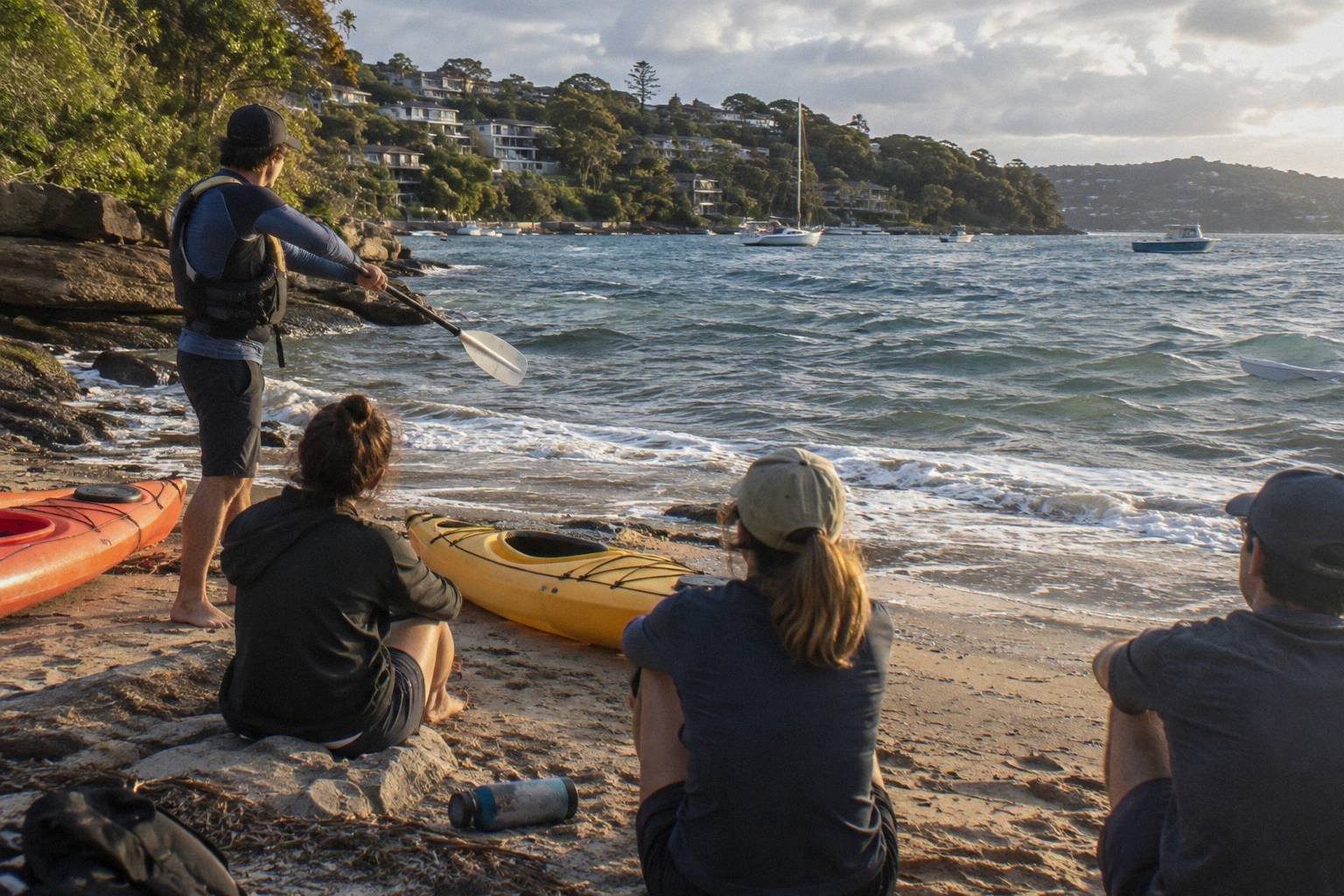
Boat choice does quiet work. The American Canoe Association describes sit-on-top kayaks as suitable entry-level craft on calm, protected water, with easy re-entry and no flooding on capsize, and wider sit-on-top singles and doubles give good initial stability. Sydney Harbour Kayaks' doubles fit the same logic: two hulls' worth of stability under one roof, with a partner who can ease off while you rest. Pacing is the third leg. Fatigue is what turns adequate technique into shoulder-wrenching technique, and a guide towing a tired paddler is a documented practice at Sydney by Kayak, not a favour you have to ask for.
| Protection factor | How a guided tour provides it | What problem it prevents |
|---|---|---|
| Pre-launch briefing | Sydney Harbour Kayaks runs a 20-minute paddling and safety briefing before its Middle Harbour Eco Tour | Technique-driven shoulder and wrist strain |
| Stable craft | Stable double sea kayaks on the Eco Tour; Sydney by Kayak uses singles with guides watching the group | Capsize and balance-related incidents |
| Pacing support | Guides can tow tired paddlers at Sydney by Kayak | Fatigue-driven poor form late in the paddle |
| Beginner screening | Paddler questionnaire at booking (Sydney by Kayak); no experience needed on the Eco Tour | Mismatch between paddler and trip difficulty |
| Lifejackets | Operators issue approved lifejackets; NSW requires them carried, worn alone or at night | Worst-case outcomes if something goes wrong |
The lifejacket line is worth its own sentence. NSW's official rule is that every kayak must carry an approved lifejacket for each person on board, that you must wear one when paddling alone or between sunset and sunrise on enclosed waters such as Sydney Harbour, and that wearing one at all times is recommended. Tour operators issue them as standard. A lifejacket prevents no shoulder injury, but it is the piece of equipment that decides how minor an incident stays, and it is why the Royal Life Saving Society Australia stresses them even for strong swimmers.
For paddlers who want the guide's attention more concentrated, the private option in Middle Harbour runs with a dedicated guide for your group.
What About Capsizing And Falling Out?
No published statistic exists for how often capsizes or falls happen on guided flat-water kayak tours, so any reassuring number would be invented. What is documented is the response: sit-on-top kayaks do not flood and let you climb back on, sit-in kayaks require a wet exit, a guide attends a capsized paddler and runs the rescue, and width and type of kayak, wind, wake, experience, and instruction all matter.
A wet exit in a sit-in kayak means releasing the spray skirt while upside down and pushing clear of the cockpit, a skill taught in courses and one reason tour fleets lean towards more forgiving hulls. The capsize question connects to the injury question through the shoulder: the moment of a capsize or a hasty brace is when the arm takes the largest loads. Training your reflex to keep the elbow low and the paddle shaft in front of your body, rather than reaching high and wide, is the single most protective habit a newcomer can be taught, and it belongs in any decent briefing.
If the capsize worry is your real question rather than the injury one, the companion piece on how likely it is that a kayak flips takes it in full, and the run-through of what happens if you fall out on Sydney Harbour covers the rescue sequence. The short version for this page: falling in is a nuisance event on a guided flat-water tour, not an emergency, and the injury most likely to come out of it is a bruise or a scraped hand, not the overuse damage the competitive studies describe.
It also matters that the two hull types fail differently. A sit-on-top that tips leaves you in the water beside a floating, unflooded boat you can climb back onto, with nothing to untangle. A sit-in kayak that tips leaves you inverted in a cockpit with a skirt to release, which is why courses teach the wet exit separately and why guides carry rescue gear for the tour fleet. Neither outcome is dangerous on sheltered water with a guide present, but they are not the same event, and the distinction explains a lot about how tour fleets are chosen.
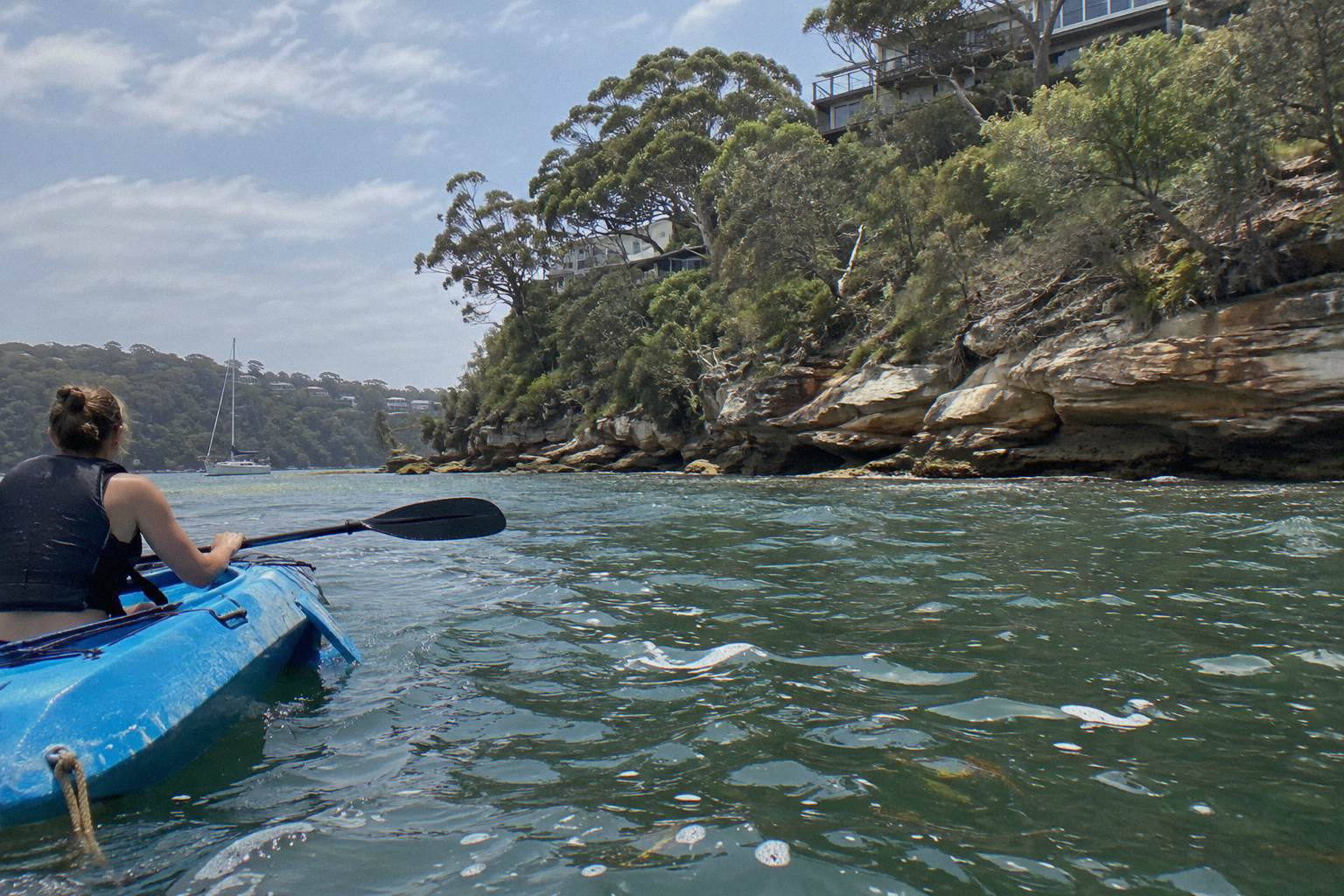
Common Mistakes When Preparing For A First Kayak Tour
The mistakes that matter are unglamorous: skipping the briefing because it looks optional, gripping the paddle too tightly, slouching in the seat, dressing for the air and ignoring splash, and hiding an existing injury from the operator. Each one maps onto a documented risk, technique strain, back load, discomfort-driven bad form, and they are all avoidable in the ten minutes before launch. None of them requires strength or experience to fix.
The grip mistake deserves emphasis because nobody corrects it unprompted. A white-knuckle hold transmits every paddle wobble into the forearm and shoulder, and it is the fastest route to the sore wrists newcomers complain about the next day. The seat mistake is quieter: sitting slumped with the back unsupported loads the lumbar spine for the full duration, which is precisely the position the competitive literature links to lower-back complaints. Sit tall, rest against the backrest, and adjust the footrests so your legs brace without locking.
The honesty mistake is the one with real consequences. Operators ask about experience, not medical history, and their questionnaires, where they exist, are about paddling skill. If a past shoulder dislocation or a back condition is part of your picture, the operator can often adapt, a shorter tour, a double kayak, a calmer route, but only if you tell them. Ask your doctor too; that is not a formality to skip for the sake of a booking. The planning basics, from footwear to why closed-in shoes matter on oyster-shell beaches, are covered in the what to wear kayaking guide, and the broader safety picture sits in the Sydney Harbour kayak safety guide.
One more mistake belongs on the list because it works in the opposite direction: overestimating the difficulty and arriving anxious, shoulders already up around the ears. Tension paddles badly. The guidance for beginners is consistent that calm, protected water with instruction is an entry-level setting, and the tours above are built around exactly that. If you can sit upright and hold a paddle, you meet the physical baseline; the rest is what the briefing is for.
For an early start with fewer boats about, the sunrise option in Middle Harbour keeps the same sheltered-water logic.
“Amazing morning!! Do this trip if you are in Sydney :))) it was so worth the money and we saw a gorgeous sunrise!!”
The Bottom Line For A Cautious Booker
The evidence supports a calm conclusion: the injuries that dominate kayaking research belong to athletes, the shoulder is the joint most implicated, with the lower back close behind, and the mechanisms are training volume and loaded technique. A guided tour supplies neither. What a tour paddler realistically faces are small, predictable problems addressed by exactly the things tours already do: a briefing, a stable boat, a guide, a lifejacket and the option to be towed rather than push through fatigue.
Book with an operator that states those things plainly, mention any existing injury to both the operator and your doctor, and relax your grip on the paddle. The Middle Harbour Eco Tour is the pick that puts every protective factor in one package: a 20-minute briefing, stable double sea kayaks, no experience needed, a qualified guide on the water, and morning tea on a beach partway through so the pacing has a natural break. It is a four-hour tour, so if even that sounds long for a first paddle, a shorter guided option builds the same habits in less time.
If Middle Harbour's sheltered paddling suits that plan, these are the guided options to compare.
Common Questions About Kayaking Injuries
What Is The Most Common Injury In Kayaking?
Peer-reviewed studies of competitive paddlers most often report shoulder and lower-back problems. Those findings come from athletes with heavy training volumes, not from guided tours, and no broad injury statistic exists for recreational kayaking.
Are Guided Kayak Tours Dangerous For Beginners?
Guided tours are structured for beginners: stable boats, a safety briefing before launch, a guide on the water, and issued lifejackets. Sydney by Kayak welcomes beginners and its guides can tow tired paddlers; Sydney Harbour Kayaks' Middle Harbour Eco Tour needs no experience and runs a 20-minute briefing.
How Do I Protect My Shoulders While Kayaking?
Use torso rotation rather than arm power, keep your elbow low and the paddle in front of your body, and relax your grip. These are standard briefing points and echo the golden rules taught in recreational kayaking instruction.
What Happens If A Kayak Capsizes On A Tour?
On a sit-on-top you climb back on; in a sit-in kayak a wet exit means releasing the spray skirt and pushing clear. On a guided tour the guide attends a capsized paddler and runs the rescue. No published statistic exists for capsize frequency on guided flat-water tours.
Should I Kayak With An Old Shoulder Or Back Injury?
Ask your doctor first, and tell the operator when you book. Tour companies screen for age, weight and experience rather than medical history, so an existing injury is yours to disclose; many can adapt with a double kayak or a shorter, calmer route.
Do I Need To Be A Strong Swimmer To Take A Kayak Tour?
Australian guidance does not set a must-swim rule, and Australian safety bodies stress wearing a lifejacket because even competent swimmers can need them. Operators issue approved lifejackets, which NSW requires to be carried on every kayak and worn when paddling alone or at night.