How Likely Is It To Flip A Kayak?
An honest look at how likely a kayak is to flip, what drives capsize risk, and what guided Sydney Harbour tours do to keep paddlers upright.
In short: no official statistic exists for how often a guided flat-water kayak tour ends in a capsize, and any site that quotes you a percentage for Sydney Harbour is inventing it. What paddling bodies do publish is a list of factors: the width and type of kayak, wind, wake from other boats, and the paddler's experience and instruction. Guided harbour tours stack the deck against capsizing, with stable doubles, safety briefings, guides on the water, issued lifejackets and cancellations when the wind gets strong.
If the wider question is whether a guided paddle on the harbour is realistic for a nervous first-timer, start with kayaking on Sydney Harbour as a beginner, then come back here for the capsize question specifically.
| Quick fact | Answer |
|---|---|
| Is there a capsize rate for guided tours? | No published statistic exists |
| What drives capsize risk? | Kayak type and width, wind, wake, experience, instruction |
| Does a tour use stable kayaks? | Many use wide doubles or stable singles, per operator |
| Are lifejackets issued? | Yes on the tours covered here, per each operator |
| Do tours run in strong wind? | Sydney Harbour Kayaks cancels for strong winds and storms |
| Can you re-enter without swimming skill? | Sit-on-top re-entry needs no swim, per ACA guidance |
No authority publishes a capsize rate for guided flat-water tours, so any percentage you see on a blog is invented. What bodies like the American Canoe Association do define is the teaching envelope: calm, protected water, wind under 10 knots, waves under one foot, current under one knot. Inside those limits, on a stable kayak with a guide, flipping is the exception rather than the expectation.
That answer frustrates people who want a number, so it helps to look at where the risk actually lives. Paddling instruction treats capsize as a possibility you plan for, not a probability you calculate. The third of the three golden rules of recreational kayaking as published on Paddling.com is exactly that: have a plan for the case where you end up in the water. The rule exists precisely because a capsize is rare but never impossible, on any water, for any paddler.
“Such a fantastic experience. Extremely helpful and knowledgeable guides. Very well organised. Such good value for money, experienced an amazing sunrise, photos were incredible and got to see the main Syndey sites.”
The first two golden rules matter just as much to the likelihood question. Using torso rotation rather than arm paddling keeps your balance centred over the boat, and choosing an appropriate location does more to cut your capsize risk than any piece of gear. A sheltered harbour bay at dawn is a different activity from an open channel with a running breeze, even in the same kayak. The American Canoe Association's beginner guidance describes sit-on-top kayaks as suitable entry-level craft on calm, protected water, with easy re-entry and no flooding on capsize, which is why so many commercial fleets use them.
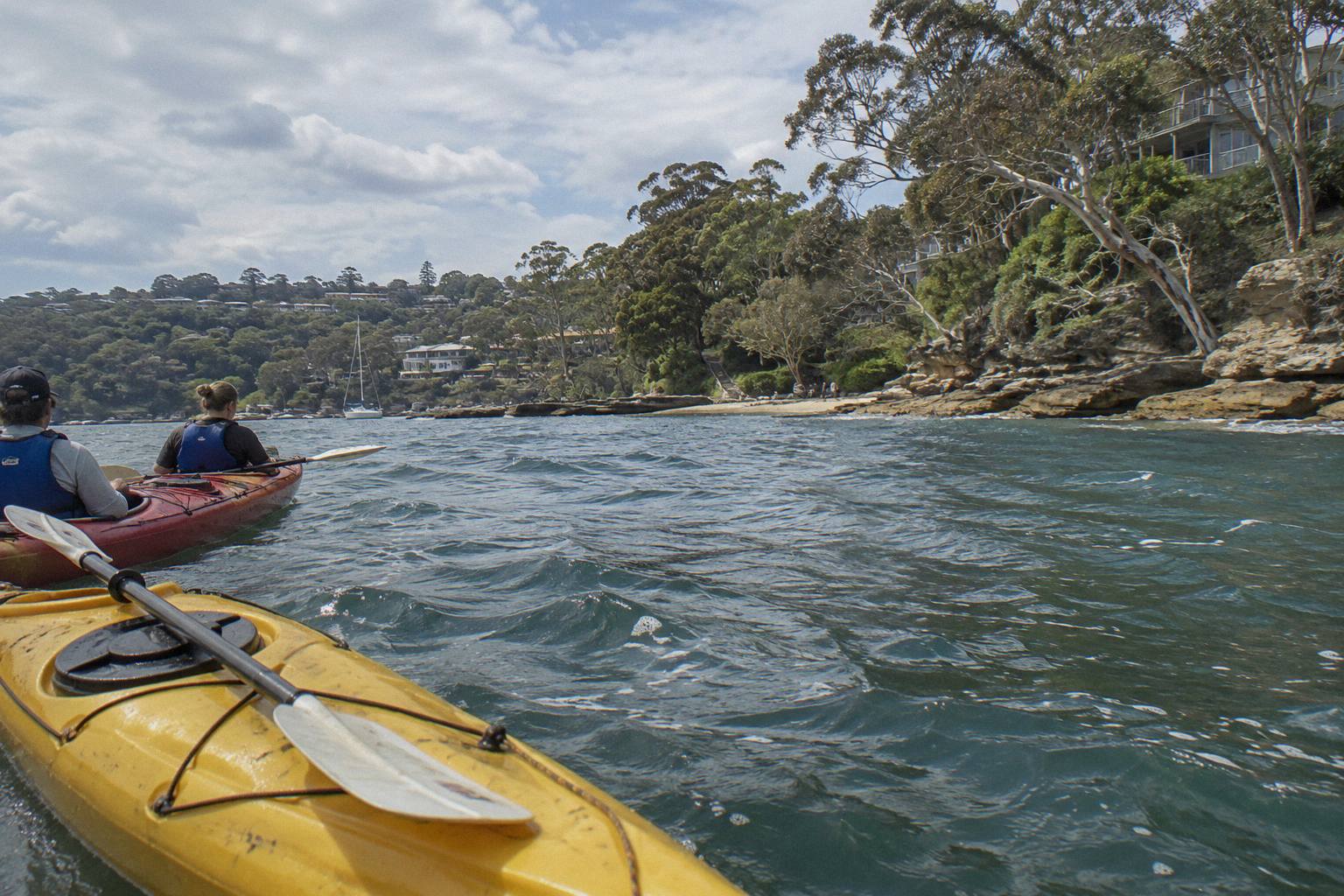
Where does that leave a nervous reader considering a guided tour? In a good position. A tour puts you in the right location, in a boat chosen for stability, with a briefing before you launch and a guide whose job includes watching for the conditions that flip people. The tours covered here run in exactly the calm-water envelope instructors design for. The 3-Hour Sunrise Kayak, Breakfast Included tour from Lavender Bay caps its group at 12 paddlers, runs 3 hours and is rated 5.0 across 365 reviews; the price depends on date and group and sits on the booking page, and free cancellation applies up to 24 hours before the start.
For comparison, two other sunrise paddles suit the same calm-water logic: Sunrise Kayak From Rushcutters Bay, rated 4.9 across 2,776 reviews, and Sunrise Paddle Under Harbour Bridge, rated 5.0 across 998 reviews.
What Actually Makes A Kayak Capsize?
Capsizes trace back to four sources: the kayak itself, the water, other vessels, and the paddler. A narrow, tippy boat caught in a gust with a ferry wake rolling through will test anyone, while a wide double in a sheltered bay barely tests anyone, and trained paddlers brace and recover where untrained ones freeze and tip.
Kayak type first. Wider sit-on-top singles and doubles give good initial stability, which is the boat's resistance to tipping when you shift your weight. That is the ACA's stated reason for putting beginners on sit-on-tops. Narrow sit-in sea kayaks trade some of that stability for speed and tracking, which is why operators match the boat to the paddler rather than the other way round. Sydney Harbour Kayaks, for example, runs its Middle Harbour Eco Tour in stable double sea kayaks and says no experience is needed, after a 20-minute paddling and safety briefing.
| Factor | Raises risk | Lowers risk |
|---|---|---|
| Kayak type | Narrow, tippy craft | Wide sit-on-tops, stable doubles |
| Wind | Gusty or strong breeze | Calm, sheltered water |
| Wake | Ferry and powerboat wash | Water away from busy channels |
| Experience | First time, no briefing | Briefing, guide, prior instruction |
| Loading | Heavy or unbalanced gear | Operator-set loading |
| Plan | No capsize plan | Third golden rule: have a plan |
Water and traffic next. Sydney Harbour is what NSW's own boating rules call an extremely busy waterway, and the official rules for boating on Sydney Harbour note that paddlecraft sit low and are hard to see. Wake from a passing ferry can rock a kayak, and NSW guidance tells paddlers to take extra care near powered vessels and when crossing channels, crossing behind rather than in front. A guided tour handles that judgement for you: the guide picks the route, the timing and the crossings, which is a large part of why tour capsizes are the rare case.
Finally the paddler. Reaching out over the side, leaning back, or jerking the paddle all move your centre of gravity, and the torso-rotation technique in the first golden rule exists to keep your weight centred. None of this requires athleticism. It requires a demonstration and a few minutes of practice, which is what a briefing gives you. For more on the mechanics, see how hard kayaking is for beginners, which walks through the same technique points in detail.
If you are already weighing a specific booking, one question settles most of the risk: does the operator use stable doubles or sit-on-tops, brief you before launch, and cancel in strong wind? On the tours covered here, the answers are yes, yes and yes.
Do Sit-On-Top Kayaks Flip More Easily Than Sit-In Kayaks?
No, and for beginners the difference runs the other way: sit-on-tops are the wider, more stable entry-level craft in American Canoe Association guidance. A sit-in kayak can feel steadier once moving, but its capsize is a bigger event, and when a sit-on-top does flip it does not flood, with no cockpit to drain and no spray skirt to release.
That re-entry difference is the practical reason tour fleets lean sit-on-top. The ACA's beginner material describes sit-on-top re-entry as easy: you climb back on from the water, no pump, no skirt, no assisted rescue required. A sit-in kayak, by contrast, needs either a roll, an assisted rescue or a wet exit followed by emptying the boat, which is a real skill and one reason intermediate tours name themselves as such. Sydney by Kayak's Bridge Tour, for instance, is described by the operator as for intermediate paddlers, while its Harbour Highlights tour is listed as beginner-friendly.
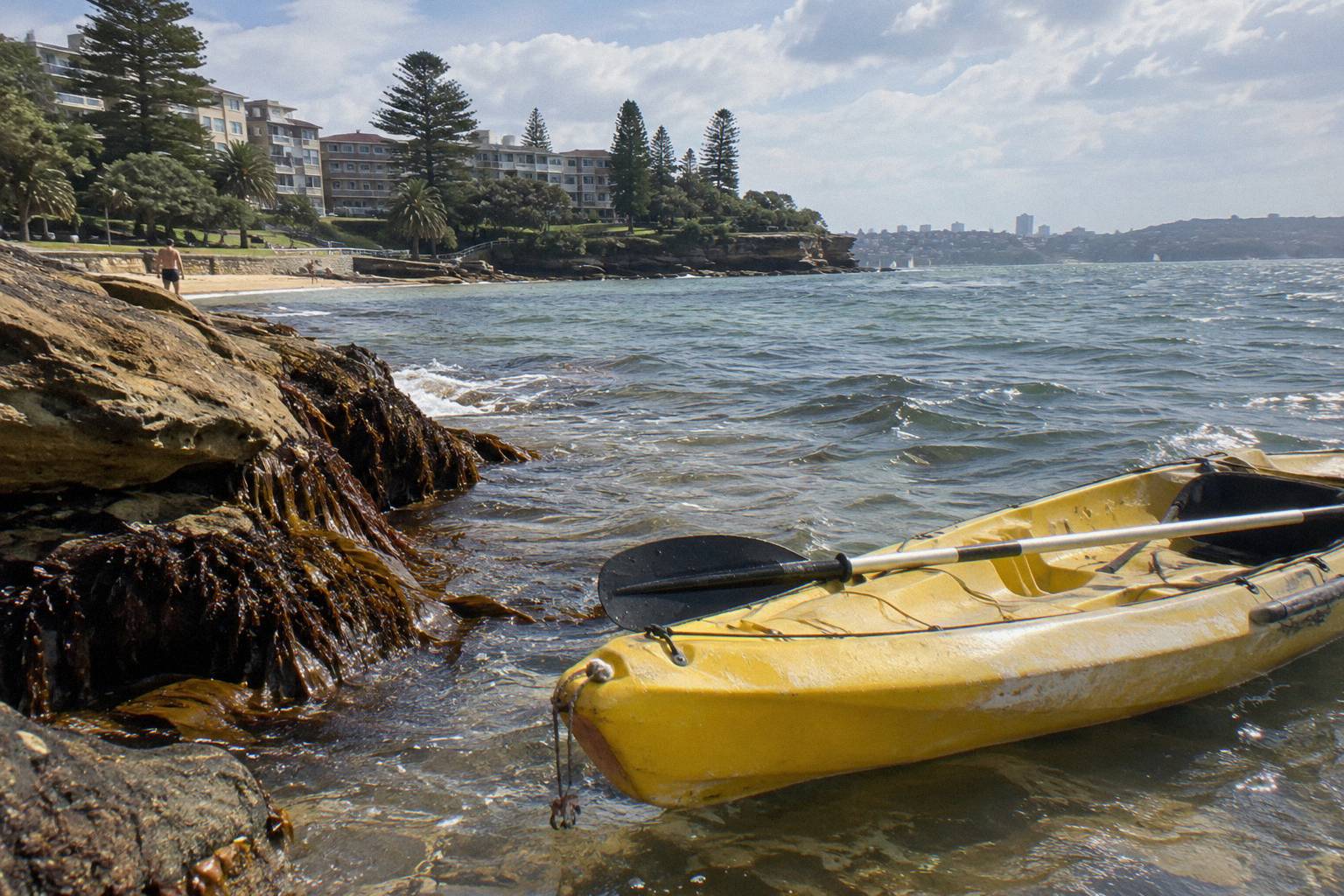
Doubles add another layer of forgiveness. Two paddlers in one wide hull create a platform that shrugs off small weight shifts, and an operator can pair a nervous guest with a stronger one or with a guide. Sydney Harbour Kayaks uses stable double sea kayaks on its 4-hour Middle Harbour Eco Tour precisely for that stability, and the tour needs no prior experience. Neither style is capsize-proof, and no honest description claims otherwise. The point is that the craft, the location and the guide all push the same risk in the same direction, down.
One caution worth naming: the folk rules that circulate online do not substitute for any of this. The so-called 120 rule, air plus water temperature in Fahrenheit above 120 meaning no immersion protection is needed, is repeated on commercial blogs, criticised as lacking scientific basis, and stated by no official body. Ignore it. Likewise the 50/90 rule is a tidal-stream estimate used in sea-kayak navigation, current at roughly 50 percent of maximum after the first hour and 90 percent after the second, and has nothing to do with capsize safety, a confusion explained properly in what the 50/90 rule actually means in sea kayaking.
What Do Sydney Tour Operators Do To Reduce Capsize Risk?
Every element of a guided tour exists to keep you upright: stable boats, a pre-launch briefing, a guide on the water watching conditions, issued lifejackets, group-size caps, and cancellation when the weather turns. Sydney Harbour Kayaks states that its tours proceed in light rain but are cancelled for strong winds, thunderstorms or lightning, dangerous water and poor visibility, which removes the exact conditions that flip kayaks. That cancellation policy is the single biggest safety feature of any tour.
Start with the briefing. Sydney Harbour Kayaks runs a 20-minute paddling and safety briefing before its Eco Tour, covering technique and rescue procedure before anyone touches the water. Sydney by Kayak sends beginners a paddler questionnaire at booking and says its guides can tow tired paddlers, and it caps what you wear on your feet with a practical rule: water shoes, because oyster shells line the launch areas. Briefings are where the golden rules get compressed into ten minutes of instruction that would take a solo beginner months to accumulate the hard way.
| Operator safeguard | What it does | Who states it |
|---|---|---|
| Stable double sea kayaks | Raises initial stability | Sydney Harbour Kayaks, Eco Tour |
| 20-minute safety briefing | Technique and rescue plan | Sydney Harbour Kayaks, Eco Tour |
| Group cap of 12 or fewer | Guide can watch everyone | 3-Hour Sunrise Kayak tour, group max 12 |
| Weather cancellation | Removes wind and storm risk | Sydney Harbour Kayaks policy page |
| Lifejackets issued | Buoyancy if a capsize happens | Sydney Harbour Kayaks rentals and tours |
| Guide can tow tired paddlers | Fatigue does not become panic | Sydney by Kayak FAQ |
Group size is quieter but real. A guide responsible for five or twelve paddlers can watch each hull; a guide responsible for thirty cannot. The tours covered here cap groups at numbers a single guide can supervise, from the Sunset Kayak, Free Photos tour at nine paddlers to the Small-Group Opera And Bridge Paddle at five.
For a worked example, Sunrise Kayak From Rushcutters Bay runs 2 hours from Rushcutters Bay with a group max of 12, is rated 4.9 across 2,776 reviews, allows free cancellation up to 24 hours before the start, and sets a minimum age of 12. Its price is on the booking page rather than quoted here, because it depends on date and group.
Note that cancellation terms belong to each operator and each booking. Sydney Harbour Kayaks' direct-booking terms are generous when the operator itself cancels: a transfer, a three-year credit or a full refund with no admin fee. The booking-page terms for a specific tour may differ, so read the terms of the exact booking you make. When weather cancels a paddle, the practical aftermath is covered in what happens when a harbour tour is cancelled for weather.
“Excellent experience we had for our first time kayaking, guides were great.”
Do You Need To Swim To Kayak On Sydney Harbour?
No, you don't need to swim to kayak on Sydney Harbour: no Australian authority sets a must-swim rule, and Royal Life Saving Society Australia and NSW urge lifejackets, since even competent swimmers can need them. NSW requires every vessel to carry enough approved lifejackets for all aboard; in enclosed waters such as Sydney Harbour, a Level 50S or above must be worn when paddling alone or at night, and tour operators issue them.
That wording comes straight from NSW's official lifejacket rules, and it reframes the swimming question. The question is not whether you could reach shore unaided; it is whether you would float while help arrives, and a lifejacket answers that for swimmers and non-swimmers alike. A guided tour answers the rest: you are with a group, near a guide, in water the operator has chosen. The full reasoning, including what Royal Life Saving says, is in whether you need to swim to kayak on Sydney Harbour.
A lifejacket also changes what a capsize is. Without one, a capsize is an emergency. With one, it is an unplanned swim followed by a re-entry, which is why Royal Life Saving's lifejacket guidance treats the jacket as the primary control, ahead of swimming ability. Sydney Harbour Kayaks includes an approved lifejacket in every rental and says children always wear one. On the roster tours, lifejackets are the operator's standard equipment, and every tour here allows free cancellation up to 24 hours before the start, so nerves alone never lock you in.
“It was our first time kayaking and we thoroughly enjoyed ourselves. Thank you Shannon and your lovely assistant (Sorry, we forgot her name)”
What Happens If A Kayak Does Flip On A Guided Tour?
If a kayak flips on a guided tour, the guide attends to you immediately and runs the rescue, so you are never handling a capsize alone. In a sit-on-top, you surface, hang on to the boat and paddle, and climb back on, a move the American Canoe Association describes as easy re-entry; in a sit-in kayak, you release the spray skirt, push clear of the cockpit, and the boat then needs emptying.
The mechanics matter because they demystify the event. A sit-on-top has no cockpit to flood, so the boat stays usable and the re-entry is a climb, not a procedure. A sit-in kayak swamps, which is why instruction for those boats includes the wet exit as a core skill: pull the skirt's grab loop, push off the cockpit rim, surface beside the hull. Neither is comfortable, both are survivable and teachable, and REI and ACA guidance both treat them as standard beginner curriculum rather than emergency medicine.
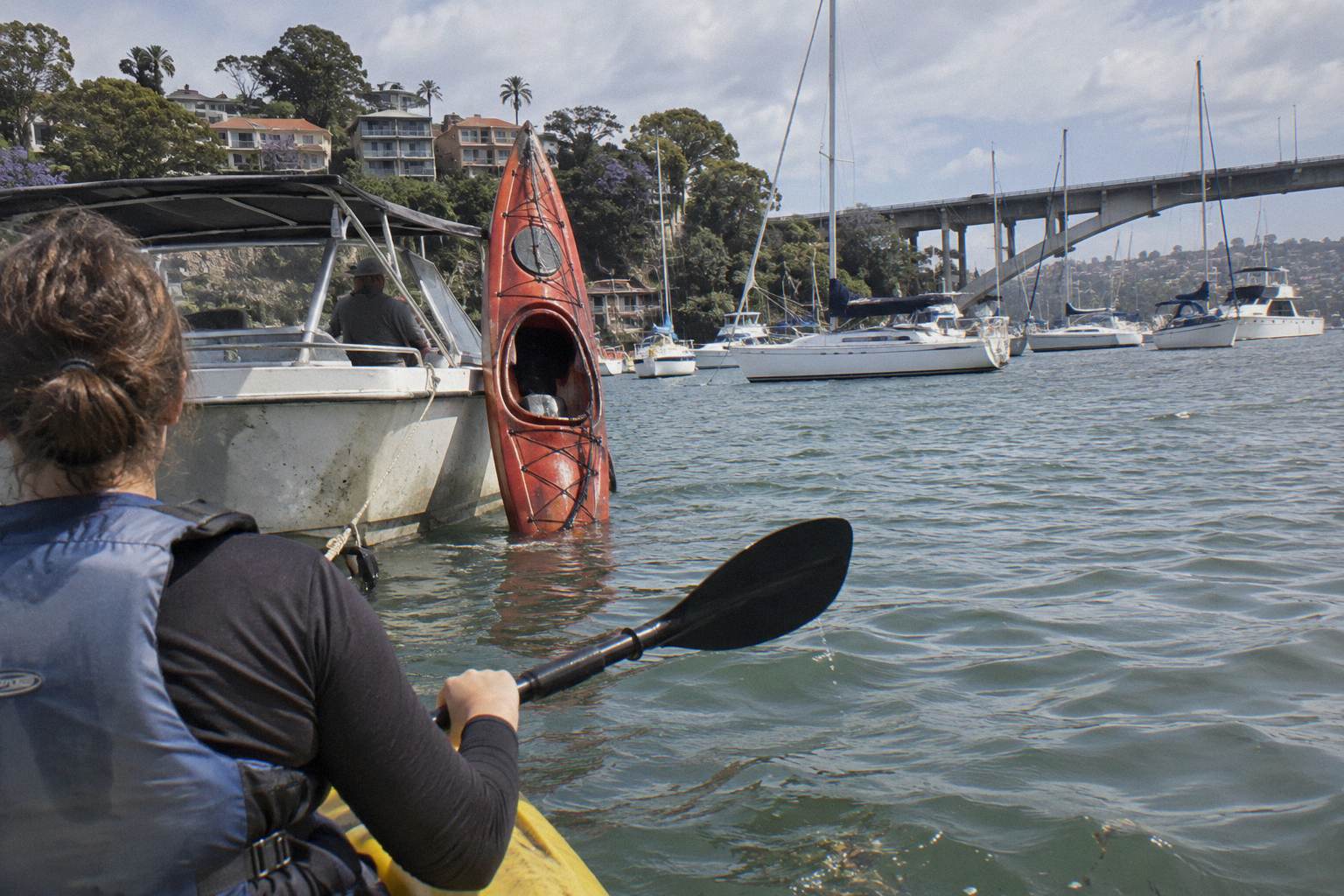
What actually happens on the day is usually smaller than the fear. Paddle drip and splash get you damp even on calm water, more so on a sit-on-top, per the ACA beginner guide, and that ordinary wetness is worth expecting before it is worth fearing, as whether you get wet on a harbour tour explains. A full capsize on a guided flat-water tour is the uncommon version of an already gentle story, and the sequence afterward is rehearsed, not improvised.
The injury picture supports the same conclusion. Peer-reviewed studies of paddling injuries, drawn from elite and competitive paddlers in journals such as the Journal of Science and Medicine in Sport, most often report shoulder and lower-back problems from heavy training volumes. Those are overuse injuries in athletes, not capsize injuries in tourists, and no broad statistic exists for recreational kayaking. If you want the aftermath walkthrough in full, read what happens if you fall out of a kayak on Sydney Harbour. For a plain-English look at what those findings mean for a casual paddler, the guide to the most common injuries in kayaking separates overuse strains from genuine on-water risks.
For a tour that pairs the calm-water formula with a small group, Sunrise Paddle Under Harbour Bridge runs 2 hours from Milsons Park at Kirribilli, is rated 5.0 across 998 reviews, sets a minimum age of 12, and allows free cancellation up to 24 hours before the start. Like every tour here, its price sits on the booking page.
What Trips People Up About Capsizing
Three misconceptions do the damage: that a hidden capsize percentage exists, though no statistic for guided flat-water tours has ever been published; that swimming ability keeps you safe, though NSW rules and Royal Life Saving both give that job to the lifejacket; and that folk rules like the 120 rule carry scientific weight, though commercial blogs are their only source. Let all three go and the real risk picture, stable boat, calm water, briefed paddler, guide, jacket, reads clearly.
The fourth trap is booking against the weather. People fix a date, then hope. The operators that cancel for strong wind are doing you a favour, and Sydney Harbour Kayaks is explicit that its tours are cancelled for strong winds, thunderstorms or lightning, dangerous water and poor visibility. Build one spare morning into a trip and a weather cancellation becomes a reschedule rather than a disappointment.
“Amazing morning!! Do this trip if you are in Sydney :))) it was so worth the money and we saw a gorgeous sunrise!!”
The fifth is gear denial: thongs at an oyster-shell launch, no change of clothes, phone in a pocket. Operators state the footwear rule for a reason, and dry storage is offered on tours that have it. The preparation side is covered in what to wear kayaking on Sydney Harbour, and the timing side, which mornings suit calm water and what the sunrise clock does through the year, is in the best time to kayak Sydney Harbour.
Finally, do not let the rare worst case crowd out the common one. The likeliest bad outcome on a guided harbour tour is being a bit damp and a bit tired. The second likeliest is a weather cancellation. The flip itself sits well behind both, and everything a tour does, from the double hull to the group cap to the guide's eyes on the sky, is arranged to keep it there. The site behind these pages, Sydney Harbour Kayak Tours, covers the harbour's launch points, tour types and safety notes across its guides if you want to go deeper before booking.
Common Questions About Flipping A Kayak
How Likely Is It To Flip A Kayak?
No published statistic exists, for Sydney Harbour or anywhere else, so any percentage you read is invented. The factors that drive capsize risk are known: kayak type and width, wind, wake, and the paddler's experience and instruction. Guided tours reduce each one with stable boats, briefings, guides and weather cancellations.
Do Double Kayaks Flip Less Than Singles?
Wide doubles give good initial stability, and pairing a nervous paddler with a steadier one spreads the balance. Sydney Harbour Kayaks runs its Middle Harbour Eco Tour in stable double sea kayaks and states no experience is needed. No kayak of any kind is capsize-proof.
Can You Get Back In A Kayak If It Flips?
Yes. A sit-on-top lets you climb back on from the water, which the American Canoe Association describes as easy re-entry. A sit-in kayak needs a wet exit, releasing the spray skirt upside down and pushing clear, after which the boat must be emptied. On a guided tour the guide attends a capsized paddler and runs the rescue.
Do Tour Operators Cancel Kayaking In Strong Wind?
Sydney Harbour Kayaks states its tours proceed in light rain and are cancelled for strong winds, thunderstorms or lightning, dangerous water and poor visibility. Each operator sets its own terms, so check the terms of the exact booking you make.
Is The 120 Rule A Real Kayaking Safety Rule?
No. The 120 rule, air plus water temperature in Fahrenheit above 120 meaning no immersion protection needed, is repeated on commercial blogs, criticised as lacking scientific basis, and stated by no official body. It should not guide any decision.
Do You Need To Be Able To Swim If A Kayak Flips?
Australian guidance sets no must-swim rule. Royal Life Saving Society Australia and NSW both say lifejackets should be worn because even competent swimmers can need them, and NSW requires a Level 50S or above lifejacket to be worn in enclosed waters when paddling alone or at night. Tour operators issue lifejackets.