What Is The 50-90 Rule In Sea Kayaking?
A plain explanation of the 50-90 rule of tidal streams in sea kayaking, what it estimates, its limits, the 120 rule myth, and how tides shape guided tours on Sydney Harbour.
The 50-90 rule sounds like one of those pieces of paddling lore that gets passed around launch sites with total confidence and very little explanation. Someone mentions it, someone else nods, and half the group is quietly wondering whether it is about tides, temperature or how far you should push off from shore. It is about tides, specifically tidal streams, and it is a genuine navigation teaching with a real use in trip planning.
In short: the 50-90 rule estimates how fast a tidal stream runs at each hour of a roughly six-hour tidal cycle. Slack water is near zero speed, the stream reaches about 50 percent of its maximum after one hour, about 90 percent after two hours, and 100 percent at mid-tide around the third hour, then the sequence runs back down. It is a planning tool for crossing currents, not a safety rule and not a temperature guideline, and it sits alongside chart tidal diamonds rather than replacing them.
This page explains the rule, shows the full hour-by-hour table, sets out what it is good for and where it breaks down, and untangles it from a separate piece of internet folklore, the so-called 120 rule. It also connects the idea back to paddling in Sydney, where one operator states outright that its Middle Harbour route follows tides and weather, which is the practical reason a recreational paddler might care about any of this. If the reading sends you toward booking a paddle instead, Sydney Harbour Kayak Tours keeps the sunset and night options side by side.
| Quick fact | Detail |
|---|---|
| What it is | An estimate of tidal-stream speed by hour across a tidal cycle |
| Core numbers | 0, 50, 90, 100 percent of maximum stream at hours zero to three, reversing thereafter |
| What it is for | Judging when currents are weakest or strongest for crossings and route timing |
| What it is not | Not a water-temperature or immersion-safety rule |
| Where it is taught | Coastal navigation instruction, summarized by tide reference sites |
| Sydney relevance | Sydney Harbour Kayaks states its Middle Harbour routes follow tides and weather |
The 50-90 rule is a rule of thumb for estimating tidal stream speed during a tidal cycle: the current runs at roughly zero at slack water, about 50 percent of its maximum one hour into the flow, about 90 percent after two hours, and 100 percent at around the third hour at mid-tide, before easing back down through the same steps. Sea-kayak navigators use it to picture how a current will build and fade between low and high water, so they can time a crossing or a channel passage for the hours when the stream is weakest. It is taught in coastal navigation circles and summarized by tide reference resources such as TideTime's explanation of the 50-90 rule, which presents the same fractions.
The logic underneath is simple. Tidal streams do not switch on and off like a tap. They accelerate from slack water to their peak speed over roughly three hours, hold near peak through mid-tide, then decelerate over the next three. If you know the maximum stream speed for a location, from a chart's tidal diamond or a local tidal stream atlas, the rule lets you estimate the speed at any hour without a detailed stream table. Hour one after slack is about half of maximum. Hour two is nearly full. Hour three is full. Hours four, five and six run the sequence in reverse: 90, then 50, then back toward zero at the next slack.
That is the whole mechanism. It is arithmetic, not folklore, and its accuracy depends entirely on knowing two things: the time of slack water or the relevant tidal reference, and the maximum stream rate for the spot you care about. Get those from a proper chart and the rule gives you a usable sketch. Guess them and you have a confident-sounding number built on nothing.
A few honest limits belong here too. The rule assumes a symmetrical, roughly six-hour cycle, and real tidal curves are not perfectly symmetrical everywhere. Some locations have double tides, stands or unusual bathymetry that distort the pattern. Streams also vary across a channel, stronger in deep water, weaker in the shallows near the edges. The rule gives you a single speed figure for a whole hour, when reality changes minute by minute. Treat it as a planning sketch, then verify against local knowledge or published stream data where a crossing genuinely matters.
None of this is required knowledge for joining a guided tour on Sydney Harbour. Guides handle route and timing decisions, and several tours state free cancellation up to 24 hours before the start with a full refund, which removes most of the planning burden from a visitor.
How The Hour-By-Hour Table Works
Across a full cycle, the stream builds from zero at slack water to 50 percent of maximum by the end of hour one, 90 percent by the end of hour two and 100 percent around mid-tide in hour three, then decays through 90 and 50 percent back to zero at the next slack. The table below lays out both halves of the cycle, and it is the version summarized in coastal navigation teaching and repeated by tide reference sites. Read the middle column as a fraction of the charted maximum stream rate for your location, not as an absolute speed.
| Hour from slack water | Stream speed, percent of maximum | What a paddler notices |
|---|---|---|
| 0, slack water | about 0 percent | Water barely moves; easiest crossing window |
| 1 | about 50 percent | Drift becomes obvious when you stop paddling |
| 2 | about 90 percent | Ferry-glide angles grow steep; ground speed changes visibly |
| 3, mid-tide | about 100 percent | Peak set; crossings at peak demand planning and margin |
| 4 | about 90 percent | Still strong; barely easier than peak |
| 5 | about 50 percent | Manageable drift, comparable to hour one |
| 6, next slack | about 0 percent | Second easiest window |
To turn percentages into numbers you need the maximum stream rate. Suppose a channel runs at two knots at peak, a figure you would read from a chart tidal diamond. Under the rule, the first hour after slack gives you about one knot of set, the second hour nearly two, and mid-tide the full two. If your comfortable paddling speed is three knots, you can see immediately that a crossing near mid-tide means fighting a set at two-thirds of your boat speed, while the same crossing an hour after slack costs about a third. That comparison, quick and concrete, is exactly what the rule exists for.
The second use is timing direction changes. Because the stream runs one way through the flood half of the cycle and the other way through the ebb, the hours either side of slack are when the current is both weakest and about to flip. Paddlers planning a channel crossing often aim for the hour before or after slack for that reason: minimum set, minimum drift, and the luxury of a mistake that costs metres rather than hundreds of metres.
What the rule cannot do is tell you when slack water occurs at a given spot. High and low water times at a reference port are not the same thing as slack stream in a channel, and in some places stream turnaround lags the vertical tide by an hour or more. You need the tide tables and, ideally, the tidal diamond or stream atlas for the actual location. Without those, the 50-90 fractions have nothing to attach to.
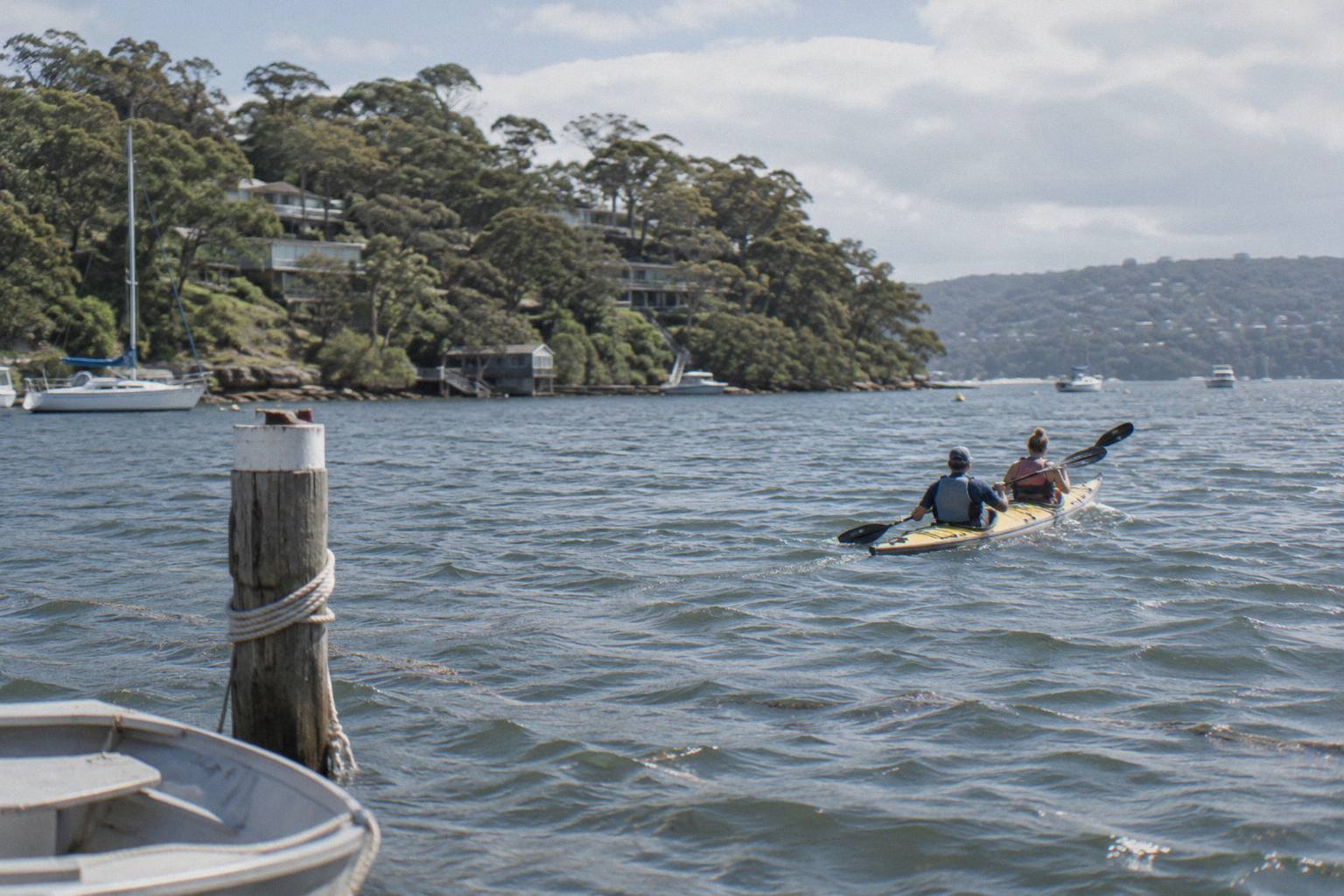
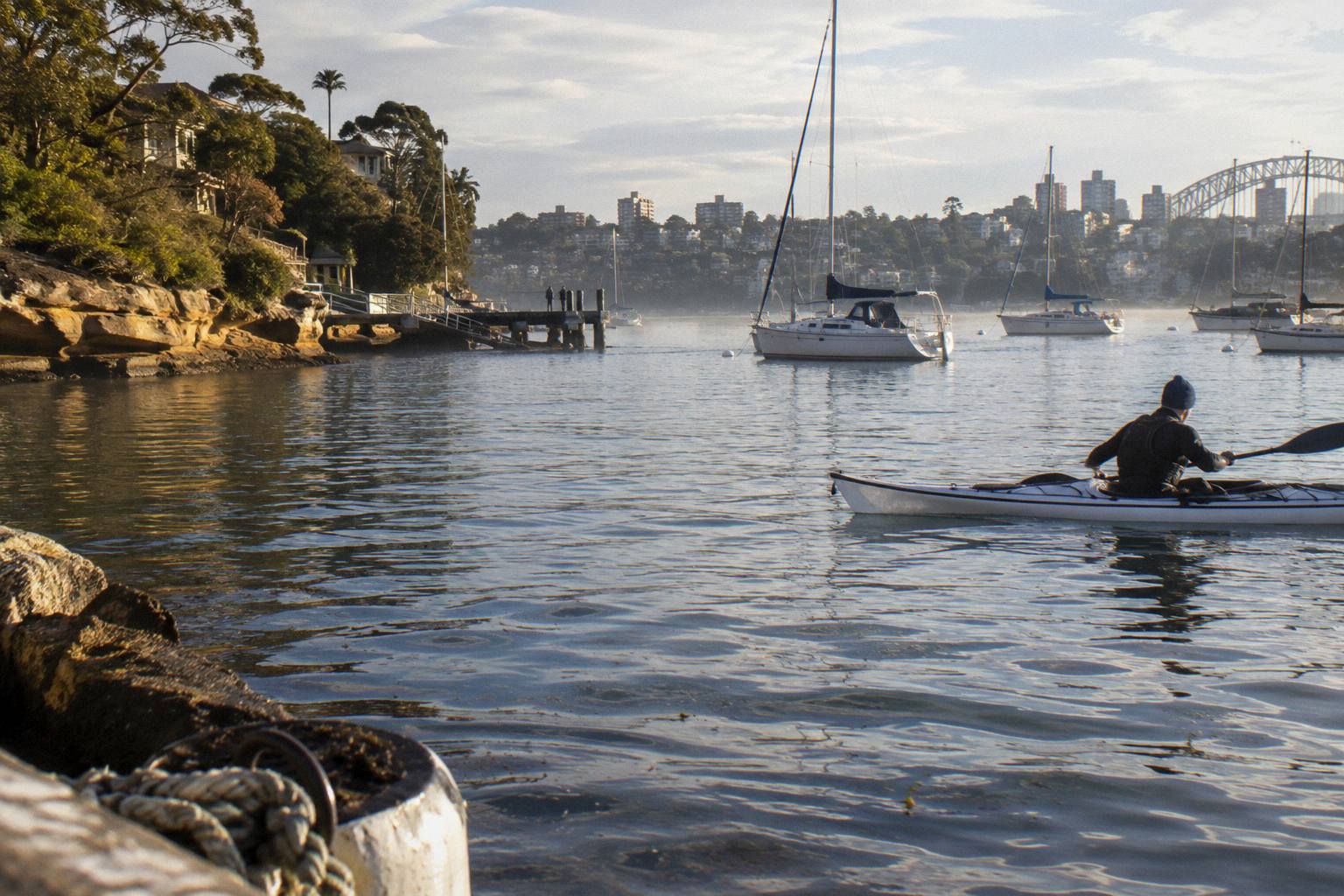
On Sydney Harbour, a visiting paddler rarely needs any of this personally, because the harbour is a drowned river valley with modest tidal streams compared with classic tidal-race locations, and because guided tours make the route call for you. One place the concept surfaces directly is Middle Harbour, where Sydney Harbour Kayaks runs its tours from Ferguson's Marina at The Spit. The operator says its routes follow tides and weather, that Scotts Creek, Sugarloaf Bay and the Bantry Bay mangroves appear "when tides allow", and that routes cannot be guaranteed. That is the 50-90 idea expressed as an operational fact: the water decides the plan. The outfit's details are on the Sydney Harbour Kayaks website, and its four-hour Middle Harbour Eco Tour, with public departures every Saturday and Sunday at 8:30am, is the tour where that tide-following routing applies.
For most readers the decision is not when to cross a tide race but which evening paddle to book. The Sunset Kayak, Free Photos tour from Lavender Bay is a 1.5-hour paddle rated 4.8 across 162 reviews with a group capped at nine and free photos included, and check availability takes you to the booking page. The question below covers the choice in more detail.
Which Sunset Paddle Suits A Rule-Reading Beginner?
If tidal theory appeals but your paddling is still at the guided-tour stage, the LED Sunset Kayak is the gentlest entry: 1.5 hours from Prue's Beach at Lavender Bay, rated 4.9 across 139 reviews, with pink lights on the kayaks and a group cap of fourteen. The 3-Hour Sunset, Opera House Views tour from Cockatoo Kayak Tours suits paddlers who want a longer outing from Greenwich's Manns Point Boat Ramp with a small group of six, though reviews for it sit on the booking page rather than in a published figure here. Both are free-cancellation products, with the refund available up to 24 hours before the start.
Comparing the three evening tours on their published facts:
| Tour | Duration | Start point | Rating and reviews | Group max | Minimum age |
|---|---|---|---|---|---|
| Sunset Kayak, Free Photos | 1.5 hours | Quibaree Park, Lavender Bay | 4.8 across 162 reviews | 9 | 12 |
| LED Sunset Kayak | 1.5 hours | Prue's Beach, Lavender Bay | 4.9 across 139 reviews | 14 | 12 |
| 3-Hour Sunset, Opera House Views | 3 hours | Manns Point Boat Ramp, Greenwich | on the booking page | 6 | 14 |
Durations matter more than they look. A 1.5-hour water time is a beginner-friendly commitment even for someone who has never held a paddle, while three hours from Greenwich demands more stamina and a later finish. Group size matters too: a cap of six means more guide attention, a cap of fourteen means more of a social paddle. Ages are per tour, not general, so a family with a twelve-year-old fits the two Lavender Bay sunset tours but not the Greenwich one.
The interesting angle for this article's question is that none of these tours puts tidal arithmetic on the guest. Evening paddles on the city side of the harbour hug bays and shorelines where stream set is a guide's concern, not yours. If you want the tour where tides most visibly shape the route, that is the Middle Harbour Eco Tour covered earlier, where the operator says the route itself flexes with the tide.
What The 50-90 Rule Is Not
The 50-90 rule is not a safety rule, not a cold-water guideline, and not a substitute for tide tables, and the most common misreading is confusing it with the unrelated "120 rule", a temperature formula that no official body states. The two get tangled in search results because both are short numeric labels attached to kayaking advice, but they answer different questions. The 50-90 rule answers "how fast is the current running this hour". The 120 rule claims to answer "do I need immersion protection today", and it does so on shaky ground.
The distinction matters because a rule that helps you time a crossing is useless for deciding what to wear, and a temperature formula is useless for reading a channel. Paddlers who mix them up end up either over-dressed for a slack-water crossing or, worse, treating a debunked formula as permission to skip thermal protection. Neither follows from the other.
For safety guidance that actually carries official weight, NSW lifejacket rules are the reference: vessels must carry enough approved lifejackets for everyone on board, and on enclosed waters including Sydney Harbour a kayaker must wear one when alone on the vessel or between sunset and sunrise, with the NSW government recommending wearing one at all times. The details are on the NSW lifejacket requirements page. Tour operators issue lifejackets as standard, so on a guided paddle this is handled for you, but the rule explains why every sunset and night tour in the comparison above hands you one.
There is also a habit of mistaking any named rule for official regulation. The 50-90 rule is a teaching heuristic, passed through coastal navigation instruction. It works because tides behave broadly the way it describes, not because any authority decreed the fractions. That is worth holding onto as a general filter: ask who states a rule before you lean your safety on it.
The 120 Rule Myth, Briefly
The 120 rule claims that if air temperature plus water temperature in degrees Fahrenheit exceeds 120, no immersion protection is needed; it is repeated on commercial blogs but no official body states it, and it is criticised as lacking scientific basis, so treat it as folklore rather than guidance. It appears in this article only because it shares shelf space with the 50-90 rule in search results and gets confused with it.
The problems are structural, not just numerical. The formula treats two very different exposures, air temperature and water temperature, as interchangeable inputs to a single threshold, and it says nothing about time in the water, clothing, body size or conditions. Cold-water risk depends on all of those. An official alternative does not come as a tidy number: the sound advice is simply to dress for the water temperature, not the air temperature, and to wear the lifejacket that dramatically improves outcomes in any immersion.
Water temperature by month for Sydney is not printed anywhere on these pages, because no verified official monthly figure exists for the harbour, and this site does not guess. What can be said is the practical version: a guided tour operator makes the clothing call for its conditions and tells you what to bring, and the general packing logic lives in what to wear kayaking on Sydney Harbour.
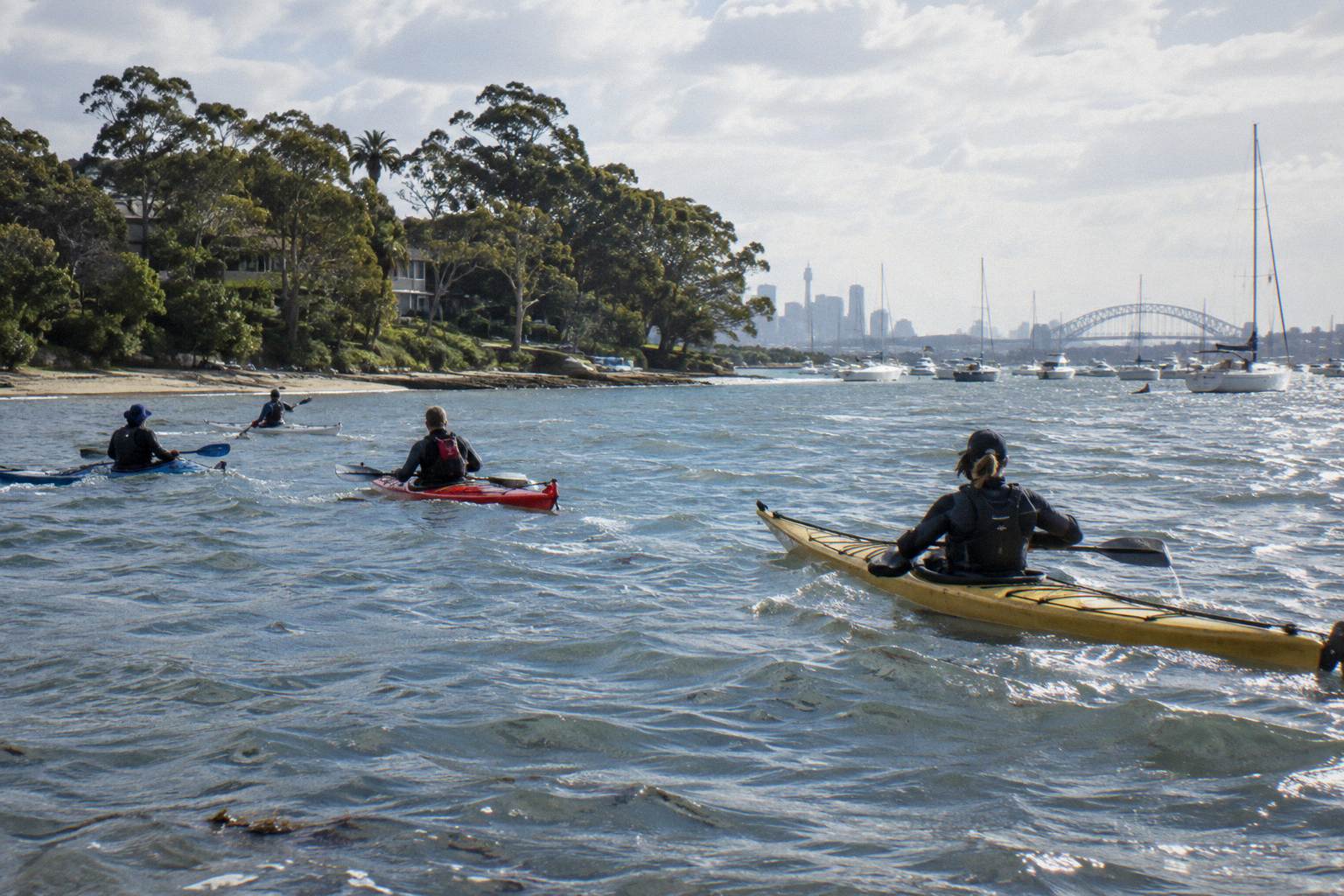
The broader lesson is that kayaking has accumulated several of these numeric folk rules, and they travel well precisely because numbers feel authoritative. Some, like the 50-90 fractions, do real work. Others, like 120, are decoration. The test is always whether a named, credible source stands behind the number and whether the physics makes sense.
“It was all excellent there was just my wife and I with the tour operator and we had a fantastic time with him and the whole experience was fantastic”
How Tides Actually Shape Sydney Paddles
On Sydney Harbour the tide's practical effect on a tour is route choice rather than current-fighting: Sydney Harbour Kayaks states its Middle Harbour routes follow tides and weather and cannot be guaranteed, while the city-side sunset tours run fixed bay circuits where a guide absorbs the tidal planning entirely. No Sydney tide-table claims are made on these pages, and none are needed, because the operator's own statement is the honest source: the water decides.
Middle Harbour is the instructive case. The four-hour Eco Tour from The Spit uses stable double sea kayaks, needs no experience, and includes a twenty-minute paddling and safety briefing before the group sets out. The route sweeps past Garigal National Park bushland and reaches Scotts Creek, Sugarloaf Bay and the Bantry Bay mangroves only, in the operator's words, when tides allow. That is a 50-90-world decision made by a professional: timing the day's water so a relaxed group can cover the distance and still reach a secluded beach for morning tea.
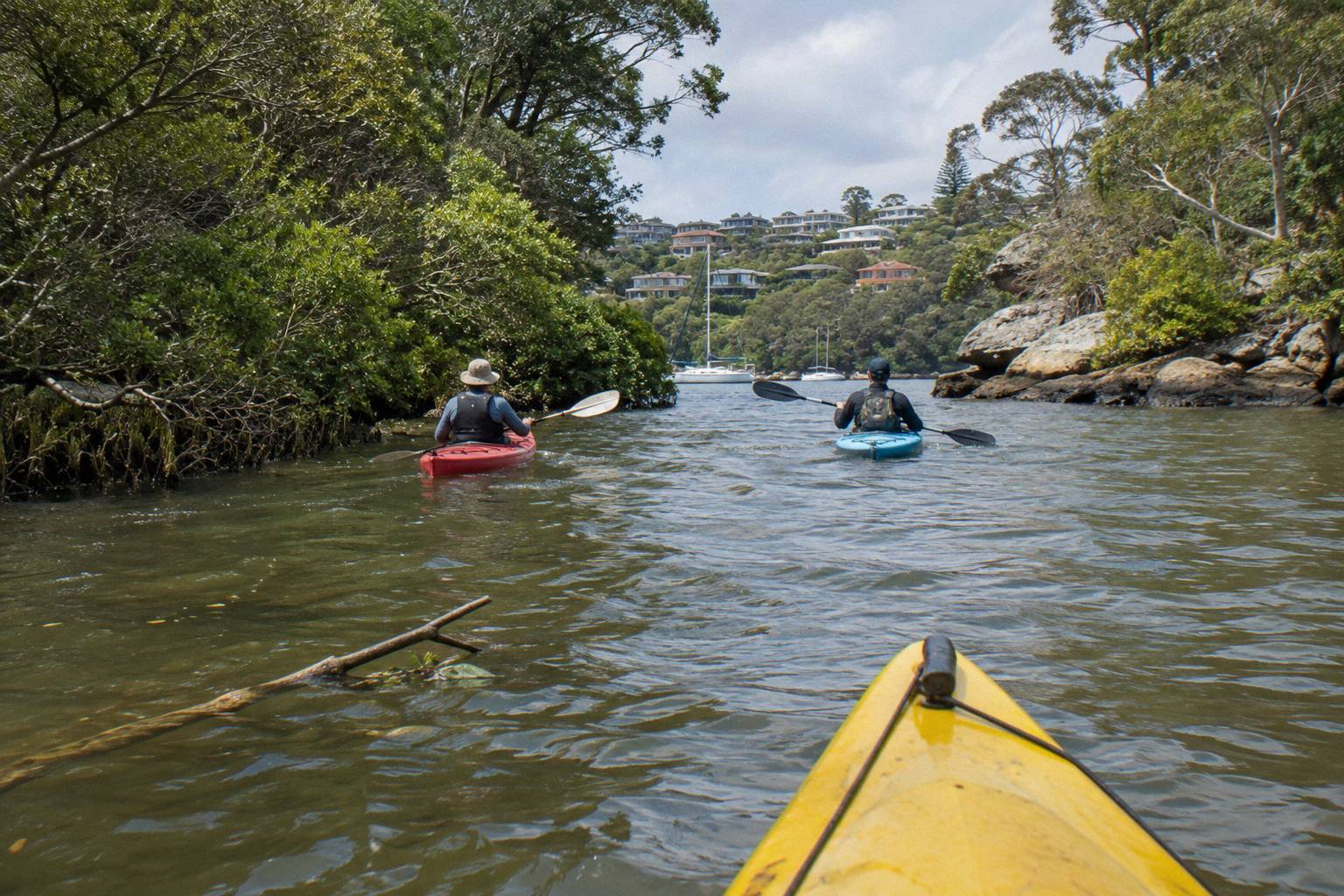
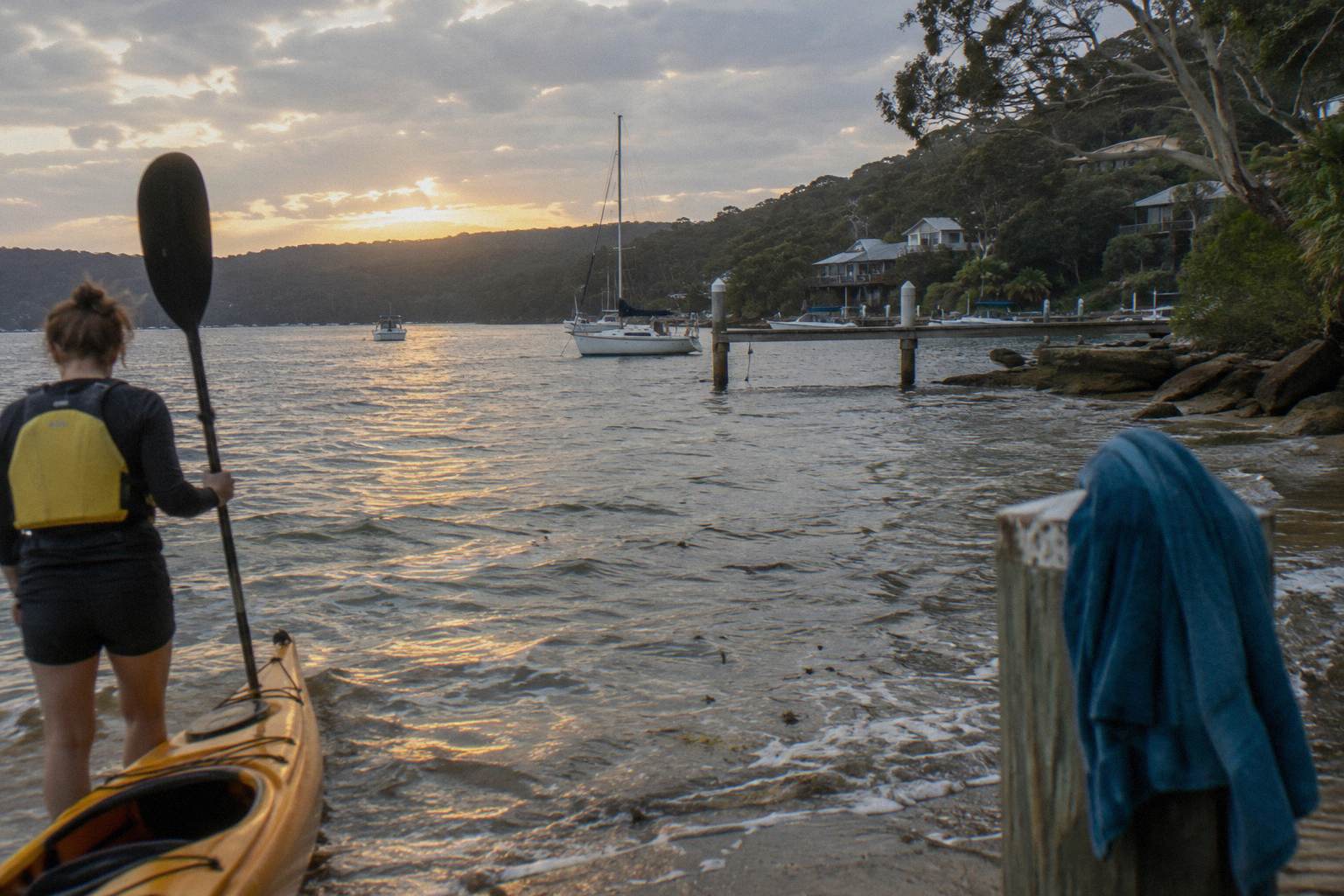
The city side works differently. Lavender Bay, Kirribilli and Rushcutters Bay launches sit inside bays where the tide rises and falls without generating the channel streams the 50-90 rule describes. A sunset tour there has one timing dependency that outranks tide tables: the clock. Sunset in Sydney falls around 19:35 in mid-November and 20:08 in mid-January, per computed solar figures with a margin of about two minutes, so a 1.5-hour evening paddle starts at very different times across the season. Daylight saving began on Sunday 4 October 2026 and ends on Sunday 4 April 2027.
For a reader weighing a booking, the takeaway is simple. Choose your tour by duration, group size and start point, and let the operator own the tidal decisions; every operator on these pages runs its tours with a guide whose job includes exactly that. If a two-hour evening paddle with lights on the boats appeals, Check availability shows current dates. The broader logic of timing a Sydney paddle is unpacked in the best time to kayak Sydney Harbour, and the skills side continues below.
Skills That Matter More Than Tidal Arithmetic
For a beginner on guided flat water, three habits matter far more than any tidal arithmetic: power every stroke with torso rotation, choose a paddling location that genuinely matches your current ability, and always keep a clear, simple plan ready for what to do if you capsize. Those are the "three golden rules of recreational kayaking" as published by paddling instructor Ken Whiting on Paddling.com, and they carry more practical weight for a tour paddler than the 50-90 fractions ever will. The full breakdown is in the three golden rules of kayaking.
The craft matters too. The American Canoe Association describes sit-on-top kayaks as suitable entry-level craft on calm, protected water, with easy re-entry and no flooding on capsize; its Level 2 Essentials course sets planning limits of wind under 10 knots, waves under one foot and current under one knot. Wider sit-on-top singles and doubles, the kind most Sydney tour operators use, give good initial stability. The ACA's beginner guidance is available as the ACA beginners' guide PDF.
On capsize itself, honesty beats bravado. No published statistic exists for how often a guided flat-water kayak capsizes, so any confident figure you read is invented. What the guidance does say is that factors include kayak width and type, wind, wake, experience and instruction, and that on a tour a guide attends a capsized paddler and runs the rescue. In a sit-on-top you climb back on; in a sit-in you release the spray skirt and wet-exit. The realistic odds and outcomes are covered in how likely is it to flip a kayak.
Connect this back to the 50-90 rule and a hierarchy appears. First comes choosing water that suits your skill, the second golden rule and the reason guided tours exist. Then comes the capsize plan and the lifejacket. Tidal stream estimation is a fourth-order concern that matters only once you start planning your own crossings, well after your first few tours. Learning it early does no harm, but believing it replaces a guide, a lifejacket or a capsize plan does.
Common Mistakes When Applying The 50-90 Rule
The classic mistakes are treating the rule as a temperature guideline, using it without knowing the local maximum stream rate or slack time, assuming the cycle is perfectly six hours everywhere, and expecting it to account for wind against current or local eddies. Each of these turns a useful sketch into a bad decision, and each is avoidable with one extra piece of information or one change of habit.
The first mistake is the mix-up already covered: reaching for 50-90 when the question is clothing. The second is running the percentages with no anchor. Fifty percent of an unknown number is still unknown. The rule needs a charted maximum stream rate and a slack-water time before it outputs anything usable, and guessing either input produces confident nonsense. The third is assuming symmetry. Real cycles can stand at high water, run double peaks or lag stream turnaround behind the vertical tide, and the further your location is from a standard semi-diurnal pattern, the rougher the sketch becomes.
The fourth and subtlest mistake is ignoring wind. Wind against a tidal stream steepens chop far beyond what either factor alone would suggest, and a crossing that the 50-90 maths calls comfortable can be unpleasant or unsafe in a fresh breeze over an ebb. No tidal rule covers that interaction; weather judgement does. If conditions look marginal, the decisions around calling off a day are covered in when not to go kayaking.
Finally, some paddlers apply ocean-crossing thinking to sheltered harbour water where it adds nothing but anxiety. If your route hugs bays and shorelines under a guide, the stream estimate is the guide's tool. Save your own 50-90 work for the day you plan an independent crossing, and pair it with the verification steps above rather than the fractions alone.
For readers whose next step is simply another Sydney paddle, these three evening tours cover the range from a ninety-minute lights paddle to a three-hour small-group outing:
The 3-Hour Sunset, Opera House Views tour deserves its own line here: a six-paddler maximum, a minimum age of fourteen and a Greenwich launch make it the most committed of the three, and Check availability shows dates and current details. Free cancellation up to 24 hours before the start applies.
Common Questions About The 50-90 Rule In Sea Kayaking
What Is The 50-90 Rule In Sea Kayaking?
It is a rule of thumb for estimating tidal stream speed across a tidal cycle: about zero at slack water, roughly 50 percent of the maximum stream after one hour, about 90 percent after two, and 100 percent around mid-tide in the third hour, easing back down through the same steps. Navigators use it to time crossings and channel passages for weak-stream windows, combining it with charted maximum stream rates and slack-water times.
Is The 50-90 Rule A Safety Rule?
No. It is a navigation planning aid about current speed, not a safety regulation. It says nothing about clothing, lifejackets, cold water or capsize planning. Official safety guidance for Sydney Harbour paddling comes from NSW maritime rules: lifejackets must be carried for everyone on board and worn when paddling alone or at night on enclosed waters, with wearing one at all times recommended.
Does The 50-90 Rule Apply On Sydney Harbour?
As a concept, yes, tidal streams exist and operators plan around them. As a tool you need on a guided tour, rarely: the city-side sunset and sunrise tours run fixed bay circuits where the guide absorbs tidal planning. The clearest local example is Sydney Harbour Kayaks, which states its Middle Harbour routes follow tides and weather and reach Bantry Bay and Sugarloaf Bay only when tides allow.
What Is The 120 Rule In Kayaking?
A formula claiming that air temperature plus water temperature in Fahrenheit above 120 means no immersion protection is needed. It is repeated on commercial blogs, has no official body behind it, and is criticised as lacking scientific basis. Dress for the water temperature, not the air temperature, and wear a lifejacket instead of trusting a folk formula.
Do I Need To Know The 50-90 Rule To Join A Guided Tour?
No. Every tour covered on these pages runs with a qualified guide who makes the route and timing calls. Beginners receive a paddling and safety briefing before setting out, lifejackets are issued, and the Sunset Kayak, Free Photos tour even includes photographs taken during the paddle. The rule becomes relevant when you start planning your own independent crossings.
How Accurate Is The 50-90 Rule?
It is a reasonable sketch for locations with a standard, roughly six-hour semi-diurnal cycle, and it degrades wherever the tidal curve is asymmetrical, has stands or double peaks, or where wind and current interact. Streams also vary across a channel, and the rule gives one speed per hour when reality changes continuously. Use it for planning, then verify against published stream data for the specific spot.