Do You Get Wet On A Sydney Harbour Kayak Tour?
Some water contact is normal on any Sydney Harbour kayak tour: paddle drip, splash and wet seats are part of it. Here is what to expect, what to wear and what stays dry.
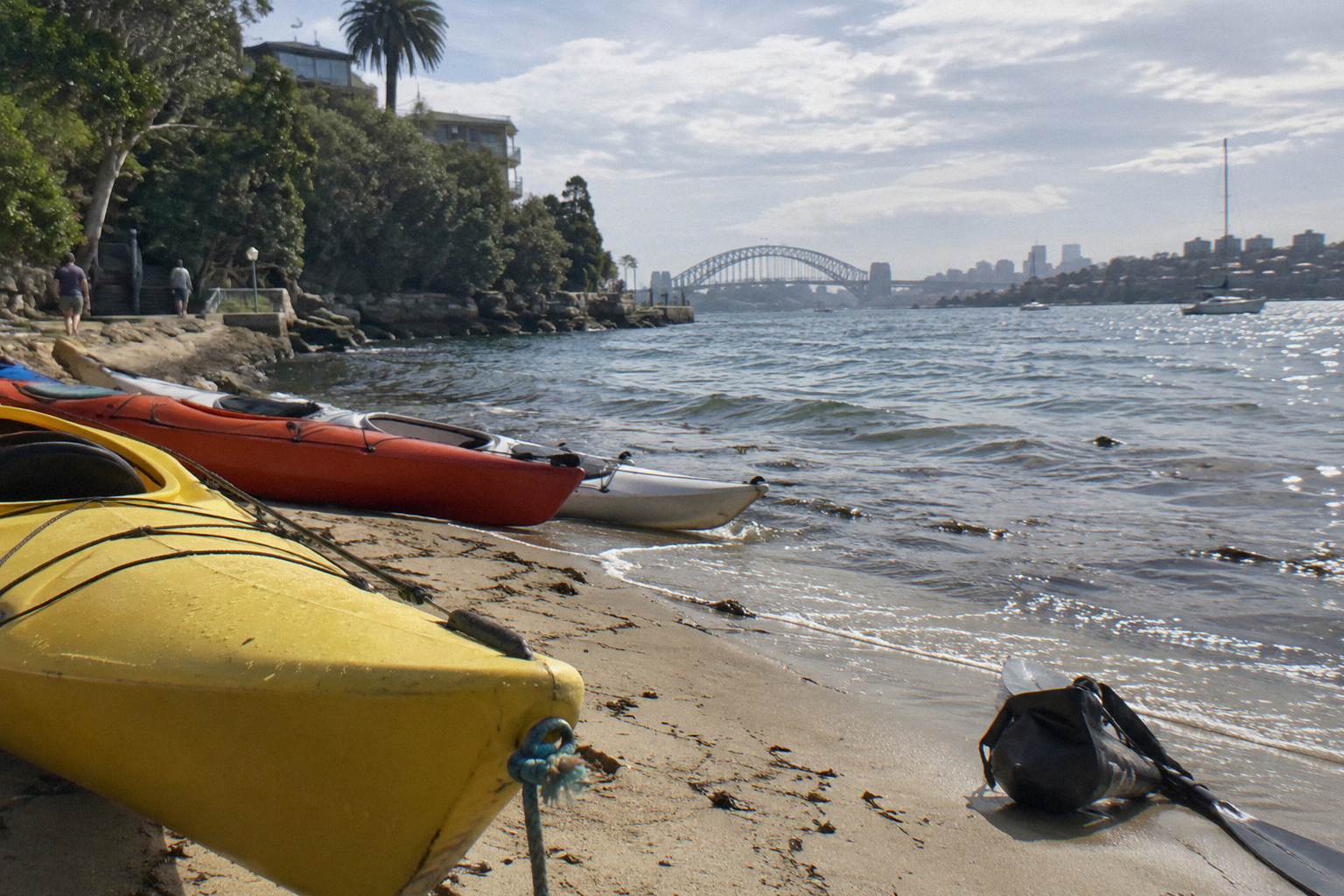
You will get at least a little wet, and you should plan for more than a little. Paddle drip runs down the shaft to your hands and sleeves, waves and wakes splash the deck, and rain counts as water too. A guided harbour tour is not a swim, but anyone who arrives in denim and sneakers will regret it before the first hour is out.
The short version, sometimes called the in-short answer: some water contact is normal on every kayak tour, from drip and splash even on calm water, and more of it on a sit-on-top than a sit-inside cockpit. Sydney operators ask for closed-in shoes because of oyster shells at launch beaches. Sydney Harbour Kayaks provides a change room, shower, toilet and dry storage at The Spit, and its tours proceed in light rain. Electronics ride at your own risk, so a dry bag is standard advice for anything you cannot afford to soak.
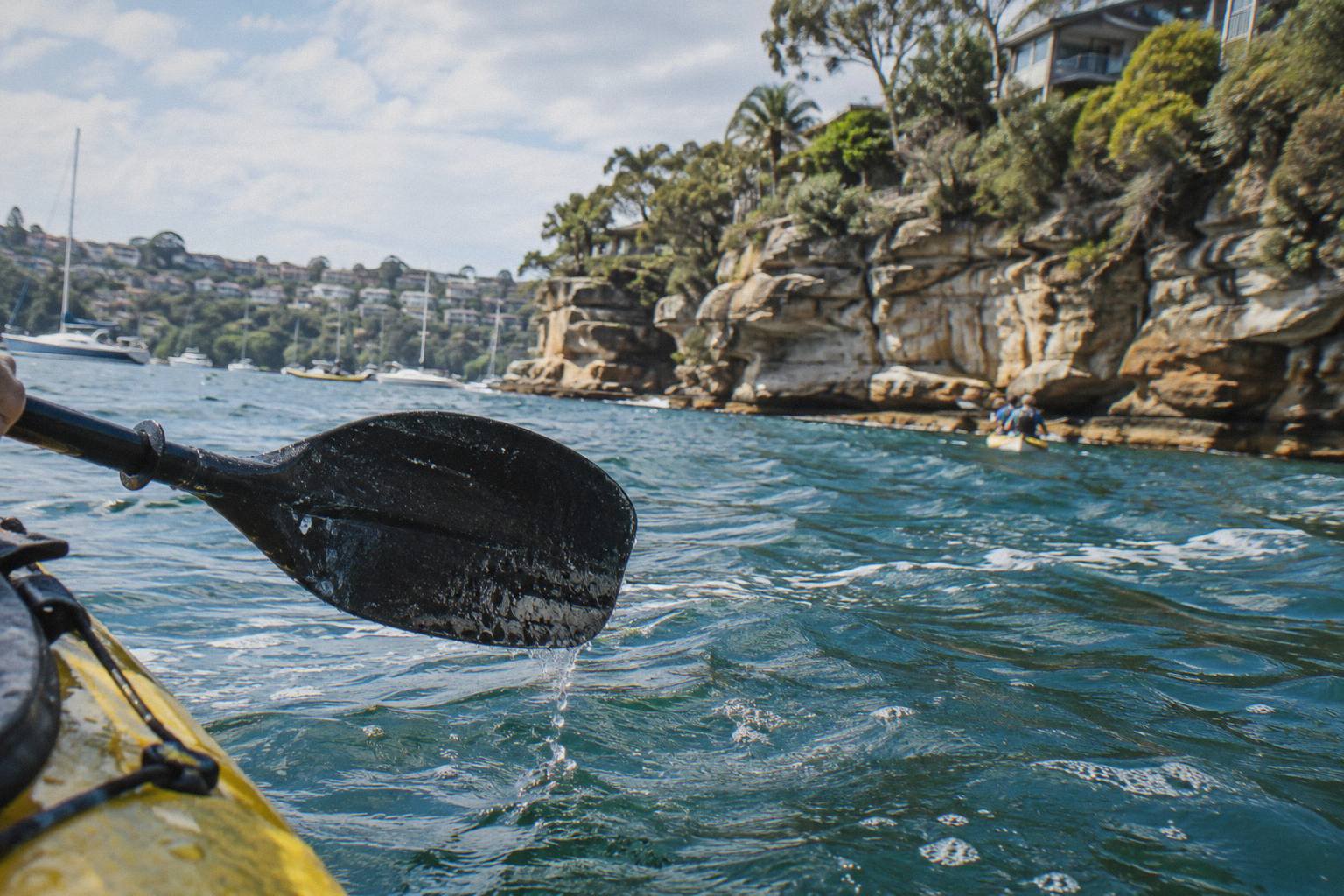
Yes, some water contact is normal on every guided paddle, even on flat water with no capsize. Paddle drip, splash off the blade and spray from a passing wake will reach your hands, forearms, lower legs and backside. The American Canoe Association's beginner guidance notes that drip and splash occur even on calm water, and that sit-on-top kayaks, where water drains through scupper holes onto whatever you are sitting in, tend to be the wetter ride.
“The kayak trip was wonderful and our guide Angela was super informative and did a magnificent job guiding us around the harbor. I highly recommend the tour.”
The question behind the question is usually "how wet", and the honest answer is: damp, not drenched. Hands and forearms get wet from the shaft. Feet get wet at the launch, because most harbour tours start from a beach or a ramp and you step into shallow water to board. The seat area collects water on a sit-on-top. What stays dry, most of the time, is your torso, because a reasonably sized paddler with a normal stroke simply does not scoop water onto their own chest.
Two things change the arithmetic. The first is the kayak type: the American Canoe Association describes sit-on-top craft as stable, easy to re-enter and unfloodable on capsize, which is exactly why tour operators use them for beginners, and also why you sit in a shallow puddle of drain water by the end. The second is conditions: a windy afternoon with ferry wake rolling into a bay will put more water over the deck than a still sunrise. Nobody can promise you a dry ride, and no honest operator tries. Weather decides what each paddle passes and how much spray comes aboard.
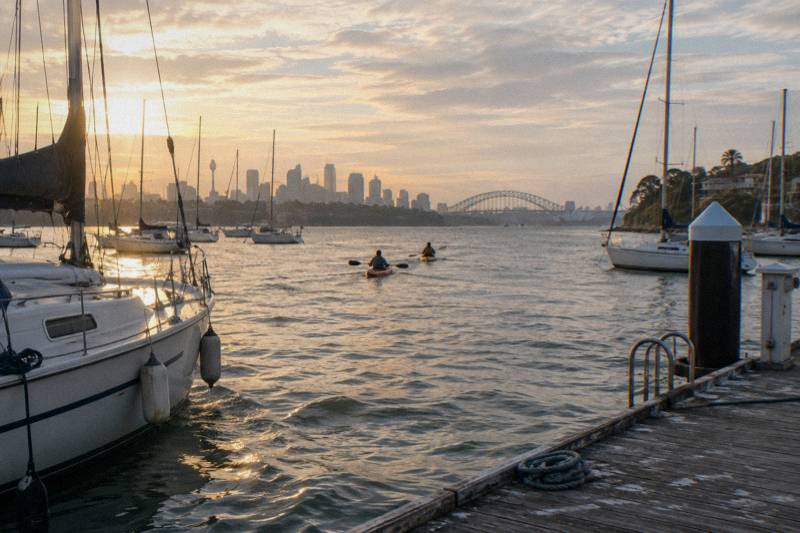
The sunset options are a good illustration, because they are short, beginner-friendly paddles where the wet you get is predictable.
How Wet Does Each Part Of You Actually Get?
Your hands, forearms and lower legs get wet on virtually every tour; your torso usually stays dry unless it rains or a wake breaks across the deck. Feet are wet from the first step into the shallows at the launch beach. On a sit-on-top, add a damp seat and backside for the whole session, because scupper holes let splash drain through the cockpit rather than out of it. None of this is a sign anything has gone wrong.
It helps to separate the three sources. Drip is the water that runs down the paddle shaft with every stroke; it is constant, small and impossible to avoid without drip rings, which tour kayaks do not usually carry. Splash is the water thrown by your own blade or by someone else's, plus spray from wind chop or wake. Immersion is the third category, meaning water you sit or stand in at the launch, and on a bad day, water you end up swimming in. A normal guided tour delivers the first two and a bit of the third at the beach; only a capsize delivers the full version, and there is no published statistic for how often a guided flat-water tour capsizes, so treat anyone quoting one with suspicion.
The kayaks themselves matter. Sydney Harbour Kayaks runs its 4-hour Middle Harbour Eco Tour in stable double sea kayaks, where you sit inside a cockpit with a seat back, drier than a sit-on-top but not sealed. Sydney by Kayak, by contrast, uses single kayaks only for its Lavender Bay tours, and singles are the classic sit-on-top style for beginner groups. Same harbour, different wetness. Neither is dry.
The table sums up where the water finds you.
| Body part | How it gets wet | How likely | How to reduce it |
|---|---|---|---|
| Hands and forearms | Paddle drip down the shaft | Every tour | Nothing much helps; drip rings are rare on hire kayaks |
| Feet | Launch through shallows; wet deck | Every tour | Closed-in water shoes; Sydney by Kayak and Sydney Harbour Kayaks both warn of oyster shells |
| Seat and backside | Scupper drain-through on sit-on-tops | Most sit-on-top tours | Quick-dry shorts instead of cotton |
| Torso | Rain, wind chop, wake spray | Occasionally | A light rain shell or rash top |
| Everything | Capsize or wet exit | Rare; no published statistic for guided flat-water tours | Lifejacket worn; guides run the rescue |
If you are already weighing which evening paddle suits you, the Sunset Kayak, Free Photos tour page covers the 1.5-hour format from Quibaree Park at Lavender Bay, with a group maximum of 9 and a minimum age of 12, and you can check availability once you know your dates.
Which Kayak Keeps You Drier, Sit-On-Top Or Sit-Inside?
A sit-inside kayak with a cockpit keeps your lower body drier in drip and light chop; a sit-on-top gets you wetter but is more stable and far easier to climb back onto if it flips. The American Canoe Association describes sit-on-top kayaks as suitable entry-level craft on calm, protected water precisely because they do not flood on capsize and allow easy re-entry, which is why tour fleets lean on them for first-timers.
The trade is straightforward. A sit-on-top is an open deck: every drop of splash that lands on it drains through scupper holes and pools where you sit. A sit-in kayak puts your legs under a deck, so drip and chop stay off them, and a spray skirt on a sea kayak seals the cockpit almost entirely. But when a sit-in goes over, you must perform a wet exit, meaning releasing the spray skirt while upside down and pushing out of the cockpit, then rely on a rescue to get back aboard. On a sit-on-top you swim alongside and climb back on. Tour operators who expect mixed abilities generally accept wetter seats in exchange for simpler rescues.
“This was a very enjoyable experience, I have never kayaked before and I found it easy and Shannon our tour guide took care of everything! Would highly recommend!”
Sydney Harbour Kayaks splits the difference on its Middle Harbour Eco Tour by using stable double sea kayaks: you get the sit-in cockpit with a backrest and a drier ride, plus the stability of two paddlers in one hull, and the operator says no experience is needed. Sydney by Kayak goes the other way, singles only, on the water for 60 to 90 minutes depending on the tour. Both are legitimate designs for beginners; they just answer the wetness question differently.
| Kayak type | Typical wetness | Capsize behaviour | Where you meet it in Sydney |
|---|---|---|---|
| Sit-on-top single | Wettest; drain-through seat | Climb back on from the water | Sydney by Kayak singles at Lavender Bay |
| Double sea kayak (sit-in) | Drier legs and seat | Wet exit needed; guide-assisted rescue | Sydney Harbour Kayaks 4-hour Eco Tour, The Spit |
| Sit-in sea kayak with skirt | Driest in chop | Wet exit releasing the skirt while inverted | Tour fleets less often; more common in intermediate paddles |
What Should You Wear So Getting Wet Does Not Ruin The Tour?
Wear quick-dry clothing, closed-in water shoes and a layer you do not mind getting damp, and bring a full change of clothes for afterwards. Both Sydney Harbour Kayaks and Sydney by Kayak warn against open shoes because of oyster shells at launch sites, and Sydney Harbour Kayaks lists a change room, shower and toilet at its The Spit base. Cotton is the one fabric to avoid: it holds water and stays cold against your skin.
The footwear point deserves its own sentence, because it is the most concrete, most repeated instruction across Sydney operators: closed-in shoes, no thongs. Launch beaches around the harbour carry oyster shells on rocks and hard surfaces, and bare feet or flip-flops are a quick way to end a tour early. Water shoes, old trainers that can get soaked, or reef shoes all work. Whatever you choose, assume it will be wet within five minutes of arrival.
For the rest of the outfit, think in layers that do not mind water. Quick-dry shorts or leggings, a synthetic or merino top, a rash top or light rain shell if the sky looks unsure, a hat with a brim, and sunglasses with a retainer cord. In the colder months add a synthetic mid-layer rather than a cotton hoodie. If you want the full clothing logic by season, the Sydney Harbour kayaking clothing guide works through it in detail, and the question of whether to hire or book a guided tour matters here too, because hire includes a briefing but no guide watching your packing choices.
One habit separates relaxed paddlers from stressed ones: leave a dry towel and a full change of clothes, including shoes, in your bag at the meeting point. Sydney Harbour Kayaks provides dry storage at The Spit for exactly this kind of thing, and its policy pages note that electronics are carried at your own risk, which is the operator's plain way of saying phones drown. A dry bag is general advice rather than a Sydney-specific rule, but it is good advice, and a zip-lock bag inside a zip-lock bag is the budget version.
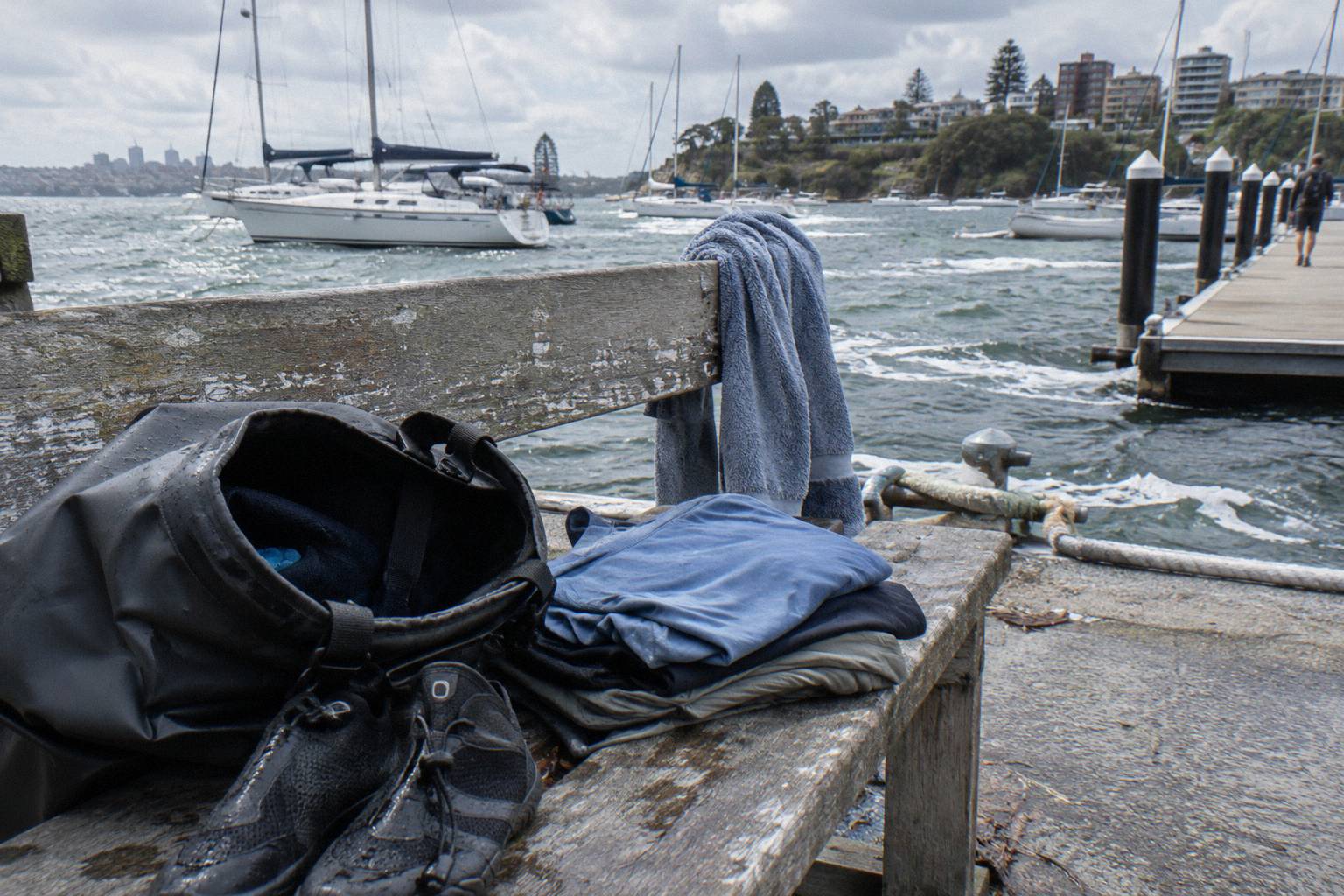
A longer paddle multiplies all of this, because four hours of drip beats ninety minutes of it. If the wet-but-worth-it prospect appeals, the 4-Hour Middle Harbour Eco Paddle includes morning tea on a secluded beach, dry storage and the change facilities at Ferguson's Marina, with a minimum age of 14.
Does Rain Cancel A Sydney Kayak Tour?
Not usually. Sydney Harbour Kayaks states that its tours proceed in light rain and are cancelled only for strong winds, thunderstorms or lightning, dangerous water or poor visibility. Rain, in other words, is a clothing problem rather than a cancellation trigger, which means a wet day can still be a tour day and you should dress for it. Each tour's exact booking terms are its own: read them before you pay.
“Fantastic morning on the water. Well worth it! Jack was fabulous!! Suitable for all levels. Met some lovely people.”
That policy line is worth attributing carefully, because cancellation rules belong to the operator that states them and never transfer. On Sydney Harbour Kayaks' own direct-booking terms, if the operator cancels you get a transfer, a 3-year credit or a full refund with no admin fee, and public tours generally need a minimum of four participants or they are rescheduled, altered or cancelled. For tours booked through a booking page rather than the operator directly, the booking-page terms apply, and most of the sunset and sunrise tours covered here offer free cancellation up to 24 hours before the start; check the exact terms of the booking you actually make. Other pages covering the same trip are gathered on Sydney Harbour Kayak Tours.
The practical reading for a reader worried about wetness: light rain does not cancel a Middle Harbour tour, so the difference between a miserable hour and a pleasant one is a rain shell and a dry bag. For a fuller walk-through of the cancellation mechanics, what happens when a tour is cancelled for weather covers refunds, credits and rebooking, and the official NSW guidance on when to wear a lifejacket is worth reading before any dawn or dusk paddle, since lifejackets must be worn when paddling alone or at night on enclosed waters such as Sydney Harbour, and NSW recommends wearing one at all times.
| Condition | What the operator does | What you should do |
|---|---|---|
| Light rain | Tour proceeds (Sydney Harbour Kayaks policy) | Rain shell, dry bag, cap with a brim |
| Strong wind | Tour cancelled | Take the transfer, credit or refund per your booking terms |
| Thunderstorm or lightning | Tour cancelled | Same as above; rebook early for popular sunrise slots |
| Under 4 participants on a public tour | Reschedule, alternative or cancel (Sydney Harbour Kayaks) | Ask about private options if your dates are fixed |
What Happens If You Capsize On A Guided Tour?
You get properly wet, you float in your lifejacket, and the guide comes to you. In a sit-in kayak a wet exit means pulling the release on the spray skirt while upside down and pushing clear of the cockpit; on a sit-on-top you simply climb back onto the deck, which the American Canoe Association notes is one of the format's beginner advantages. Guides on commercial tours are trained to attend a capsized paddler and run the rescue.
Honesty first: no published statistic exists for how often a guided flat-water tour capsizes, so anyone quoting a percentage is guessing. The factors cited in paddling guidance are the kayak's width and type, wind, boat wake, paddler experience and the quality of instruction, which is why operators brief every group before launch, Sydney Harbour Kayaks for 20 minutes on its Eco Tour, and why fleets skew towards wide, stable craft. Width and stability are the reason doubles and sit-on-tops dominate beginner tourism.
“Such a fantastic experience. Extremely helpful and knowledgeable guides. Very well organised. Such good value for money, experienced an amazing sunrise, photos were incredible and got to see the main Syndey sites.”
You do not need to be a strong swimmer to take a guided tour, but you should be comfortable in the water with a lifejacket on. Australian guidance sets no must-swim rule; instead, the Royal Life Saving Society Australia and NSW authorities push lifejacket use precisely because even competent swimmers can need them, and the official position is that lifejackets must be carried on every vessel, worn when paddling alone or between sunset and sunrise, and are recommended at all times. Operators issue them. For the fuller argument, whether you need to swim to kayak on Sydney Harbour deals with the anxiety version of the question.
The injury picture, for completeness, is smaller than the water. Peer-reviewed studies of elite and competitive paddlers, in journals such as the Journal of Science and Medicine in Sport, most often report shoulder and lower-back problems, but those findings concern athletes with heavy training volumes, not tourists on a two-hour sunset paddle, and no broad statistic exists for recreational kayaking. The realistic worst case on a guided harbour tour is a soaking, a swim and a story.
If a dawn start with the most water-aware operators appeals, the Sunrise Paddle Under Harbour Bridge tour runs two hours from Kirribilli, rated 5.0 across 998 reviews, with a minimum age of 12; where the paddle actually goes on the day depends on weather and the operator's routing, so treat the route as indicative, never guaranteed.
Phones, Cameras And Everything You Did Not Want To Get Wet
Assume anything not in waterproof storage will get splashed, and treat electronics as at your own risk, which is exactly how Sydney Harbour Kayaks words its policy. Water from drip, splash and rain finds bags, pockets and seats regardless of intentions, and the operator's dry storage at The Spit is for use before and after the paddle, not a promise about your pocket mid-tour. A dry bag or a sealed case is standard, general advice for phones and keys.
The details vary by launch point. At The Spit, Sydney Harbour Kayaks provides dry storage plus a change room, shower and toilet, so the sensible routine is to lock valuables away and carry only a cased phone. At Lavender Bay, Sydney by Kayak is a mobile business with no shed or shop at the launch, so whatever stays dry does so because you packed it that way. Sydney by Kayak does give a nice compensation on its tours: photos are free, so you can leave your own camera behind entirely and let the operator carry the waterproof one.
The same logic applies to things you wear. A phone in an open jacket pocket will meet the same drip your sleeve meets. Keys on a lanyard around your neck will swing into the puddle on your seat. Sunglasses without a cord are a routine casualty on any sit-on-top. None of these are Sydney-specific hazards; they are just the ordinary physics of a wet activity, best handled before the paddle rather than during it.
“We were very lucky to do the kayak trip with Tim, just the two of us. We found him very passionate and knowledgeable and in safe hands. Highly recommend booking a trip with Tim.”
Common Mistakes When Preparing For Water On A Harbour Paddle
The recurring mistakes are wearing cotton and open shoes, carrying a bare phone with no dry storage, assuming rain means cancellation, and skipping the change of clothes for afterwards. Each one is avoidable in five minutes of packing. Tour operators warn about the oyster shells; the rest is ordinary planning that wetness imposes on every paddle, harbour or otherwise.
Cotton is the quiet offender. Jeans and a cotton hoodie absorb drip, splash and rain, hold the water against your skin and refuse to give it back, and by the second hour you are cold as well as damp. Quick-dry synthetics or merino do the opposite: they wet out, then shed. The fix costs nothing if you already own gym clothes.
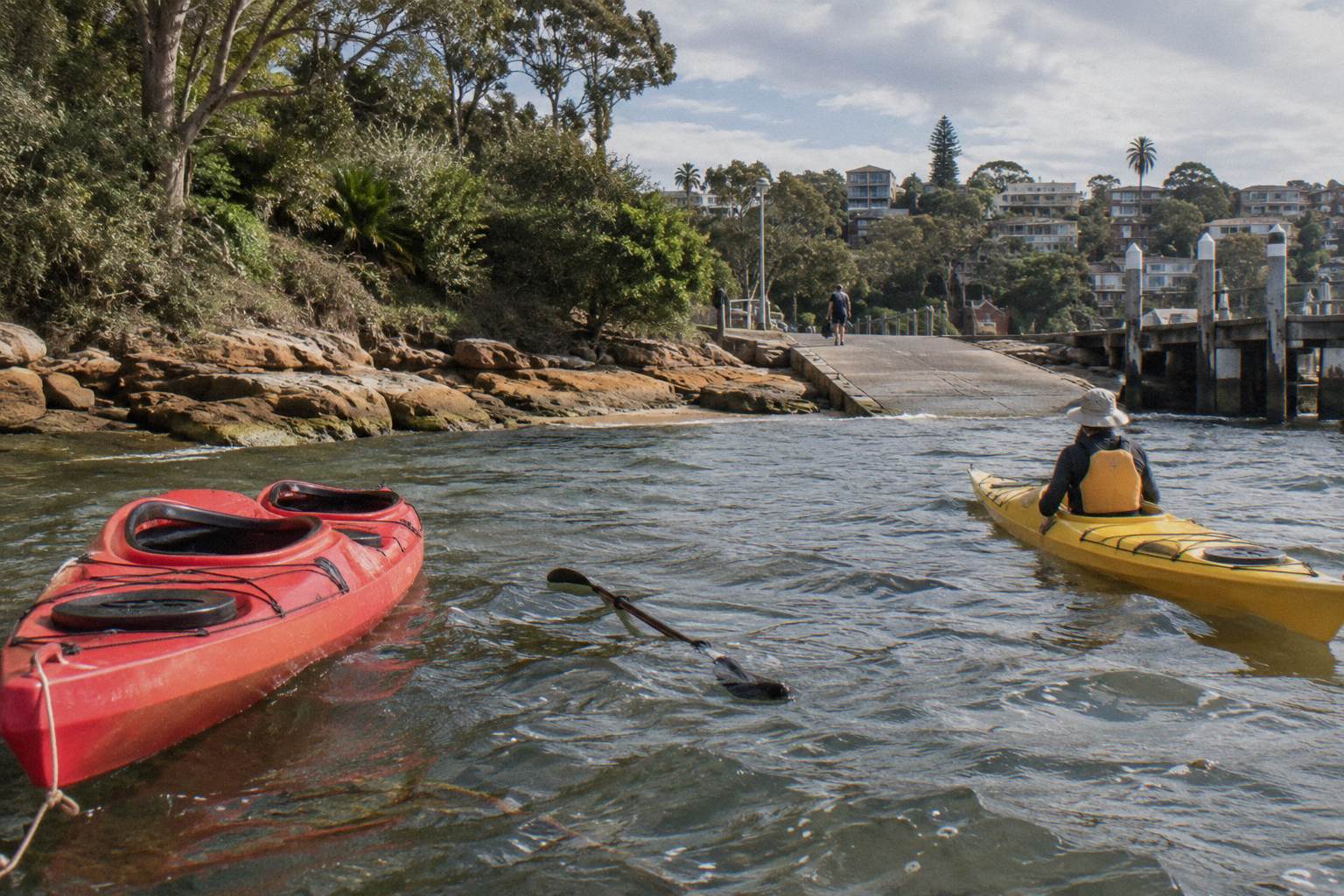
The second mistake is treating the launch beach as a dry-footed event. It is not. You walk into shallow water to board, the deck is wet from the previous group, and rocks carry oyster shells that cut. Bare feet, thongs and brand-new trainers all fail here in different ways. Closed-in water shoes are the one piece of kit every Sydney operator mentioned here asks for by name.
Third, assuming a grey sky cancels the tour. It does not, on the stated policy of Sydney Harbour Kayaks, so people who arrive soaked and surprised have usually packed for a day that was never promised to be dry. Fourth, the electronics gamble: a phone in a back pocket, no case, no dry bag, and a recovery mission at the marina. Lock it away or seal it. Fifth, no towel and no change of clothes waiting on shore, which turns a fun paddle into a cold ferry ride home.
Common Questions About Getting Wet On A Sydney Harbour Kayak Tour
Do You Get Wet On A Sydney Harbour Kayak Tour?
Yes, a little. Paddle drip, splash and a damp seat are normal on every tour, with more water on sit-on-top kayaks than sit-in cockpits. Your hands, forearms and feet will get wet; your torso usually stays dry unless it rains. Plan quick-dry clothing and closed-in shoes, and bring a change of clothes for afterwards.
Will I Fall In On A Beginner Tour?
Probably not. No published statistic exists for how often guided flat-water tours capsize, but operators use wide, stable kayaks precisely to make it rare, and guides brief every group before launch. If it does happen, you float in your lifejacket and the guide runs the rescue.
Do Tours Still Run If It Is Raining?
Light rain does not cancel tours run by Sydney Harbour Kayaks; its policy cancels only for strong winds, thunderstorms or lightning, dangerous water and poor visibility. Other operators set their own terms, so check the exact booking terms for the tour you book.
What Shoes Should I Wear?
Closed-in water shoes or old trainers you can soak. Sydney Harbour Kayaks and Sydney by Kayak both warn against open shoes because of oyster shells at their launch sites. Thongs fail on the rocks and at the wet deck.
Do I Need To Be Able To Swim?
Australian guidance sets no must-swim rule for guided kayaking, but you should be comfortable floating in a lifejacket. NSW requires lifejackets to be carried on every vessel, worn when paddling alone or at night, and recommends wearing one at all times; operators issue them.
Where Can I Store My Phone And Dry Clothes?
Sydney Harbour Kayaks offers dry storage plus a change room, shower and toilet at its The Spit base, and its policy notes electronics are carried at your own risk. At launches without facilities, a dry bag is the standard general advice for phones, keys and a spare layer.