Do You Need A Licence To Kayak On Sydney Harbour?
No paddler licence is described on the NSW government pages that govern Sydney Harbour kayaking, but lifejacket, light and give-way rules do apply. Here is what the rules actually say.
In short: The NSW government pages that govern kayaking on Sydney Harbour set out rules for lifejackets, lights and conduct around other vessels, and they do not describe a paddler licence for kayaks. A boating licence applies to powered vessels, not to paddlecraft, though licence classes are beyond what the pages read here cover. Before you paddle, confirm anything specific with Transport for NSW Maritime on 13 12 36.
If you want the wider picture of paddling the harbour, start with the kayaking on Sydney Harbour overview, which covers launch points and tour areas. Below is the licence question in full, plus the rules that do apply to every paddler on this waterway.
Quick Facts
| Question | Answer |
|---|---|
| Is a paddler licence described for kayaks? | No. The NSW pages read here set equipment and conduct rules and do not describe a paddler licence |
| Who confirms licence questions? | Transport for NSW Maritime, phone 13 12 36 |
| Lifejacket, enclosed waters | Must be worn when alone on the vessel (including with children under 12) or at night, Level 50S or above |
| Lights | A torch or lantern showing a white light, ready in time to prevent a collision |
| Harbour character | Described by NSW as an extremely busy waterway |
| Guided tours | Operators issue lifejackets and run a safety briefing |
No paddler licence appears in the NSW government rules that apply to kayaking on Sydney Harbour. The pages that govern this waterway, the lifejacket requirements, the lighting rules and the harbour conduct rules, describe equipment you must carry and behaviour around other vessels, and they do not describe a licence for kayaks or canoes. Boating licences in NSW apply to powered vessels. If you want chapter and verse, phone Transport for NSW Maritime on 13 12 36 and ask directly.
That answer surprises people who have paddled in other countries, where permits, registration cards or paddle licences are common. In New South Wales the regulatory weight sits on equipment and conduct rather than on a paper credential. The trade-off is that the rules which do exist are enforced expectations, not suggestions, and they are the reason a guided tour begins with a briefing rather than a licence check.
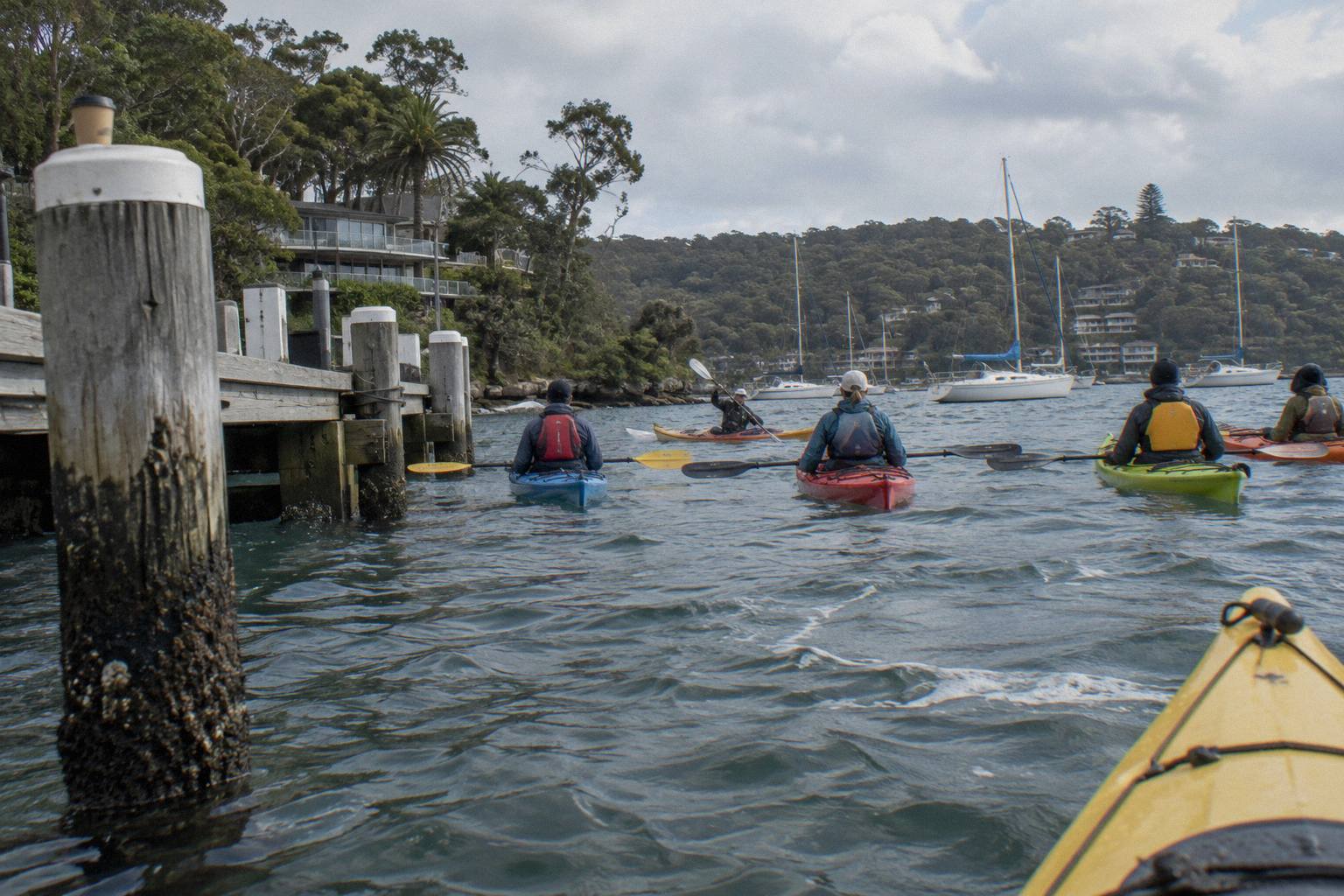
The distinction matters most at the moment you are choosing how to get on the water. A reader asking about licences is usually weighing hire against a guided tour. On a guided paddle, the operator supplies the equipment that the rules require, briefs you on conduct near ferries, and carries the local knowledge of where the shipping lanes sit. On a hire kayak, every one of those obligations lands on you, from the lifejacket in the boat to the torch in the hatch after sunset.
What Rules Do Apply To Kayaks On Sydney Harbour?
Three rule sets apply, and none of them is a licence. The NSW lifejacket rules say what you must wear and when, the lighting rules say what you must carry after dark, and the Sydney Harbour conduct rules cover behaviour around ships, ferries and the bridge transit zone. Sydney Harbour is described by NSW as an extremely busy waterway, and the conduct rules exist because paddlecraft sit low and are hard for larger vessels to see.
“A really great tour! The guides were fantastic. They also helped participants who were having trouble getting the hang of the kayak during the tour.”
The lifejacket rules come from the NSW government's when to wear a lifejacket page. In full: vessels must carry enough approved lifejackets for everyone on board at all times. For canoes and kayaks in enclosed waters, which includes Sydney Harbour, a lifejacket of Level 50S or above must be worn when the paddler is alone on the vessel, including when paddling with children under 12, or at night between sunset and sunrise. In open waters and when crossing coastal bars, a lifejacket must be worn at all times. NSW also recommends wearing one at all times regardless, and a skipper can require wearing in heightened risk conditions such as a severe weather warning, non-swimmers aboard, cold water or a danger of swamping.
The harbour conduct rules come from the NSW rules for boating on Sydney Harbour page. Paddlers must keep to the starboard side of shipping channels and stay well clear of big ships. High-speed ferries display an all-round yellow flashing light. Sydney VTS, the vessel traffic service, broadcasts on VHF channels 16 and 13 every two hours, which matters mainly if you carry a radio. Personal watercraft and kiteboards are banned on the harbour, including Middle Harbour, but that ban does not apply to kayaks.
| Rule area | What NSW requires of a kayaker on Sydney Harbour |
|---|---|
| Lifejacket carried | Enough approved lifejackets for everyone on board, at all times |
| Lifejacket worn | Enclosed waters: when alone (including with children under 12) or at night, Level 50S or above |
| Lifejacket in open waters | Worn at all times, Level 50S or above |
| Lights at night | A torch or lantern showing a white light, ready in time to prevent a collision |
| Shipping channels | Keep to starboard, stay well clear of large vessels |
| Bridge Transit Zone | Vessels must not stop, anchor or drift under the Harbour Bridge except in an emergency; transit only |
| Banned craft | Personal watercraft and kiteboards, including on Middle Harbour; kayaks are not banned |
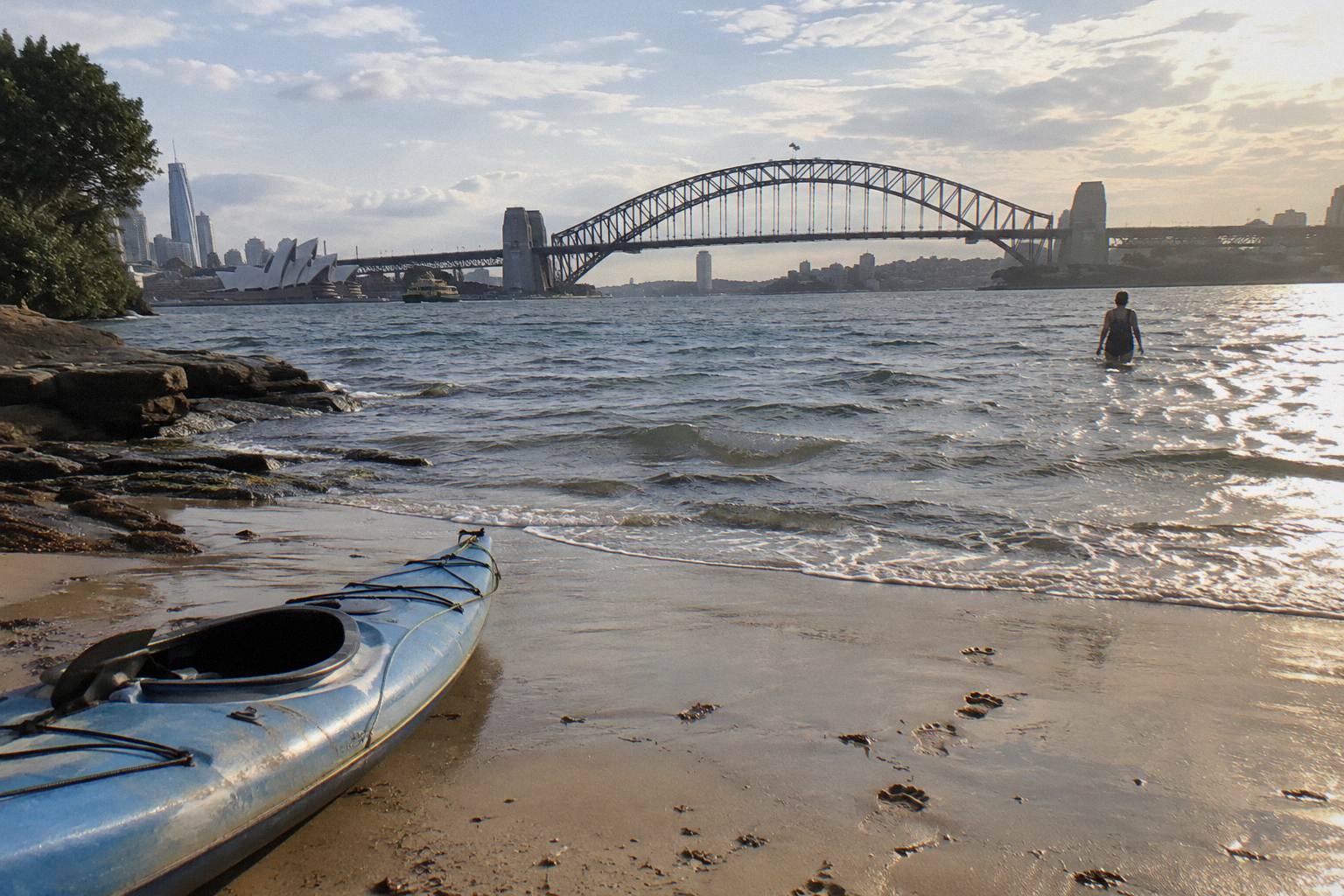
One more rule deserves its own line: the Sydney Harbour Bridge Transit Zone runs between Bennelong Point and Kirribilli Point on one side and Millers Point and Blues Point on the other, with defined exclusions. Vessels must not stop, anchor or drift under the bridge except in an emergency, and may only transit through. A 15-knot limit applies. For a paddler this means the bridge is something you pass through, weather and traffic permitting, not a place to pause, and no tour operator can promise a stop beneath it.
Event closures add a seasonal wrinkle. Vivid, New Year's Eve and Australia Day each bring temporary exclusion zones to parts of the harbour, published as annual maps by Transport for NSW. The maps change year to year, so check the current Transport for NSW map rather than relying on anything a friend tells you about last year's fireworks.
If reading a rulebook before breakfast sounds unappealing, that is the strongest argument for a guided tour. The Small-Group Opera And Bridge Paddle keeps its groups to a maximum of five paddlers from Lavender Bay, and the guide handles the safety equipment and the briefing.
Lifejacket Rules For Kayaking In Sydney Harbour
Under current NSW rules, every kayak on Sydney Harbour must carry an approved lifejacket for each person on board, and since the harbour counts as enclosed waters, you must wear yours whenever you paddle alone, whenever a child under 12 is aboard, and any time between sunset and sunrise. NSW also gives plain advice: wear one at all times.
The level matters as much as the timing. The rule specifies Level 50S or above, which is a buoyancy standard, not a brand. Rental and tour operators on the harbour issue lifejackets as standard practice. Sydney Harbour Kayaks, for example, includes an approved lifejacket with every rental from its Middle Harbour base and says lifejackets are always worn by children. That is an operator's own policy stated on its pages, and it sits comfortably above the legal minimum.
Do not carry forward anything you remember about a "100 metres from shore" lifejacket rule. That wording came from a 2013 safety brochure and has since been replaced by the current requirements summarised above. If you see it repeated on an old forum post or a stale tourism page, treat it as history, and treat the current NSW page as the source of truth.
One practical reading of the rule catches many solo paddlers: if you are alone in your own kayak, the lifejacket goes on your body, not under the deck lines. Paddling with a child under 12 aboard triggers the same requirement even when a second adult is present. Night paddling, sunset to sunrise, triggers it for everyone. If a sunrise or sunset tour is on your list, the odds are good that at least part of the paddle falls inside the wear window, which is one reason operators fit lifejackets before anyone touches the water.
Lights, Torches And Paddling At Night
Yes, you can paddle at night on the harbour without a licence or registration, as long as you carry the right lighting: after sunset every kayak, canoe and surf ski must have a torch or lantern showing a white light, ready to be displayed in time to prevent a collision. A head torch is recommended, and NSW recommends two all-round white lights for paddlecraft over four metres.
“Tim is an amazing guide! He is very accommodating, knowledgeable and fun! This experience was memorable”
The wording comes from the NSW government's lights to display page. Note the phrase "ready in time to prevent a collision". A torch buried at the bottom of a dry bag does not meet the spirit of the rule. The practical setup used by evening tour operators is a head torch per paddler plus a lantern or deck light on the guide's boat, so a group presents one visible cluster rather than scattered points.
This is also where night kayaking becomes attractive rather than intimidating. Some harbour tours run deliberately in the dark, with lights on the kayaks themselves, and the operator carries the compliance load. If you are curious about that format, the night kayaking on the harbour guide covers how those trips work and what the operators provide.
For independent paddlers, the checklist after dark is short: white light ready to display, lifejacket worn as the night rule requires, extra care near powered vessels. The give-way rules technically encourage powered and sailing vessels to keep a lookout and give way to paddlecraft, but the same NSW page acknowledges the reality, paddlecraft sit low and are hard to see, so the burden of self-preservation sits with the person in the low boat. Other pages covering the same trip are gathered on Sydney Harbour Kayak Tours.
“Such a fantastic experience. Extremely helpful and knowledgeable guides. Very well organised. Such good value for money, experienced an amazing sunrise, photos were incredible and got to see the main Syndey sites.”
Ferries, Ships And Give-Way Rules
Under NSW guidance, powered and sailing vessels should keep a proper lookout and give way to paddlecraft, yet no vessel may cross in front of a large vessel or obstruct a channel. For kayakers the practical rule is simple: never position yourself where a ferry or ship must change course for you, cross channels behind big vessels rather than in front, and watch for the all-round yellow flashing light that marks a high-speed ferry.
The harbour's ferry traffic is the reason the conduct rules are written the way they are. Sydney VTS broadcasts on VHF 16 and 13, large ships use the main channels, and the manoeuvring room a fully loaded vessel has is close to zero. A kayak can turn in its own length; a ship cannot. The rules acknowledge that asymmetry by telling paddlecraft to take extra care near powered vessels and when crossing channels, rather than by granting paddlers right of way in any practical sense.
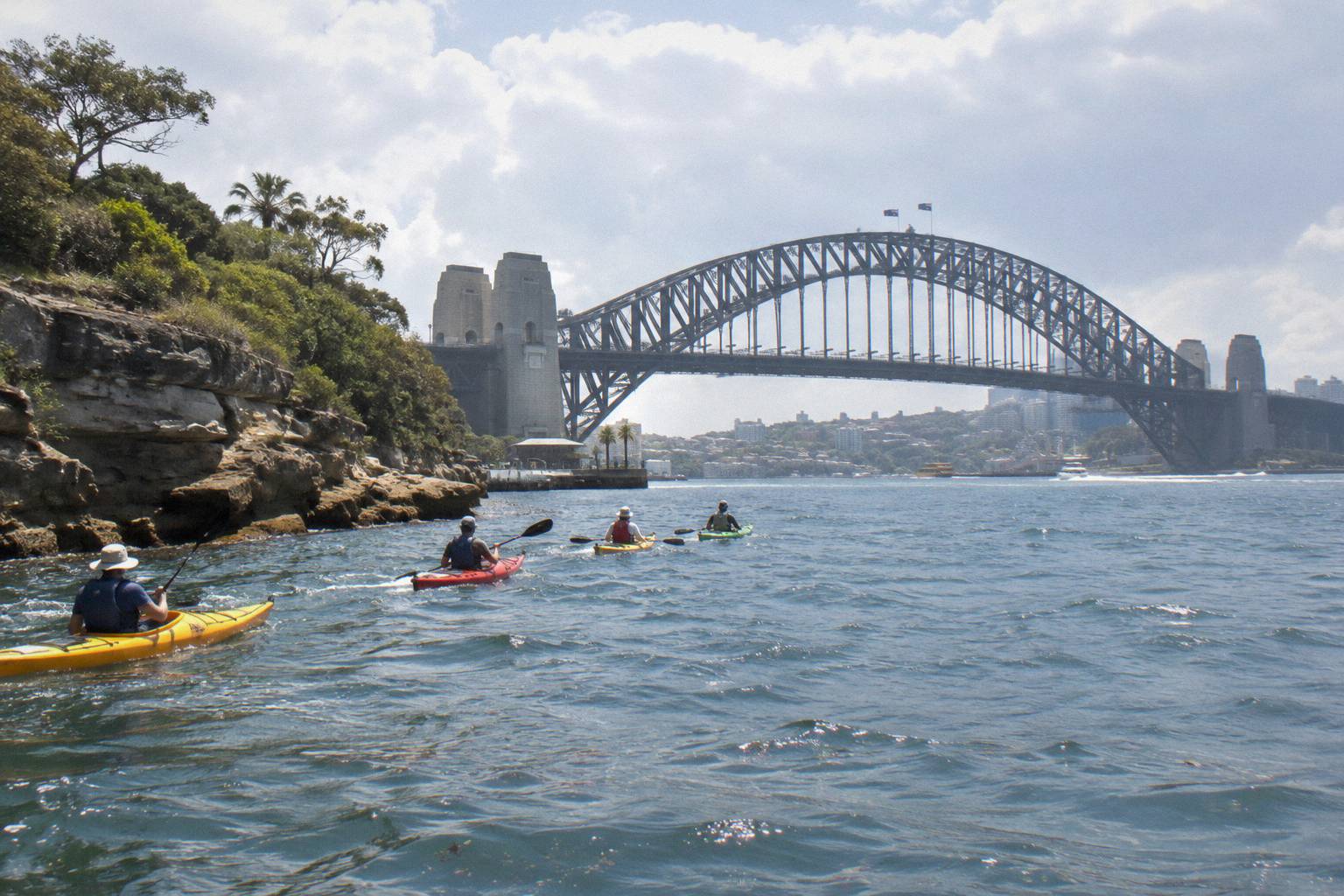
Guided tours earn their keep here. A guide who paddles the harbour daily knows where the ferry lines run and times crossings, and the briefing before launch covers it. On the western side of the harbour, the Kayak To Goat Island tour runs from the Sydney University Boat Shed in Glebe with a maximum of six paddlers, and its route crosses working water where that local judgement matters. The island itself is restricted, so treat the trip as a harbour paddle rather than a landing.
If a friend has told you about a licence for paddling near ferries, they are probably half-remembering the ferry-specific conduct rules. There is no ferry licence described in the NSW pages for kayakers. There is only the obligation to stay clear, cross behind, and keep a light ready after dark. For more on the practical side, the paddling near ferries and ships on the harbour post works through real crossing situations.
Hire Versus A Guided Tour: Who Handles The Rules?
On a guided tour, the operator supplies and fits the lifejackets, carries the lights, briefs you on conduct around ferries, and chooses a route that respects the bridge transit zone and shipping channels. On a hire kayak, every rule becomes your personal responsibility, including the equipment, the timing around sunset, and the route choice. The licence answer is the same either way, because no paddler licence is described, but the compliance effort is very different.
“The kayak trip was wonderful and our guide Angela was super informative and did a magnificent job guiding us around the harbor. I highly recommend the tour.”
Hire suits confident paddlers who know the harbour or are staying in calm, enclosed corners of it. You take the lifejacket the operator issues, you check the torch if there is any chance of dusk, and you plan a route that keeps you out of the main channels. Rental operators reinforce this: Sydney Harbour Kayaks requires groups of four or more, and rentals over two hours, to be prebooked, which is partly a logistics rule and partly a safety check.
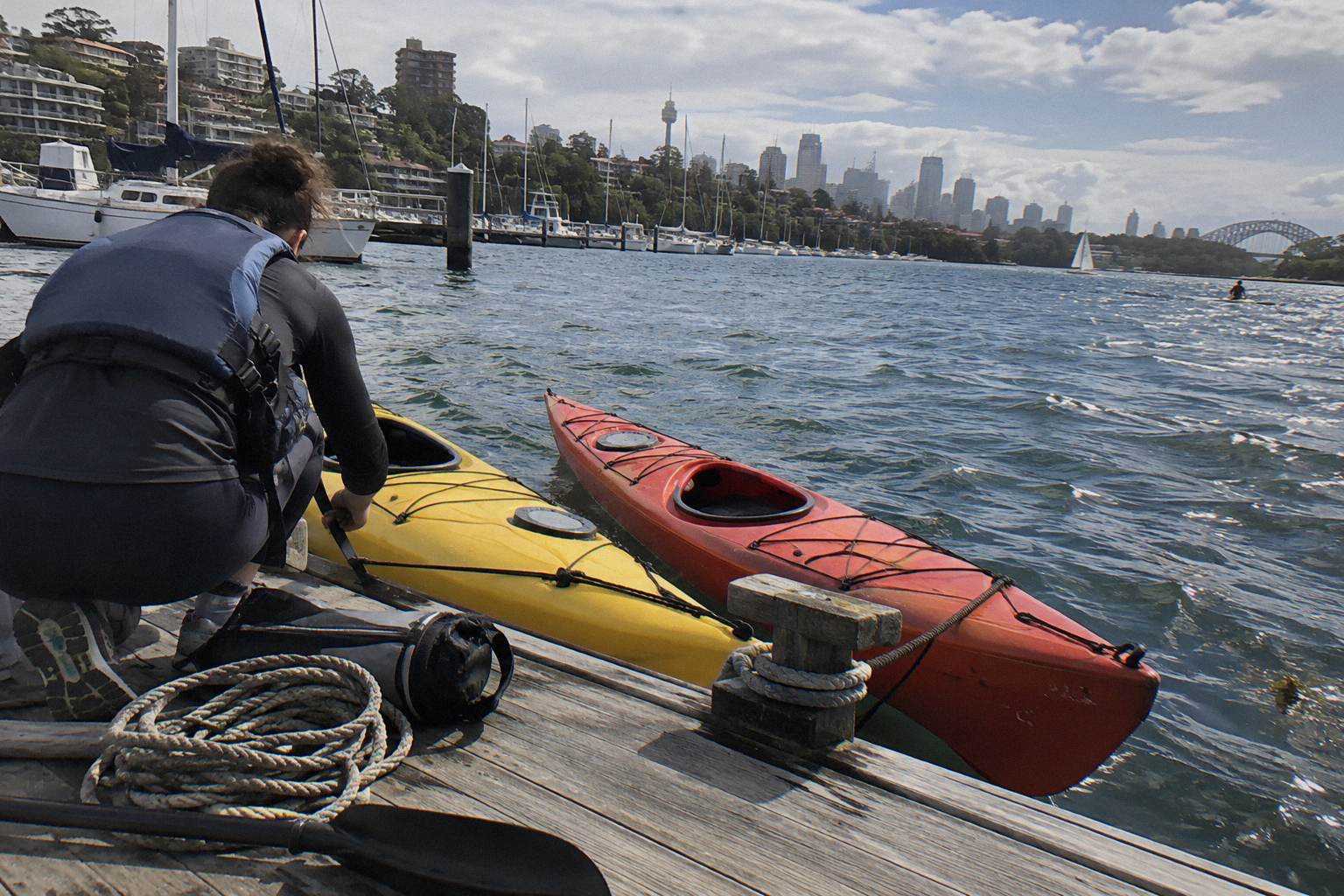
A guided tour suits everyone else, and it is the natural answer for a visitor asking the licence question in the first place. The 1.5-Hour Guided Opera House Paddle from Kirribilli, rated 5.0 across 29 reviews, is a short first paddle with the guide handling equipment and conduct. The Small-Group Opera And Bridge Paddle, rated 4.9 across 105 reviews, caps groups at five and states a minimum age of 16 and a 110-kilogram weight limit, which is worth knowing before you book either way. Both run with the operator's cancellation terms of free cancellation up to 24 hours before the start.
| Guided tour | Independent hire | |
|---|---|---|
| Licence needed | Not described by NSW for kayaks | Not described by NSW for kayaks |
| Lifejacket | Issued and fitted by the operator | Issued by the rental operator; wearing is on you |
| Lights after dark | Carried and managed by the guide | Your torch, your responsibility |
| Route and ferries | Guide plans and times crossings | You plan around channels and ferry lines |
| Briefing | Included at launch | Rental safety briefing; conduct rules are yours to know |
| Best for | First-timers, visitors, short stays | Confident paddlers who know the harbour |
The cost question is separate from the licence question, and prices depend on date and group size, so the booking page is the place to check. The kayak tour prices guide lays out what drives the differences. If your worry is weather rather than paperwork, read what happens when a tour is cancelled for weather before you book.
What Trips People Up Before A First Paddle
The traps are consistent: paddlers repeat the outdated 100-metre lifejacket rule, assume a licence exists because ferries and ships do, forget that the lifejacket must be worn rather than carried when paddling alone or after dark, and plan to pause under the Harbour Bridge without knowing the transit zone forbids stopping, anchoring or drifting there. Each of these is fixable in a minute of reading, and none of them requires a licence.
The transit zone point deserves emphasis because it is the one that can genuinely spoil a plan. Paddling through beneath the bridge, where an operator's route states it, is transit and is allowed. Stopping for photographs is not, and no operator may promise it. Any tour that markets itself around time spent stationary under the bridge is promising something the harbour rules do not permit, so weigh that when comparing options.
The second trap is treating the lifejacket as optional gear for strong swimmers. Swimming ability is not part of the rule. The NSW requirements turn on being alone, having children under 12 aboard, and the hours between sunset and sunrise, and the recommendation beyond those cases is to wear one anyway. If swimming confidence is your real worry, the do you need to swim to kayak question is worth two minutes.
The third trap is assuming the rules change with the seasons. They do not. Daylight saving shifts the clock, with clocks having gone forward on Sunday 4 October 2026 and going back on Sunday 4 April 2027, which changes when sunset falls but not what the rules require. A December evening paddle and a June evening paddle carry identical obligations once the sun is down.
Common Questions About Kayak Licences On Sydney Harbour
Do You Need A Licence To Kayak On Sydney Harbour?
No paddler licence is described on the NSW government pages that govern kayaking on the harbour. Those pages set rules for lifejackets, lights and conduct around other vessels. Boating licences in NSW apply to powered vessels. For a definitive answer on your own situation, phone Transport for NSW Maritime on 13 12 36.
Do You Need A Licence To Hire A Kayak In Sydney?
No licence for paddlecraft is described in the NSW rules, and hire operators on the harbour rent kayaks on that basis, with their own safety briefing and an approved lifejacket included. The operator's own terms, such as prebooking requirements for groups, still apply. Confirm any age or supervision requirements with the operator you book with.
Do Children Need Anything Special To Kayak On The Harbour?
A child under 12 aboard triggers the lifejacket-wearing requirement for the paddler responsible, and NSW says lifejackets are always worn by children in the operator guidance. Minimum ages differ by tour and operator: the Small-Group Opera And Bridge Paddle states 16, the sunrise Rushcutters Bay tours state 12, and the 3-Hour Sunrise Kayak with breakfast states 8. Check the specific tour before booking.
Can You Kayak Under The Sydney Harbour Bridge?
You may transit beneath the bridge where an operator's route states it, but the Bridge Transit Zone forbids stopping, anchoring or drifting there except in an emergency. No tour can promise a stop or photographs from directly under the bridge. Weather and traffic decide what any given paddle passes.
What Equipment Must A Kayak Carry On Sydney Harbour?
Enough approved lifejackets for everyone on board at all times, and a torch or lantern showing a white light, ready in time to prevent a collision after dark. A lifejacket of Level 50S or above must be worn when paddling alone, with children under 12, or at night. Guided and rental operators issue lifejackets as standard.
Who Do You Ask If The Rules Are Unclear?
Transport for NSW Maritime, on 13 12 36, is the contact given on the official harbour rules page. Event closure zones for Vivid, New Year's Eve and Australia Day are published as annual maps, so check the current Transport for NSW map for the dates you plan to paddle.