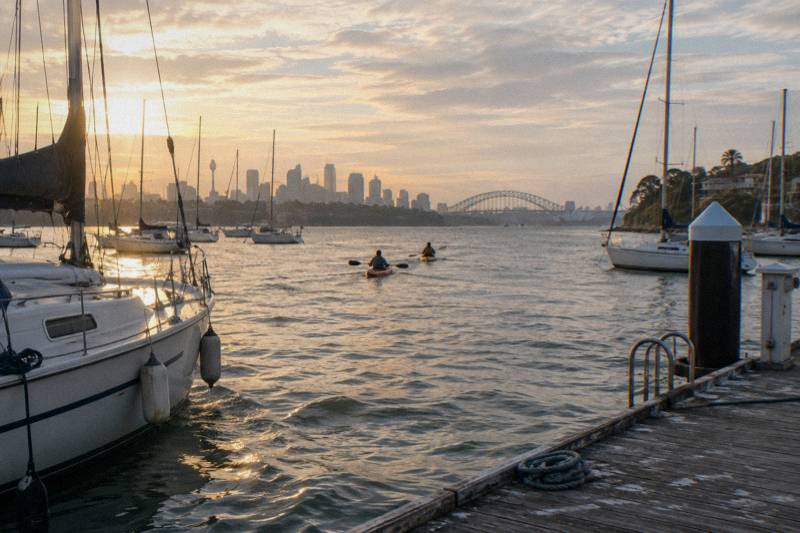
Sydney Harbour Kayak Safety: Traffic, Weather, Guides And Gear
Sydney Harbour is a working port, a ferry highway and one of the busiest recreational waterways in Australia, and that is exactly why a safety briefing matters before you book a paddle.
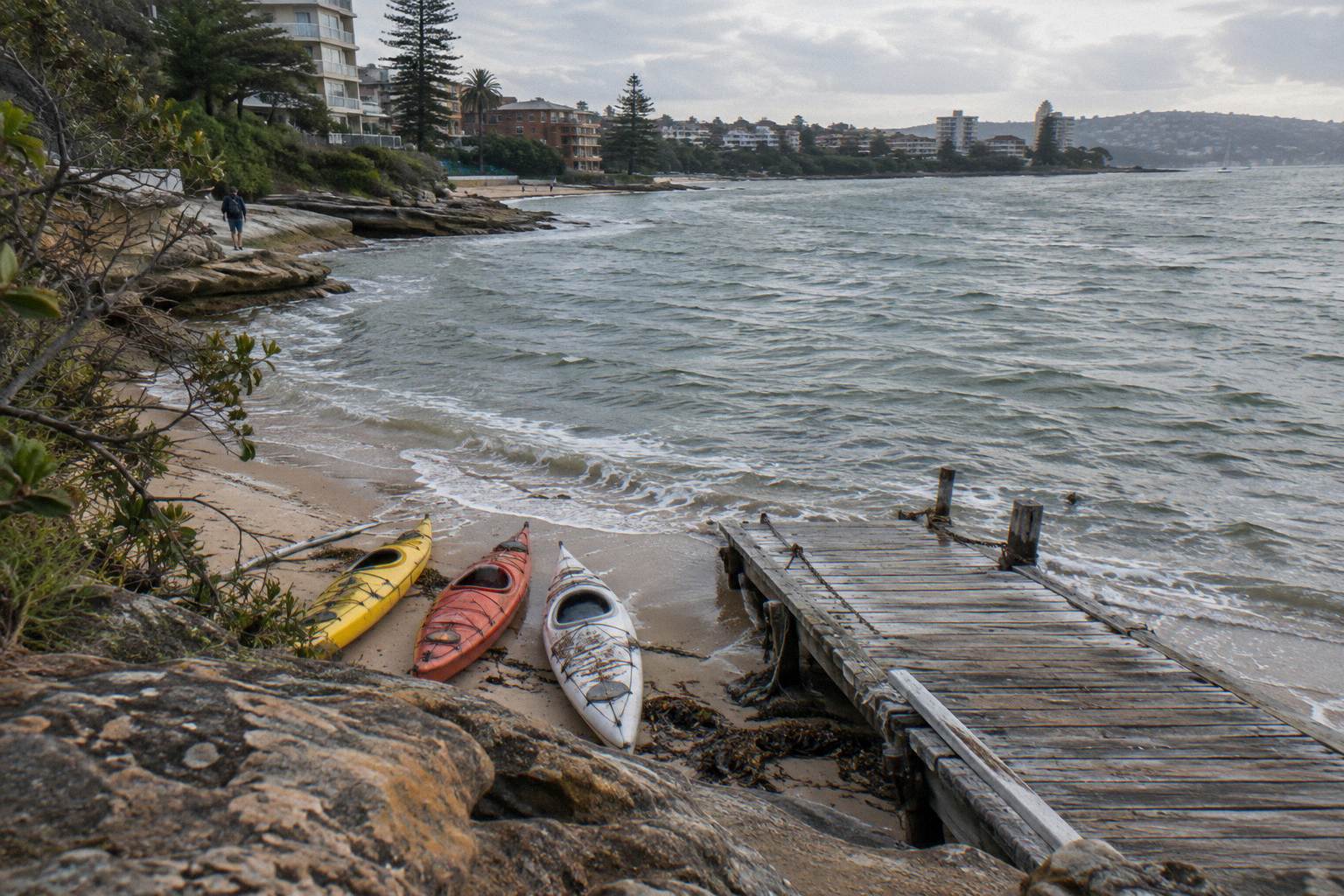
Short answer
Kayaking on Sydney Harbour is a well-run, guided activity when you follow the NSW rules: wear the lifejacket the operator issues, carry a white light near dark, keep clear of ferries and big ships, and never stop or drift under the Harbour Bridge. Tours here are cancelled for strong wind, thunderstorms or poor visibility, not for light rain.
In short: Sydney Harbour is an extremely busy waterway in the NSW government's own words, and kayaking it safely comes down to four things: wearing the lifejacket your operator issues, carrying a white light if you are out near dark, giving ferries and ships a wide berth, and never stopping or drifting under the Harbour Bridge. Every rule below comes from NSW maritime rules or operator policy pages, and every guided tour on the harbour builds its briefing around the same points. Weather calls are made by operators, not by you, and the terms below show exactly how those calls work. Before you head out, it also helps to know whether any paperwork is required, and the guide to licence rules for kayaking on Sydney Harbour covers exactly that question.
Start with the full area overview in kayaking Sydney Harbour, then come back here for the safety detail.
Quick Facts
The short answers to the safety questions people ask most: lifejackets must be worn when paddling alone or at night on Sydney Harbour, a white light must be carried on the kayak, stopping under the Harbour Bridge is banned, and tours run in light rain but cancel for strong wind, storms or poor visibility. Each row below is expanded in full later in this guide, with the NSW rule or operator policy page it comes from, so treat this table as a checklist rather than the whole briefing.
| Question | Answer |
|---|---|
| Lifejacket required? | Must be carried for everyone on board; must be worn when alone or at night in enclosed waters such as Sydney Harbour (NSW rules) |
| Light required? | A torch or lantern showing a white light, ready to prevent a collision |
| Stopping under the Harbour Bridge? | Not allowed, except in an emergency (Bridge Transit Zone) |
| Personal watercraft and kiteboards | Banned on the harbour, including Middle Harbour; kayaks are not affected |
| Weather cancellations | Light rain proceeds; strong wind, thunderstorms, lightning, dangerous water or poor visibility cancel (Sydney Harbour Kayaks policy) |
| Maritime authority contact | Transport for NSW Maritime, 13 12 36 |
Is Kayaking On Sydney Harbour Safe?
Yes, in the sense that matters most to a first-time paddler: Sydney Harbour is a regulated, patrolled, guide-friendly waterway governed by clear written rules, and every guided tour covered here begins with a structured briefing before anyone so much as touches the water. Safety on this harbour is less about hidden danger and more about traffic management. NSW describes Sydney Harbour as an extremely busy waterway, with ferries, ships and recreational craft sharing narrow channels with low-sitting paddlecraft. The rules that govern that sharing are published, plain and short, and a guided tour folds all of them into a twenty-minute briefing before launch. For a closer look at how those right-of-way rules play out around working vessels, the guide to paddling near ferries and ships on Sydney Harbour covers what to watch for in the shipping lanes and how tours handle ferry wash.
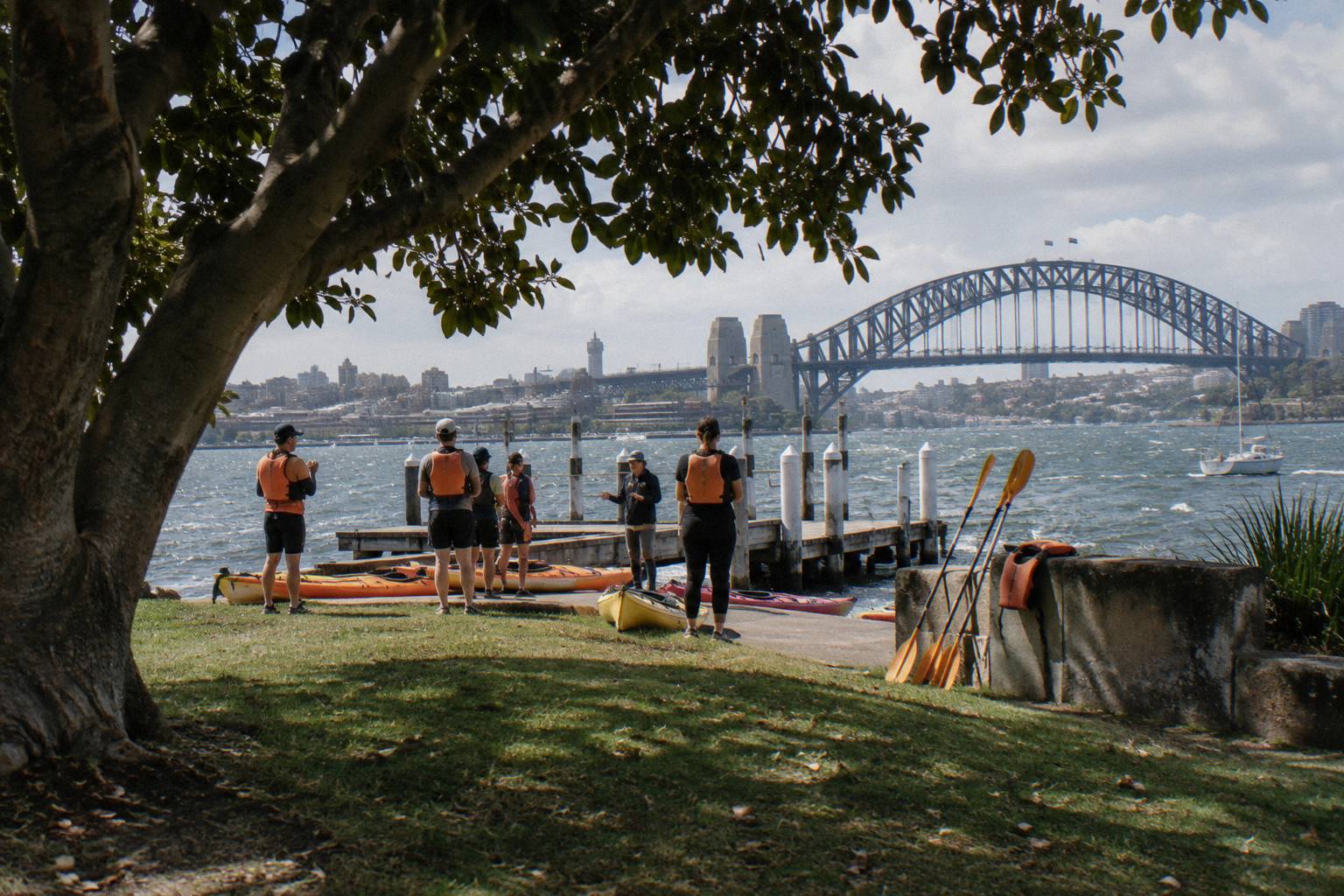
The honest framing is that the harbour asks something of you. It is a working port with shipping channels, a fast ferry network and a transit zone under the bridge, and the skills that keep you safe are attention and positioning rather than athletic fitness. Operators here run stable double kayaks on many tours precisely because stability matters more than speed in confined water. Sydney Harbour Kayaks, for example, paddles its Middle Harbour tours in stable double sea kayaks and says no experience is needed, with a twenty-minute paddling and safety briefing included.
Guided versus independent matters too. A guide who knows the ferry lines, the channel edges and the weather patterns of a given bay carries most of the risk management for you. That decision has its own breakdown in guided tour or kayak hire, and the safety case for a guide on this harbour in particular is strong: the guide decides the route around traffic, tide and visibility, not you.
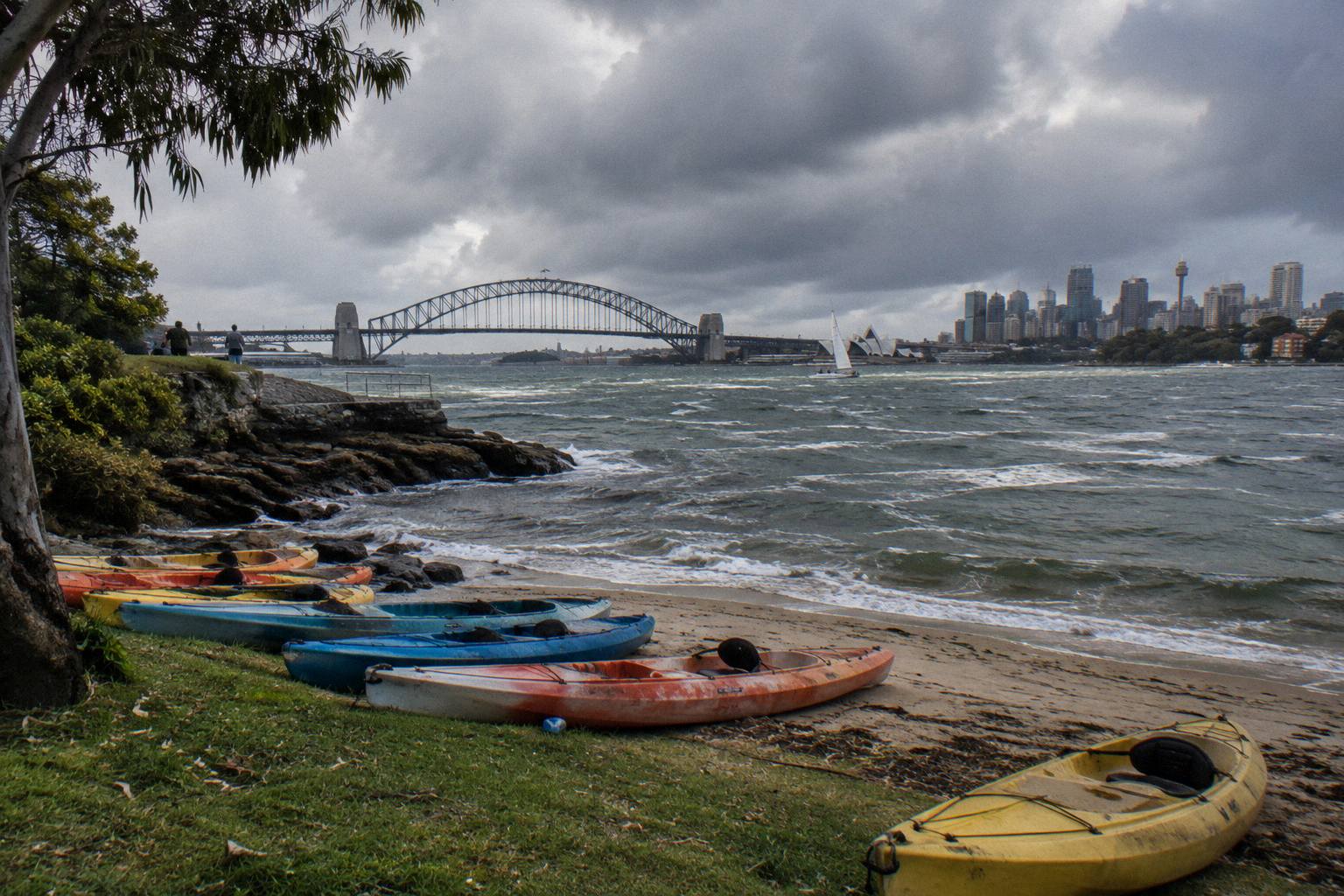
What no operator or writer can promise is an outcome. Weather and traffic decide what a paddle passes and whether it runs at all, so treat every route description as a plan rather than a guarantee. The pages that follow set out exactly which rules bind you, which gear the operators supply, and which weather calls cancel a tour, all from NSW rules and operator policy pages.
What Are The Lifejacket And Light Rules?
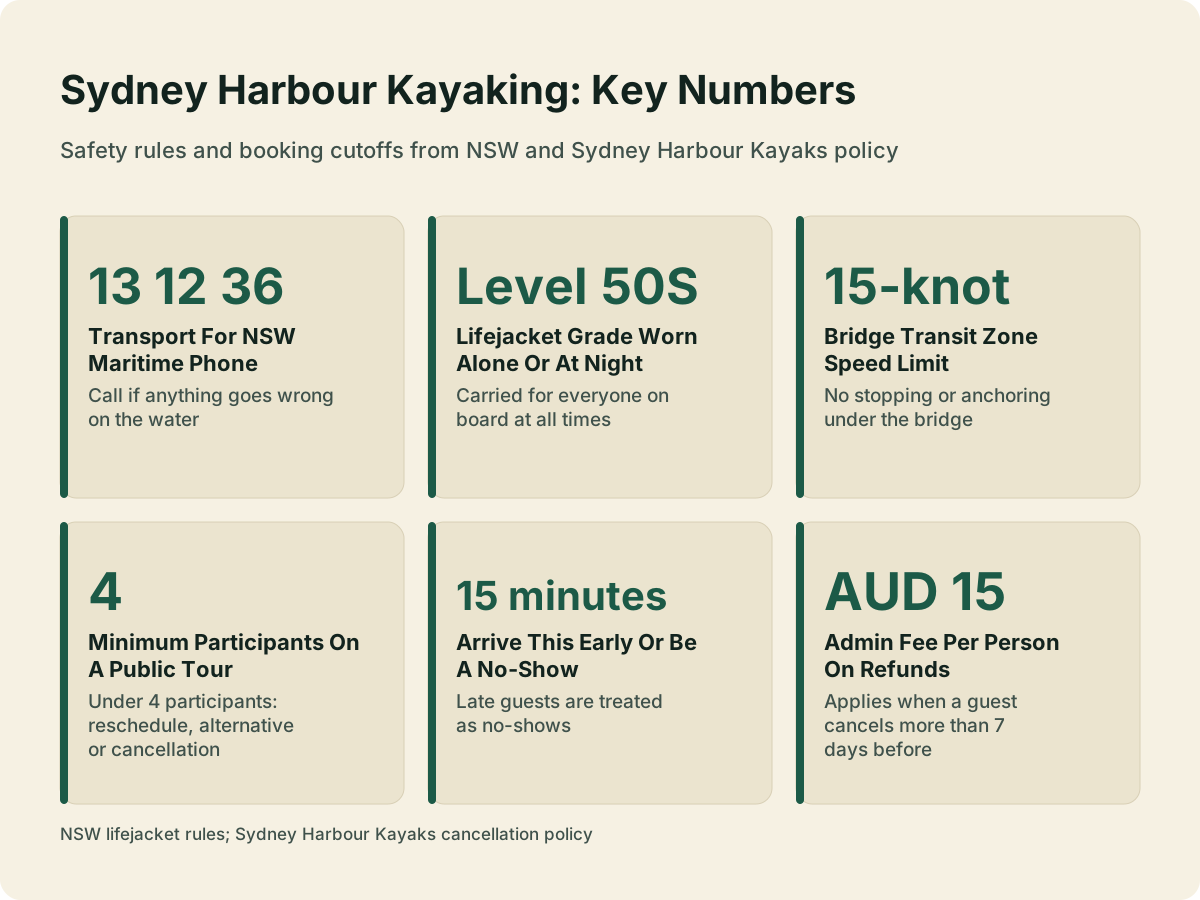
NSW rules say every vessel, kayaks included, must carry enough approved lifejackets for everyone on board at all times, and in enclosed waters, which includes Sydney Harbour, a lifejacket of Level 50S or above must be worn when you paddle alone or at night, between sunset and sunrise. Beyond those two cases, NSW states plainly that it recommends wearing one at all times, and a skipper can require wearing one in heightened-risk conditions such as a severe weather warning, non-swimmers on board, cold water or a danger of swamping. Guided and rental operators on this harbour issue lifejackets as standard: Sydney Harbour Kayaks includes an approved lifejacket in every rental and says lifejackets are always worn by children.
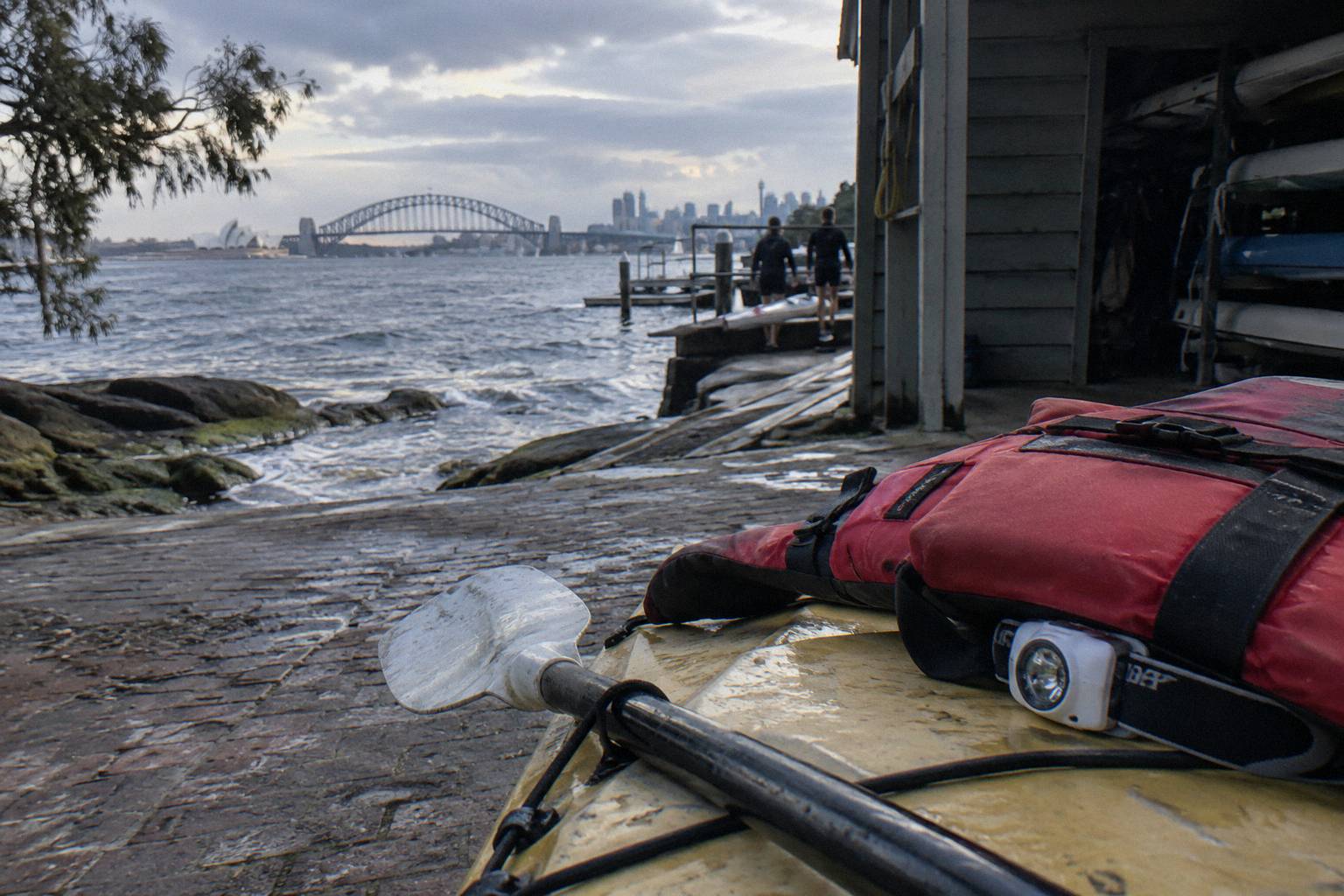
The night rule is the one that surprises people, because sunrise and sunset paddles are the signature experiences here. A sunrise launch in November leaves the beach in the dark, so the lifejacket-on rule applies from the moment you push off until the sun clears the horizon. The same logic applies at the other end of the day. Sunset tours such as the Sunset Kayak, Free Photos departure from Lavender Bay, a 1.5-hour paddle rated 4.8 across 162 reviews, finish as the light drops, and the LED Sunset Kayak, rated 4.9 across 139 reviews, is deliberately built around that window with lights on the kayaks themselves.
Lights have their own short rule. Under NSW requirements for paddlecraft, kayaks, canoes and surf skis must carry a torch or lantern showing a white light, ready in time to prevent a collision, and a head torch is recommended. Boats over four metres are also recommended to show two all-round white lights. On a guided tour the guide carries and manages this; if you ever paddle independently, the torch goes with you, not in the car.
The official wording lives on the NSW lifejacket page at when to wear a lifejacket, and one dated brochure still circulates a "100 metres from shore" rule that no longer applies; ignore it. The current rule is the one above. For gear beyond the jacket, the packing breakdown in what to wear kayaking Sydney Harbour covers shoes, layers and the oyster-shell reality of harbour beaches, which is why operators keep asking for closed-in shoes.
| Situation on Sydney Harbour | Lifejacket (Level 50S or above) | White light |
|---|---|---|
| Paddling alone | Must be worn | Torch or lantern carried, ready to show |
| Paddling at night, sunset to sunrise | Must be worn | Torch or lantern carried, ready to show |
| Paddling with others in daylight | Must be carried for everyone; wearing recommended at all times | Recommended, not required |
| Children on board | Operators state children always wear one (Sydney Harbour Kayaks) | Same rule as adults |
| Open waters or crossing coastal bars | Must be worn at all times | Torch or lantern required |
Because the night boundary is what triggers both the wear rule and the light rule, the clock times matter. Sunrise on the 15th of each month in Sydney, computed to within about plus or minus 2 minutes, runs like this.
Those three sunset departures are the ones most affected by the after-dark rules, and each operator runs its own briefing covering lights, jackets and group spacing before launch.
How Do You Paddle Around Ferries, Ships And Channels?
The NSW give-way rules say powered and sailing vessels are recommended to keep a proper lookout and give way to paddlecraft, but paddlecraft sit low on the water and are hard to see, so the practical rule for a kayaker is to stay outside shipping channels, cross them behind traffic rather than in front, and keep well clear of big ships and fast ferries. No vessel may cross in front of a large vessel or obstruct a channel where a large vessel is passing. High-speed ferries show an all-round yellow flashing light, which is your signal to hold position well away from their line. Sydney VTS, the harbour's vessel traffic service, broadcasts on VHF channels 16 and 13 every two hours.
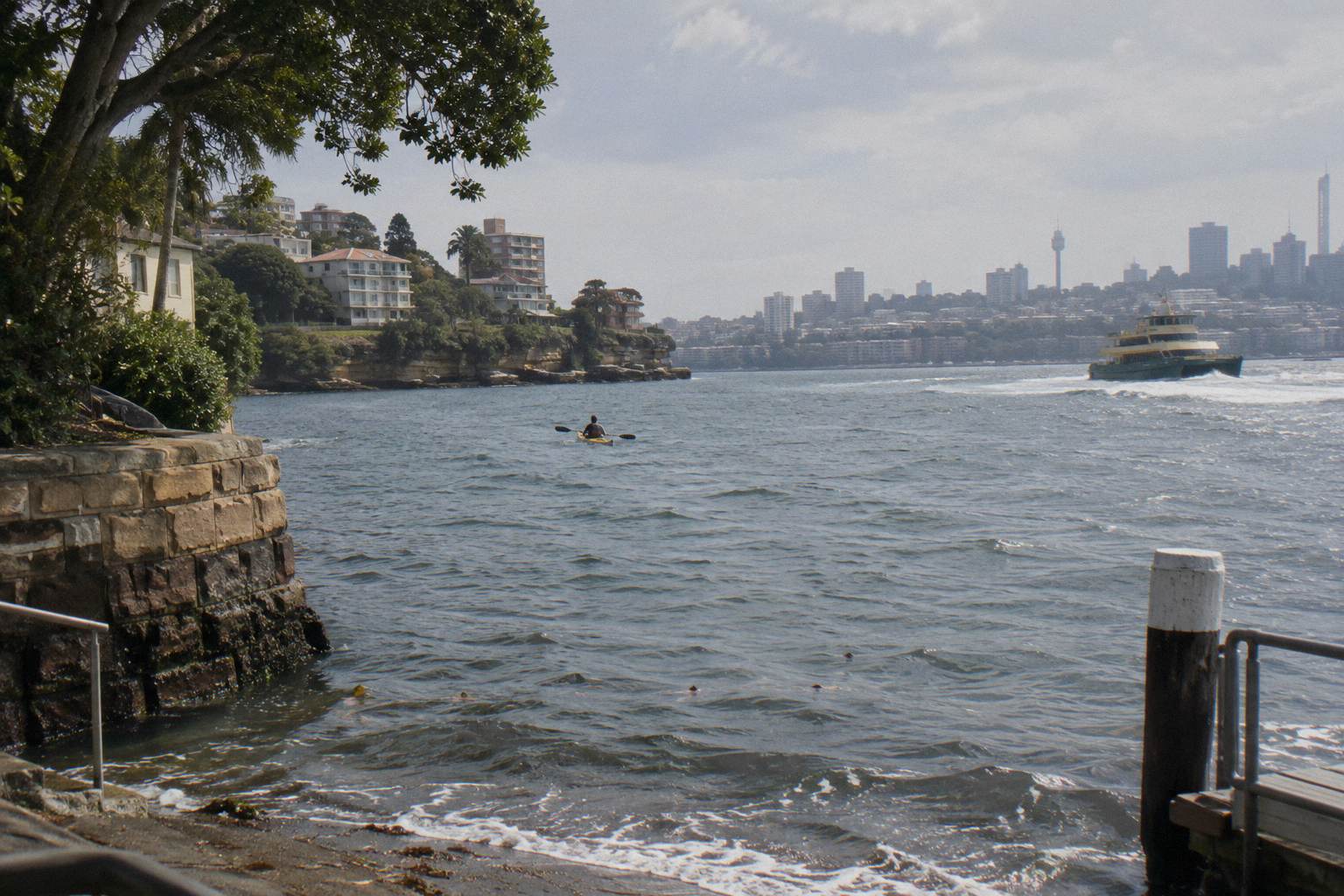
The harbour rules page, rules for boating on Sydney Harbour, is the primary source for all of this, and two points on it matter more to kayakers than anything else. First, keep to the starboard side of channels, the right-hand side looking up-channel, exactly as the powered traffic does. Second, wash from large vessels can capsize small craft, so the moment anything big moves, you turn your bow into its wake and let it pass under you rather than broadside.
Guided tours choose launch points and timings that keep group traffic away from the busiest lanes. The Sunrise Kayak From Rushcutters Bay tour, rated 4.9 across 2,776 reviews, leaves from the quieter eastern side of the harbour, and the Sunrise Paddle Under Harbour Bridge departure from Kirribilli, rated 5.0 across 998 reviews, is timed before the daytime ferry traffic builds. That is not luck; it is the safety logic of the whole category, and the same reasoning is unpacked for one specific question in kayaking near ferries and ships.
Personal watercraft and kiteboards are banned on Sydney Harbour, including Middle Harbour, which removes two of the more erratic hazards a paddler might otherwise meet. Kayaks are unaffected by that ban. If anything goes wrong on the water, the maritime authority to call is Transport for NSW Maritime on 13 12 36.
The Rushcutters Bay sunrise departure is a good example of the traffic logic in practice: a sheltered starting bay, a guide setting the line, and a finish before the harbour fills with daytime craft.
What Is The Bridge Transit Zone?
The Sydney Harbour Bridge Transit Zone runs from Bennelong Point and Kirribilli Point to Millers Point and Blues Point, and inside it vessels must not stop, anchor or drift under the bridge except in an emergency; they may only transit through, with a 15-knot speed limit. The zone excludes Walsh Bay, Sydney Cove, Lavender Bay north of Blues Point and the southern end of Milsons Point wharf, so the bays either side of the bridge remain normal paddling water. For a kayaker the practical meaning is simple: you can paddle past or pass under the bridge where an operator's route says so, but no tour can promise a stop, a drift or a photo session beneath it.
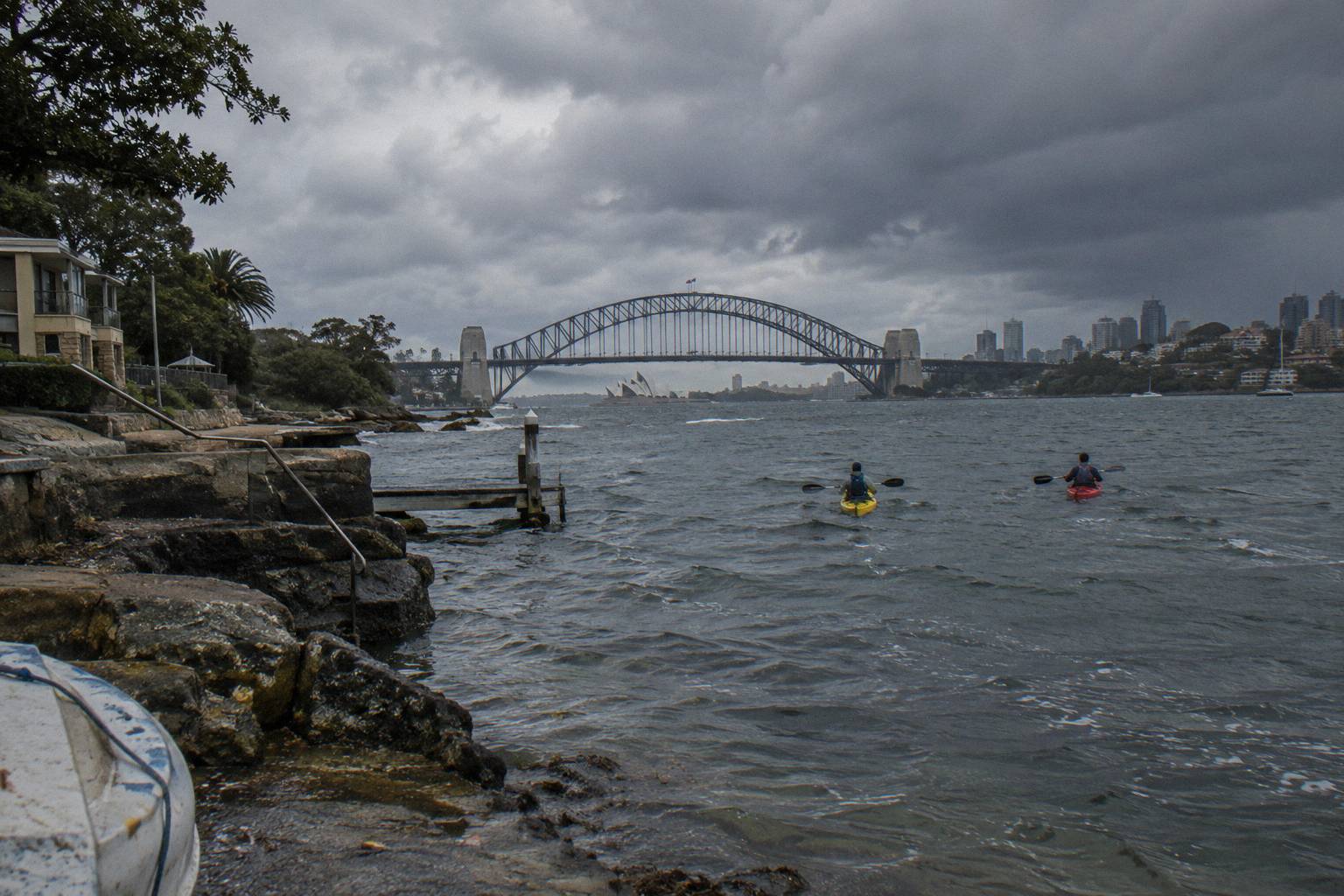
This is why careful reading of tour language matters. Several sunrise tours from the north side pass under the bridge on their way around the harbour, and their descriptions say exactly that, passing. Any promise of stopping or lingering beneath the span would break the transit zone rule, so treat that wording as the tell between a well-run tour and an overclaim. Sydney by Kayak's own FAQ says a pass under the bridge is guaranteed only on its warm-month sunrise tour, before ferries run, and that off-peak sunrise tours route to Berry's Bay instead; that is an operator being specific about what traffic and timing allow.
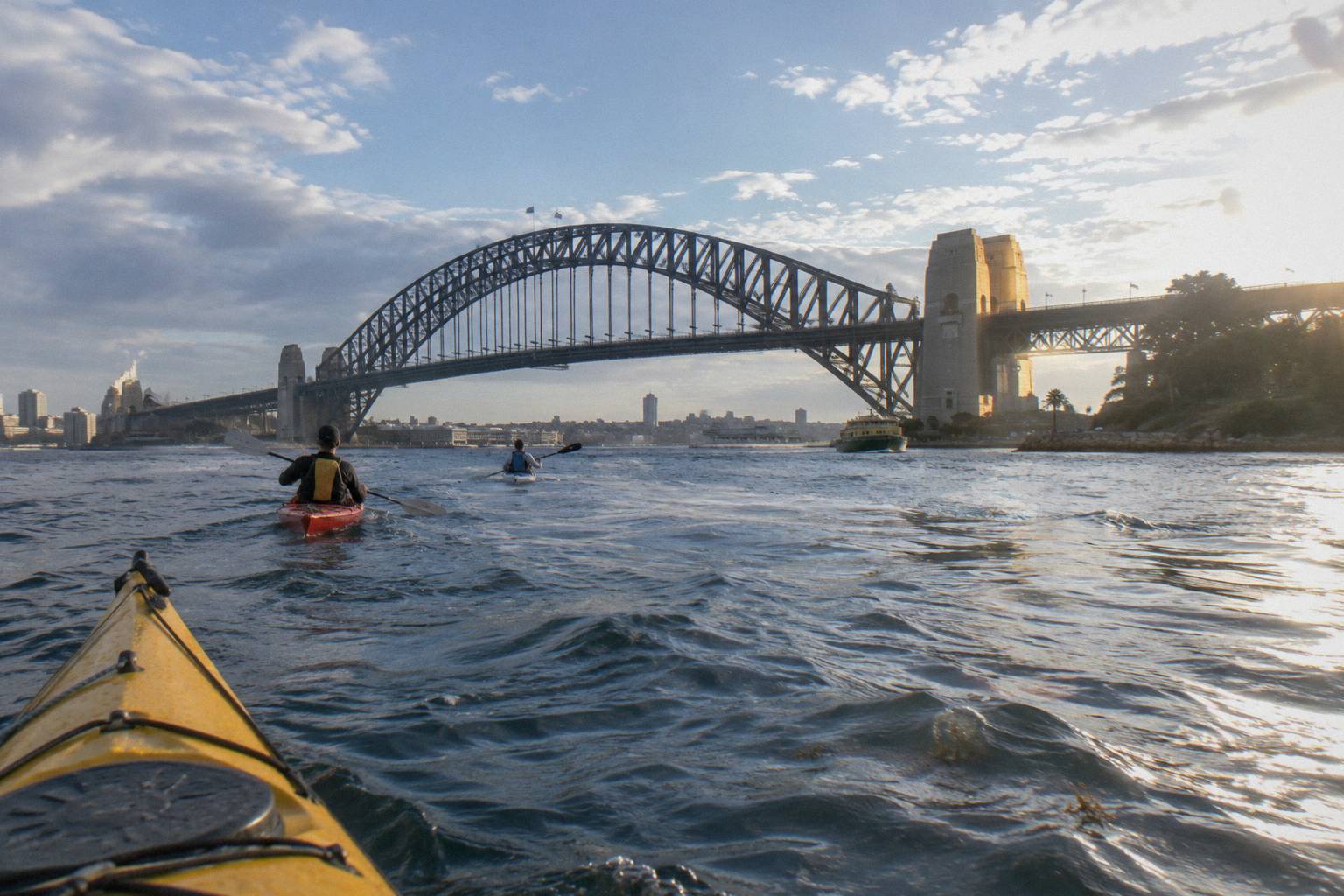
The zone's geography is worth a minute of study before you book any bridge-area tour, because it explains the routes. Lavender Bay sits north of Blues Point and outside the zone, which is why so many tours launch from Quibaree Park there: they start in calm excluded water and transit the zone only when crossing. The full bridge-area picture, including which tours pass under and which stay in the bays, is laid out in kayaking under the Sydney Harbour Bridge, and the launch-point detail sits in Sydney Harbour kayak meeting points.
One more time, because it is the single most misrepresented fact in this category: no operator may stop, anchor or drift under the Sydney Harbour Bridge outside an emergency. Any page, review or pitch that promises otherwise is describing something the official harbour rules do not allow.
When Does Weather Cancel A Kayak Tour?
Sydney Harbour Kayaks states on its own policy page that its tours proceed in light rain and are cancelled for strong winds, thunderstorms or lightning, dangerous water or poor visibility, and that if the operator cancels a direct booking, guests get a transfer, a three-year credit or a full refund with no admin fee. Those are that operator's own terms, not a harbour-wide rule, so read the terms attached to whichever booking you actually make. The broader principle holds across the tours covered here: the call is made by the operator on the day, using wind, lightning and visibility rather than rain alone.
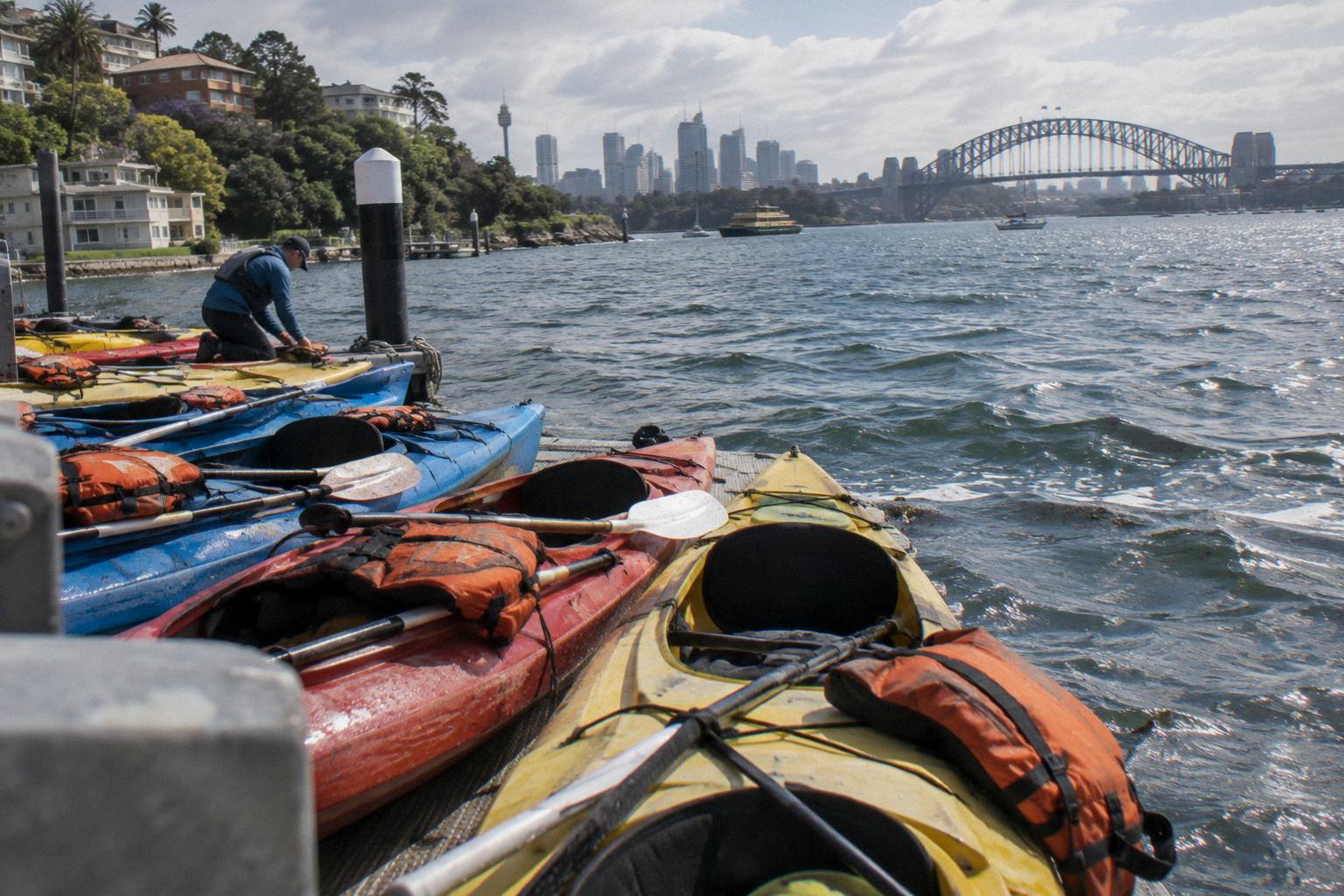
The detail of that policy is worth knowing because it shapes what you can and cannot plan around. Guests arriving late are treated as no-shows, with arrival set at fifteen minutes before departure. Public tours generally need a minimum of four participants or the operator offers a reschedule, an alternative or a cancellation. A guest cancelling a direct booking more than seven days out gets a refund less an AUD 15 per-person admin fee, or a free transfer or credit; from 24 hours to seven days there is no refund, only transfer or credit; inside 24 hours and for no-shows, nothing. Private and corporate bookings carry their own ladder, with refunds more than 14 days out and nothing inside 48 hours. Full payment is taken at booking, and prices include GST.
| Cancellation scenario (Sydney Harbour Kayaks direct bookings) | What happens |
|---|---|
| Operator cancels for weather | Transfer, 3-year credit, or full refund, no admin fee |
| Guest cancels more than 7 days before | Refund less AUD 15 admin per person, or free transfer or credit |
| Guest cancels 24 hours to 7 days before | No refund; free transfer or credit |
| Guest cancels within 24 hours, or no-show | Nothing |
| Guest arrives late (under 15 minutes early) | Treated as a no-show |
| Public tour under 4 participants | Reschedule, alternative or cancellation offered |
The booking-page products in the tours covered here carry their own stated cancellation terms, and each of the sunset and sunrise departures named above states free cancellation up to 24 hours before the start for a full refund. That is a materially friendlier window than the operator's own direct-booking ladder, and it is exactly why the rule above matters: match the terms to the booking you made, not to the operator's website in general. The full mechanics, including what happens on the morning itself, are worked through in what happens when a tour is cancelled for weather.
Timing your paddle around the seasons is a separate question from weather calls, and it has its own page in the best time to kayak Sydney Harbour. The short safety-relevant version: light is a planning input here, because the computed sunrise and sunset clock below decides when the wear-your-lifejacket and carry-a-light rules switch on.
| Month (15th) | Sunrise, around | Sunset, around |
|---|---|---|
| January | 05:58 | 20:08 |
| February | 06:29 | 19:49 |
| March | 06:54 | 19:15 |
| April | 06:17 | 17:33 |
| May | 06:39 | 17:03 |
| June | 06:57 | 16:52 |
| July | 06:58 | 17:03 |
| August | 06:35 | 17:24 |
| September | 05:55 | 17:45 |
| October | 06:14 | 19:07 |
| November | 05:44 | 19:35 |
| December | 05:38 | 20:01 |
These times are computed, approximate to within about plus or minus 2 minutes, and not an official table. Clocks went forward on Sunday 4 October 2026 and go back on Sunday 4 April 2027.
A pre-dawn departure like the Kirribilli sunrise paddle is the case study for the night rules: launch in the dark with jackets on, and the light rule dissolves as the sun comes up mid-tour.
What About Sharks And Wildlife?
The verified shark facts for Sydney Harbour are narrow and plain: the NSW SharkSmart program runs 2 tagged-shark listening stations in the harbour that send an alert when a tagged white, tiger or bull shark passes within 500 m, via the SharkSmart app and X, and its research program includes bull sharks in Sydney Harbour and estuaries. That is the whole of what the official pages state. There are no verified incident counts, no verified seasonality claim and no verified risk percentage for harbour paddling, and this article will not invent any of them.
The Shark Meshing (Bather Protection) Program covers 51 ocean beaches between Newcastle and Wollongong, and the official page states the nets do not create a total barrier. Those are ocean beaches; the page says nothing about nets inside the harbour, so the claim "there are no nets in the harbour" cannot be made as an official statement either. If you want the live picture, the source is SharkSmart's current program page, and the fuller wildlife discussion, including what operators may and may not promise, sits in sharks and Sydney Harbour kayaking.
One operator statement is on the record: Manly Kayak Centre's FAQ describes a shark sighting as extremely rare. That is that operator's words, not a statistic, and it is the only quotable claim in the category.
Wildlife rules cut the other way too, toward protecting animals from paddlers. The Manly little penguin colony is a small population with special protections under NSW environment rules: restrictions on approaching or disturbing the birds, a 4-knot limit around Spring Cove, yellow marker buoys marking a no-anchoring zone, and a warning that boats can strike penguins. The same honesty applies to sightings as to sharks: no tour can promise penguins, dolphins, turtles, seals or rays, and an operator page listing them as seasonal possibilities is a claim about luck, not a schedule.
What Do Guides And Gear Actually Cover?
On the guided tours covered here, the operator supplies the kayak, paddle and lifejacket, runs a pre-launch safety briefing, and sets the route around traffic, tides and weather, which is why the guide carries most of the risk decisions you would otherwise make alone. Sydney Harbour Kayaks states its Eco Tour includes stable double sea kayaks, a qualified guide, a twenty-minute paddling and safety briefing, dry storage and change facilities, and its rentals include the kayak, paddle, approved lifejacket, briefing and change room. Group sizes are capped on the tours where they are stated: 12 on the 3-Hour Sunrise Kayak with breakfast from Lavender Bay, 9 on the Sunset Kayak with free photos, and 14 on the LED sunset departure. Guides make the safety calls on the water, but the calendar still matters, so before picking a day it pays to skim the rundown of when not to go kayaking on Sydney Harbour, from ferry traffic to weather cancellations.
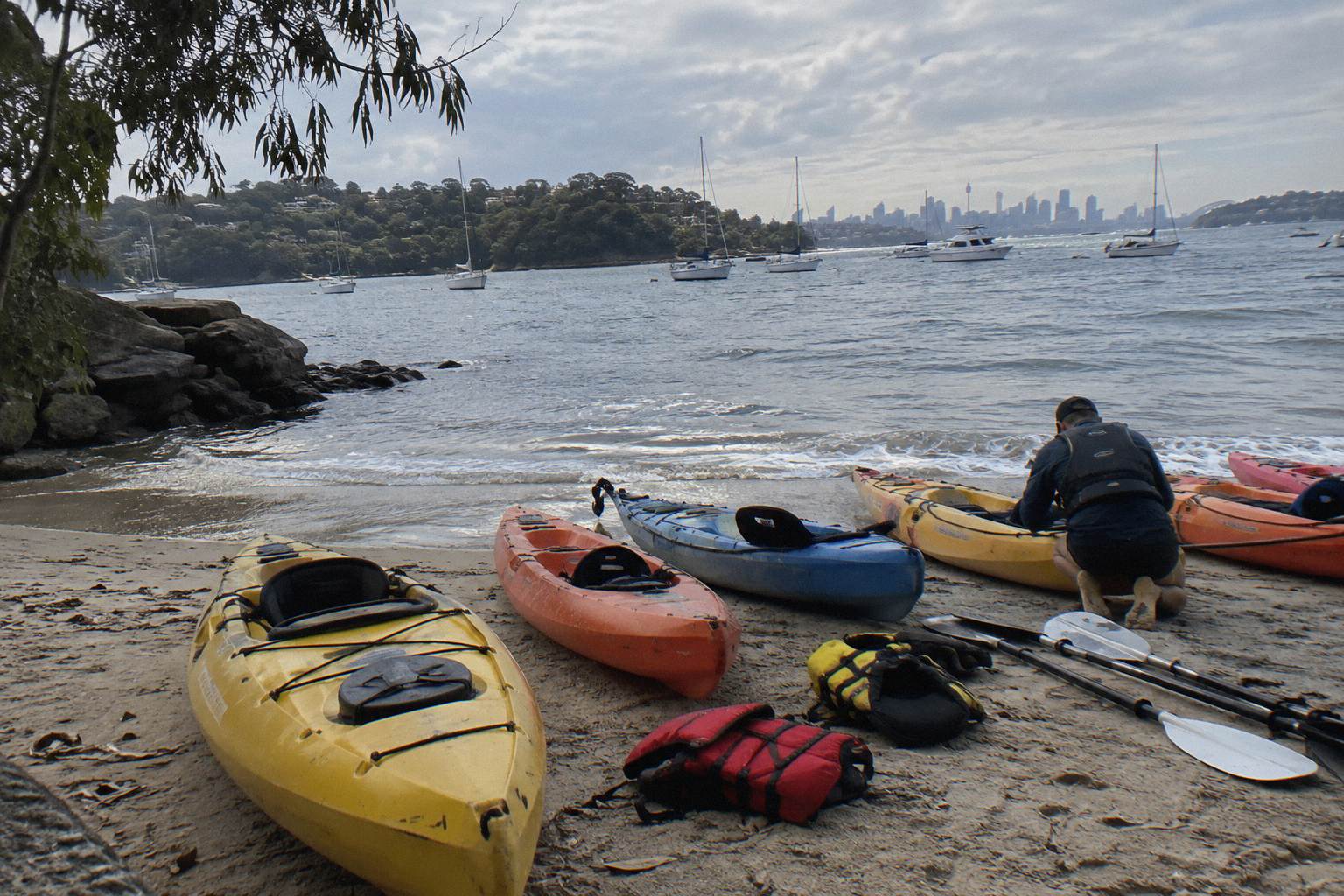
What gear does not cover is you. Closed-in shoes are the standing request across operators because of oyster shells on harbour beaches, and the packing logic is in the what-to-wear guide linked above. Water, sun protection and a dry layer are on you even when the kayak and jacket are not. Fitness is a smaller factor than people fear: the 4-Hour Middle Harbour Eco Paddle from The Spit, minimum age 14, states no experience is needed, and its routes follow tides and weather rather than a fixed line, with the operator saying routes cannot be guaranteed.
The guide's real safety function is judgment. A guide decides, from experience, whether the group crosses now or waits, holds the outside line or cuts a bay, and turns back early. That judgment is what you are buying on a guided departure, and it is why the deeper skill questions, such as how hard paddling actually is and what happens if a kayak flips, have their own pages in how hard kayaking is for beginners and what happens if you fall out of a kayak.
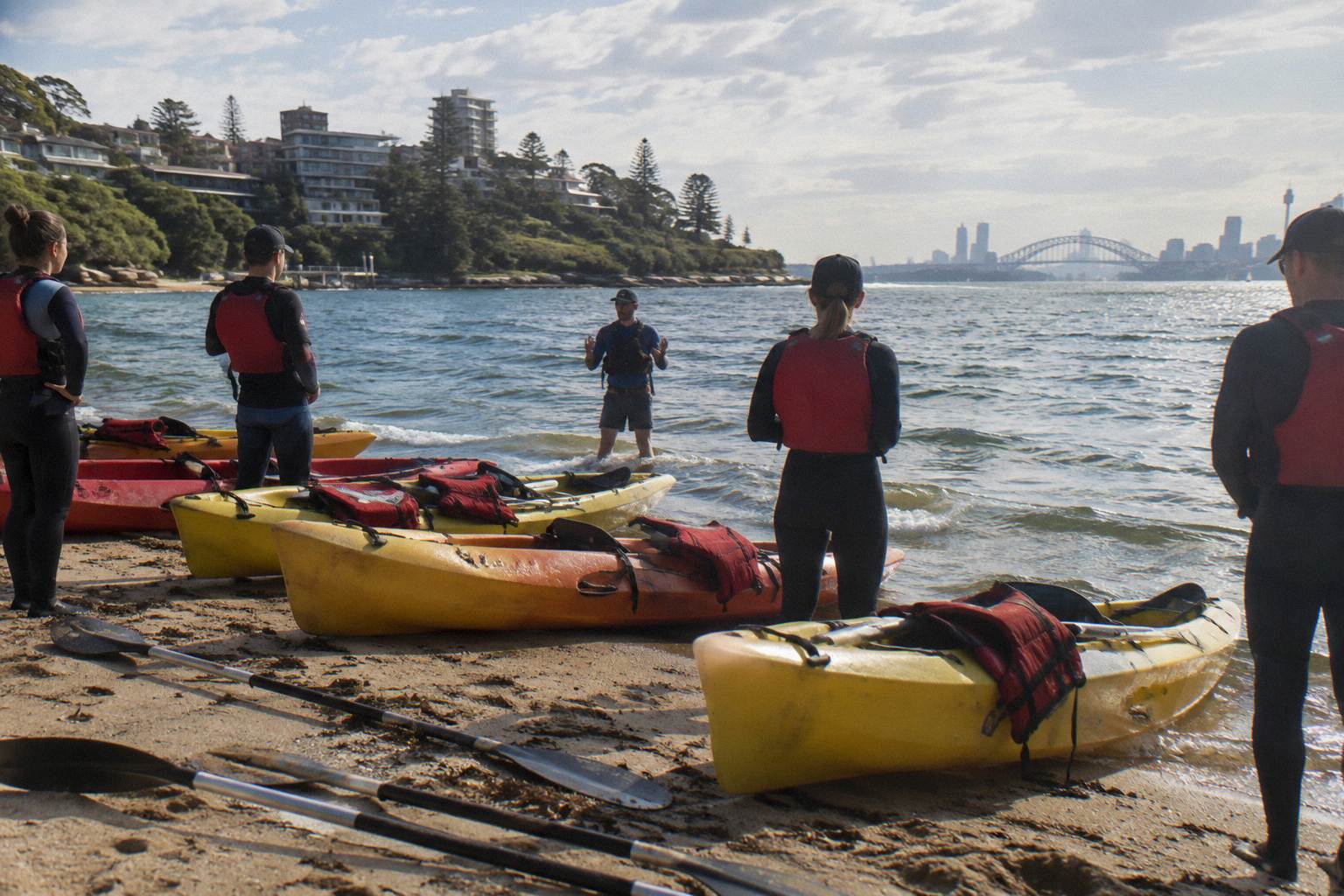
The Middle Harbour eco departure is the clearest example of the full gear-and-guide package: doubles, briefing, guide, morning tea on a beach, and a sheltered waterway that never has to cross the working harbour's shipping lanes.
Common Mistakes When Paddling Sydney Harbour
The mistakes that trip people up are almost all preparation errors: arriving late and forfeiting the booking, wearing thongs instead of closed shoes on shell-strewn beaches, assuming the bridge pass includes a bridge stop, skipping the lifejacket on a pre-dawn launch, and reading one operator's cancellation terms as if they applied to every booking. Each of these has a one-line fix, and none of them requires skill or strength, only attention before you leave the house.
Arrival is the silent one. Sydney Harbour Kayaks sets check-in at fifteen minutes before departure and treats late arrivals as no-shows, and sunrise tours in particular leave on the sun's schedule, not yours. Shoes are the second: oyster shells cut, and thongs fail. The bridge is the third, and it repeats throughout these pages because the transit zone rule is absolute: no stops, no drifting, no photo sessions under the span, on any tour, from any operator.
The lifejacket mistake runs both directions. Some paddlers assume a jacket is optional on a calm guided tour, but the night rule makes it mandatory on every pre-dawn and post-sunset departure, and NSW recommends wearing one at all times regardless. The terms mistake is the expensive one: the operator's own website terms and the booking-page terms on the same tour can differ, as the cancellation tables above show, so read the terms attached to the booking you actually make, and check the current Transport for NSW map before planning a paddle around any major event period, since closure zones are published annually rather than as standing rules.
Common Questions About Sydney Harbour Kayak Safety
Do You Have To Wear A Lifejacket Kayaking On Sydney Harbour?
NSW rules say every kayak must carry an approved lifejacket for each person on board, and in enclosed waters, which includes Sydney Harbour, a Level 50S or above lifejacket must be worn when you paddle alone or at night between sunset and sunrise. NSW recommends wearing one at all times, and guided operators issue lifejackets to every paddler as standard.
Can You Kayak Under The Sydney Harbour Bridge?
You may transit under the bridge where an operator's route says so, but the Bridge Transit Zone forbids stopping, anchoring or drifting beneath it except in an emergency, with a 15-knot limit. Tours paddle past or pass under the span; no tour can promise a stop or a photo session beneath it.
Is Kayaking Near Ferries On Sydney Harbour Dangerous?
NSW rules recommend powered and sailing vessels give way to paddlecraft, but kayaks sit low and are hard to see. Stay outside shipping channels where you can, cross behind traffic rather than in front, and hold well clear of high-speed ferries, which show an all-round yellow flashing light. Guided tours plan routes and timings around ferry traffic.
What Weather Cancels A Sydney Harbour Kayak Tour?
Sydney Harbour Kayaks states its tours proceed in light rain and are cancelled for strong winds, thunderstorms or lightning, dangerous water or poor visibility. If that operator cancels a direct booking, guests receive a transfer, a three-year credit or a full refund with no admin fee. The tours covered here state free cancellation up to 24 hours before the start on their booking pages.
Do You Need A Light On A Kayak At Night?
Yes. NSW rules require paddlecraft, including kayaks, canoes and surf skis, to carry a torch or lantern showing a white light, ready in time to prevent a collision, and a head torch is recommended. This applies to sunrise launches that begin in the dark and to sunset paddles that finish after the sun goes down.
Are There Sharks In Sydney Harbour?
SharkSmart runs 2 tagged-shark listening stations in Sydney Harbour that alert, via its app and X, when a tagged white, tiger or bull shark passes within 500 m, and its research includes bull sharks in the harbour and estuaries. No verified incident counts or seasonality figures exist for harbour paddling. Manly Kayak Centre's FAQ describes a shark sighting as extremely rare.
Paddling this harbour safely is mostly a reading exercise: the rules are published, the operators brief them, and Sydney Harbour Kayak Tours exists to connect the two. Wear what they hand you, carry a light when the clock says to, keep the ferry lines clear, and let the guide make the traffic calls.