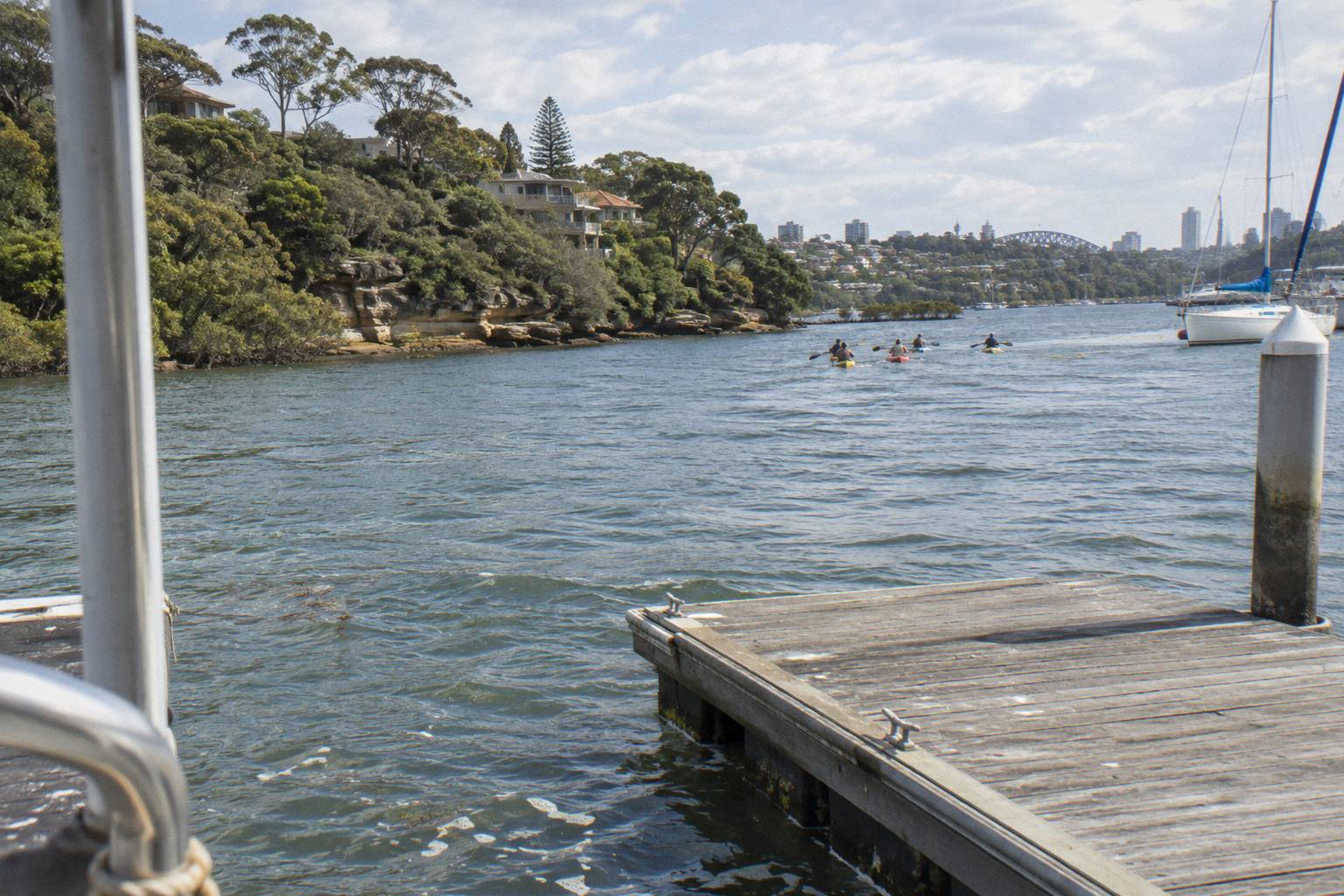
Wildlife From A Sydney Harbour Kayak: What You Might See
A kayak puts you at water level with whatever shares the harbour that morning. Here is what operators actually say you might see, what SharkSmart and the NSW government confirm, and which paddles give wildlife the best chance to appear.
Short answer
Sydney Harbour kayakers might see dolphins, fur seals, turtles, rays, cormorants, sea eagles and, around Manly, a small protected colony of little penguins. Every one of these is a possibility, never a promise: operators list them as seasonal, and shark activity is tracked by two NSW listening stations. Quiet backwaters such as Middle Harbour and quiet hours around sunrise give you the best odds.
A kayak is the slowest, quietest craft on Sydney Harbour, and that is exactly why wildlife watchers like it. You sit centimetres above the water, you make no engine noise, and you can hold position in bays that ferries never enter. What you actually see, though, depends on season, tide, weather and plain luck, and any operator who promises a dolphin sighting is overreaching. The tours covered here do not promise. They describe what has been seen, and the official sources describe what lives in the harbour year round.
In short: Sydney Harbour kayakers might encounter dolphins, fur seals, turtles, rays, cormorants, sea eagles and, near Manly, a small protected population of little penguins. Every sighting is a possibility rather than a schedule. Two NSW tagged-shark listening stations operate in the harbour and alert when a tagged white, tiger or bull shark passes within 500 metres, and Manly's penguins carry strict approach and boating protections. Quiet water and quiet hours, especially the Middle Harbour arms and the hours around sunrise, are where operators concentrate their wildlife language.
For the broader on-water picture, see kayaking Sydney Harbour start to finish, and for timing, the best time to kayak Sydney Harbour.
Quick Facts
Sydney Harbour kayakers reliably see cormorants and sea eagles on most paddles, while dolphins, fur seals, turtles and rays are seasonal possibilities named by operators, little penguins survive in one protected Manly colony, and sharks share the whole waterway, with two NSW listening stations tracking tagged whites, tigers and bulls at 500 metres. No tour guarantees any sighting on this list.
| Question | Answer |
|---|---|
| Which animals do operators name? | Dolphins, turtles, fur seals, fairy penguins and rays (Sydney Harbour Kayaks, "depending on season"); seals, penguins, cormorants and sea eagles (Paddle Pirates) |
| Is a sighting guaranteed? | No. Every operator frames wildlife as seasonal possibility, and routes follow tides and weather |
| Are there sharks? | Yes, the harbour is their habitat. SharkSmart runs 2 tagged-shark listening stations in Sydney Harbour with 500-metre alerts |
| Where are the penguins? | A small, specially protected colony at Manly, with a 4-knot limit around Spring Cove and no-anchoring buoys |
| Best paddle for wildlife odds? | Quiet backwaters: Middle Harbour's mangrove and bushland arms, and dawn starts before harbour traffic builds |
| Lifejacket rule? | Must be carried for everyone aboard; worn when paddling alone or at night on enclosed waters such as Sydney Harbour |
What Wildlife Can You Actually See From A Sydney Harbour Kayak?
The honest answer is a short list of possibilities: dolphins, fur seals, turtles, rays, cormorants, sea eagles and, near Manly, little penguins. Each claim comes from an operator's own seasonal description or an official NSW source, never from a guarantee. No Sydney Harbour kayak tour can promise any animal, because routes follow tides and weather, and the animals keep their own schedule.
Two operators publish wildlife descriptions you can weigh. Sydney Harbour Kayaks, which runs the Middle Harbour tours from The Spit, lists dolphins, turtles, fur seals, fairy penguins and rays on its sunrise page, always with the words "depending on season". That is a claim about what has appeared on its paddles, not a schedule of what will appear on yours. Paddle Pirates, working out of Blackwattle Bay at Glebe, names seals, penguins, cormorants and sea eagles among wildlife seen on its roughly two-hour paddles, again as an operator statement rather than a promise.
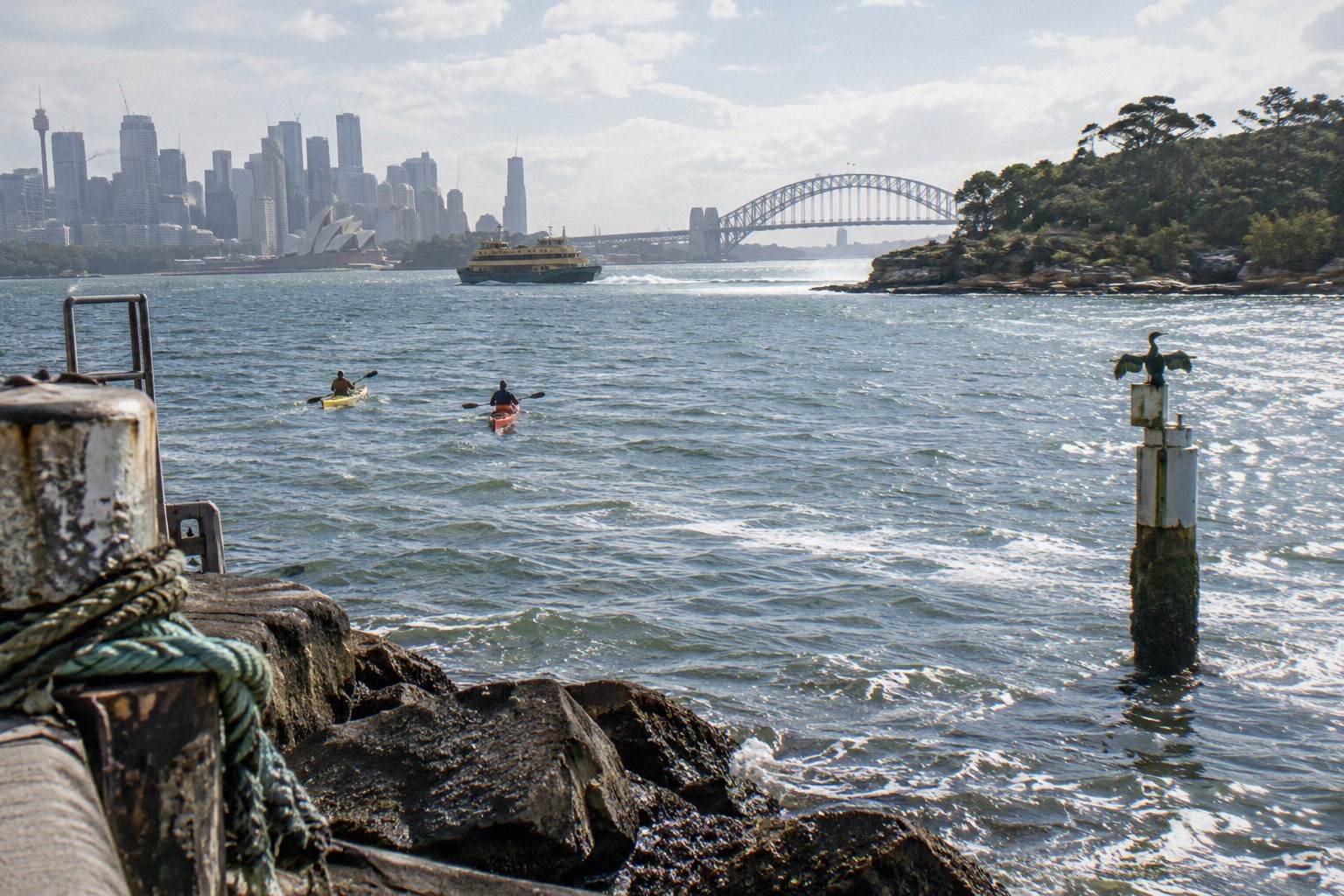
Birds are the reliable tier. Cormorants dry their wings on channel markers across the harbour, and sea eagles appear in operator descriptions from both the Glebe and Middle Harbour ends of the water. Birds are the one group you can reasonably expect to see on any paddle, because the harbour's Port Jackson waterway supports resident populations that do not migrate away. Even here, restraint is the right register: you will see birds on most paddles, and you will identify some of them, and that is as far as any source here lets the claim go.
The second tier is the seasonal marine visitors. Dolphins and fur seals do enter the harbour, and rays pass over the sandy shallows of the middle arms, but no month is a guarantee and no operator here claims one. The right mindset is the one a fishing guide would recognise: you choose water where the animals feed, you go at the hours of least disturbance, and you accept that the harbour owes you nothing. The pages that excite you with certainty are the pages to distrust.
The third tier is the penguins, and they deserve their own section below because they carry legal protections, not just hopeful language. Around Manly, a small colony of little penguins nests, and the rules for boaters near them are specific and enforceable. A kayak is a vessel under those rules.
Which Kayak Tours Give You The Best Chance Of Wildlife?
The tours with wildlife in their own descriptions are the Middle Harbour paddles run by Sydney Harbour Kayaks and the Glebe-based Paddle Pirates paddle, because both operators name the animals their water has produced. The 4-hour Middle Harbour Eco Tour spends the longest time in mangrove and bushland habitat, and dawn starts add the advantage of low boat traffic. None of this converts to a guarantee, but it stacks the conditions in your favour.
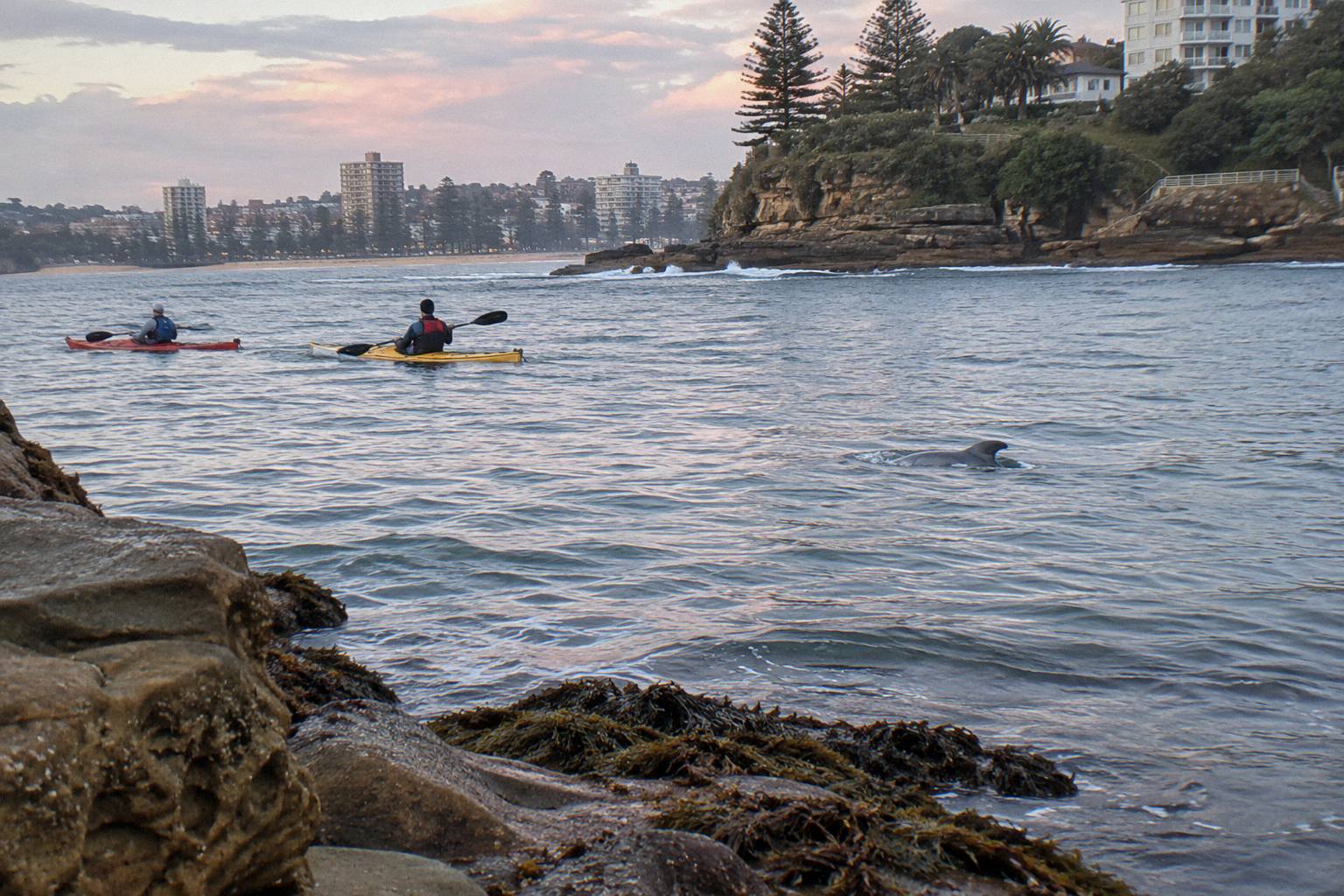
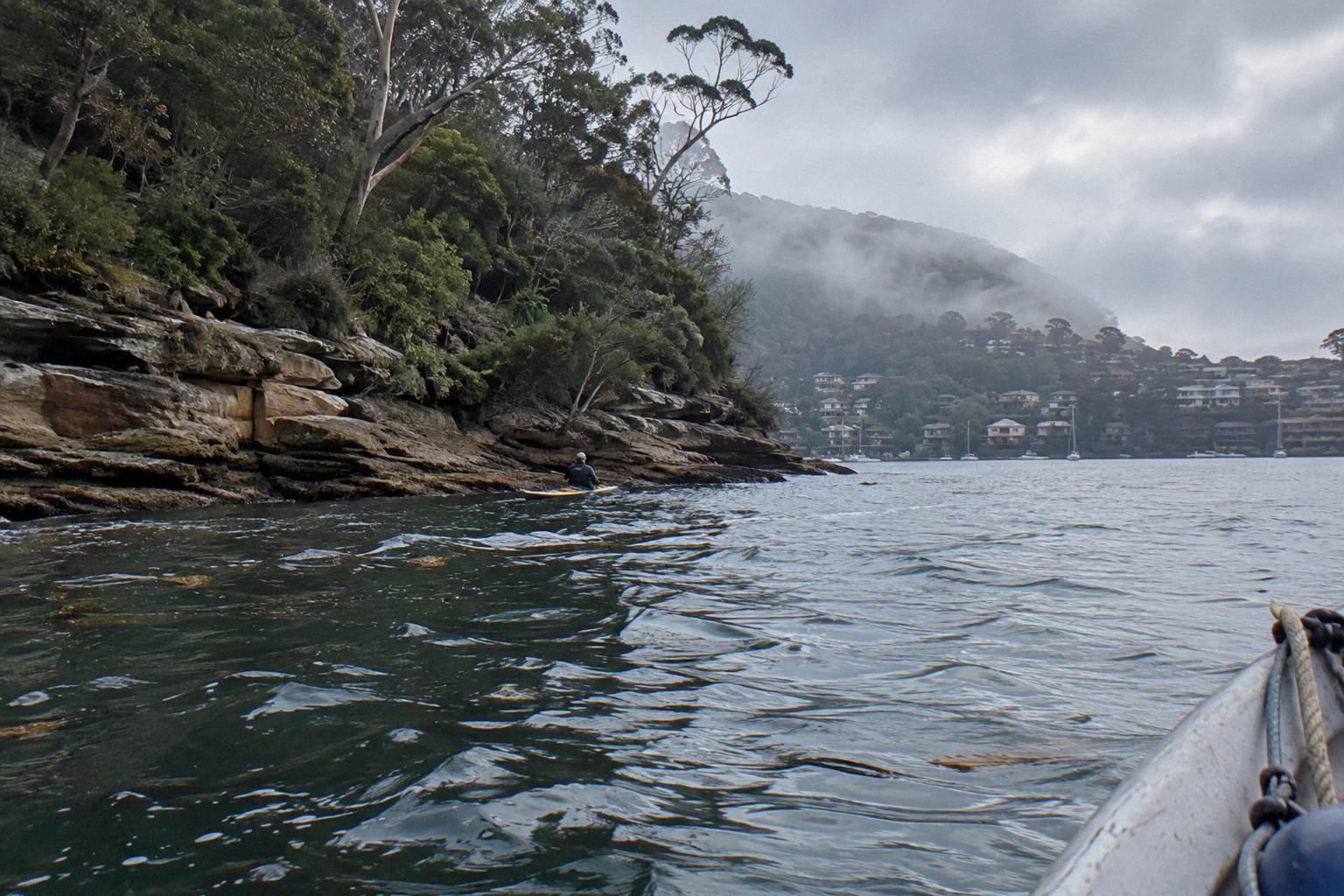
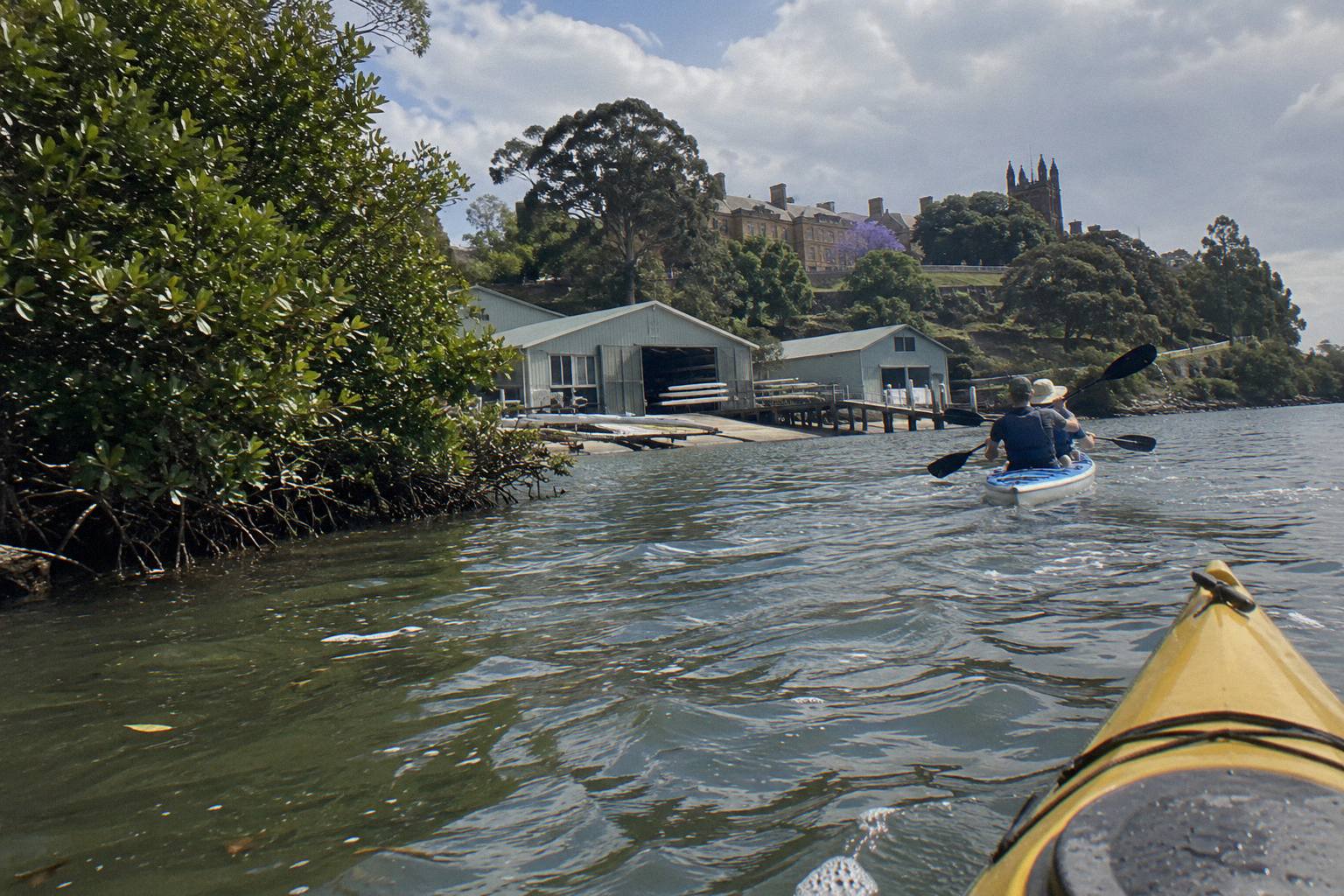
Start with habitat. The Middle Harbour arms reach into Garigal National Park bushland, past Bantry Bay mangroves that the operator says the route enters "when tides allow", along Scotts Creek and Sugarloaf Bay. That is sheltered, vegetated water, the kind that holds rays, small fish and the birds that hunt them. Sydney Harbour Kayaks' Eco Tour runs four hours, every Saturday and Sunday at 8:30am with an 8:10am check-in, in stable double sea kayaks with no experience needed, minimum age 14, and includes a 20-minute briefing, a qualified guide, morning tea on a secluded beach and dry storage. The route, as its page states plainly, cannot be guaranteed and follows tides and weather.
The shorter Middle Harbour options trade reach for convenience. The Middle Harbour Sunrise Escape runs two and a half hours from The Spit, and the private Ultimate Private Sea Kayaking Adventure runs three and a half hours for your own group from the same base. The Sunriser page for Sydney Harbour Kayaks' dawn product carries the seasonal wildlife list, and it also states in as many words that Middle Harbour paddles do not go looking for the Harbour Bridge or Opera House. If landmarks are the priority rather than habitat, that is the wrong end of the harbour; see the Middle Harbour kayak tours guide for the full comparison.
On the city side, Paddle Pirates runs its roughly two-hour Sydney paddle from 123 Ferry Road, Glebe, in Blackwattle Bay near the Fish Market, in singles and doubles with free photos and no food provided, about a 20-minute paddle from the Harbour Bridge. Its wildlife language, seals, penguins, cormorants, sea eagles, belongs to the same register: seen on these paddles, never promised. The paddle does not land on any island, and its cancellation terms are strict, with no refund, voucher or postponement within 14 days of the tour, so a wildlife-motivated booking deserves a firm date.
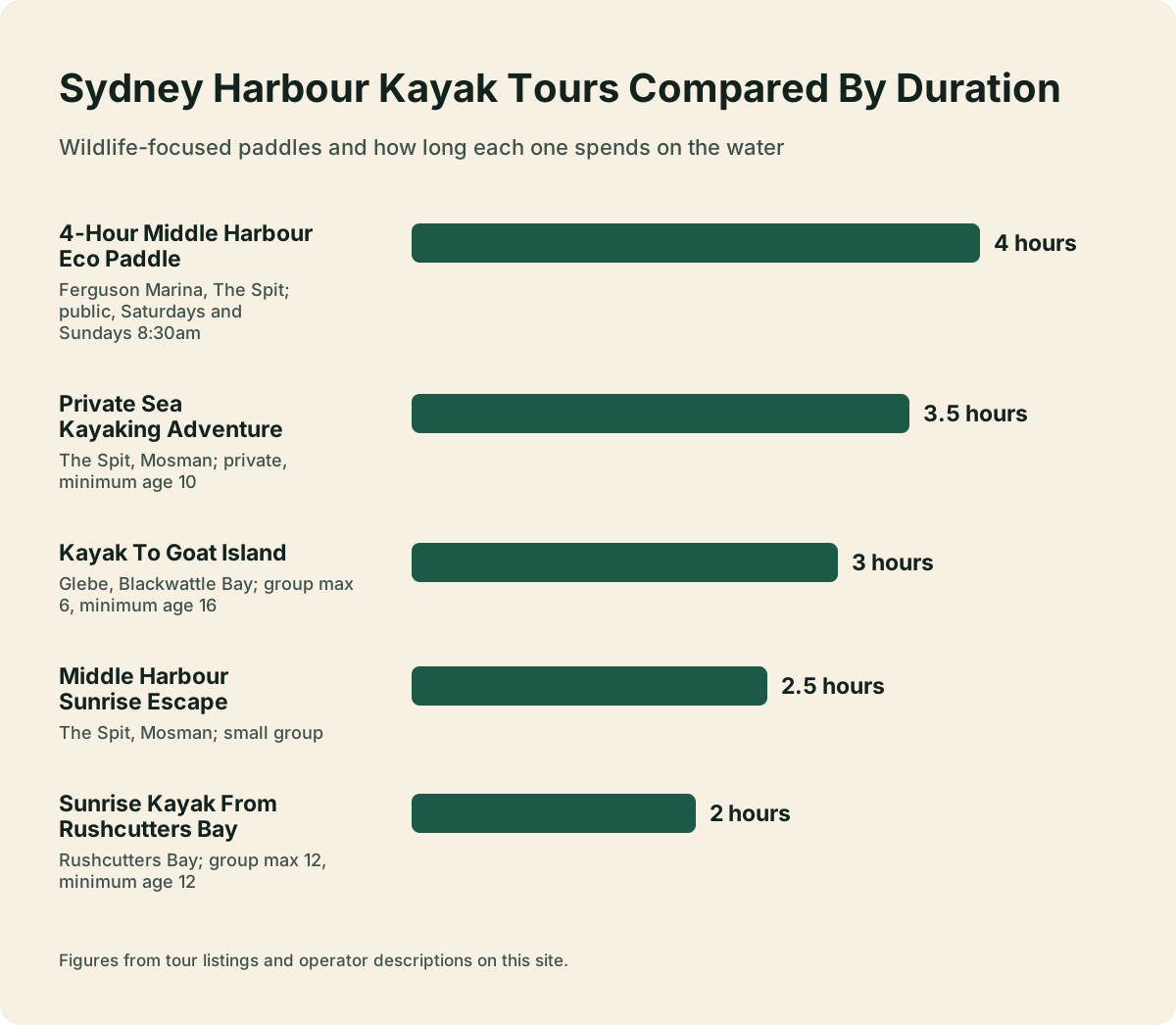
| Tour | Duration | Wildlife language | Start point | Group setting |
|---|---|---|---|---|
| 4-Hour Middle Harbour Eco Paddle | 4 hours | Operator's seasonal list (dolphins, turtles, fur seals, fairy penguins, rays on its sunrise product) | Ferguson Marina, The Spit | Public, Saturdays and Sundays 8:30am |
| Middle Harbour Sunrise Escape | 2.5 hours | Same operator, dawn timing | The Spit, Mosman | Small group |
| Ultimate Private Sea Kayaking Adventure | 3.5 hours | Same operator, private habitat access | The Spit, Mosman | Private, minimum age 10 |
| Kayak To Goat Island | 3 hours | Operator names seals, penguins, cormorants, sea eagles | Glebe, Blackwattle Bay | Group max 6, minimum age 16 |
| Sunrise Kayak From Rushcutters Bay | 2 hours | Wildlife not stated; dawn city paddle | Rushcutters Bay | Group max 12, minimum age 12 |
Ratings follow the same honesty rule. The Rushcutters Bay sunrise paddle is rated 4.9 across 2,776 reviews, and the Glebe paddle is rated 5.0 across 30 reviews; the Eco Tour's reviews sit on its booking page. Numbers with small pools tell you little, and no rating predicts a dolphin.
Sharks On Sydney Harbour: What The Official Sources Say
Sharks live in Sydney Harbour, and the official position is specific rather than scary. NSW SharkSmart confirms 2 tagged-shark listening stations in the harbour, triggering an alert when a tagged white, tiger or bull shark passes within 500 metres, and its research program explicitly includes bull sharks in the harbour and estuaries. Manly Kayak Centre's FAQ calls a sighting "extremely rare", an operator statement. No source supports claims about harbour nets, incident counts or seasonality, so none appear here. For a closer look at what the official research does and does not say, the guide to sharks in Sydney Harbour when you kayak walks through the evidence.
The listening stations matter because they replace folklore with data. Alerts go out through the SharkSmart app and X, so a paddler can check recent detections before a dawn launch. The SharkSmart current program page describes the stations and the tagged-species focus, and it is the right page to read the morning of any paddle you are serious about. The meshing program is separate: it covers 51 ocean beaches between Newcastle and Wollongong, and its own page says the nets "do not create a total barrier", per the SharkSmart nets page. That program is about ocean beaches, and its page says nothing about harbour nets, so no claim either way belongs in a harbour wildlife article.
What this means practically for a kayaker is modest and worth stating plainly. Thousands of people paddle the harbour without incident, but no safety statistic is printable from the sources here, and none is needed. The reasonable steps are the ones the official rules already give you: wear the lifejacket the operator issues, paddle in the group your guide sets up, and check the SharkSmart feed if detections would change your plans. The full safety picture, including what to do near ferries and ships, is in the Sydney Harbour kayak safety guide.
A note on balance, because wildlife articles drift toward either reassurance or alarm. The harbour is a working estuary with a full marine food web, and the same quiet bays that hold rays and cormorants are part of that web. Neither fact should keep you off the water, and neither should be spun. Go, paddle the habitat, and let the animals decide the morning. The full index of guides sits on Sydney Harbour Kayak Tours.
Manly's Little Penguins And The Rules That Protect Them
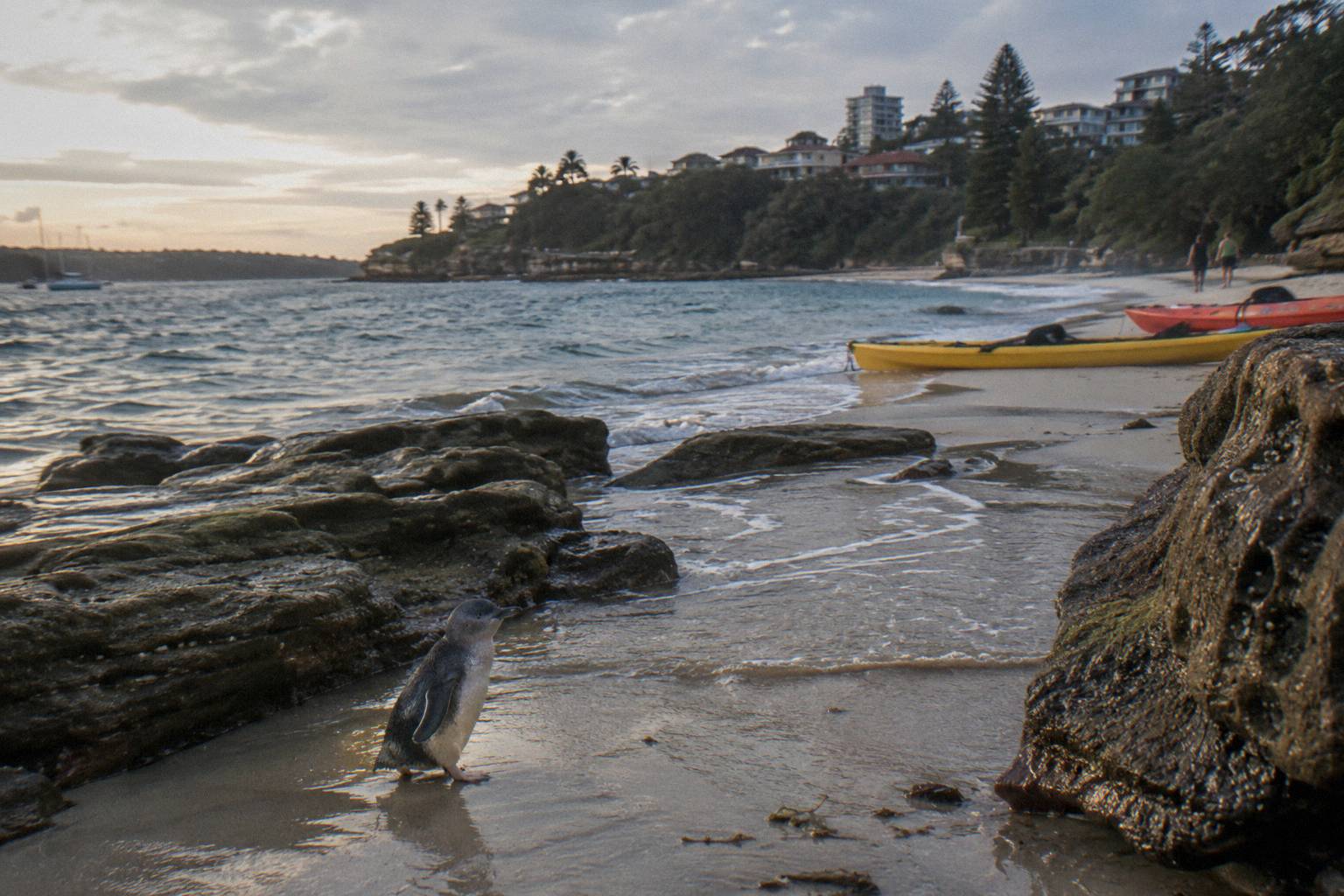
The Manly little penguin colony is a small, protected population on the harbour's northern edge, and the rules around it apply to kayakers the same as to powerboats. NSW Environment regulations restrict approaching or disturbing the penguins, impose a 4-knot speed limit around Spring Cove, and mark a no-anchoring zone with yellow marker buoys. Boats can strike penguins, so speed and distance are the whole game. No tour promises a penguin sighting.
The official little penguin page is the source for all of it. The colony is small, which is why the protections are strict: disturbing a nesting penguin is not a faux pas, it is a breach of restrictions designed for a fragile population. For a kayaker the practical translation is simple. Around Spring Cove, travel at or under 4 knots, which in a kayak means a slow, steady stroke. Do not chase, follow or cut off a swimming penguin. Keep clear of the yellow buoys, and never anchor inside the marked zone.
If penguins are your target, geography comes first. The colony sits around the Manly side of the harbour, and the paddles that put you nearby are the Manly options: Manly Kayak Centre operates from East Side Pier at Manly Wharf, with sit-on-top hire from AUD 30 for one to eight hours and a FAQ that lets hirers paddle to beaches east of the Manly ferry route, about 30 minutes to the furthest point. Its guided Mini Kayak Tour runs 90 minutes from 10:30am, and its Three Beaches tour runs 4 hours on the last weekend of the month with a minimum age of 12. The Manly kayak tours guide covers those in full. On a paddle anywhere near the colony, the sighting is the bonus and the compliance is the obligation.
Where Each Launch Point Sits On The Wildlife Map
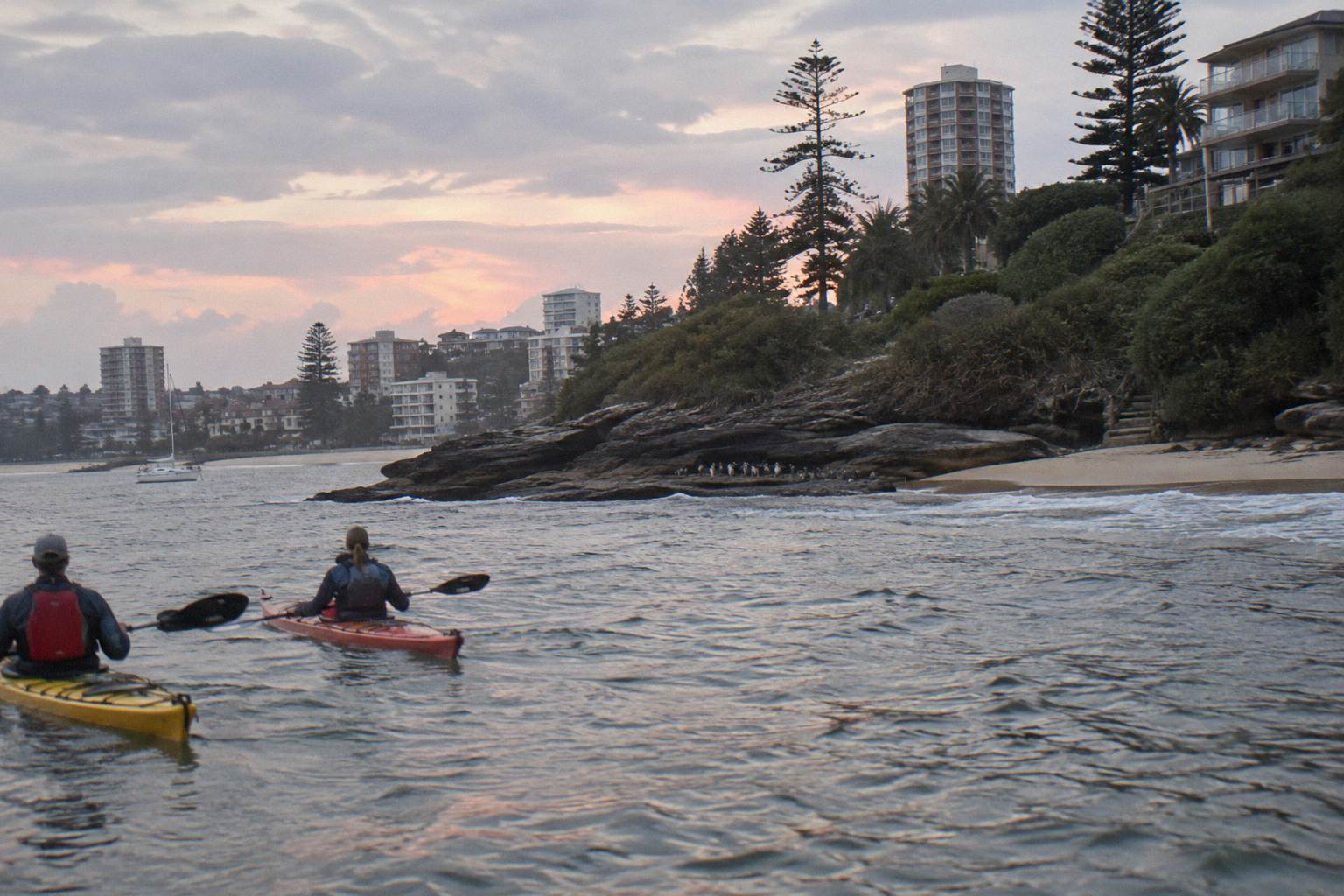
The harbour splits into three wildlife zones for a paddler: the sheltered Middle Harbour arms with mangroves and national park bushland, the open city harbour from Glebe to Rushcutters Bay, and the Manly coves where the penguin protections bite. Each launch point covered here sits in one of those zones, and the zone, more than any operator, shapes what might appear around your bow. Choosing by zone is the single most useful wildlife decision you can make.
The Spit at Mosman is the habitat end. Ferguson Marina at 83 Parriwi Road is the base, launching from the adjoining Spit East Reserve beach, and every Sydney Harbour Kayaks paddle from there moves through water bordered by Garigal National Park. Mangroves, creek mouths and sandy shallows are ray and bird territory, and the four-hour Eco Tour spends the longest stretch of any product here inside it. Bring closed-in shoes, the operator warns, because oyster shells line the launches and thongs will not do. For the wider area picture, see the guide to kayaking The Spit Bridge area.
Glebe is the city-wildlife hybrid. Paddle Pirates' Blackwattle Bay base sits about a 20-minute paddle from the Harbour Bridge, and its roughly two-hour tour in singles and doubles has produced its seal, penguin, cormorant and sea eagle descriptions. The paddle makes no island landing, whatever else a description implies, and the water between Glebe and the bridge carries ferry and ship traffic that keeps large animals further from shore than the quiet arms do. Birds are the reliable group here.
Rushcutters Bay and Kirribilli are the dawn city paddles. The Sunrise Kayak From Rushcutters Bay tour, rated 4.9 across 2,776 reviews, starts from the eastern suburbs marina and runs two hours with a minimum age of 12, free cancellation up to 24 hours before. It makes no wildlife claim, and its appeal is the empty harbour at first light rather than habitat. Kayaks can check availability alongside the related reading, and the choice between city dawn and bushland habitat is really a choice about which animals you are implicitly fishing for.
| Zone | Launch points | Habitat character | Wildlife named by operators |
|---|---|---|---|
| Middle Harbour | The Spit, Mosman | Mangroves, creek mouths, national park bushland | Dolphins, turtles, fur seals, fairy penguins, rays, seasonal |
| City harbour west | Glebe, Blackwattle Bay | Working bay, fish market edges, bridge approaches | Seals, penguins, cormorants, sea eagles, seen |
| City harbour east | Rushcutters Bay, Kirribilli, Lavender Bay | Open harbour, ferry corridors, dawn quiet | Not stated; birds the reliable group |
| Manly coves | Manly Wharf area | Penguin colony protections, Spring Cove 4-knot zone | Little penguins, protected population |
How To Paddle And Prepare So Wildlife Stays Close
Wildlife stays close when you behave like part of the scenery, so paddle at a steady speed, avoid sudden strokes, keep quiet, and swing a wide line around any animal that appears. Prepare by wearing the right clothing, using the lifejacket the operator issues, and booking the hours before the harbour fills. None of it guarantees an animal, and all of it improves the odds.
Technique first, because a kayak is quiet only when the paddler is. Long, slow strokes with the blade entering the water without a slap are the baseline. When something appears, the temptation is to sprint toward it, and that is the one move that ends the encounter; hold your line, let the animal decide the distance, and never position yourself between a parent and young or between any animal and its exit from a bay. The generic paddling guidance is consistent on this, and the operators' group formats exist partly to keep twelve paddlers from doing twelve different things.
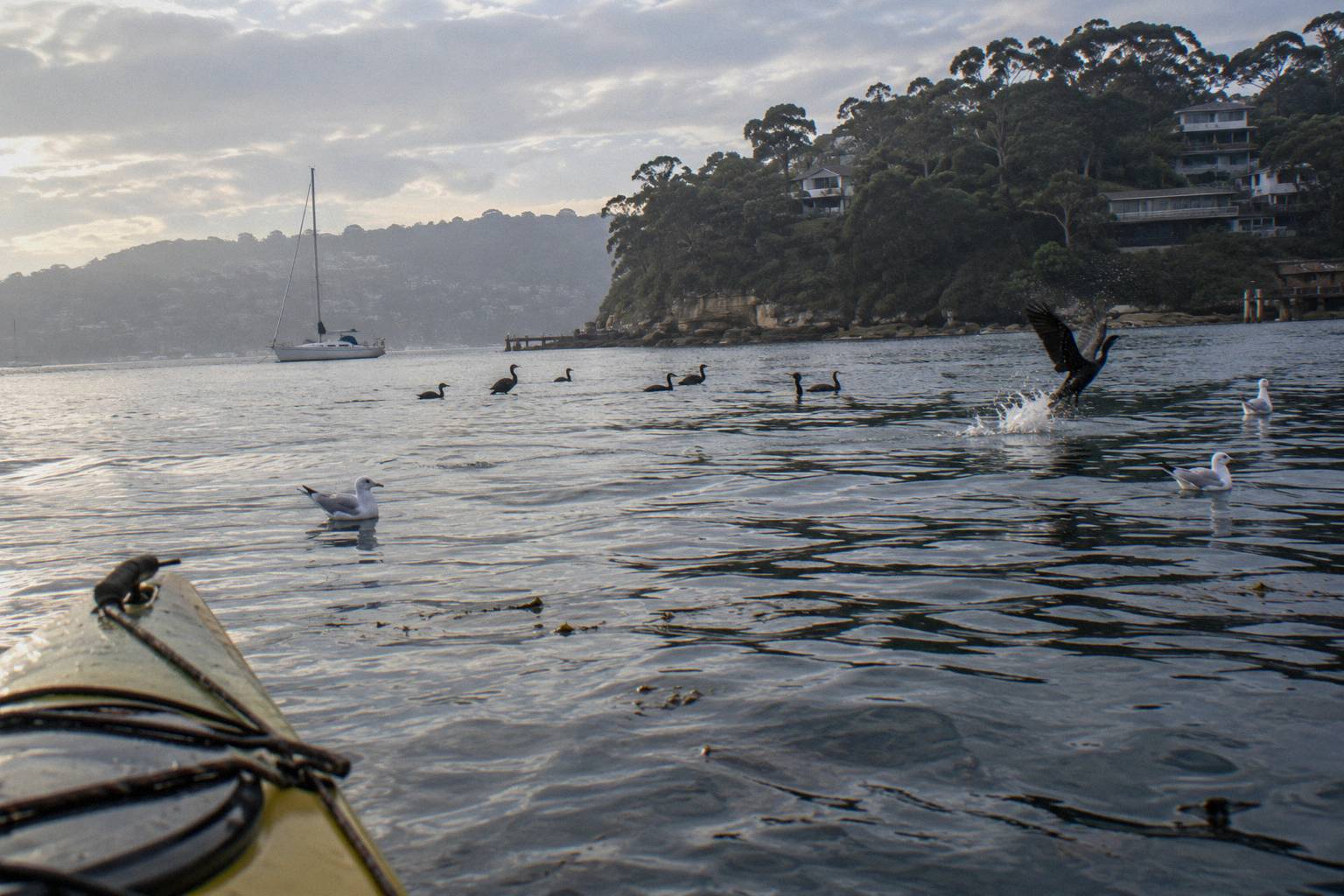
Clothing and kit are the quiet enablers. Muted colours do less to announce you than bright ones, and layers you can shed matter more than any gadget. The full kit rundown lives in what to wear kayaking on Sydney Harbour, and the gear every operator issues, lifejacket, paddle, briefing, is covered in the kayak hire versus guided tour comparison. Bring water shoes for the oyster-shell launches the Spit operators warn about, and keep phones and cameras in dry storage, which the Eco Tour provides.
Timing is the last lever. Sunrise paddles put you on the water when boat traffic is at its lowest and animals are feeding, and the difference between a 5:45am November launch and a 10:30am one is the difference between a harbour that feels like a habitat and a harbour that feels like a highway. The computed sunrise times give a rough planning line: around 05:44 in mid-November, plus or minus 2 minutes, drifting toward 05:38 by mid-December. Daylight saving is already in force, with clocks having gone forward on Sunday 4 October 2026 and going back on Sunday 4 April 2027.
Common Mistakes When Wildlife Watching From A Kayak
The recurring mistakes are booking a landmark paddle when you wanted habitat, expecting a guarantee because a page showed a photo, chasing animals and ending the encounter, ignoring the penguin rules near Manly, and dressing for a beach rather than a boat. Each one is avoidable with a single decision made before booking: choose your zone, believe only seasonal language, keep your distance, respect the markers, and pack for the water. All of them cost the sighting when made.
The first mistake is zone confusion, and it is the most common. A traveller books a bridge-and-Opera-House paddle and hopes for dolphins, when the operator's own wildlife language sits on its Middle Harbour products, whose pages state outright that they do not paddle around to the Opera House or Harbour Bridge. Both paddles are good; they are simply different products. Decide whether the morning is about habitat or about icons, then book accordingly.
The second is believing certainty. A photo of a seal on a booking page is a photo of one morning. The operators here, to their credit, say "depending on season" and "wildlife seen", and a reader who takes that language literally plans a good paddle that might include an animal, rather than an animal encounter that happens to include a paddle. The third is pursuit behaviour: sprinting at a sighting, boxing it against a wall or buoy, or surrounding it with a group. Distance is respect, and respect is what keeps an animal in view.
The fourth and fifth are rule-based and kit-based. Near Manly, the 4-knot Spring Cove limit and the yellow no-anchoring buoys apply to kayaks, and a paddler who ignores them is disturbing a protected colony, whatever the intent. And at the Spit launches, thongs on an oyster-shell beach turn a morning sour before it starts; the operator's closed-in-shoes advice exists because the shells are real. For anyone weighing a winter booking, when wildlife descriptions get thinner and the mornings darker, kayaking Sydney Harbour in winter covers what changes.
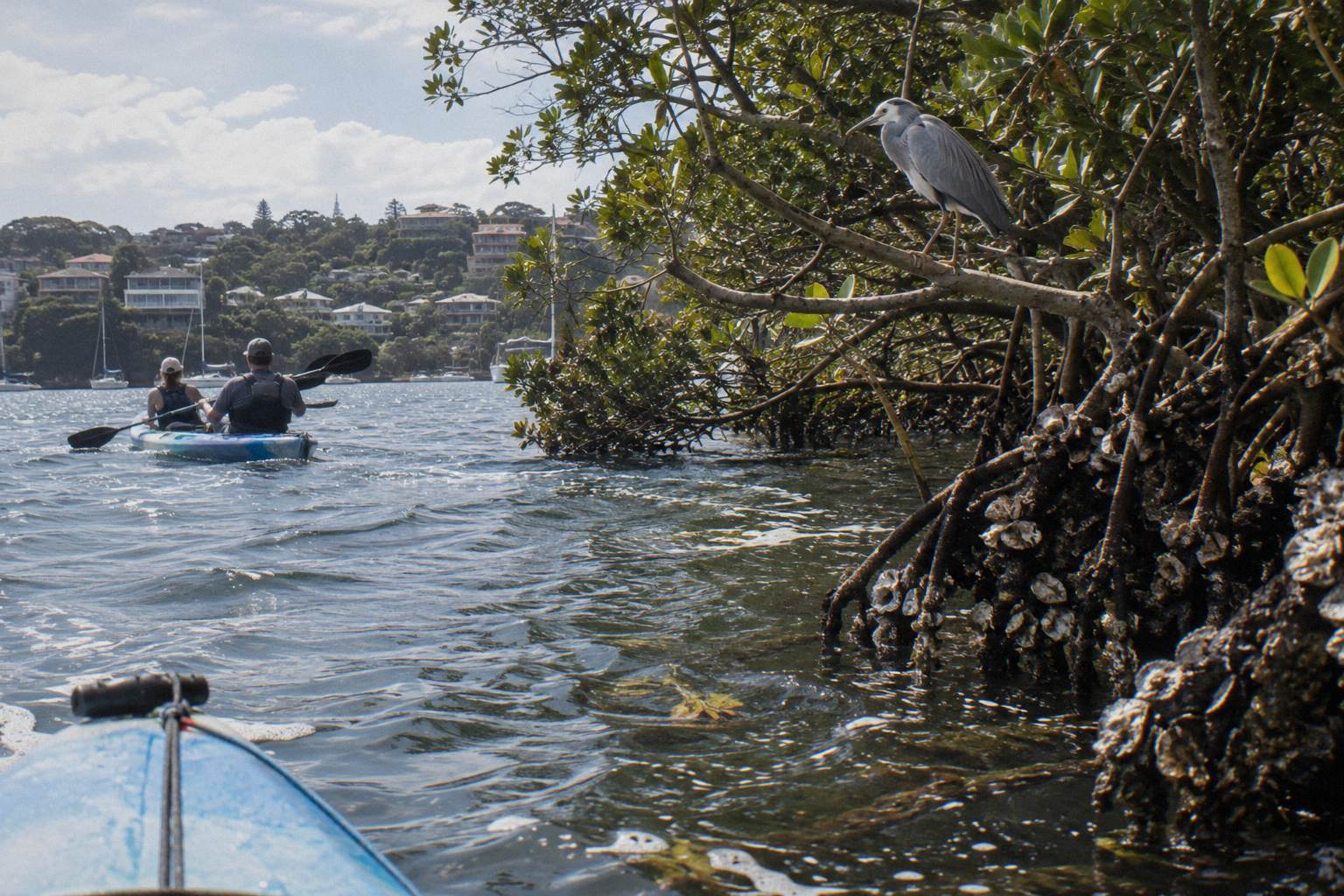
A Worked Morning: How A Wildlife Paddle Actually Unfolds
A wildlife paddle unfolds on a schedule: on the Sunday Eco Tour you check in at Ferguson Marina by 8:10am, take a 20-minute paddling and safety briefing on the beach, and have doubles on the water by 8:30. Then come four hours in the mangrove arms, a beach stop for morning tea, a route the guide picks to suit the tide, and any wildlife arriving strictly on its own terms.
The briefing is where the wildlife odds are quietly set. A qualified guide tells the group how to hold position, how to spread out, and what to do if something appears, which is basically: nothing sudden. The doubles matter too, because a stable boat with two calm paddlers makes less commotion than a fleet of nervous singles, and the operator's choice of double sea kayaks for the no-experience crowd is a wildlife decision as much as a safety one.
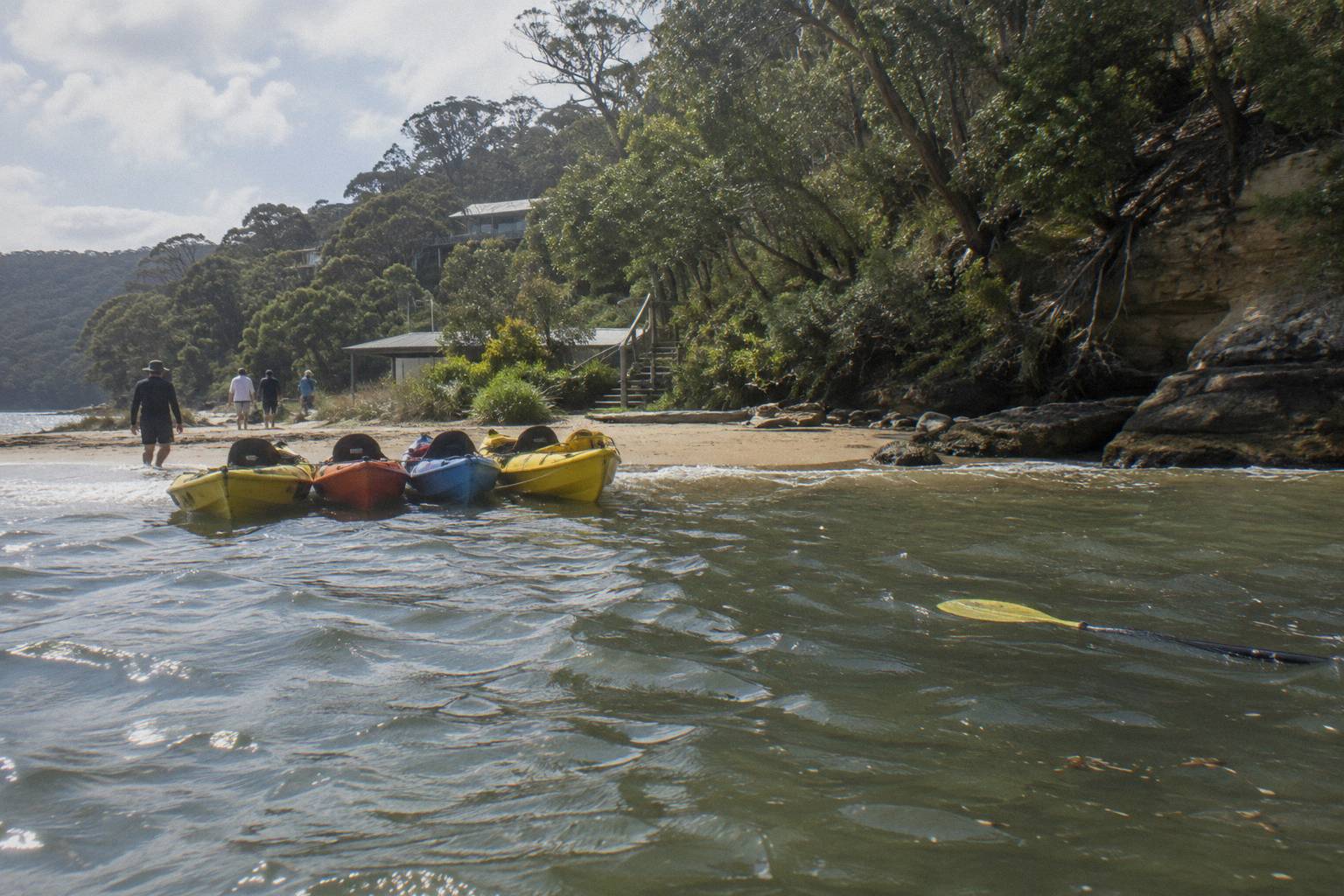
Midway, the beach stop. Morning tea on a secluded stretch is the Eco Tour's built-in stillness, and stillness is the wildlife technique that costs nothing: sit, watch the water, let the harbour resume its business around you. Rays and birds often reveal themselves to a motionless boat minutes after a moving one has passed. It is the oldest trick in wildlife watching and it ships free with the tour.
The end of the morning is where expectations deserve a final check. Some paddles deliver a dolphin in the first hundred metres and some deliver four hours of beautiful water and no marine visitors at all, and both are normal outcomes on the same tour, on the same route description, with the same guide. The booking terms acknowledge the same variability at the level of weather: every tour in the roster covered here carries free cancellation up to 24 hours before the start, and the operator's own direct-booking terms for the Middle Harbour products, transfers, multi-year credit or refund when it cancels, sit on its policies page. Book the water, enjoy the animals if they come.
Choosing Between The Three Middle Harbour Options
Choose by commitment and group: the four-hour public Eco Tour, offered on weekends, gives the deepest habitat run; the 2.5-hour Sunrise Escape delivers a dawn taste from The Spit; and the 3.5-hour private adventure fits a closed group with a minimum age of 10 that wants its own guide attention. All three launch from the same Spit base, paddle the same sheltered arms, and promise no wildlife beyond the operator's seasonal language.
The weekend traveller with no kayak history should default to the Eco Tour. It is the product whose structure, doubles, briefing, beach stop, qualified guide, longest water time, is built for first-timers who want the habitat experience rather than a sightseeing sprint. The traveller with a single free morning and a preference for empty water should look at the Sunrise Escape, which compresses the same launch into 2.5 hours at dawn, when the harbour traffic is at its thinnest. The family or small private group, including paddlers as young as 10, fits the private adventure, which gives a closed group its own pace and its own route decisions.
Cancellation is the same shape across the booking pages for all three: free cancellation up to 24 hours before the start for a full refund. The operator's own website terms for direct bookings are stricter and richer at once, with guest cancellations more than 7 days out refunded less a small per-person admin fee, and weather cancellations by the operator handled by transfer, credit or refund, so it is worth knowing which door you booked through. None of that is a wildlife fact, but a flexible booking is what lets you chase a better weather window, and weather is the variable wildlife responds to most.
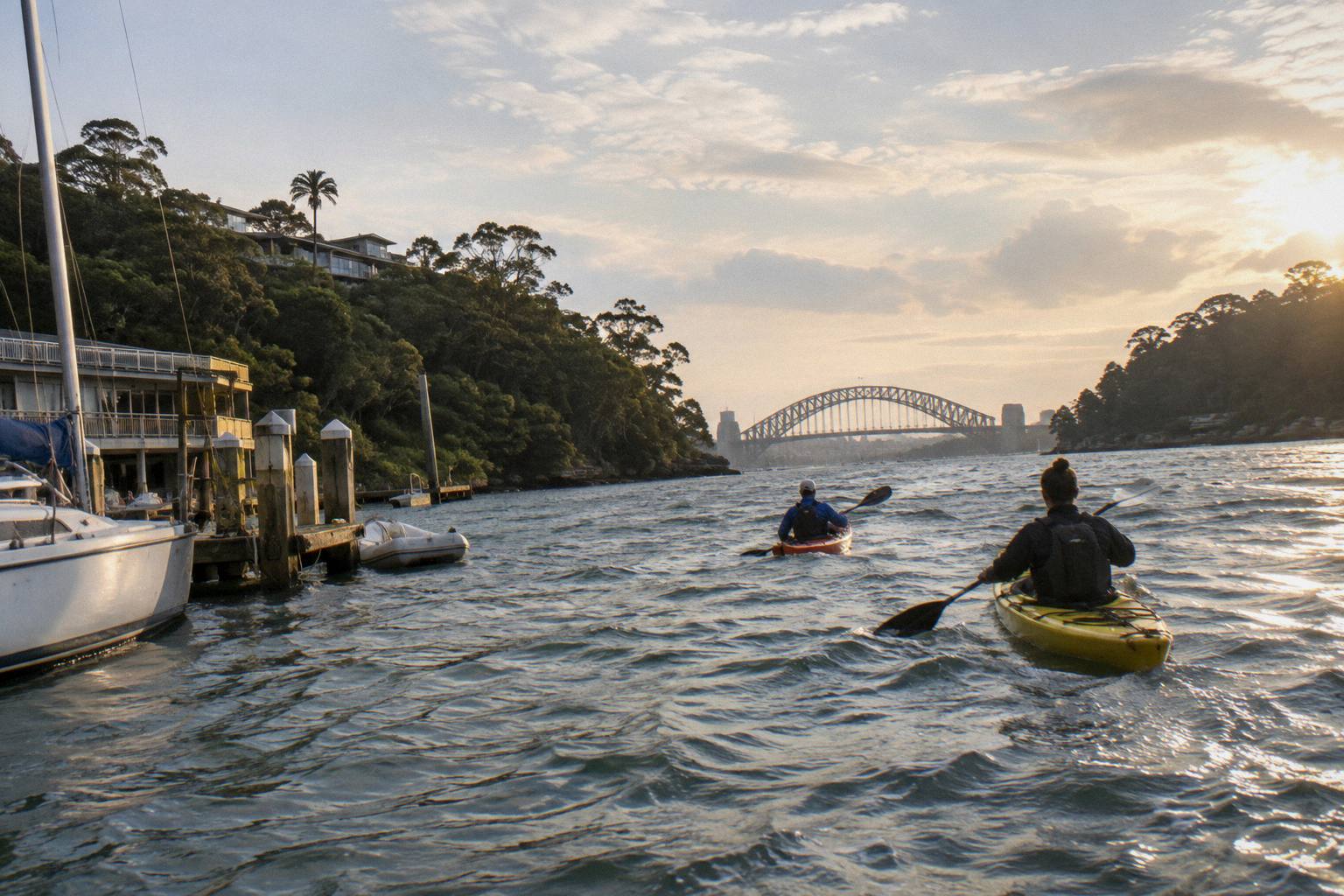
Common Questions About Wildlife From A Sydney Harbour Kayak
Can You See Dolphins From A Kayak On Sydney Harbour?
You might. Sydney Harbour Kayaks lists dolphins among the wildlife on its Middle Harbour sunrise product, always with the words "depending on season". That is an operator's description of what has appeared on its paddles, not a promise of what will appear on yours. Quiet arms, dawn timing and stillness improve nothing but the odds.
Are There Sharks In Sydney Harbour When You Kayak?
Yes, the harbour is shark habitat. NSW SharkSmart operates 2 tagged-shark listening stations in Sydney Harbour that alert when a tagged white, tiger or bull shark passes within 500 metres, via its app and X, and its research includes bull sharks in the harbour and estuaries. Manly Kayak Centre's FAQ calls a sighting "extremely rare", an operator statement only. No incident counts or seasonality claims are printable from the official sources.
Where Can You See Penguins Near Sydney?
Manly hosts a small, specially protected colony of little penguins. Restrictions apply to approaching or disturbing them, a 4-knot limit covers the Spring Cove area, yellow marker buoys mark a no-anchoring zone, and boats can strike penguins, so distance and slow speed are mandatory for kayakers too. No tour promises a penguin sighting.
Which Kayak Tour Has The Best Wildlife?
No tour guarantees wildlife, so the honest comparison is habitat and hours. The 4-Hour Middle Harbour Eco Paddle spends the longest time among mangroves and national park bushland, the habitat type the operator's seasonal wildlife list belongs to. The Glebe-based paddle by Paddle Pirates names seals, penguins, cormorants and sea eagles from its own water. Choose by zone and timing.
Do You Have To Wear A Lifejacket Kayaking On Sydney Harbour?
Yes, in the situations NSW rules specify: lifejackets must be carried for everyone on board, and worn on enclosed waters such as Sydney Harbour when paddling alone or between sunset and sunrise, Level 50S or above. NSW recommends wearing one at all times, and every operator here issues one.
What Time Of Day Is Best For Wildlife From A Kayak?
Dawn, on the logic that boat traffic is lowest and animals feed early, though no official source here quantifies either. Sunrise sits around 05:44 in mid-November, plus or minus 2 minutes, computed rather than official. Sunrise-format tours, and the quiet Middle Harbour arms at any hour, are the practical combination.