Are There Sharks In Sydney Harbour When You Kayak?
Sharks do live in Sydney Harbour, and NSW SharkSmart tracks tagged bull sharks there. Here is what the official sources say, what they do not say, and how a guided tour handles the question.

In short: Yes, sharks live in Sydney Harbour; NSW SharkSmart confirms tagged-shark listening stations in the harbour and research on bull sharks in its estuaries. No official source gives a risk figure for kayakers, and Manly Kayak Centre's FAQ calls a sighting "extremely rare to see". Guided tours brief you on safety, and the practical move is simple: check the SharkSmart app alerts and listen to your guide.
If you want the full picture on what the water is like at dusk, the sunset kayak Sydney guide covers the time of day most people worry about, and the wider Sydney kayak tour overview puts the harbour's operators side by side.
Yes, sharks do live in Sydney Harbour, and NSW DPI's SharkSmart program monitors them with 2 tagged-shark listening stations that trigger an alert when a tagged white, tiger or bull shark passes within 500 metres. That said, no official source calls kayaking the harbour dangerous; the guidance is about awareness rather than avoidance, and tour operators brief paddlers on water safety before every launch.
That pairing, sharks present, risk low, is the whole answer, and it is worth unpacking carefully because both halves get distorted. The distortion usually runs in one of two directions. Either someone insists the harbour is shark-free, which the official program plainly contradicts, or someone treats every dorsal shadow as evidence the harbour is dangerous, which no official source supports either.
What the NSW government actually publishes is measured. The SharkSmart current program page describes listening stations, tagged-shark alerts and a research stream that includes bull sharks in Sydney Harbour and estuaries. It is a monitoring and science program, not a warning system telling people to stay off the water. If a tagged animal passes a station, an alert goes out through the SharkSmart app and its X account, and beach and water users can decide what to do with that information.
For a paddler, the practical takeaway is that the information exists, it is free, and it is more specific than any generalised fear or reassurance. Checking the app before a dawn or dusk paddle takes under a minute. It tells you what tagged animals have been detected near a station recently, with the clear limitation that only tagged sharks trigger alerts, and most sharks in the water at any moment are not tagged. The site is upfront about that limitation, which is exactly why it pairs monitoring with general advice rather than promises.
If a calm evening paddle is what you are weighing up, these three sunset options are the natural starting point.
“Kayak tour was amazing! Great way to see Sydney up close. Chad and Fernando were excellent guides and took great photos. Highly recommend!”
All three carry free cancellation up to 24 hours before the start, so a shark question does not have to be settled before you book.
What Does SharkSmart Actually Say About Sydney Harbour?
SharkSmart says three concrete things: it runs 2 tagged-shark listening stations in Sydney Harbour that alert when a tagged white, tiger or bull shark passes within 500 metres, its research program includes bull sharks in Sydney Harbour and estuaries, and its meshing program covers 51 ocean beaches between Newcastle and Wollongong rather than the harbour itself. It says nothing about incident counts, nothing about seasonal patterns, and nothing that amounts to a risk rating for kayakers.
That last part matters. The Shark Meshing (Bather Protection) Program page is explicit that the meshing program covers ocean beaches, that nets are removed on 31 March, and that the nets "do not create a total barrier" even where they are installed. The page says nothing at all about harbour nets. It is tempting to read that silence as "there are no nets in the harbour", but the page does not say that, so an honest summary should not either.
| SharkSmart says | SharkSmart does not say |
|---|---|
| 2 tagged-shark listening stations operate in Sydney Harbour | How many untagged sharks are in the harbour |
| Alerts fire when a tagged white, tiger or bull shark passes within 500 m of a station | That alerts cover every shark, since only tagged animals trigger them |
| Research includes bull sharks in Sydney Harbour and estuaries | When bull sharks are more or less likely to be present |
| The meshing program covers 51 ocean beaches, Newcastle to Wollongong | Anything about nets inside the harbour, in either direction |
| Nets "do not create a total barrier" where installed | Any incident count, risk percentage or stay-out-of-the-water warning |
The table's right-hand column is the part anxious readers skip and should not. An official program that monitored a genuine, quantifiable danger to a common activity would say so. SharkSmart's silence on kayaking risk is consistent with a monitoring program, and it is the same posture the program takes toward swimmers and surfers at ocean beaches: information first, general advice second, no blanket warnings.
The alerts themselves are worth understanding before you rely on them. A listening station alert means a tagged animal was within 500 metres of that station. It does not mean the shark stayed, it does not mean it approached anyone, and it does not mean the harbour is closed, because nothing about recreational harbour use gets closed by an alert. Decisions, including a tour operator's decision to run or reroute a paddle, stay with the people on the water.
That is a natural handoff point if you are still deciding whether an evening paddle suits you at all.
Is The Question New?
No. Bull sharks tolerate low-salinity water, which is why estuaries and harbours appear in the SharkSmart research program, and Sydney Harbour is a drowned river valley, Port Jackson, with deep channels feeding in from the sea. The harbour's permanent wildlife is broader than its shark question: the same water carries rays, seals in season per operator accounts, and the little penguin colony at Manly, which the NSW environment agency protects with specific boating rules. A paddle on the harbour is a paddle through a working ecosystem, and the sharks in it are one monitored part of that.
Bull Sharks, Listening Stations And Why They Are In The Harbour
Bull sharks are the species the NSW research program singles out for Sydney Harbour and its estuaries, and they are the reason the listening stations exist. Unlike most large sharks, bull sharks tolerate brackish and fresh water, so an estuary harbour is ordinary habitat for them rather than an anomaly. The program tags animals, the stations detect tagged animals within 500 metres, and the resulting alerts are published through the SharkSmart app and X.
None of that is a warning. It is the mechanics of how a government science program observes an estuary species it wants to understand better. Research interest means the animals are there often enough to study; it does not translate into a probability of an encounter, and SharkSmart publishes no such probability for any waterway, for swimmers any more than for paddlers.
For a kayaker, the stations change the practical picture in one modest way: before a dawn or dusk paddle you can check whether any tagged animal has pinged a harbour station recently. That is more real information than a search engine will give you, and it is free. The limitation is structural. A tagged-animal alert tells you about the tagged population only, and the tagging program covers a fraction of the animals in the water. Treat the app as one input, not a guarantee.
The right mental model is the one the program itself uses. The NSW government describes Sydney Harbour as an extremely busy waterway in its boating rules, and the realistic hazards for a paddler are ranked accordingly: ferry wake, powered vessels, cold-water immersion if you capsize, and weather. Sharks sit well behind those in any honest list, not because they are absent, but because the monitored evidence gives no basis for putting them first.
What A Guided Tour Changes About The Shark Question
A guided tour does not change the sharks; it changes your preparation. Every operator covered here runs a pre-launch briefing on water safety, several follow set routes through bays and inshore stretches where a guide can read conditions and traffic, and operators cancel or reroute when conditions are wrong. Free cancellation up to 24 hours before the sunset and sunrise tours also lets a nervous first-timer book without feeling locked in.
“Fantastic morning on the water. Well worth it! Jack was fabulous!! Suitable for all levels. Met some lovely people.”
The briefing is where most of the value sits for an anxious paddler. Guides cover capsize procedure, group spacing, what to do around ferries and, where relevant, wildlife. The group format also means you are never weighing the water alone: a guide who paddles the harbour daily has a far better read of the day than any app or article can give you. The wider set of guides lives on Sydney Harbour Kayak Tours.
The Sunrise Kayak From Rushcutters Bay illustrates the format well: 2 hours on the water, rated 4.9 across 2,776 reviews, maximum group size 12, minimum age 12, launching from the Rushcutters Bay meeting point. For a reader whose shark worry is really a general first-time worry, that review pool is worth pausing on. Thousands of people have taken that paddle and reviewed it afterwards; the concerns they raise are overwhelmingly about wake-up times and arms, which tells you how the shark question feels once you are on the water.
On the evening side, the 3-Hour Sunset, Opera House Views tour from Greenwich runs with a group maximum of just six and a minimum age of 14, a smaller, slower format for someone who wants close guide attention. If the underlying question is whether a first paddle will feel manageable, the how hard is kayaking for beginners explainer is the better read, and the what happens if you fall out of a kayak piece covers the capsize scenario directly.
Both tours above carry the same free-cancellation window, 24 hours before the start, per their booking pages. That policy matters for exactly this reader: the shark question is usually asked before booking, and a flexible cancellation term means the decision does not have to be perfect on day one.
“Best thing I have done in Sydney. Views were amazing, guides Moss and Charlie so knowledgeable and friendly, felt really safe with them. Definitely do this if going to Sydney.”
Penguins, Rays And The Rest Of The Harbour's Wildlife
Sydney Harbour shelters a small, formally protected colony of little penguins at Manly, along with rays and other native wildlife, though no sighting is ever guaranteed: restrictions limit approaching or disturbing the birds, a 4-knot limit applies around Spring Cove, yellow marker buoys mark a no-anchoring zone, and explicit warnings note that boats can strike the penguins.
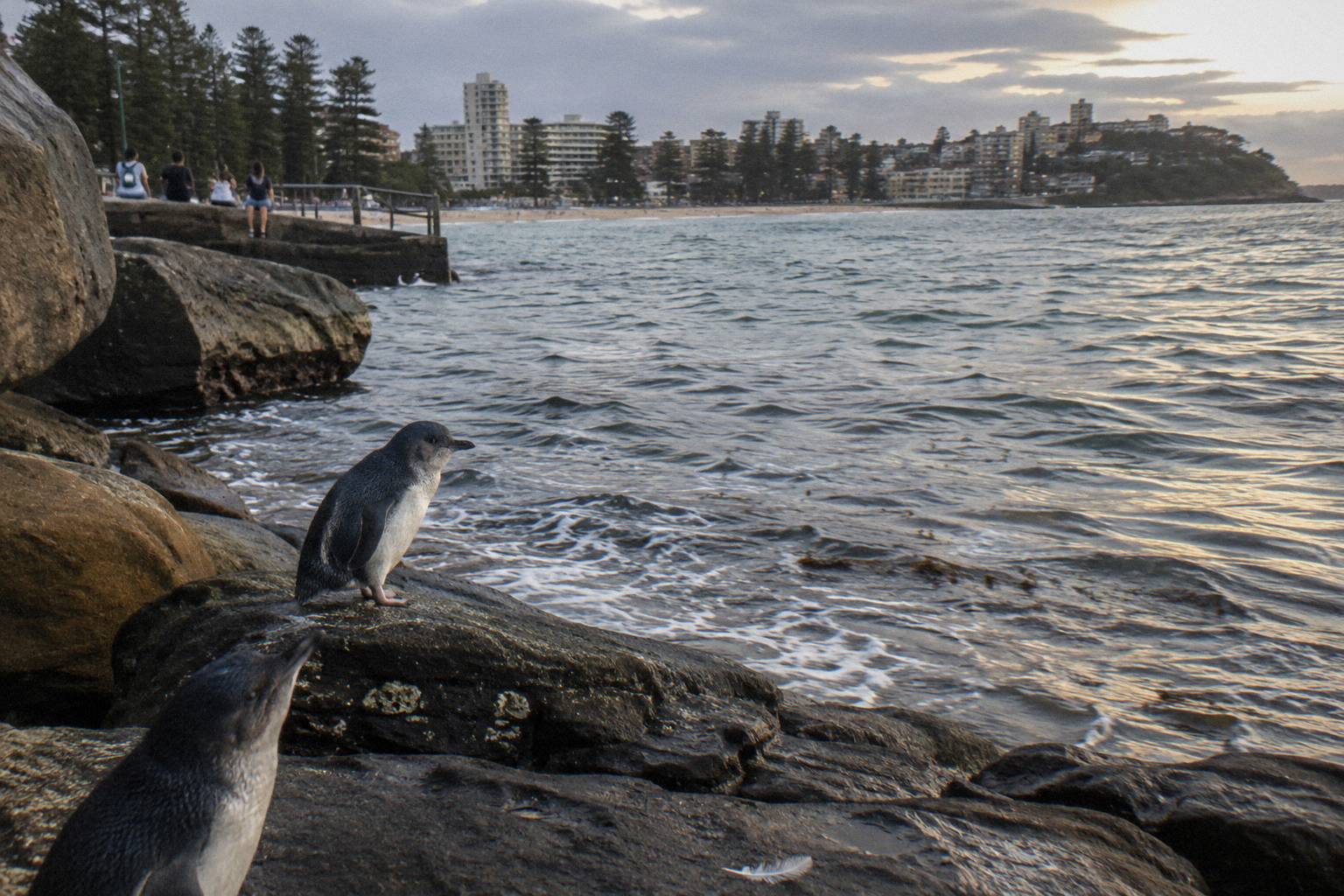
The penguin rules are worth knowing even if you never see a penguin, because they shape how tours behave around Manly. The NSW environment agency's penguin page sets out the protections: nest checks run from July to January, and the speed and anchoring rules exist because strike risk from boats is a documented threat to a small colony. A responsible tour in that area keeps its distance not from sharks, but from birds.
| Wildlife | What the official or operator source says | Source type |
|---|---|---|
| White, tiger and bull sharks | Tagged animals trigger listening-station alerts within 500 m; 2 stations in the harbour | NSW DPI SharkSmart |
| Bull sharks in estuaries | Subject of ongoing NSW research in Sydney Harbour and estuaries | NSW DPI SharkSmart |
| Shark sightings from kayaks | "Extremely rare to see" per the operator FAQ | Manly Kayak Centre operator statement |
| Seals, penguins, rays, sea eagles | Listed by operators as wildlife seen, season dependent | Operator statements, no guarantee |
| Little penguins at Manly | Small protected colony; 4-knot zone, no-anchoring buoys, strike risk from boats | NSW Environment agency |
Note the source-type column. The only organisation that speaks about harbour sharks with data is the NSW government, and what it publishes is monitoring and research, not warnings. The only direct "rare" claim about sightings comes from Manly Kayak Centre's FAQ, an operator statement, and it should be weighted as one experienced operator's account rather than a statistic. Everything else on the wildlife list is seasonal possibility, never a promise, and no tour should be booked on the expectation of any particular animal.
Practical Steps Before You Paddle
The workable routine is short: check the SharkSmart app or its X alerts for harbour station detections before you head out, read the cancellation terms on your tour's booking page, wear the lifejacket the operator issues, and pay attention to the pre-launch briefing. None of these steps is about sharks specifically, and that is the point. The harbour's rules and the tour industry's habits both treat general water safety as the preparation that actually protects you.
“A really great tour! The guides were fantastic. They also helped participants who were having trouble getting the hang of the kayak during the tour.”
The lifejacket point deserves its own sentence because the rule is specific and often misstated. Under NSW law, kayaks on enclosed waters such as Sydney Harbour must carry an approved lifejacket for every person, and you must wear one when paddling alone or at night, with the government recommending you wear one at all times. Tour operators issue lifejackets as standard. Wearing yours is the single most effective thing you can do on any paddle, shark or no shark.
Beyond that, the timing question answers itself for most people. Dawn and dusk are when the harbour is at its quietest for boat traffic, and they are also the hours the sunset and sunrise tours are built around, with meeting times tied to the season's light. The Sydney by Kayak sunset tour, for instance, starts about 1 to 1.5 hours before sunset per the operator's page, and the LED sunset tour adds lights for the paddle back in the dark, which is precisely the window the NSW night lifejacket rule covers. Operators design around these rules; you mostly just need to follow the brief.
For a fuller rundown of gear and clothing, the what to wear kayaking guide is the practical companion to this page, and the harbour kayak safety guide covers ferries, channels and the Bridge Transit Zone in detail.
What Trips People Up About Sharks And Kayaking
Three mistakes recur: readers treat official silence as proof that no nets sit inside the harbour, which SharkSmart does not state; they read a tagged-shark detection within 500 metres of a station as a closure or a warning to stay ashore, when it is only data; and they fixate on sharks while skipping the briefing on ferry wake, cold water and capsizing, which are the hazards a guide actually briefs you on.
The first mistake is the sneakiest because it feels like careful research. A government page about ocean beach meshing genuinely does not mention the harbour, and an absence of text is not a statement of fact. If you want to know what the program covers, the meshing page tells you: 51 beaches between Newcastle and Wollongong, nets out on 31 March, no total barrier. That is all it claims, and all anyone should repeat.
“It was amazing! The paddle was a good length - not too long but still a good workout. Same with the hike up to the waterfall. The view at the top was amazing and the guide proided a very delicious and healthy lunch.”
The second mistake inverts the first. Some readers see a listening-station alert and cancel plans, when the alert's own design assumes people will keep using the water with better information. The alerts exist so beach authorities, swimmers and operators can make calls, and a tour operator watching the harbour daily makes that call with more context than a first-time visitor.
The third mistake is simply misallocating attention. Ask a guide what worries them on the water and the answer will involve weather and boat traffic, not wildlife. The when not to go kayaking article covers the conditions that genuinely stop paddles, and it is a better use of pre-trip worry than a question the monitoring program answers calmly.
All three run with free cancellation up to 24 hours before the start, per their booking pages, and each launches from a different part of the harbour, so the choice is mostly about where you are staying and how long you want to be on the water.
Common Questions About Sharks And Sydney Harbour Kayaking
Are There Sharks In Sydney Harbour When You Kayak?
Yes. NSW SharkSmart operates 2 tagged-shark listening stations in Sydney Harbour and runs research on bull sharks in the harbour and estuaries, so the government treats the harbour as shark habitat. No official source gives a kayaking risk figure, and Manly Kayak Centre's FAQ calls a sighting "extremely rare to see".
Are There Shark Nets In Sydney Harbour?
The NSW Shark Meshing (Bather Protection) Program covers 51 ocean beaches between Newcastle and Wollongong, not the harbour. The SharkSmart pages say nothing about nets inside the harbour in either direction, so no claim about harbour nets can be made from them.
Do The Listening Stations Warn Kayakers?
They inform rather than warn. A station triggers an alert when a tagged white, tiger or bull shark passes within 500 metres, published through the SharkSmart app and X. Only tagged animals trigger alerts, so the system shows part of the picture, not all of it.
Is Dawn Or Dusk More Dangerous For Sharks?
No official source quoted here makes that claim for Sydney Harbour, and no seasonal or time-of-day pattern is printed by SharkSmart. What the rules do say is that lifejackets must be worn when paddling alone or at night on enclosed waters, which covers the sunrise and sunset tour windows.
Do Tour Operators Cancel For Shark Alerts?
Not stated by any operator covered here. Operators cancel or reroute for weather and water conditions, and the sunset and sunrise tours all offer free cancellation up to 24 hours before the start if you decide to change your plans. Ask the operator directly if an alert has you concerned.
What Other Wildlife Will I See From A Harbour Kayak?
Operators list rays, seals, sea eagles and cormorants as wildlife seen on their paddles, season dependent, and none of it is guaranteed. The one documented colony is the protected little penguin population at Manly, which has its own speed and anchoring rules rather than a viewing promise.