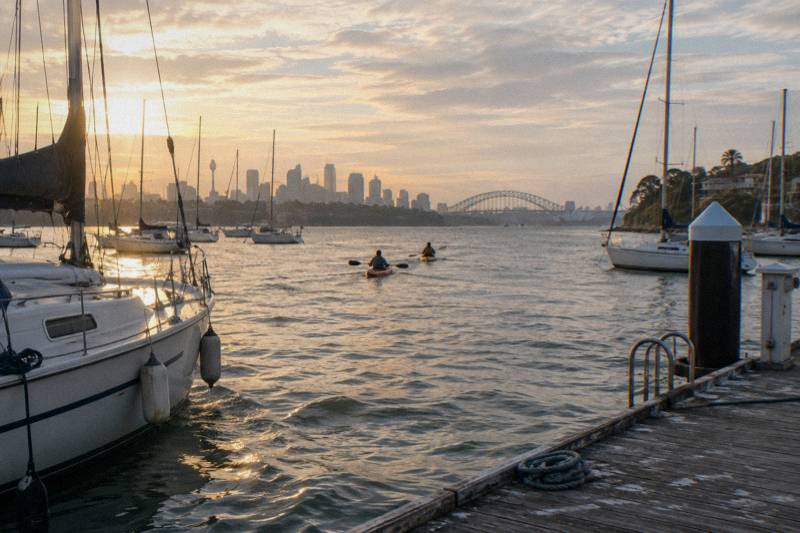
Sydney Harbour Kayak Vs Harbour Cruise: Which Is Better
Kayaks and cruise boats share the same harbour but deliver two different days out. Here is how the choice actually breaks down.
Short answer
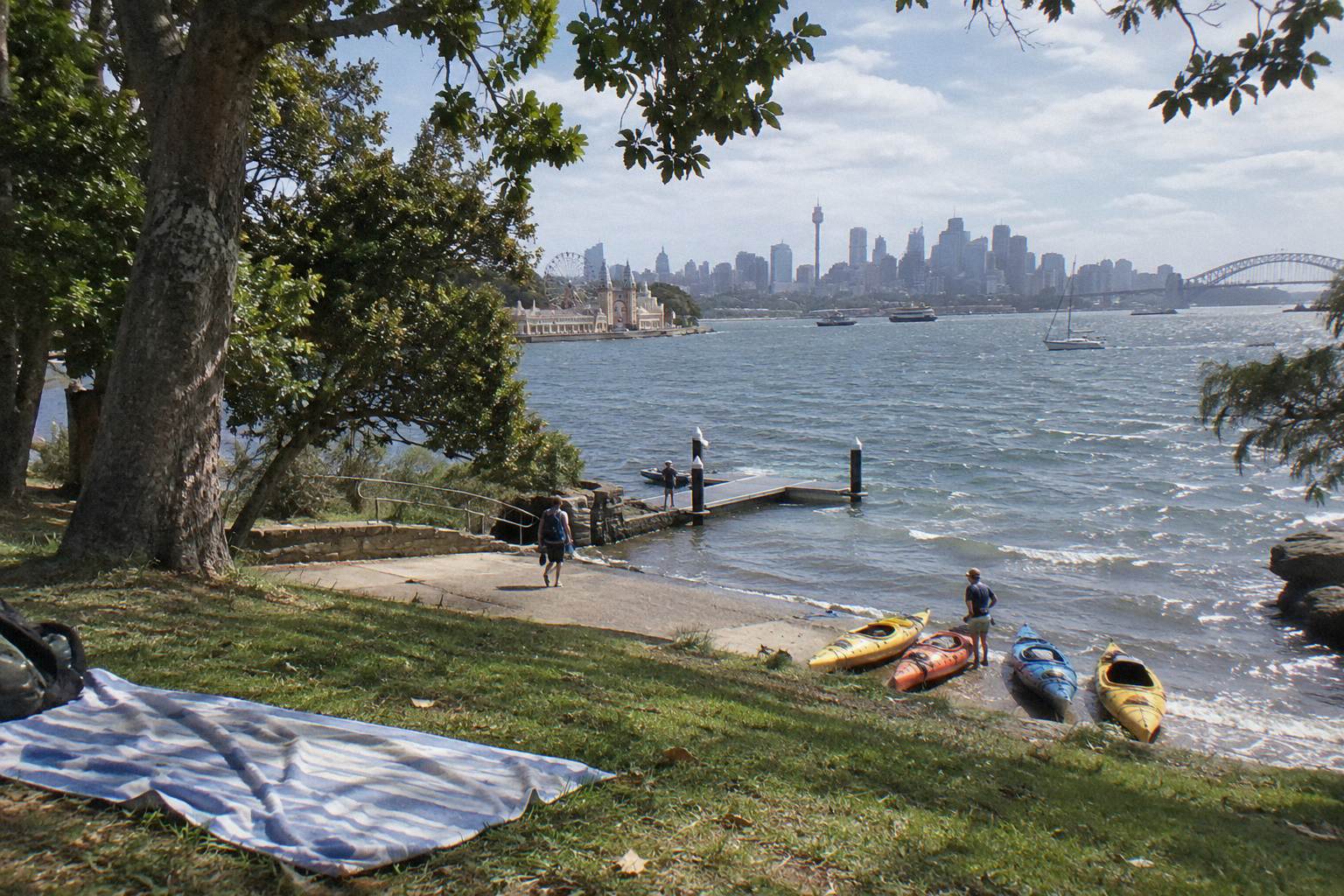
A kayak tour puts you on the water in a small group, typically 5 to 14 paddlers, for 1.5 to 4 hours with a guide, gear and often photos included; operator prices run from AUD 79 to AUD 195 per person. A cruise is a seated, larger-vessel experience. Which is better depends on pace, budget logic, mobility and the weather, not on one beating the other.
A kayak tour and a harbour cruise leave from shores a few hundred metres apart and show you the same body of water in completely different ways. One puts you a few centimetres above the surface, paddle in hand, in a group small enough that the guide knows your name. The other seats you above the water with room to move, a drink in hand and someone else responsible for the steering. Neither is the better experience in the abstract; each wins on specific criteria, and the purpose of this comparison is to lay those criteria out plainly, using only what operators and NSW Maritime actually publish.
In short: a kayak tour is a participation activity: you paddle, you follow a guide, you get briefly wet, and group sizes on the tours covered here run from a maximum of 5 to a maximum of 14. A cruise is a spectator activity: you sit, the vessel moves, and the effort required is zero. Kayak operator prices published on their own sites run from AUD 79 to AUD 195 per person depending on tour and operator. The right choice hinges on whether you want to be on the water or looking at it. Start with the parent overview at kayaking on Sydney Harbour if you are new to the harbour at all.
| Quick fact | Kayak tour | Harbour cruise |
|---|---|---|
| Effort required | You paddle, with a guide | None; seated |
| Group size | 5 to 14 maximum on tours covered here | Larger vessel, varies by operator |
| Duration | 1.5 to 4 hours 30 minutes on the tours covered here | Varies; not printed here |
| Typical inclusions | Kayak, paddle, lifejacket, guide, often photos | Seating and commentary; specifics vary |
| Water contact | Yes, some splashing is normal | No |
| Weather exposure | Full exposure; tours cancel in strong wind or storms | Sheltered seating on most vessels |
| Booking flexibility | Free cancellation up to 24 hours before start on the tours covered here | Varies by operator |
Kayak Or Cruise: What Actually Changes On The Water
The difference is not the scenery, it is your relationship to it. From a kayak the landmarks pass at paddle speed, at eye level with the water, and you hear the harbour rather than a commentary speaker. From a cruise vessel the same landmarks arrive framed and elevated, in comfort, with no physical demand on you at all. A kayak asks for effort; a cruise asks only that you sit still and look.
Both formats travel the same officially designated waterway, and that shapes both experiences more than first-time visitors expect. NSW's boating authority describes Sydney Harbour as an "extremely busy waterway" in its rules for boating on Sydney Harbour: shipping channels to keep clear of, high-speed ferries identifiable by an all-round yellow flashing light, and a requirement that no vessel stop, anchor or drift under the Harbour Bridge itself. A cruise boat transits all of this as a matter of course. A kayak tour plans around it, launching from sheltered bays and crossing channels behind traffic rather than in front of it, which is exactly why guided tours exist rather than free-form rental for visitors who do not know the harbour.
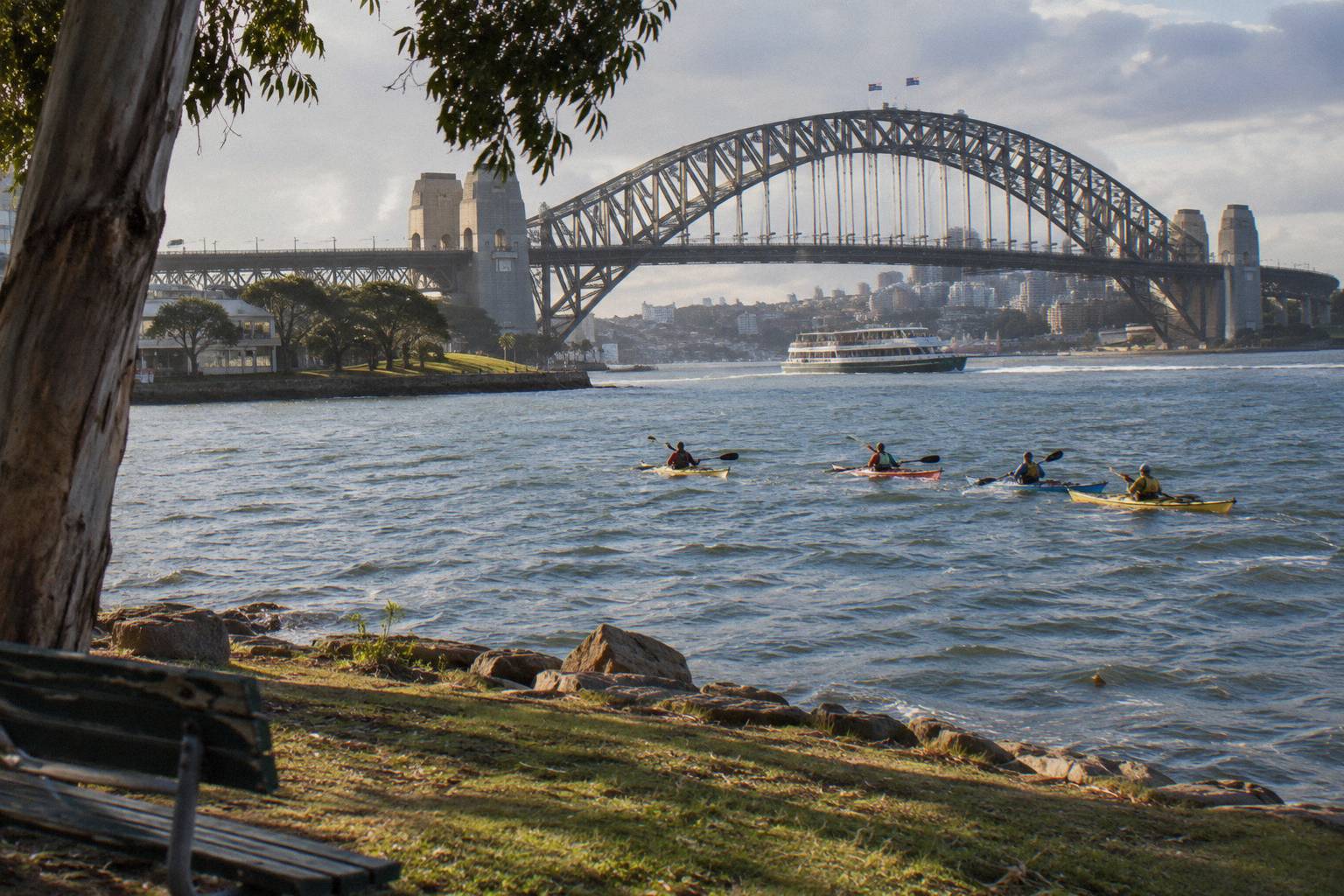
That planning is invisible to you as a guest but it is the product. A guided tour such as the 4-Hour Middle Harbour Eco Paddle from Sydney Harbour Kayaks includes a 20-minute paddling and safety briefing, stable double sea kayaks, dry storage and a qualified guide, and the operator states its routes follow tides and weather and "cannot be guaranteed". A cruise sells certainty of route; a kayak tour sells the water itself, with the route flexing around the day. Neither framing is dishonest, they are simply different products, and knowing which you are buying is the first step to being happy with the choice. That same flexibility shapes what you might spot on the water, and the guide to wildlife from a Sydney Harbour kayak runs through the dolphins, penguins and seabirds, along with the official rules for watching them.
Pace, Group Size And Freedom To Look Around
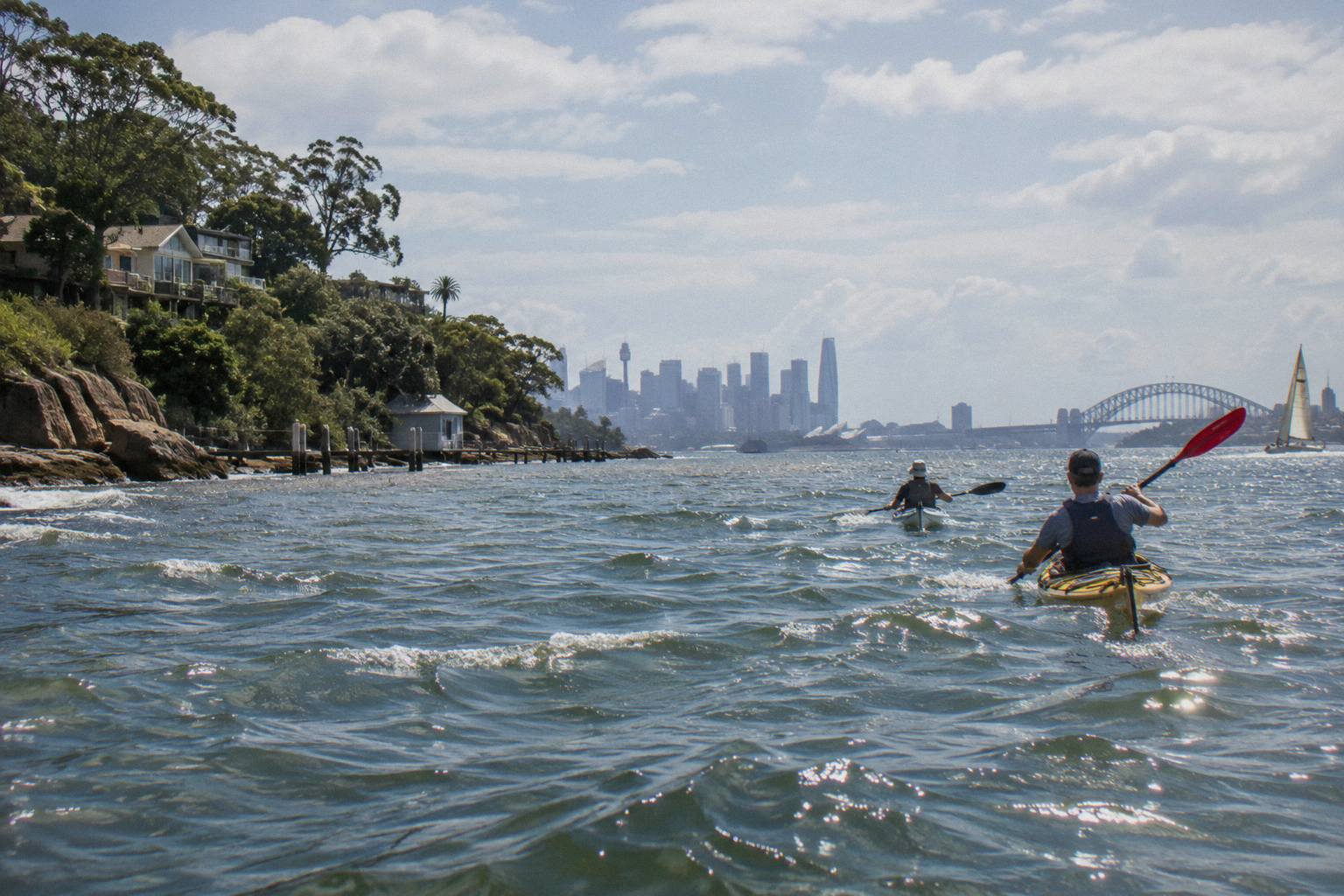
Kayak tours run small and slow: the tours compared here cap groups between 5 and 14 paddlers, move at paddle speed, and stop where the operator's route allows, which on a Middle Harbour eco tour includes morning tea on a beach. Cruises carry more people, hold a schedule and keep moving. If your priority is photographs at your own pace and a guide's attention, the kayak wins.
Group size is the single most under-considered number in this decision. On the kayak side, the Sunset Kayak With Free Photos tour caps its group at 9, the LED Sunset Kayak at 14, the Small-Group Opera And Bridge Paddle at just 5, and the Cockatoo Kayak Tours sunset paddle at 6. On a cruise, you share the deck with everyone else booked that departure. That difference determines whether you can ask the guide questions, whether the group waits for a slower paddler, and whether the trip has any stillness in it at all.
Pace follows from that. Paddle speed is slow enough that landmarks take their time arriving and leaving, and the operator decides the route: Sydney by Kayak's FAQ, for example, says a pass under the Harbour Bridge is only on its warm-month sunrise tour, before ferries run, with off-peak sunrise tours routing to Berry's Bay instead. A cruise covers more kilometres in the same hour. There is no right answer here, only the question of whether "more harbour seen" or "more harbour felt" matters to you, and it is worth being honest with yourself about which of those you are actually shopping for.
The middle ground is worth naming too. A short, beginner-friendly paddle such as Sydney by Kayak's Harbour Highlights tour, 60 minutes on the water from AUD 79 per person on the operator's own site, gives you the on-the-water sensation without committing half a day, and several families use it precisely as a test of whether the full experience suits them before booking a longer tour.
The Middle Harbour Option A Cruise Cannot Copy
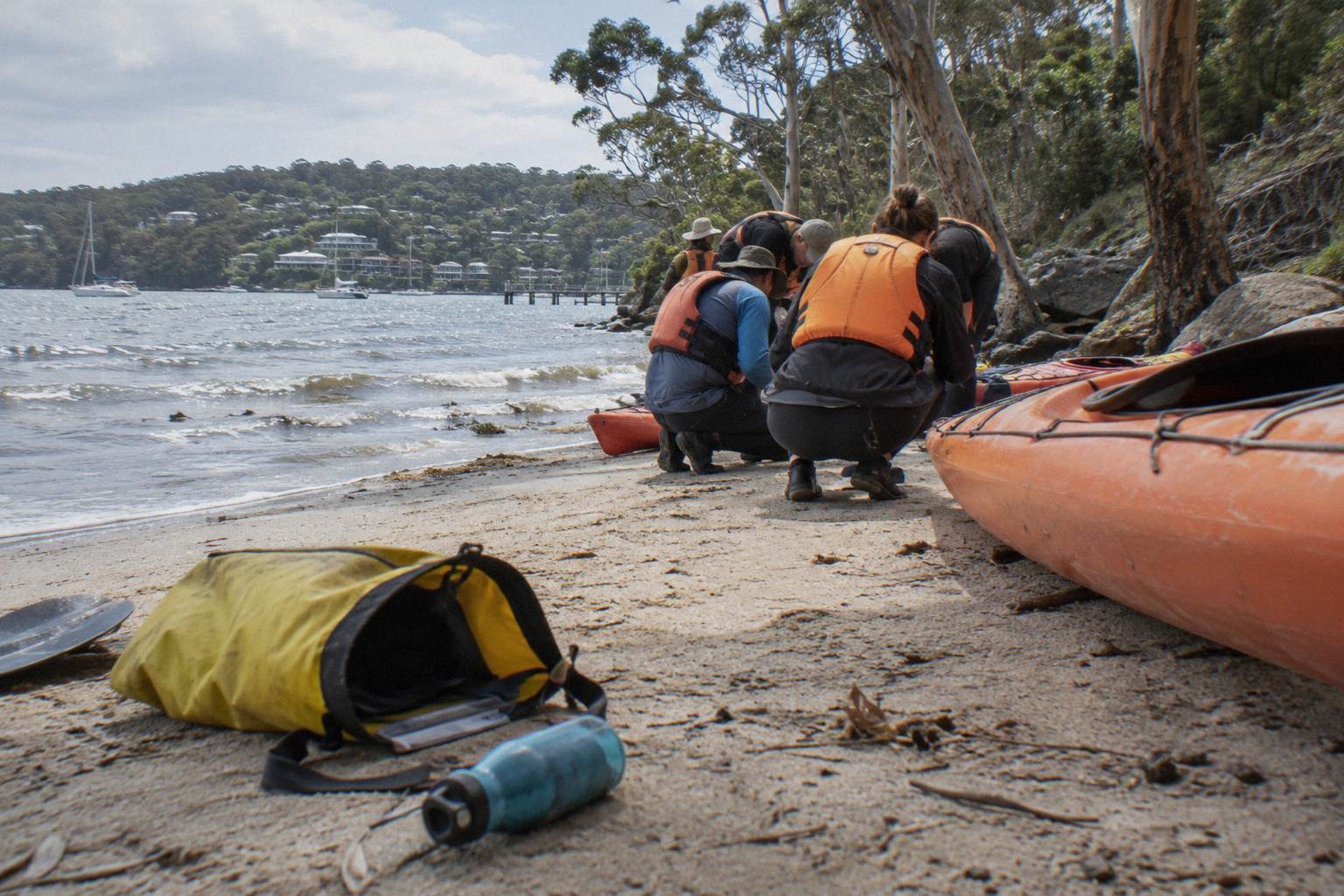
Middle Harbour, north of the Spit Bridge, is the one part of this comparison where the two products genuinely diverge rather than overlap: the guided eco paddle explores creeks, bays and mangrove inlets that large vessels do not enter, with a beach stop for morning tea. Sydney Harbour Kayaks states plainly that its Middle Harbour tours do not paddle to the Opera House or Harbour Bridge. A cruise cannot follow you in there.
The operator's own tour page describes the route as following tides and weather past Scotts Creek, Sugarloaf Bay and the Bantry Bay mangroves when tides allow, along the bushland edge of Garigal National Park. No cruise product replicates that, because the whole appeal is water too shallow and too winding for big vessels. The trade is equally clear: you give up the postcard landmarks entirely. If the Opera House is the reason you are on the harbour, this is the wrong half of the comparison and the city-side tours, covered in the guide to kayaking under the Sydney Harbour Bridge, are where to look.
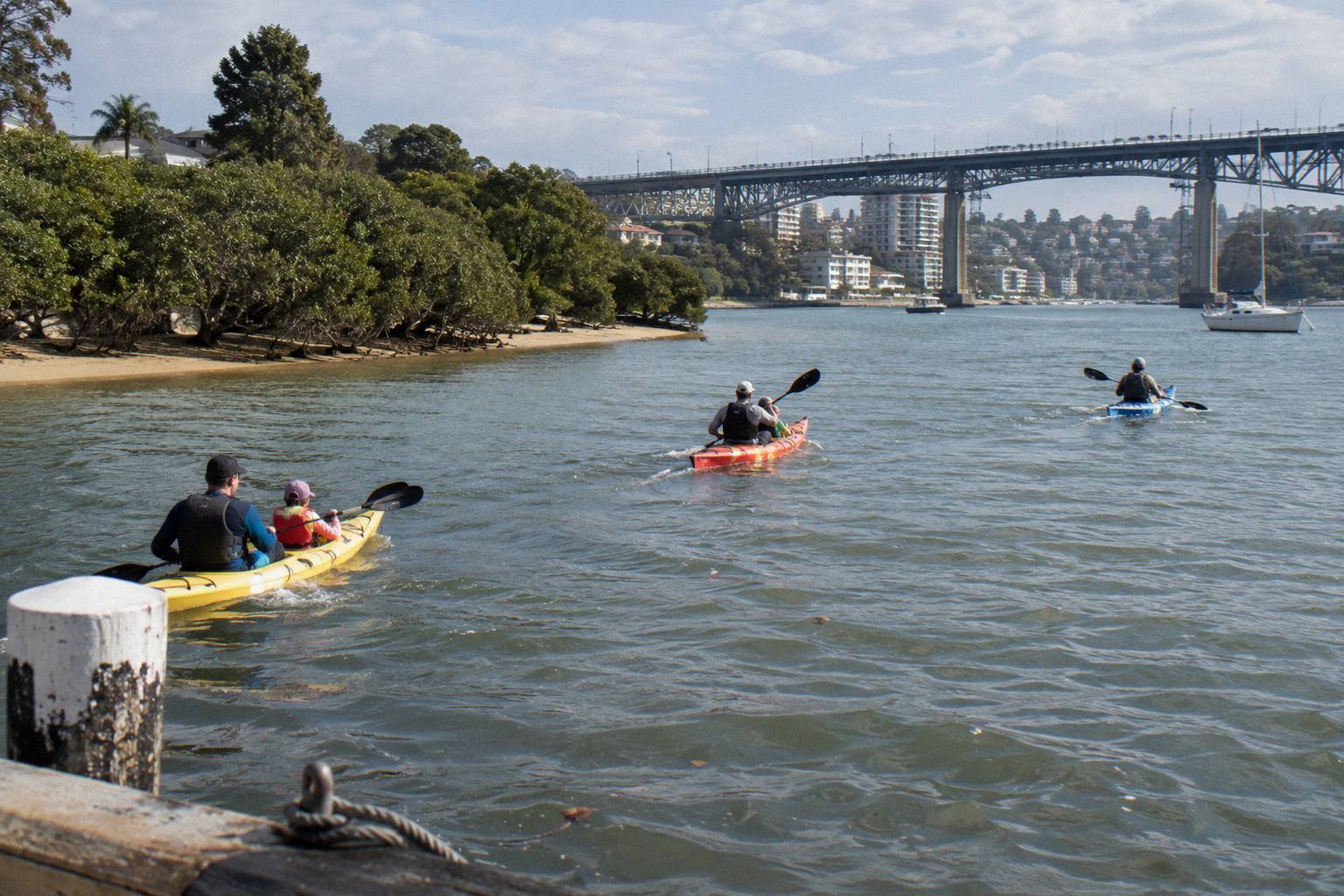
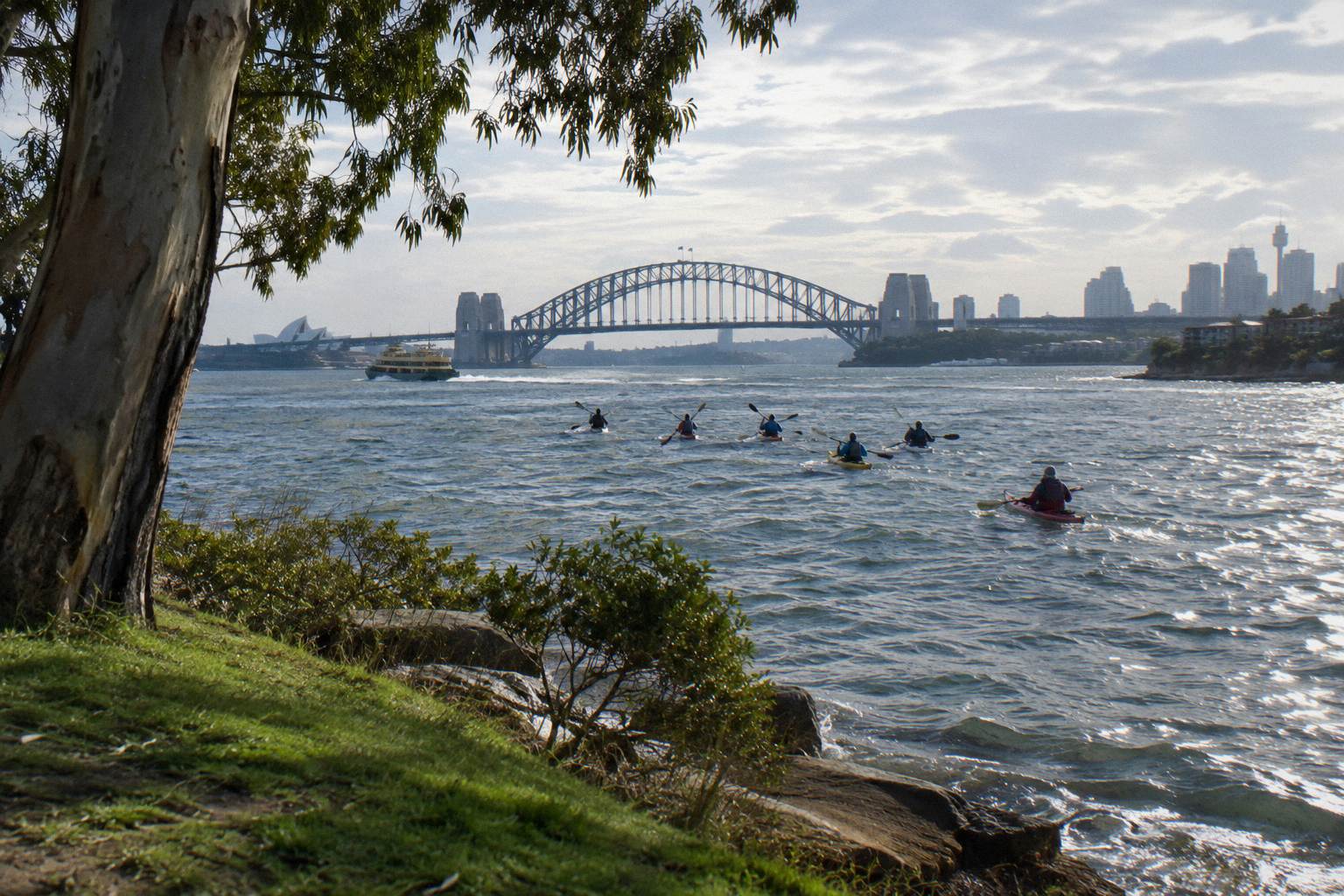
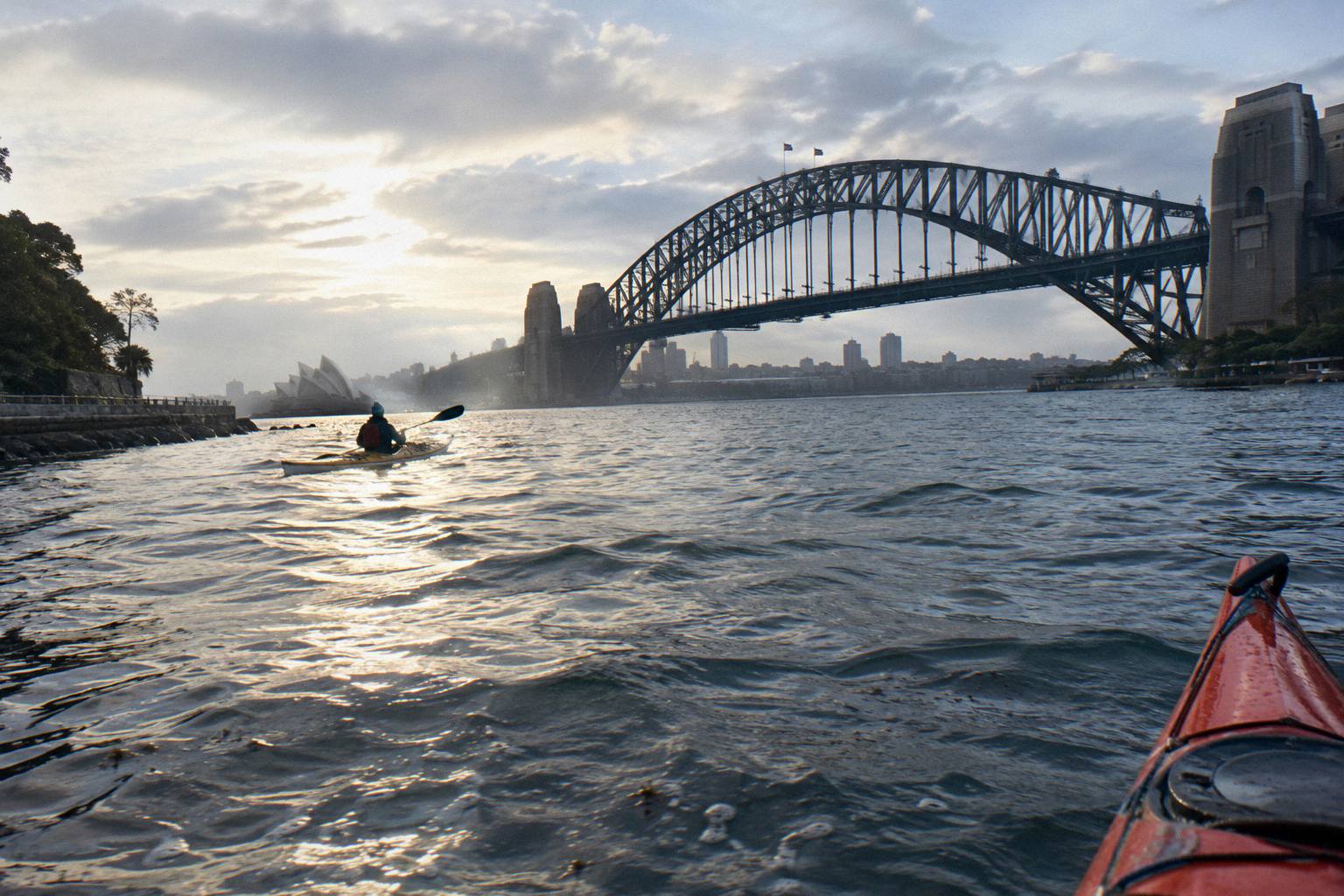
For the city-side paddle at dawn, the Sunrise Paddle Under Harbour Bridge tour from Kirribilli is the closest kayak equivalent to what people imagine a cruise delivers, the landmarks at their most photographed, rated 5.0 across 998 reviews on its booking page, with free cancellation up to 24 hours before the start.
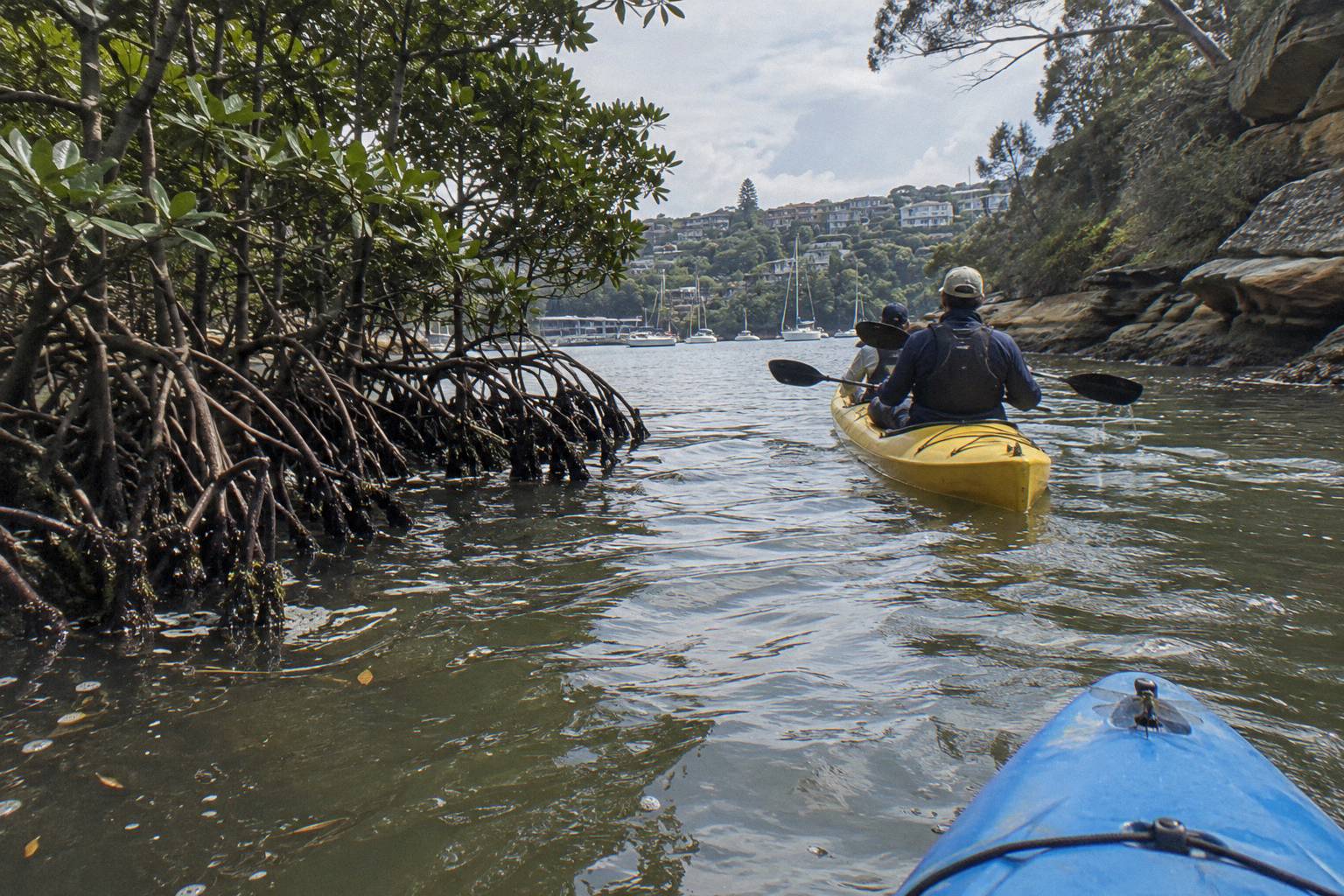
The private option matters for groups comparing against a private charter. The Ultimate Private Sea Kayaking Adventure, 3.5 hours from The Spit, rated 5.0 across 26 reviews on its booking page, is booked for your party alone, minimum age 10. When the comparison is "private cruise for eight people" versus "private paddle for eight people", the price logic and the exclusivity logic line up far more closely than the public-versus-public comparison does, and the private format removes the group-size question entirely.
Prices And What Your Money Actually Buys
No cruise price, duration or inclusion is printed here, because none is sourced; cruise specifics sit on each operator's booking page. On the kayak side, operator-website prices are clear: AUD 79 to AUD 195 per person across the published Sydney tours, all from the operators' own sites and possibly different from booking-page prices. The roster tours covered here show no price, so their cost is confirmed when you check availability.
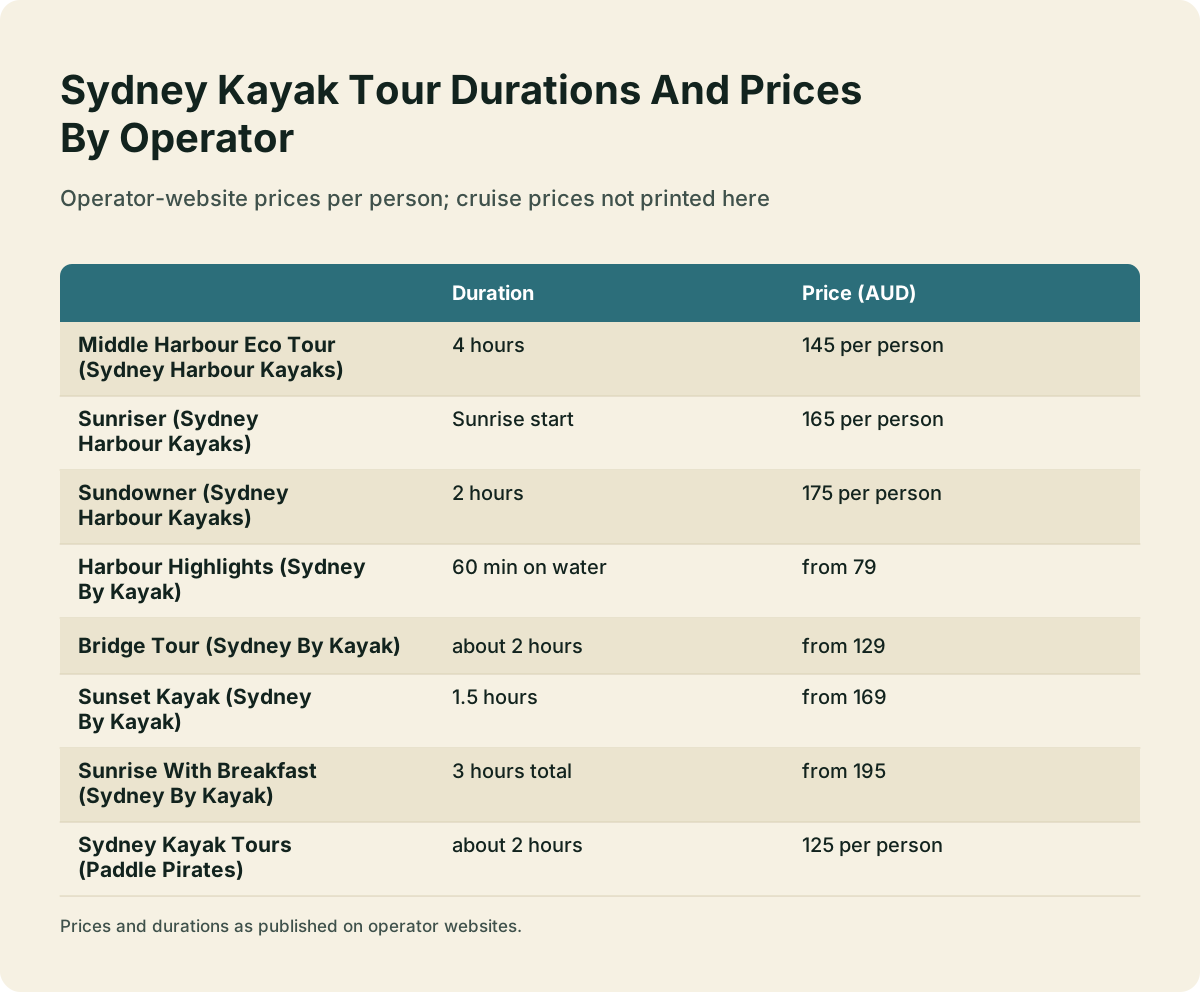
Prices below are from the operators' own websites, GST included where stated, and may differ from booking-page prices.
| Operator | Tour | Duration | Price (AUD) | Notes from the operator's page |
|---|---|---|---|---|
| Sydney Harbour Kayaks | Middle Harbour Eco Tour | 4 hours | 145 per person | Weekends; min age 14; double kayaks |
| Sydney Harbour Kayaks | Sunriser | Sunrise start | 165 per person | Min 2 people, 480 minimum |
| Sydney Harbour Kayaks | Sundowner | 2 hours | 175 per person | Min 2 people, 700 minimum |
| Sydney by Kayak | Harbour Highlights | 60 min on water | from 79 | Beginner level |
| Sydney by Kayak | Bridge Tour | about 2 hours | from 129 | Intermediate paddlers |
| Sydney by Kayak | Sunset Kayak | 1.5 hours | from 169 | LED-lit kayaks |
| Sydney by Kayak | Sunrise With Breakfast | 3 hours total | from 195 | Coffee and breakfast included |
| Paddle Pirates | Sydney Kayak Tours | about 2 hours | 125 per person | Free photos; no food |
What the money buys differs structurally between the two formats. A kayak price includes the craft, paddle, an approved lifejacket, a guide and, on several Sydney by Kayak tours, free photos, with the operator's site noting a AUD 15 per seat conservation-fund contribution built in since 2018. A cruise price buys a seat, and anything beyond the seat, food, drinks, commentary, varies by operator and is not printed here. The honest comparison at the wallet level is not number versus number, it is inclusions versus seat: ask what the kayak price includes, ask what the cruise price includes, and compare those two lists rather than the headline figures.
Cancellation terms are a real differentiator on the kayak side. Every roster tour compared here states free cancellation up to 24 hours before the start, for a full refund. That is a genuine planning safety net when your harbour day competes with weather, jet lag and the rest of an itinerary. Cruise cancellation terms are not sourced here; treat them as unknown until you read the specific operator's terms.
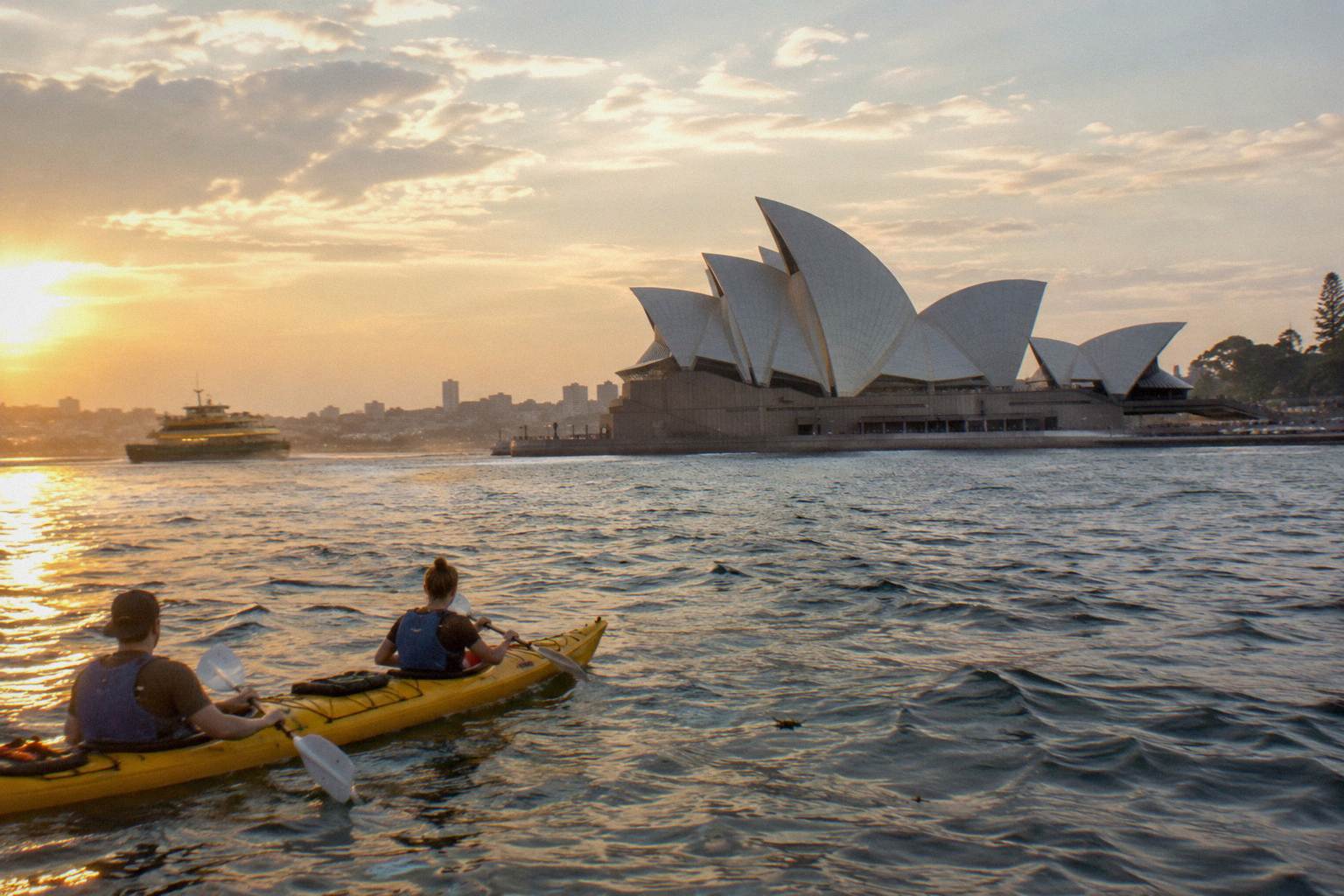
The sunset end of the market deserves its own line in this comparison, because it is where the two formats compete hardest on the same product: golden-hour light on the harbour. The Sunset Kayak With Free Photos tour, 1.5 hours from Lavender Bay, rated 4.8 across 162 reviews, caps the group at 9 and includes the photos, which on a cruise evening would otherwise be your own problem to solve from a moving deck.
Weather, Safety And The Rules Of A Busy Harbour
A cruise runs in almost anything short of a gale; a kayak tour cancels in strong winds, thunderstorms and poor visibility, and Sydney Harbour Kayaks' own policy page says exactly that, noting tours proceed in light rain. Kayaks must carry lifejackets for everyone aboard and wear them when paddling alone or at night on enclosed waters such as Sydney Harbour. Operators on the tours covered here issue them as standard.
The safety framing is not a reason to avoid kayaks, but it is a reason to prefer guided ones as a visitor. The official NSW lifejacket rules require vessels, kayaks included, to carry an approved lifejacket for every person on board at all times, with wearing required when alone on the vessel or at night on enclosed waters. Paddlecraft must also carry a torch or lantern ready to display a white light to prevent collision, per the same authority's lights guidance. A tour handles every one of these obligations for you; a bare rental leaves them yours.
Weather exposure cuts the other way as an argument for the cruise. If your group contains someone who cannot tolerate sun, spray or the physical demand of paddling, the cruise's sheltered deck is the more forgiving choice, and no amount of enthusiasm changes that. The kayak-side counter is the weather-cancel policy itself: Sydney Harbour Kayaks' terms for direct bookings give a transfer, a 3-year credit or a full refund when the operator cancels, and the roster tours here all state free cancellation up to 24 hours before the start when the guest cancels. The day being written off is rare, and when it happens, you are generally not out of pocket.
Event closures apply to both formats equally and are worth one practical note: annual events such as Vivid, New Year's Eve and Australia Day close parts of the harbour under maps published each year, so no specifics can be stated here in advance; check the current Transport for NSW map for the dates you are booking, whichever format you choose.
Families, Non-Swimmers, Mobility And Who Each Format Suits
The Middle Harbour private adventure starts at 10. Cruises set their own conditions, unsourced here. Mobility is where the cruise is clearly the easier choice.
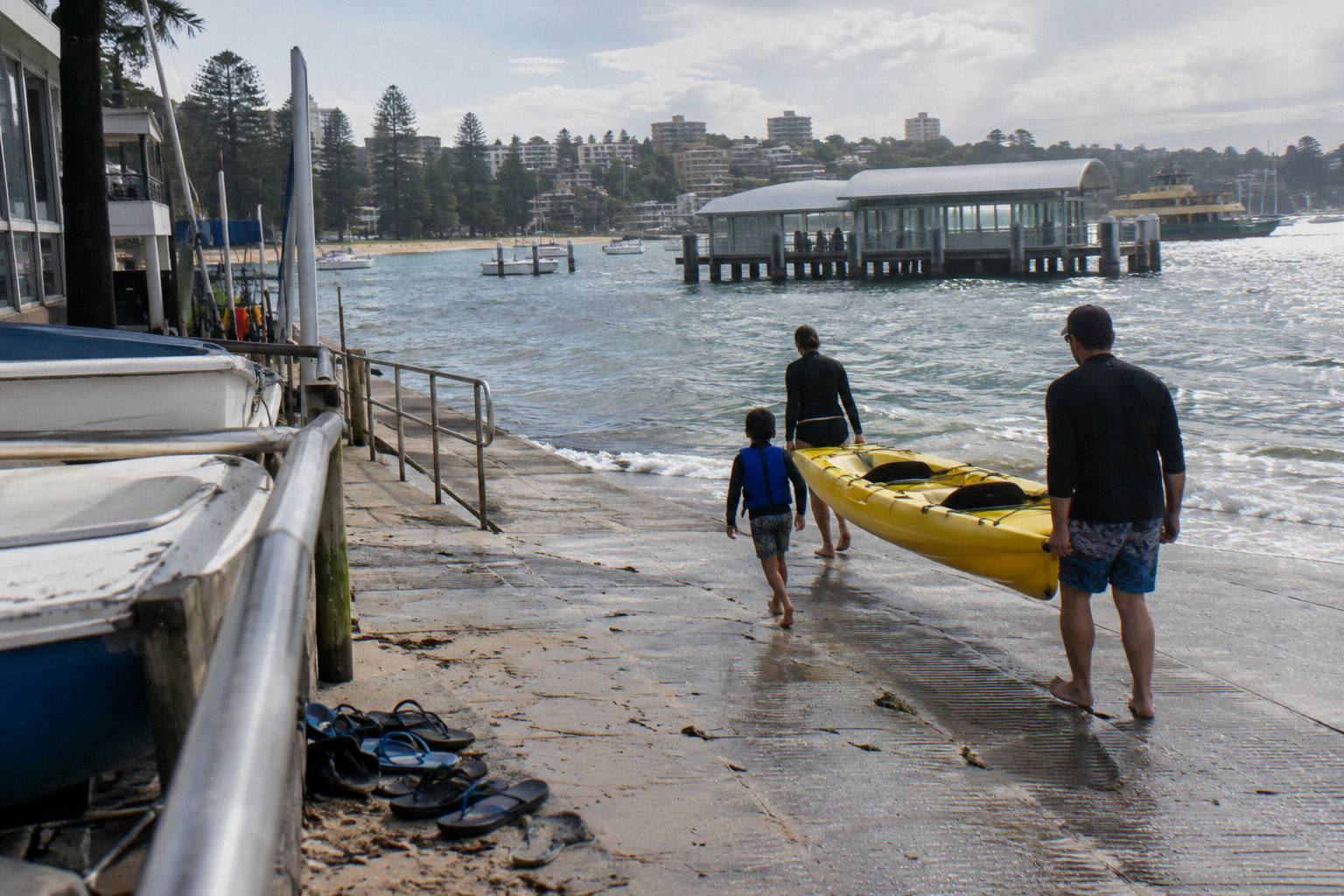
The age spread matters more than it looks. Sydney by Kayak's own requirements state a minimum age of 8 with under-15s accompanied by a parent or guardian, and its tours use single kayaks only, with a 110 kg weight limit stated on its FAQ. Sydney Harbour Kayaks runs family setups on its own products from age 3 as a passenger in a double with two adults, per its kayaking-with-kids page. A cruise typically takes all ages, which removes a planning constraint entirely, and for mixed-generation groups that single fact can decide the whole day. More on the age question generally is in the guide to Sydney Harbour kayak tours with kids.
Non-swimmers should read the safety section above and the companion piece on whether you need to swim to kayak Sydney Harbour; the short version is that the lifejacket does the floating and the guide does the managing, but a genuine fear of deep water belongs on a cruise deck, not in a cockpit. Mobility is more clear-cut: kayaks require getting down to and up from water level, sitting low with legs forward, and the tours are not adaptive-equipment products as described on their pages. Boarding a cruise vessel is a step and a handrail. This is the one comparison axis where no amount of enthusiasm for paddling closes the gap.
For capable adults weighing a premium small-group paddle against a cruise, the Small-Group Opera And Bridge Paddle caps the group at 5, runs 2 hours from Lavender Bay and is rated 4.9 across 105 reviews, with a stated minimum age of 16 and a 110 kg weight limit on its booking page.
Which Should You Book: A Decision Table
Match the format to your group and your priorities rather than to a ranking. The table below assigns each common situation to the format the sourced facts support, with the reason stated. Where neither has an edge, the row says so; the honest answer is that most groups know their own row within a minute of reading it.
| Your situation | Better fit | Why, from the sourced facts |
|---|---|---|
| Want landmarks, comfort, zero effort | Cruise | Kayak tours require paddling; operator pages describe them as activity products with briefings |
| Want the harbour at water level, small group | Kayak | Group caps of 5 to 14 on the tours here; guide attention follows from that |
| Non-swimmer, uneasy in deep water | Cruise | Lifejackets and guides manage risk, but comfort matters; see the safety section |
| Mobility constraints | Cruise | Kayaks need getting down to water level; cruise boarding is a step and a handrail |
| Photographer wanting low-angle shots | Kayak | Several tours include free photos, but the low vantage is the point |
| Booking during a windy, changeable week | Either | Kayak tours cancel in strong wind with free cancellation up to 24 hours before start; cruise terms unsourced |
| Long, unhurried nature paddle, no landmarks | Kayak | The 4-hour Middle Harbour Eco Tour enters water big vessels do not |
Use the table as a shortlist, not a verdict. Once a row points you to the kayak side, the next decisions are which part of the harbour and what time of day, and the guide to the best time to kayak Sydney Harbour covers the daylight logic for that. If a row points you to the cruise side, the kayak material here still matters for a second day on the water, which is how plenty of visitors end up doing both.
What Trips People Up When Choosing Between The Two
The most common mistake is buying the format for the wrong reason: choosing a kayak because it photographs well while wanting a cruise's zero effort, or choosing a cruise while secretly wanting to be on the water. The second is assuming a kayak tour is a workout; the tours here are beginner-paced, and Sydney Harbour Kayaks uses stable doubles with no experience needed. The third is ignoring minimum ages and weight limits until after booking.
Those ages and limits are printed on every booking page and differ tour by tour, so they belong at the start of the decision, not the end. A fourth trap is expecting a specific route. Weather, tides and ferry traffic decide the actual path on any paddle, and the operator's own pages say so; anyone who needs the route guaranteed on the day needs the cruise format, and there is no shame in that preference being the deciding factor. A fifth is assuming the landmark checklists transfer: Middle Harbour tours do not reach the Opera House or Bridge, as the operator states in so many words, and the bridge itself is a transit-only zone where stopping is prohibited for every vessel, so no tour of either format pauses beneath it. Book the side of the harbour you actually want, using the overview of Sydney Harbour kayak meeting points to see where each option starts.
Finally, do not let the comparison paralyse the booking. Free cancellation up to 24 hours before the start applies across the tours covered here, which means the kayak decision is largely reversible, and readers comparing at the level of "which is better" usually find that once they are on the water, or on the deck, the question answers itself within ten minutes.
The choice, reduced to one sentence each: book the kayak if you want the harbour at water level, in a small group, at the cost of effort and weather exposure; book the cruise if you want coverage and comfort with none of your own energy spent. Sydney Harbour Kayak Tours exists because the first of those is a genuinely different day out, not a better one.
Common Questions About Kayak Vs Cruise
Is A Kayak Tour Cheaper Than A Harbour Cruise?
No cruise prices are sourced here, so no direct comparison is printed. Published kayak operator-website prices run from AUD 79 to AUD 195 per person depending on tour and operator, and roster tour prices depend on date and group. Compare what each price includes, not the headline numbers.
Can You See The Opera House From A Kayak?
City-harbour tours from Lavender Bay, Kirribilli, Rushcutters Bay and nearby launches paddle past Opera House and Harbour Bridge viewpoints where the operator's route states it. Middle Harbour tours from The Spit do not reach either landmark, as Sydney Harbour Kayaks states on its own page.
Which Is Better For Non-Swimmers?
A cruise removes the water question entirely. A guided kayak tour is still viable for non-swimmers, since approved lifejackets are issued and a guide manages the group, but genuine discomfort around deep water is better served on a deck than in a cockpit.
Do Kayak Tours Get Cancelled More Often Than Cruises?
Kayak tours cancel in strong winds, thunderstorms, lightning, dangerous water or poor visibility, per Sydney Harbour Kayaks' policy, and proceed in light rain. Cancellations of that kind matter less than they sound: the tours covered here all state free cancellation with a full refund up to 24 hours before the start, and operator-initiated cancellations carry transfer, credit or refund terms on the operator's page.
Is One Safer Than The Other?
Both operate under NSW maritime rules on an extremely busy waterway. Kayaks must carry lifejackets for everyone aboard and wear them when paddling alone or at night on enclosed waters, with the authority recommending them at all times, and the tours here issue them and include a safety briefing. No comparative safety statistics are printed because none are sourced.