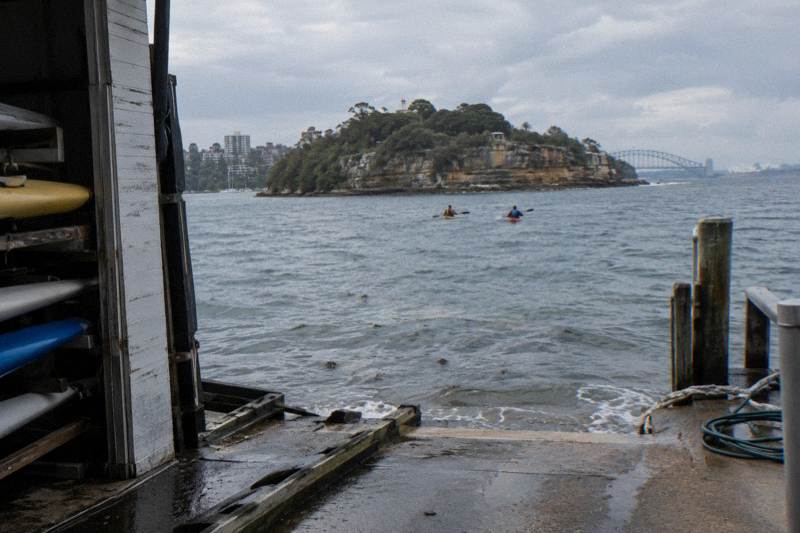
Sydney Harbour Islands By Kayak: Shark Island, Fort Denison And Cockatoo
Sydney Harbour's islands sit scattered across the working waterway, and a kayak puts you at water level with them in a way no ferry window can. The catch is that the harbour is busy, the islands have their own access rules, and no tour stops at most of them. The realistic islands paddle is a guided one that passes them.
Short answer
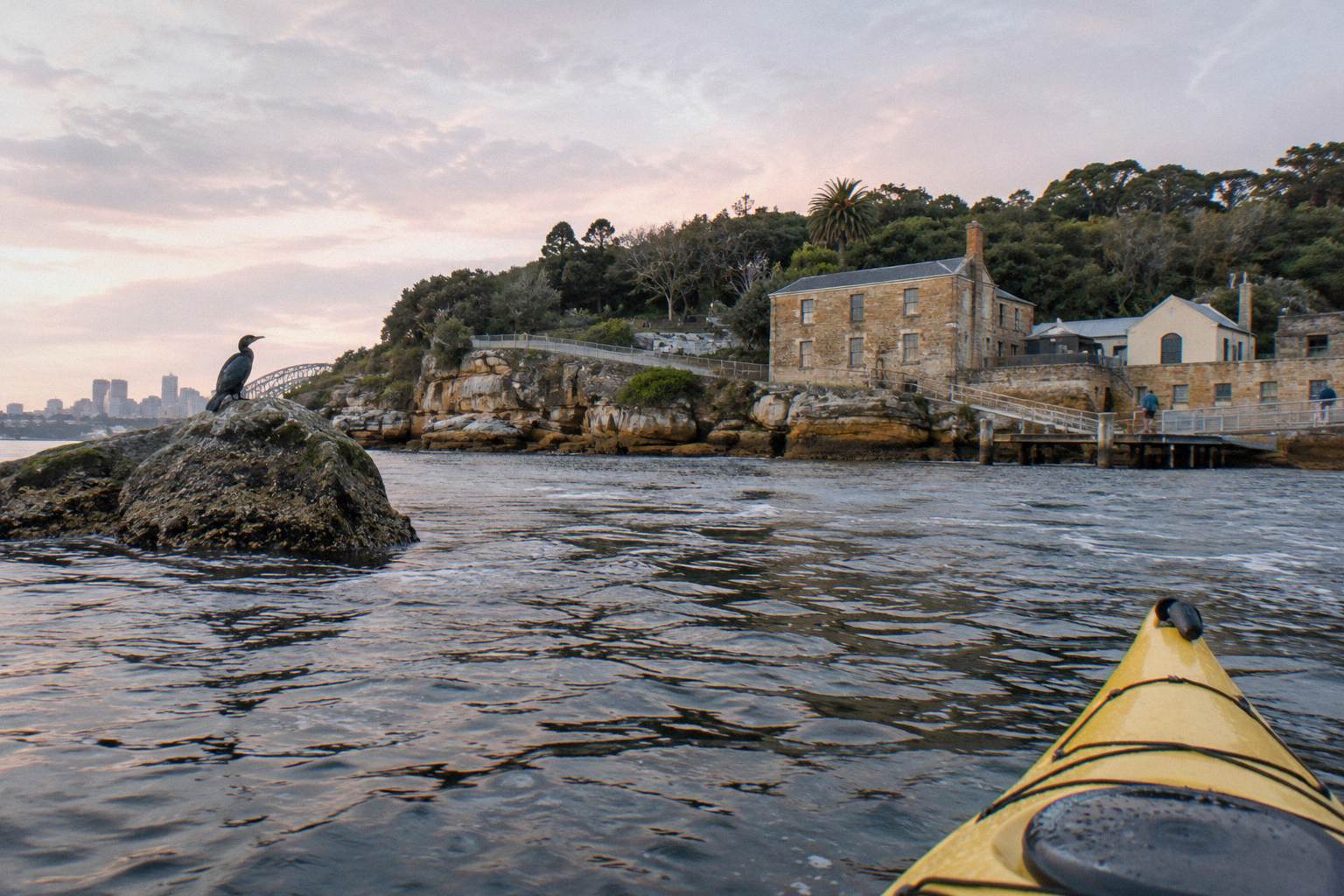
A guided kayak tour can pass Shark Island, Fort Denison, Cockatoo Island and Goat Island, with Goat Island the only one a roster tour names as its destination, paddled from Glebe over about 3 hours with free photos and a group max of 6. Landing is a separate matter: island access is restricted, and no tour here promises a landing.
In short: Sydney Harbour carries a string of islands, among them Shark Island, Fort Denison, Cockatoo Island and Goat Island, and a kayak is one of the few ways to see them from water level. Guided tours are the practical route for a visitor, because the harbour is an extremely busy waterway with shipping channels, ferry lanes and a bridge transit zone that forbids stopping under the bridge. The one tour in the lineup here built around an island is the Goat Island paddle from Glebe, and even that tour does not land you on the island. Sunrise and sunset departures give the calmest light on the sandstone, and every tour issues a lifejacket. And since paddle drip and splash are simply part of any harbour paddle, the guide to how wet you get on a Sydney Harbour kayak tour explains what to wear and what stays dry.
For the broader picture of paddling the harbour itself, start with the main guide to kayaking Sydney Harbour, then come back here for the island-by-island detail.
Quick Facts
| Question | Answer |
|---|---|
| Can you land on the harbour islands from a kayak? | Island access is restricted; no tour covered here promises a landing |
| Which tour is built around an island? | Kayak To Goat Island, from Glebe, about 3 hours, group max 6 |
| Which islands can a tour pass? | Depends on the route: Shark Island, Fort Denison, Cockatoo Island and Goat Island sit in the harbour |
| Do you need experience? | The Goat Island tour does not state a experience level; the operator runs singles and doubles |
| Lifejackets? | NSW rules require carrying one per person; worn when alone or at night; operators issue them |
| Free cancellation? | Yes on the roster tours, up to 24 hours before the start |
Which Harbour Islands Can A Kayak Actually Reach?
Shark Island, Fort Denison, Cockatoo Island and Goat Island all sit inside Sydney Harbour, and a kayak can reach the water around them far more easily than the islands themselves, since landing is restricted and no guided tour sells an island stop. The realistic paddle is a guided tour whose route passes them, with the guide handling the traffic and the timing.
Sydney Harbour is a drowned river valley, and its islands are the high ground that survived the flooding: remnants of sandstone ridges and one former fortification that now sits alone in the middle of the shipping lane. From a kayak they read differently than from a ferry. Fort Denison, the small island with the round Martello tower east of the Opera House, is something you paddle past at eye level rather than photograph across a rail. Fort Denison is established landmark knowledge as a former defensive fort, and that is about as much history as a paddler needs before setting out. For paddlers who prefer quiet bushland over open harbour chop, the guide to Lane Cove River kayak tours explains where guided trips launch, which ones stay closest to the mangroves, and what harbour rules apply.
The complication is that the harbour's middle ground is also its busiest. NSW's own harbour rules page calls it an "extremely busy waterway", with shipping channels to keep clear of, high-speed ferries identifiable by an all-round yellow flashing light, and a Transit Zone under the Harbour Bridge where vessels may only transit and must not stop, anchor or drift. None of that makes the islands unreachable. It does mean the practical way to see them from a kayak is on a guided tour with someone who knows the crossing points, which is exactly what the planning question of guided tour versus hire comes down to for visitors.
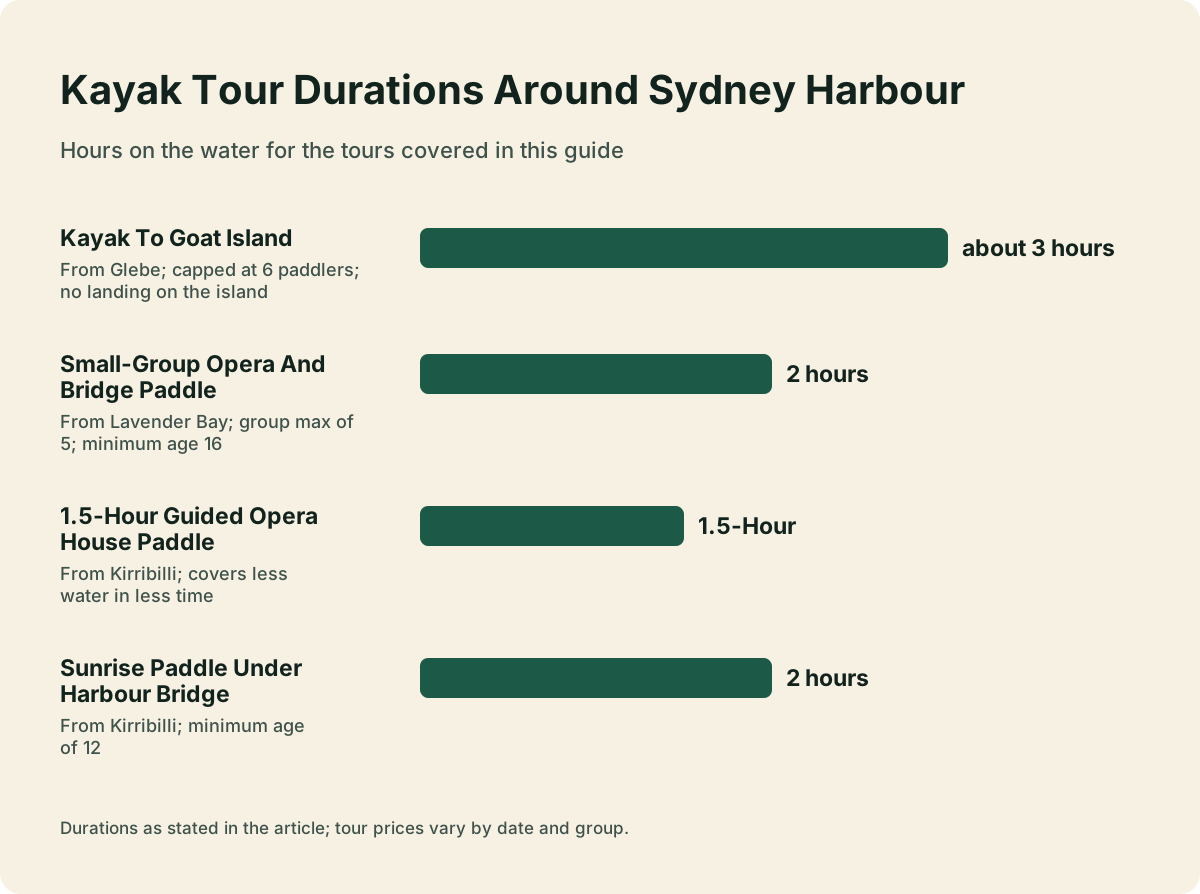
Two of the tours covered here sit in that middle harbour and bridge territory. The Small-Group Opera And Bridge Paddle from Quibaree Park at Lavender Bay runs 2 hours with a group max of 5, rated 4.9 across 105 reviews, minimum age 16, with a stated weight limit of 110 kg. The 1.5-Hour Guided Opera House Paddle from Kirribilli, rated 5.0 across 29 reviews, covers less water in less time. Both put you in the part of the harbour where Fort Denison is visible to the east and the bridge looms to the west, weather and route permitting, exactly as the operator describes.
Is Kayaking To Cockatoo Island Realistic From The Water?
Cockatoo Island sits in the Parramatta River arm of the harbour, west of the Harbour Bridge, and a kayak can absolutely paddle past it, but "kayaking to Cockatoo Island" in the sense of landing and exploring is not what any tour here sells. The tours that pass closest to it launch from the western harbourside, around Blackwattle Bay and Glebe. Landing arrangements are the island's own business, not a tour inclusion.
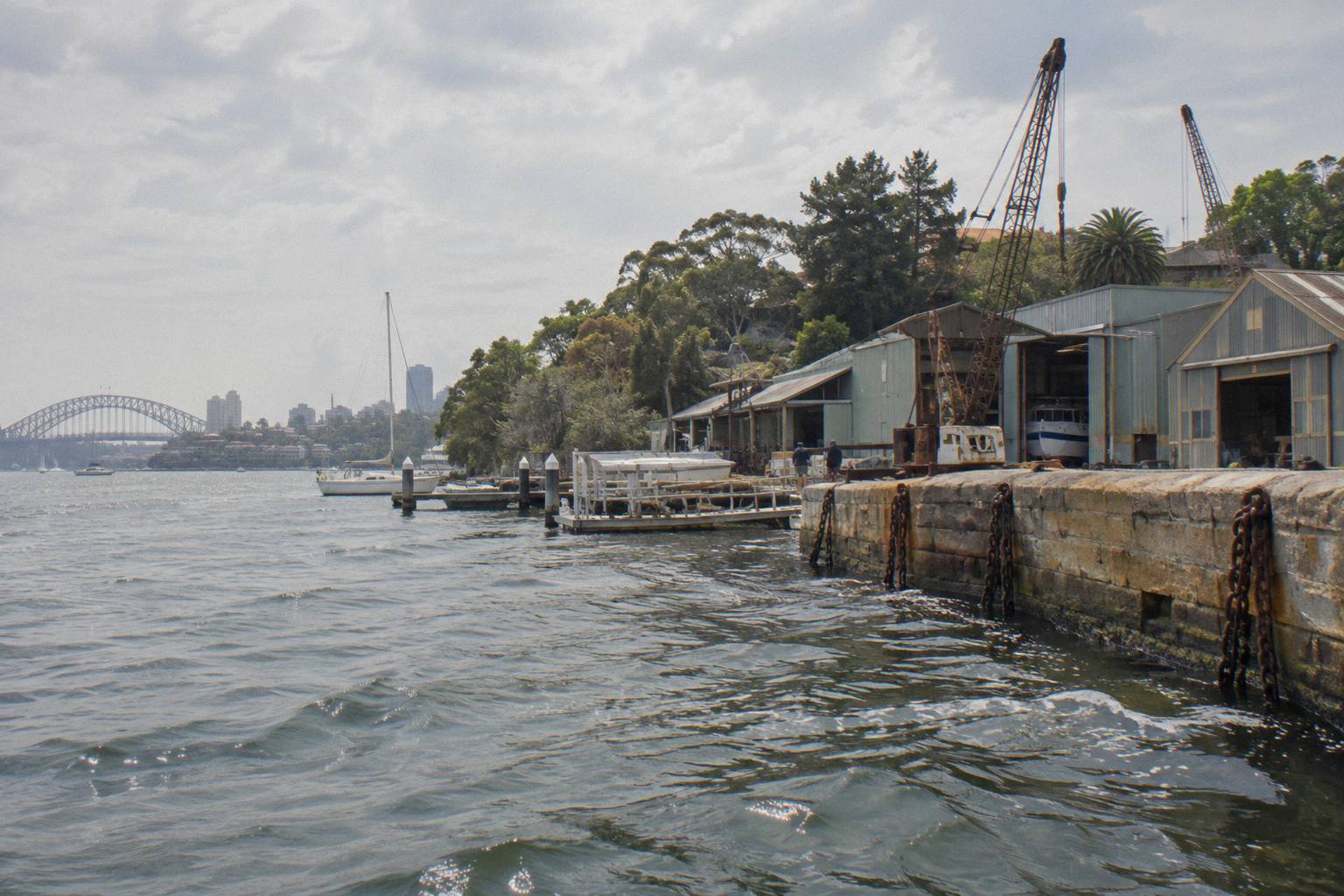
Cockatoo Island is the harbour's largest island, a former shipyard whose docks, cranes and workshop buildings still stand on the sandstone plateau. One general sentence of history carries it: it was a convict stockade and then a shipyard, and the fabric you see from the water is mostly industrial. From a kayak the island reads as a long timber-and-stone silhouette, and paddling its edges is the closest look a day visitor gets without stepping ashore.
The launch that matters is Glebe. Paddle Pirates, the operator behind the island-focused tour here, works from 123 Ferry Road, Glebe, in Blackwattle Bay near the Fish Market, and says the Harbour Bridge is about a 20-minute paddle away. That puts the western harbour, and by extension the water toward Cockatoo Island, within reach of a half-day paddle in capable company. The operator runs singles and doubles, includes free photos, provides no food, and lists seals, penguins, cormorants and sea eagles among wildlife seen on its paddles, all as operator statements rather than promises. Its cancellation terms are strict: no refund, voucher or postponement within 14 days of the tour.
What no honest island paddle can promise is the landing. Goat Island's access situation is covered below, and the same caution applies in a softer form to Cockatoo Island: ferries serve it on their own schedule, and a kayak tour's job is the water, not the wharf. If a landing matters to you, the booking page of whichever tour you are weighing is the place to ask the operator directly, before you pay.
The three tours below span the island-and-city-harbour question: the Goat Island paddle from Glebe, the small-group bridge paddle from Lavender Bay, and the short guided Opera House paddle for time-poor visitors.
| Island | Where It Sits | What A Kayak Can Do | Landing From A Tour |
|---|---|---|---|
| Goat Island | West of the Harbour Bridge, off Balmain | One roster tour paddles toward it from Glebe | No tour promises a landing; access is restricted |
| Cockatoo Island | Parramatta River arm, west of the bridge | Passable on a western harbour paddle | Not a tour inclusion; ask the operator |
| Fort Denison | Harbour centre, east of the Opera House | Visible from city-side tour routes, weather and route permitting | Not offered by the tours here |
| Shark Island | Eastern harbour, off Rose Bay | Visible on eastern harbour paddles | Not offered by the tours here |
What Does The Goat Island Kayak Tour Actually Do?
The Kayak To Goat Island tour, run by Paddle Pirates from the Glebe boat shed, is a 3-hour guided paddle toward the island at the heart of the harbour, capped at 6 paddlers aged 16 and over, rated 5.0 across 30 reviews, and including free photos, though the price, which varies by date and group, sits on the booking page. One catch: it paddles toward the island but never lands you on it.
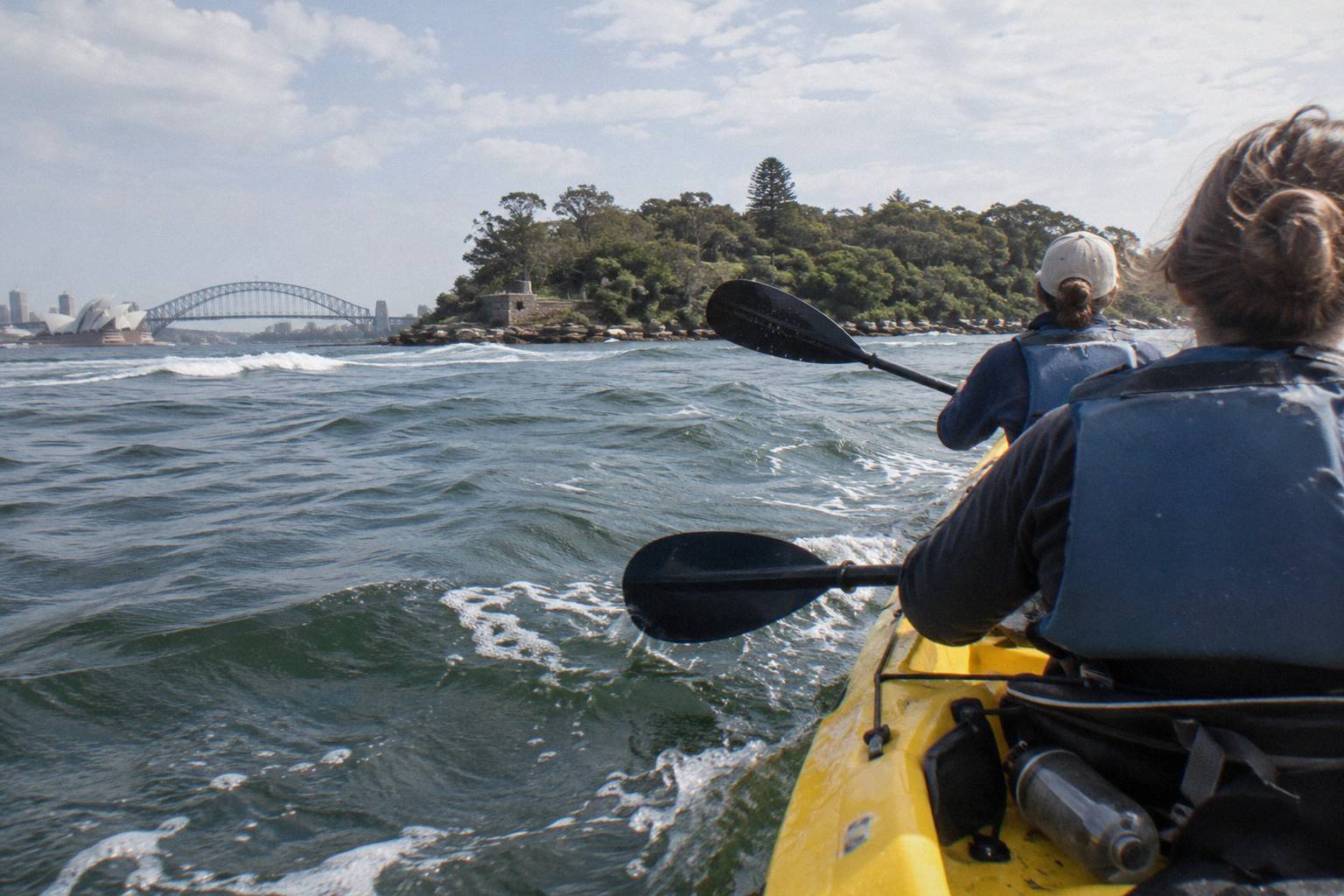
Goat Island, known as Me-mel, sits just west of the Harbour Bridge off the Balmain shore, and its operator's own pages conflict on landing, which is why no landing, permit or fee is described here. What can be said plainly is the shape of the tour: about 3 hours on the water with a guide, in a group capped at 6, launching from Blackwattle Bay. The operator's stated 20-minute paddle to the Harbour Bridge from the same launch gives a sense of the neighbourhood: this is the quieter western harbour, with the bridge to the east and the island close by. Free cancellation applies up to 24 hours before the start, per the tour's terms.
The paddle itself is the point. Because the group is small, the guide can shape the route around traffic and weather rather than a fixed schedule, and the island's sandstone foreshore, with its old military and maritime stonework, is best read from the water anyway. The operator lists sea eagles and cormorants among birds seen on its paddles, as an observation rather than a schedule. If you want the island decision made for you, Check availability on the operator's live listing, and read the meeting-point detail before you book.
One planning note that trips people up: the strict cancellation window. The operator's own terms give no refund, voucher or postponement inside 14 days of the tour, which is tighter than the 24-hour free-cancellation policy that applies to the tour's booking-page terms. Whichever way you book, read the cancellation line on the page you pay through, because the strictest applicable window is the one that counts.
How Do Fort Denison And Shark Island Fit Into A Paddle?
Fort Denison and Shark Island sit in the eastern harbour, and neither is a stop on any tour here, but both can appear on a route depending on where a tour launches and what the water allows. Fort Denison is the fortified island east of the Opera House; Shark Island is the small national-park island off the eastern shore. City-side and eastern launches put them in view, and the operator's route notes decide what is actually passed.
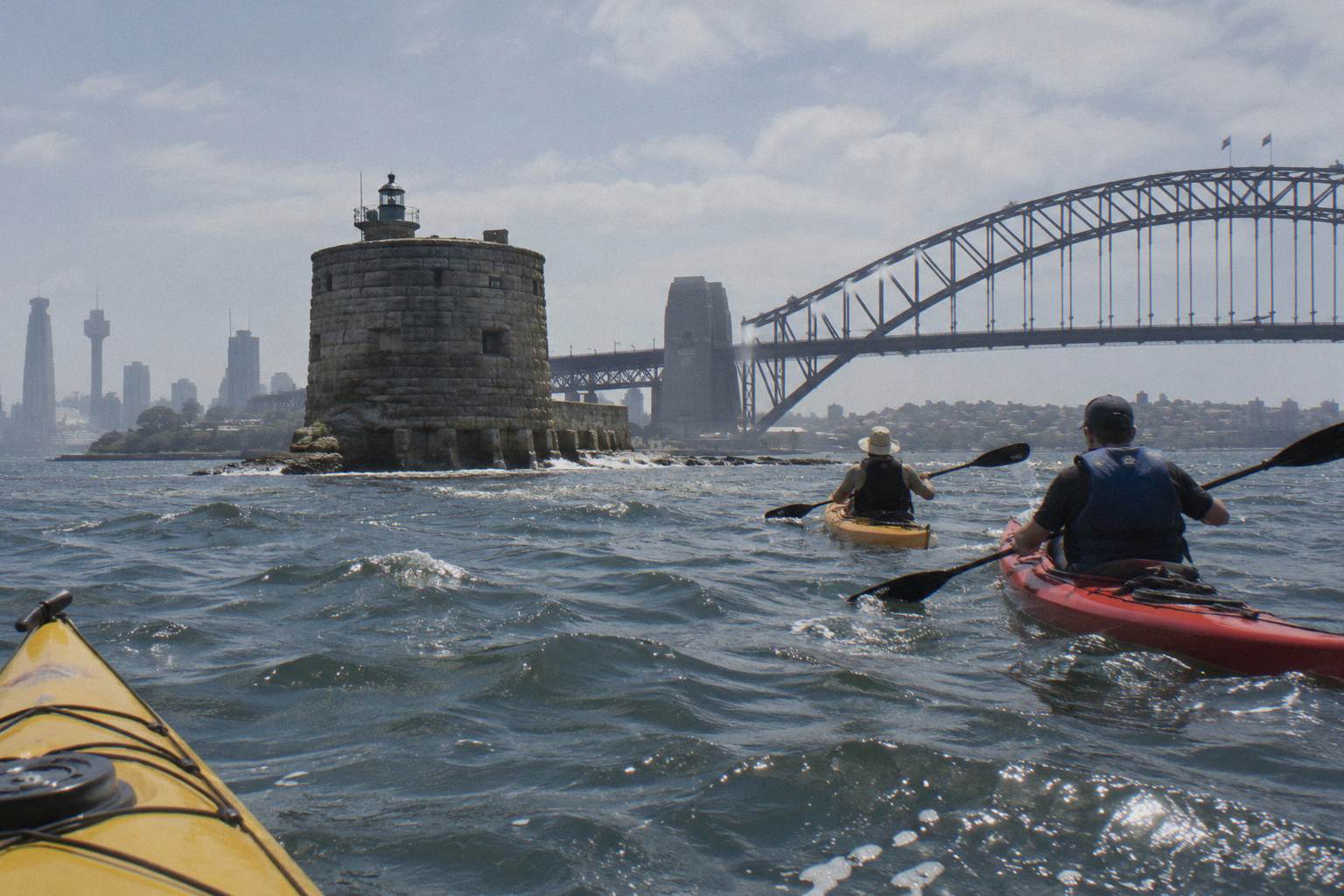
The tours that launch closest to this territory start at Kirribilli, Lavender Bay and Rushcutters Bay. The Sunrise Paddle Under Harbour Bridge from Kirribilli, rated 5.0 across 998 reviews, runs 2 hours with a minimum age of 12, and its title alone tells you the neighbourhood: the bridge, the Opera House across the water, and the harbour opening east toward Fort Denison. Further east, the Sunrise Kayak From Rushcutters Bay, rated 4.9 across 2,776 reviews, starts from the marina at Rushcutters Bay, which puts a paddle within sight of the eastern shore islands on the routes the operator runs. Neither tour promises an island pass, and no tour here should be booked on the assumption of one. Other pages covering the same trip are gathered on Sydney Harbour Kayak Tours.
Shark Island, the grassy national-park island off Rose Bay, is the least demanding of the harbour's islands to look at and one of the hardest to land on, since it is managed as parkland with its own access rules. The eastern shore paddles from Rose Bay are covered in the Rose Bay kayak tours guide, which is the better starting point if the eastern islands, rather than the city ones, are your real interest. For the middle-harbour islands like Goat and Cockatoo, the western launches at Glebe matter more than the eastern ones, and mixing the two in one morning is not realistic.
A short worked comparison helps. A visitor with one morning who wants the city icons plus an island in view paddles from Kirribilli or Lavender Bay: bridge, Opera House, and Fort Denison to the east, in 1.5 to 3 hours. A visitor whose priority is the islands themselves paddles from Glebe toward Goat Island, accepting a longer outing and no landing. A visitor who wants bushland and quieter water skips the islands entirely and takes the Middle Harbour eco paddle, which the Middle Harbour kayak tours guide covers in full.
When Is The Best Time Of Day For An Islands Paddle?
Sunrise and sunset are the two windows that work best, and each suits a different paddler. Sunrise tours launch pre-dawn to catch the light and the reduced ferry traffic, with 2-hour and 3-hour options from Kirribilli, Lavender Bay, Rushcutters Bay and Glebe. Sunset tours, including a 1.5-hour option from Lavender Bay and an LED-lit paddle, swap the early alarm for skyline colour, so your start point and alarm tolerance decide it.
The sunrise roster is deep because the harbour rewards it. Around November, the sun rises at about 5:44 in Sydney, plus or minus 2 minutes on the computed figures, which means a sunrise tour in late spring is a genuine pre-dawn commitment with a very early meeting time. In June the computed sunrise is around 6:57, a gentler alarm. The exact times shift through the year, and the best time to kayak Sydney Harbour guide carries the full month-by-month picture, including the daylight-saving change on 4 October 2026 that moved those early mornings back an hour.
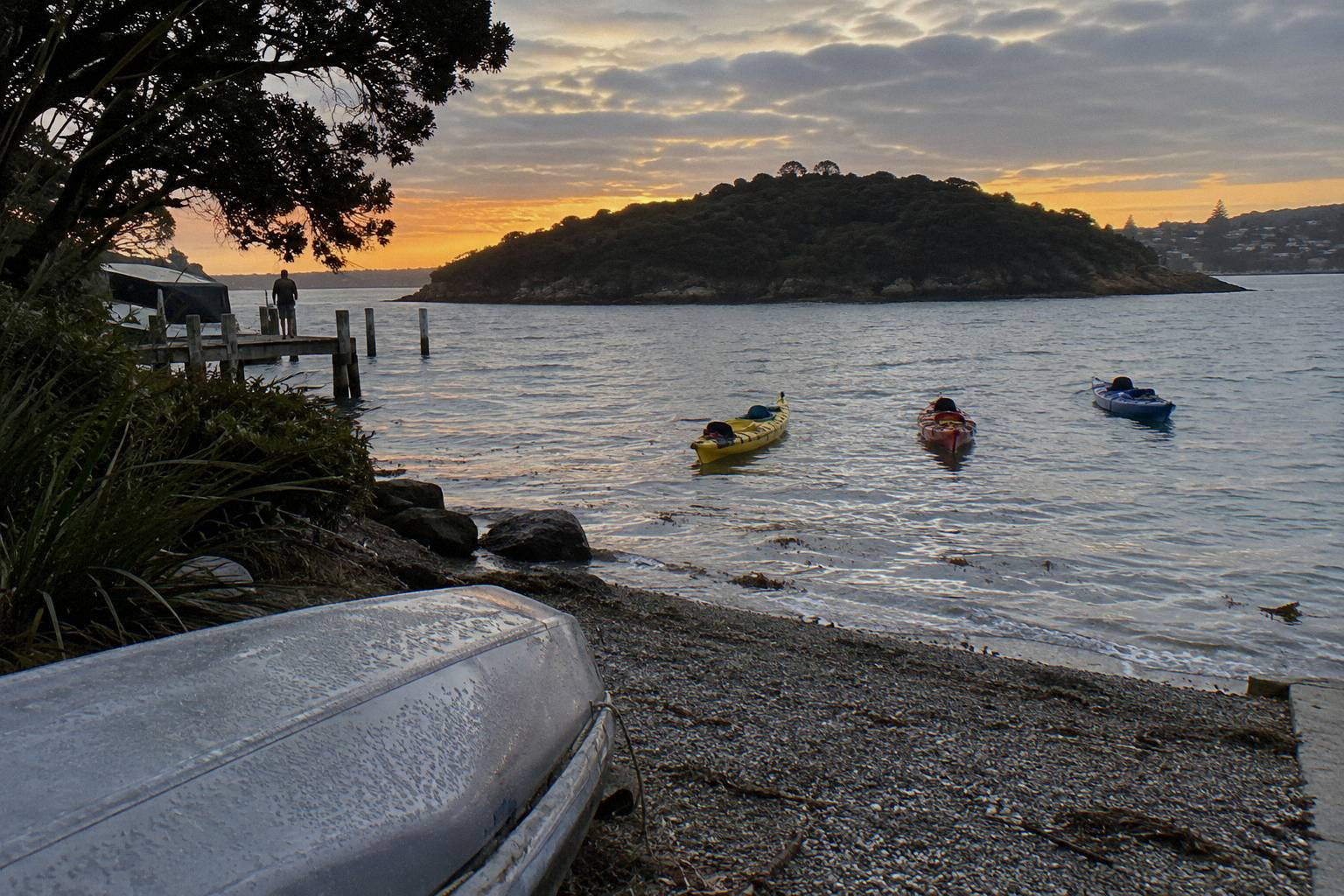
The sunset side is shorter but stronger on atmosphere. The Sunset Kayak With Free Photos from Quibaree Park runs 1.5 hours with a group max of 9, rated 4.8 across 162 reviews, minimum age 12. The LED Sunset Kayak from Prue's Beach at Lavender Bay, rated 4.9 across 139 reviews, fits kayaks with pink LED lights for a group of up to 14. Neither passes an island by name, but both paddle the Lavender Bay water where the bridge and the western harbour, Goat Island's direction, sit in view. The sunset kayak Sydney guide compares them in detail.
One honest caution belongs here rather than later: the LED and sunset tours end on the water after dark, and NSW rules require a lifejacket to be worn at night, sunset to sunrise, for kayaks in enclosed waters, which includes Sydney Harbour. Operators issue lifejackets, and the night tours operate inside that rule, but if you are renting rather than touring, the night rule is yours to follow, and a torch or lantern ready to show a white light is required equipment for paddlecraft at any hour.
What Harbour Rules Change An Islands Paddle?
Three rules shape every islands paddle more than any tour description does. First, the Harbour Bridge Transit Zone forbids stopping, anchoring or drifting under the bridge, so no photo stop under the steelwork is possible on any tour. Second, shipping channels run through the island-dotted middle harbour, and paddlers keep to starboard and well clear of big ships. Third, lifejackets must be carried for everyone on board, and worn when paddling alone or at night.
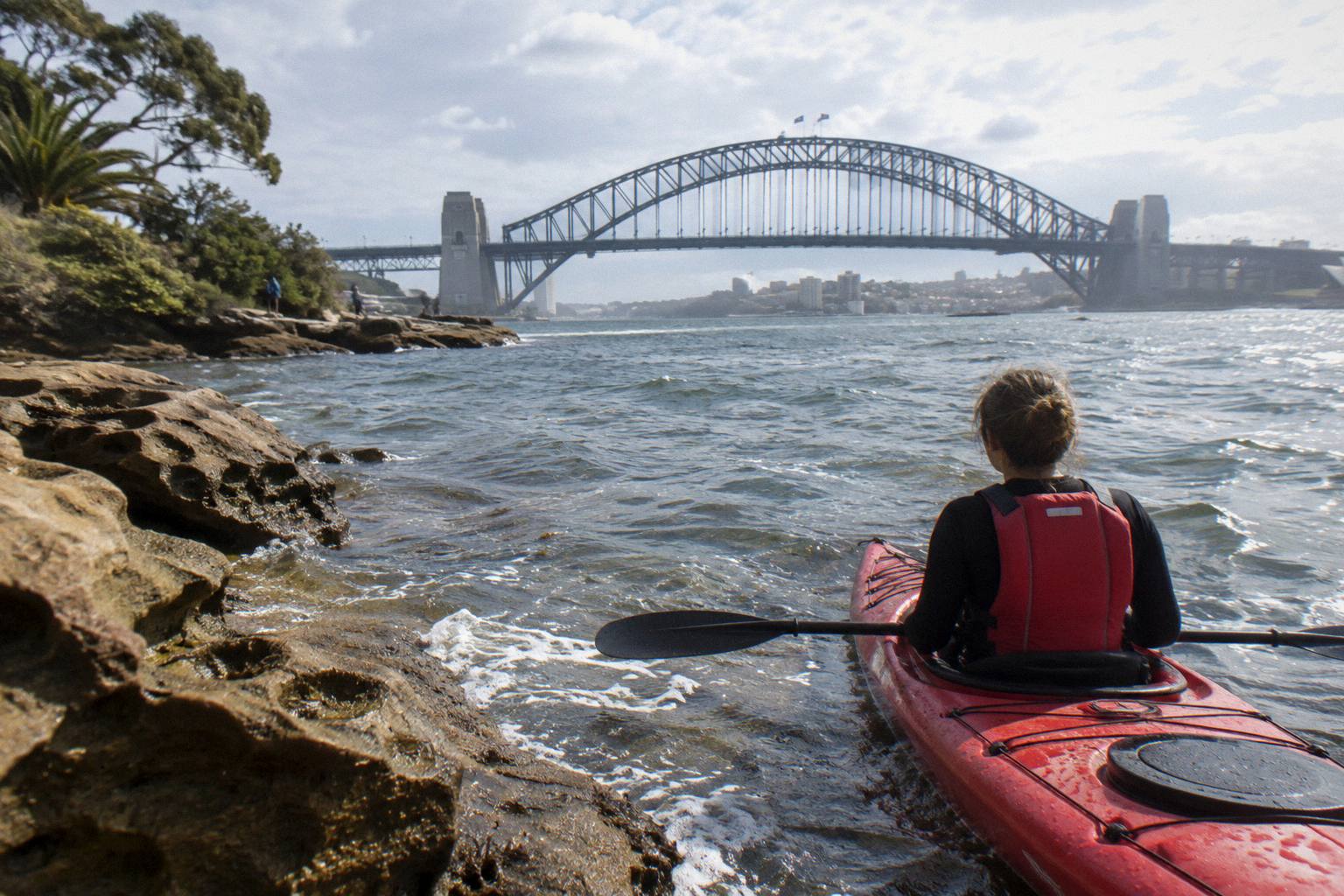
The Transit Zone runs from Bennelong Point and Kirribilli Point to Millers Point and Blues Point, and it excludes Walsh Bay, Sydney Cove, Lavender Bay north of Blues Point and the southern end of Milsons Point wharf, so the Lavender Bay launches sit outside it. Inside the zone, vessels may only transit, with a 15-knot limit that is irrelevant to a kayak but tells you how the water is managed. The practical consequence for an islands paddle is simple: tours pass under the bridge where the operator says they do, and none of them stop there. The kayaking under the Harbour Bridge guide unpacks which tours pass under and on what terms. On the western side of the city, the guide to kayaking Darling Harbour explains which launch options exist there and what the local rules allow.
| Rule | What It Says | What It Means For You |
|---|---|---|
| Bridge Transit Zone | No stopping, anchoring or drifting under the bridge; transit only | No photo stop under the steelwork, on any tour |
| Shipping channels | Keep to starboard, well clear of big ships | Cross behind ferries, never in front; guides handle this |
| Lifejackets | Carried for everyone; worn alone or at night, Level 50S or above | Operators issue them; wear one, full stop |
| Lights | Paddlecraft carry a torch or lantern showing a white light | Matters for sunset and LED tours that end after dark |
| Event closures | Vivid, New Year's Eve and Australia Day closures exist as annual maps | Check the current Transport for NSW map before a summer booking |
The ferry rule deserves its own sentence because it is the one that decides routes. High-speed ferries show an all-round yellow flashing light, and Sydney VTS broadcasts on VHF 16 and 13 every 2 hours, which is harbour-management detail a guide absorbs so you do not have to. Personal watercraft and kiteboards are banned on the harbour, including Middle Harbour, which is one reason the water stays workable for kayaks. The full safety picture, including the lifejacket wording and what to do near ferries, is in the Sydney Harbour kayak safety guide.
Event closures are the quiet season trap. Vivid, New Year's Eve and Australia Day each bring exclusion zones, but they exist as annual maps rather than fixed boundaries, so no specifics belong here: check the current Transport for NSW map if your paddle falls near a major event, and expect the operator to reschedule if a closure swallows your route. Free cancellation up to 24 hours before the start, which the roster tours carry, covers the ordinary reasons for change, and the what happens if a tour is cancelled for weather post covers the rest.
Common Mistakes When Planning An Islands Paddle
The mistakes are consistent: booking a tour on the promise of an island landing that no operator makes, assuming the eastern islands and the western ones fit in a single morning, ignoring the 14-day cancellation window on the Glebe operator's own terms, and treating the bridge underpass as a stop rather than a transit. Each one is avoidable with a single habit: read the route description on the booking page and ask the operator one direct question before paying.
The first mistake is the island landing itself. Goat Island access is restricted, its operator's pages conflict on landing, and printing anything about a permit or fee would be inventing certainty. A reader who books the Glebe tour expecting to stand on the island has misread the product: it is a paddle toward and around the island's waters, in a small group, with photos. That is a good product, and it is a different product from a landing.
The second is geography. The harbour's islands split into a western cluster, Goat and Cockatoo, reachable from Glebe, and an eastern pair, Fort Denison and Shark, visible from city and eastern launches. A first-time visitor who books a Kirribilli sunrise and expects Cockatoo Island has bought the wrong half of the harbour. The duration table above is the antidote: match the launch to the island, not the other way round.
The third is the mismatch between cancellation windows. The tour's booking-page terms offer free cancellation up to 24 hours before the start, while the operator's own site is stricter inside 14 days. Whichever governs your booking, the safe assumption is the stricter one, and the what happens if a tour is cancelled post explains the weather side of the same coin.
The fourth, and the one that costs the most on the day, is treating the bridge as a destination. The Transit Zone forbids stopping, anchoring or drifting under it, so a tour that passes under is giving you a transit, not a pause, and tours that promise a stop are promising something the harbour rules do not allow. The tours here say what they do: pass under, paddle past, view from the water. Book on those words.
If an island-focused paddle is what you came for, the three below cover the spread: the Goat Island tour from Glebe, the small-group Opera and Bridge paddle, and the short guided Opera House paddle.
Common Questions About Sydney Harbour Islands By Kayak
Can You Kayak To Goat Island?
You can paddle toward Goat Island on a guided tour: the Kayak To Goat Island paddle from Glebe runs about 3 hours with a group max of 6 and a minimum age of 16. Landing is a different matter. Island access is restricted, and no tour covered here promises a landing, permit or island stop.
Can You Kayak To Cockatoo Island?
A kayak can paddle past Cockatoo Island, which sits in the Parramatta River arm west of the Harbour Bridge, and western launches such as Glebe in Blackwattle Bay put it within range of a longer guided paddle. No tour here includes a landing; if stepping ashore matters, ask the operator directly before booking.
Do Any Sydney Kayak Tours Stop At The Islands?
No tour covered here sells an island stop. The harbour rules add their own limit under the bridge, where the Transit Zone forbids stopping, anchoring or drifting. Island-focused tours are paddles around and past the islands, with the guide managing traffic and route.
Which Tour Is Best For Seeing Fort Denison From A Kayak?
City-side launches put Fort Denison in view on the routes operators run: the Sunrise Paddle Under Harbour Bridge from Kirribilli, rated 5.0 across 998 reviews, and the Sunrise Kayak From Rushcutters Bay, rated 4.9 across 2,776 reviews, both paddle the eastern harbour where the fort sits. Neither promises a pass; the route on the day decides.
Do You Need Experience For An Island-Area Paddle?
Experience levels are not stated for most of these tours, so ask the operator. The Glebe operator runs both singles and doubles, which suits mixed-ability groups. NSW rules require a lifejacket to be carried for everyone on board and worn when paddling alone or at night, and every operator here issues them.
When Should You Paddle The Islands, Sunrise Or Sunset?
Sunrise tours dominate the island-area options, launching pre-dawn from Kirribilli, Lavender Bay, Rushcutters Bay and Glebe, with the sun rising around 5:44 in November and around 6:57 in June on computed figures. Sunset options run 1.5 hours from Lavender Bay, including an LED-lit paddle that ends after dark, when the night lifejacket rule applies.