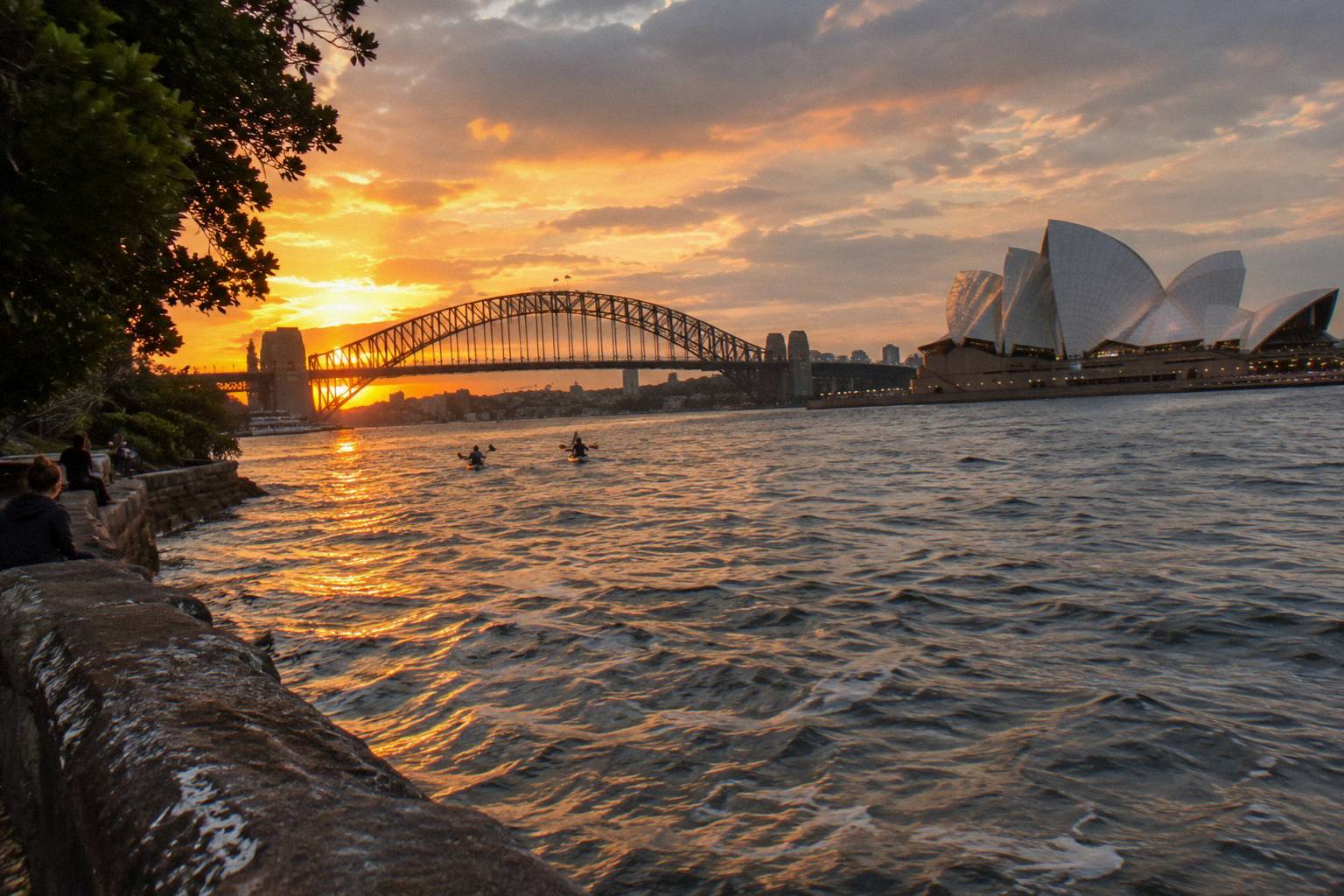
Photographing Sydney Harbour From A Kayak: Light, Dry Bags And Angles
A kayak puts a camera lower than any ferry deck and closer to the harbour's best light than any shoreline path. The planning work is about timing, dry storage and angles, and most of it happens before the paddle.
Short answer
Sydney's best kayak photography light sits around the computed sunrise and sunset times: roughly 5:44am to 6:58am sunrise and 4:52pm to 8:08pm sunset through the year, plus or minus 2 minutes. Operators including Sydney by Kayak and Paddle Pirates supply free photos, electronics are at your own risk with Sydney Harbour Kayaks, and no tour may stop under the bridge for pictures.
In short: Kayak photography on Sydney Harbour is won before launch. Work from the computed sun times, pack the camera in dry storage, and pick a tour whose route matches the backdrop, not just the clock. Sydney by Kayak and Paddle Pirates both state they give guests free photos, Sydney Harbour Kayaks puts electronics at your own risk, and the Bridge Transit Zone rules out any stop or drift for pictures under the bridge. A 2-hour sunrise window is the highest-value slot on the water.
Start with the planning basics in what to expect on a Sydney Harbour sunrise kayak, and use Sydney Harbour Kayak Tours as the hub for every launch area. The harbour rewards photographers who treat it as a set of separate waterways rather than one big bay: the north-shore bays under the bridge, the eastern harbour off Rushcutters Bay, and the bushland creeks of Middle Harbour each carry their own light, their own traffic and their own frames.
Quick Facts
The essentials for planning photography on the water: the best light sits around the computed sunrise and sunset times, which drift more than an hour across the year. Free photos are stated by Sydney by Kayak and Paddle Pirates, dry storage appears on some Middle Harbour tours, and the bridge rules out any photo stop beneath it. The table below compresses the decisions a photographer makes first.
| Question | Answer |
|---|---|
| Best light windows | Around sunrise and sunset, computed times, plus or minus 2 minutes |
| Summer sunrise (Dec) | About 5:38am |
| Winter sunrise (Jul) | About 6:58am |
| Latest sunset (Jan) | About 8:08pm |
| Free photos stated by operator | Sydney by Kayak, Paddle Pirates |
| Electronics policy (Sydney Harbour Kayaks) | At your own risk |
| Stopping under the bridge | Not allowed except in an emergency (official Transit Zone rule) |
| Best low-angle subjects | Opera House sails, bridge steelwork, water reflections |
When Does The Light Work Hardest On Sydney Harbour?
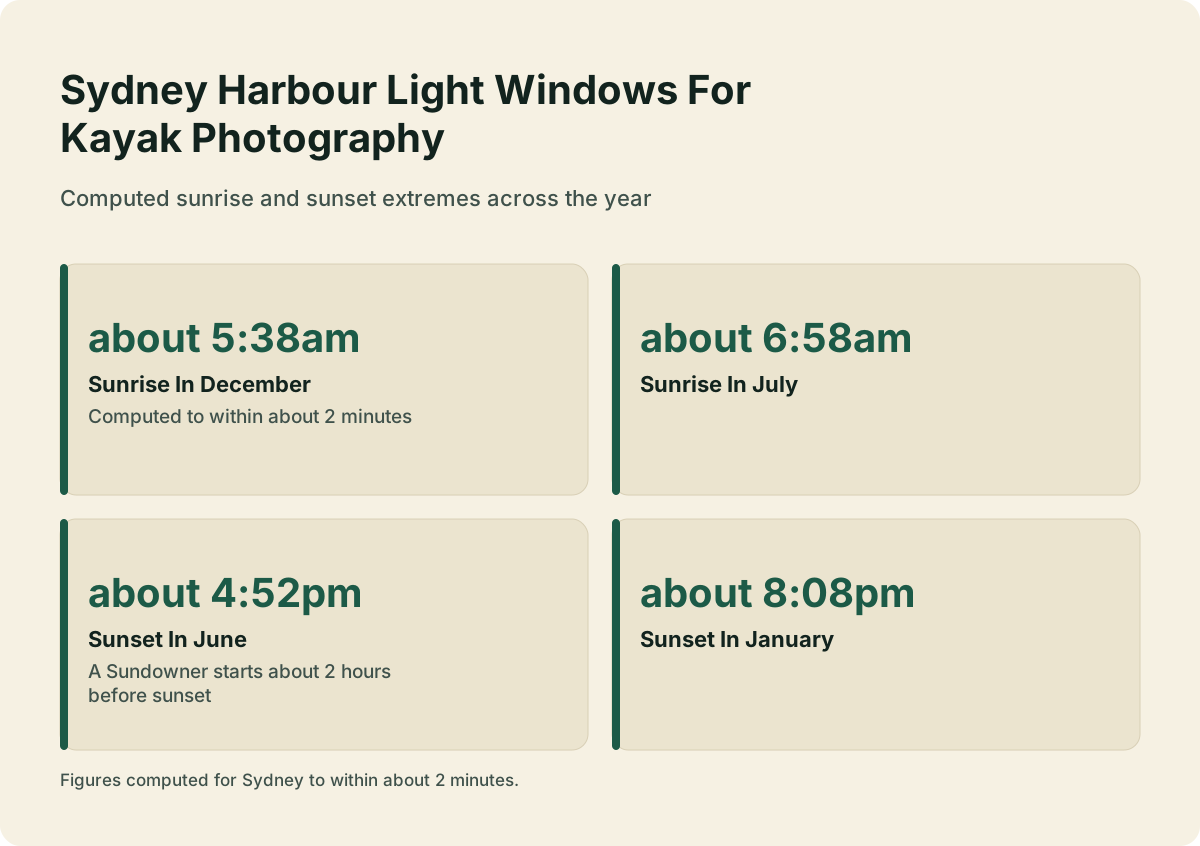
The two windows that matter are around sunrise and around sunset, and the clock moves a long way across the year. Computed for Sydney, sunrise runs from about 5:38am in December to about 6:58am in July, while sunset stretches from about 4:52pm in June to about 8:08pm in January. These figures are computed to within about 2 minutes. A photographer planning against the wrong end of that range misses the light by an hour.
A sunrise tour is the natural fit for kayak photography because the tour start is set by the sun, not by a timetable. Sydney Harbour Kayaks states its Sunriser small groups start between about 5am and 8am depending on sunrise, so the operator, not the photographer, absorbs the seasonal drift. That matters most in the shoulder months, when a 6am alarm in March becomes a 5:15am alarm in October, after clocks went forward on Sunday 4 October 2026. Daylight saving runs until Sunday 4 April 2027, per the NSW Government daylight saving page.
| Month (15th) | Sunrise, about | Sunset, about |
|---|---|---|
| January | 5:58am | 8:08pm |
| February | 6:29am | 7:49pm |
| March | 6:54am | 7:15pm |
| April | 6:17am | 5:33pm |
| May | 6:39am | 5:03pm |
| June | 6:57am | 4:52pm |
| July | 6:58am | 5:03pm |
| August | 6:35am | 5:24pm |
| September | 5:55am | 5:45pm |
| October | 6:14am | 7:07pm |
| November | 5:44am | 7:35pm |
| December | 5:38am | 8:01pm |
Read the table as a booking tool. A December sunrise paddle starts in the dark and finishes in full daylight with the whole morning left. A June one starts in near-daylight and trades sleep for calm harbour reflections at an hour when sunset tours are equally short: about 4:52pm means a Sundowner, which Sydney Harbour Kayaks says starts about 2 hours before sunset, launches mid-afternoon. For the evening side of the year, the timing logic in sunset kayak tour planning carries the same computation.
Which Kayak Tours Give You The Best Photo Backdrops?
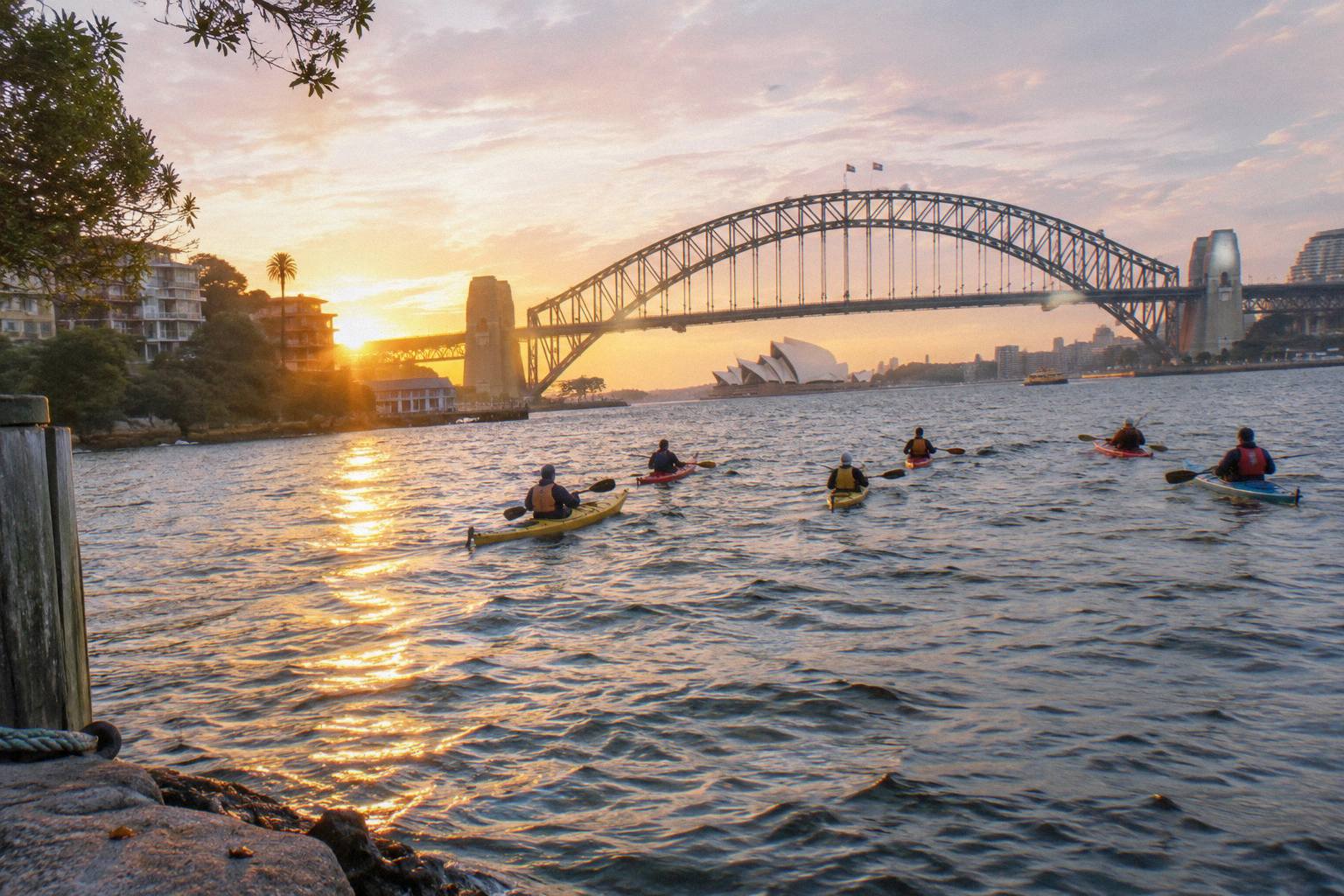
The backdrop decides the tour, and the harbour splits cleanly by launch area. Lavender Bay and Kirribilli launches put the Harbour Bridge and the Opera House in one frame, Rushcutters Bay delivers the eastern harbour and skyline, and The Spit in Middle Harbour trades landmarks for bushland and mangrove water. No Middle Harbour tour reaches the Opera House or the bridge: Sydney Harbour Kayaks says so plainly on its own Sunriser page.
For a first photography paddle, the Shortest Sunrise Launch Beside Bridge tour, a 1.5 to 2 hour sunrise departure from McMahons Point rated 4.9 across 52 reviews, keeps the session tight and the bridge close. The Sunrise Kayak From Rushcutters Bay option, rated 4.9 across 2,776 reviews, opens the eastern harbour instead, and the Sunrise Paddle Under Harbour Bridge from Kirribilli, rated 5.0 across 998 reviews, transits the bridge stretch. All three allow free cancellation up to 24 hours before the start, which protects a plan built around one specific morning of light.
Match the tour to the picture, not the reverse. A reader chasing the Opera House sails at first light should look at the Opera House kayak angle guide, while bridge steelwork belongs to the north-shore launches covered in Lavender Bay kayak tour planning. The differences are real: a 2-hour sunrise tour from Lavender Bay and a 2-hour sunrise tour from Rushcutters Bay produce two entirely different contact sheets from the same sunrise.
Ratings help only a little here. The breakfast-included 3-hour sunrise tour from Lavender Bay, rated 5.0 across 365 reviews, trades a fast exit for a slower morning with food on the water. The 1.5-Hour Guided Opera House Paddle, rated 5.0 across 29 reviews, is short and focused. Neither number says anything about light; the launch point and the hour do that work. Meeting points are worth confirming early, since the specifics sit in the harbour meeting points overview.
What Camera Gear Should You Bring In A Kayak?
Bring the smallest camera you will actually use, protected in a dry bag you can open and close with one hand, and leave behind anything that cannot survive a splash. Sydney Harbour Kayaks states electronics are carried at your own risk, and paddle drip, spray and a wet deck are routine, so a phone in a lanyard case or one small camera in a dry bag beats a full kit that stays zipped away all tour.
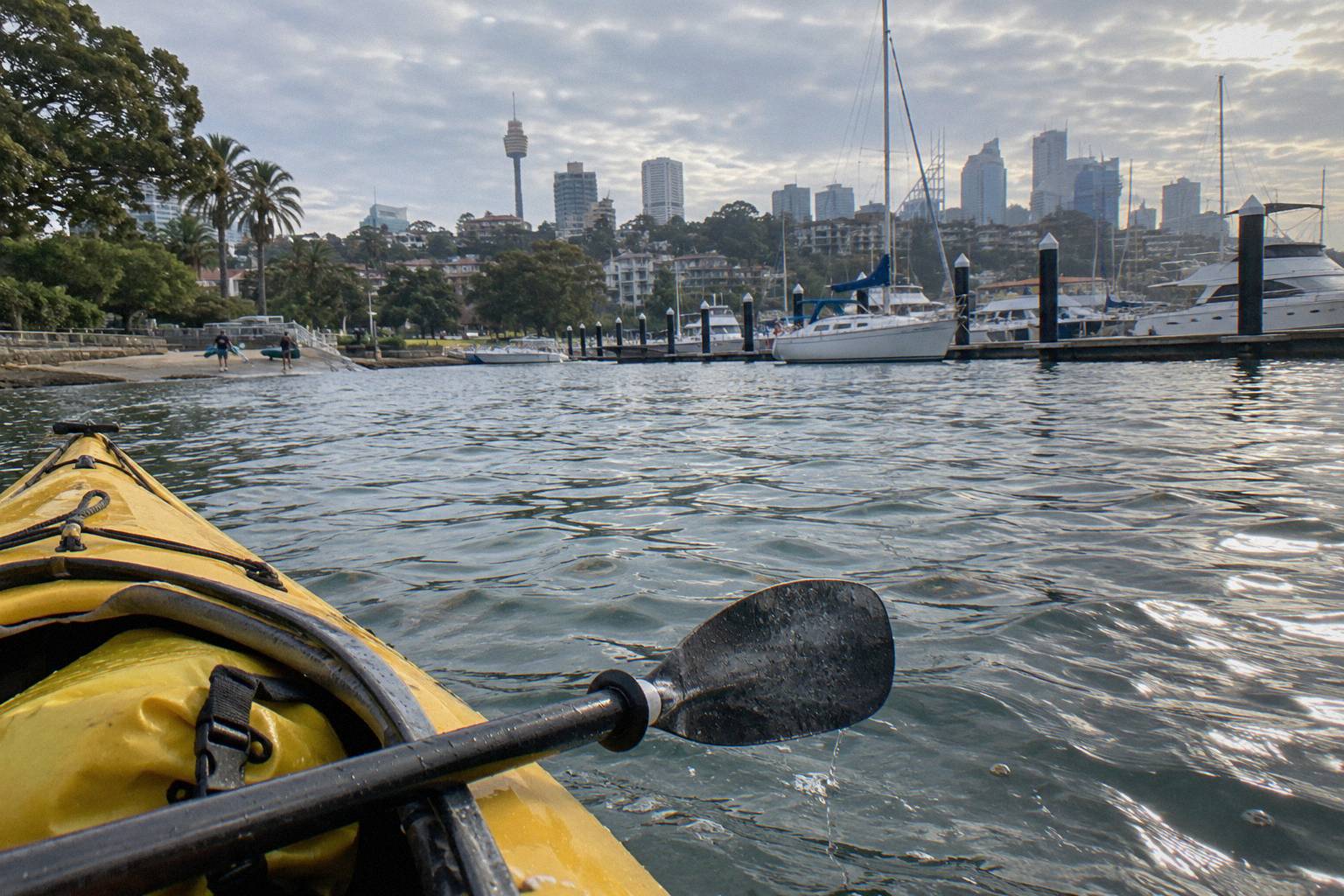
The operator's gear list comes first. Sydney Harbour Kayaks includes dry storage on its Middle Harbour tours, but the size is not stated; ask the operator before counting on a specific bag. Paddle Pirates, launching from Ferry Road in Glebe about a 20-minute paddle from the bridge, states free photos, which changes the calculation: if the guide shoots and shares, your own camera only needs to cover what the guide cannot frame, meaning the low-angle close-ups of your own kayak and paddle.
Clothing matters more to photography than most packing lists admit. The advice in what to wear kayaking Sydney Harbour covers layering, and cold hands are the quiet enemy of camera settings: a thin glove layer you can shoot through beats a warm pair you keep taking off. Closed-in shoes are required or advised on several departures, Sydney Harbour Kayaks citing oyster shells, and stable footing is stable framing.
Keep a checklist short and honest:
| Item | Why It Earns Its Place |
|---|---|
| Phone in a sealed lanyard case | Always reachable, survives a dunk, shoots the light that changes fast |
| One camera body, one lens, in a dry bag | Covers the keeper frames without a bag puzzle mid-paddle |
| Microfibre cloth, tethered | Paddle drip on a front element is constant |
| Empty cards and a full battery | Cold mornings and long waits drain both |
| Nothing else | Every extra item is one more thing to drop overboard |
No camera brand advice travels with a tour: the light and the launch point shape the pictures far more than the sensor. A launch decision weighs more than a lens decision, which is the argument in kayak hire or guided tour for Sydney Harbour turned toward photography: a guide who knows where the ferry traffic and the morning light intersect is worth more than any accessory. A hired kayak gives freedom of timing, but it also hands the photographer every decision, from route to light window, with no local knowledge behind it.
How Do You Keep A Camera Dry On The Water?
Dry storage is a system, not a bag. Seal the camera before launch, keep it sealed through the paddling stretches, and shoot only when the kayak is steady, never while working the paddle. Sydney Harbour Kayaks states electronics are at your own risk, and free cancellation up to 24 hours before the start, which the tours here carry, does not extend to gear. One hand for the camera, one for the boat, and everything tethered that can be tethered.
The realistic risk on a guided harbour tour is not a capsize, it is drip and spray. Paddle shafts shed water with every stroke, and a camera resting on a spray deck takes a slow soaking even on flat water. A dry bag clipped into the boat, opened only for the shooting windows, keeps the odds on your side. On the tours here, guides handle the launch and the group's spacing, which is exactly when a photographer should have both hands free and the camera away. What happens if the boat does flip is covered separately in what happens if you fall out of a kayak on Sydney Harbour.
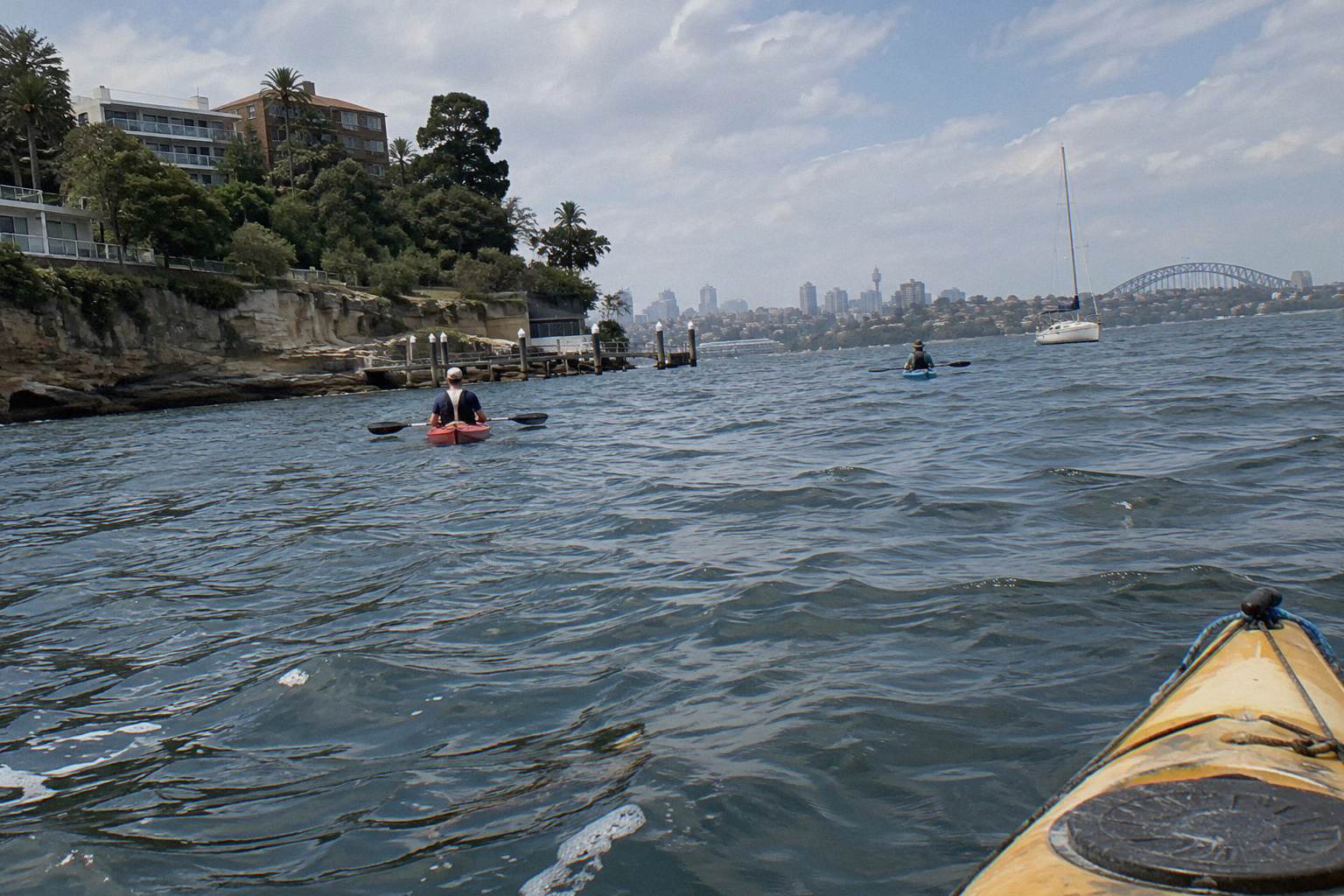
The lifejacket interacts with camera work more than expected. NSW rules require lifejackets to be carried for everyone on board, worn when paddling alone or at night on enclosed waters, with wearing one at all times recommended, per the NSW lifejacket requirements. A sunrise tour is a night launch by that definition, so the jacket is worn, and a camera strap routed around the jacket, not under it, keeps the camera reachable. Night paddles also mean a torch must be carried ready, per the same rule set.
Double kayaks help here. The 4-Hour Middle Harbour Eco Paddle uses stable double sea kayaks, per its operator, with no experience needed, meaning one partner can hold position while the other shoots. That stability is why a flatwater tour is a better first photography platform than any ambitious single. The two-versus-one question is laid out in double or single kayak choices for Sydney Harbour, and for a photographer carrying gear, the case for a double is strong.
What Angles Work From A Kayak Seat?
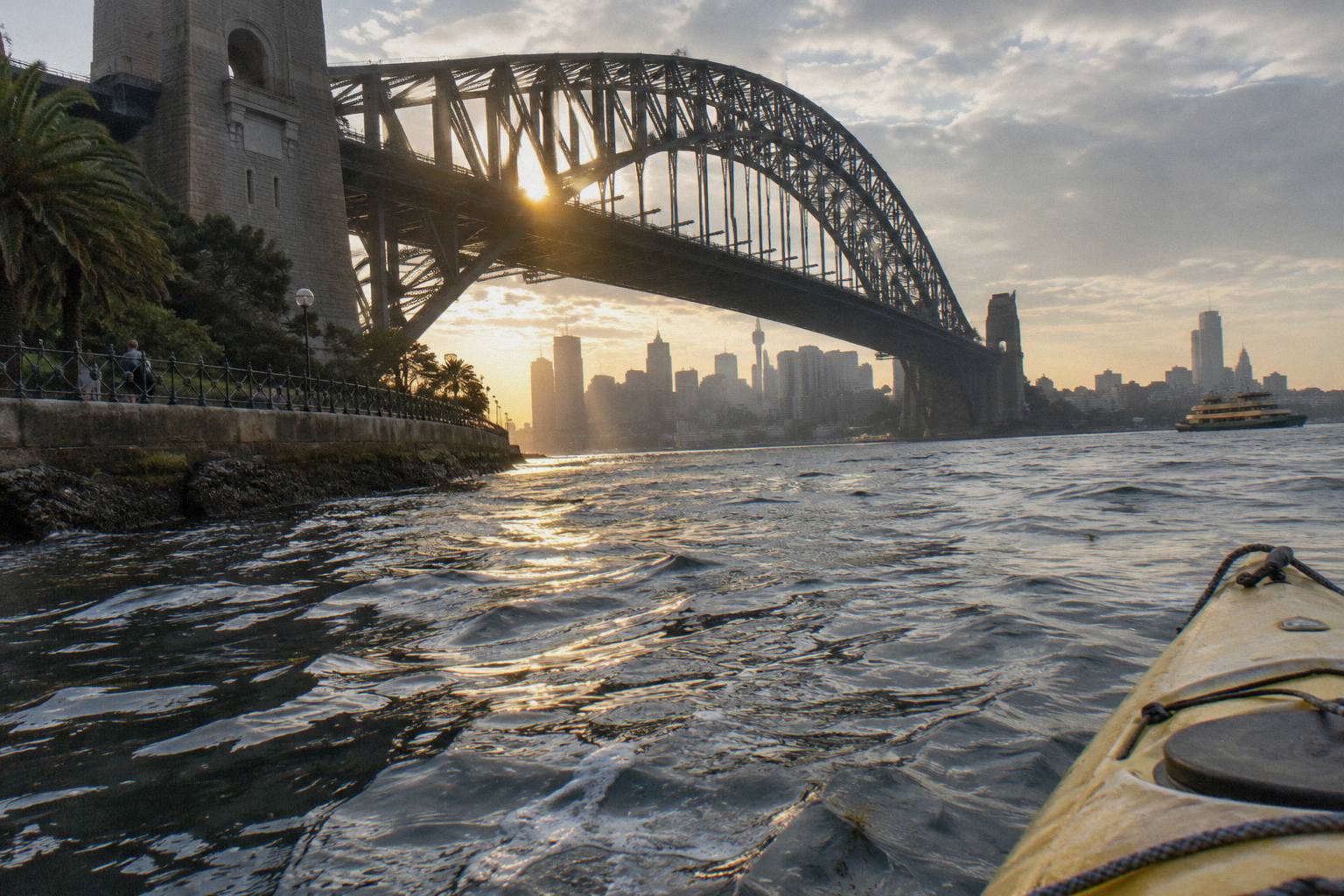
A kayak sits a metre or less above the water, which is the whole photographic point: silhouettes, reflections and foreground water that no shore or vessel camera gets. The trade is a wide, low view with no height to compose over railings. Work the bridge and the Opera House as side-lit shapes at the edges of the day, keep the horizon level, and let the water fill the lower half of the frame.
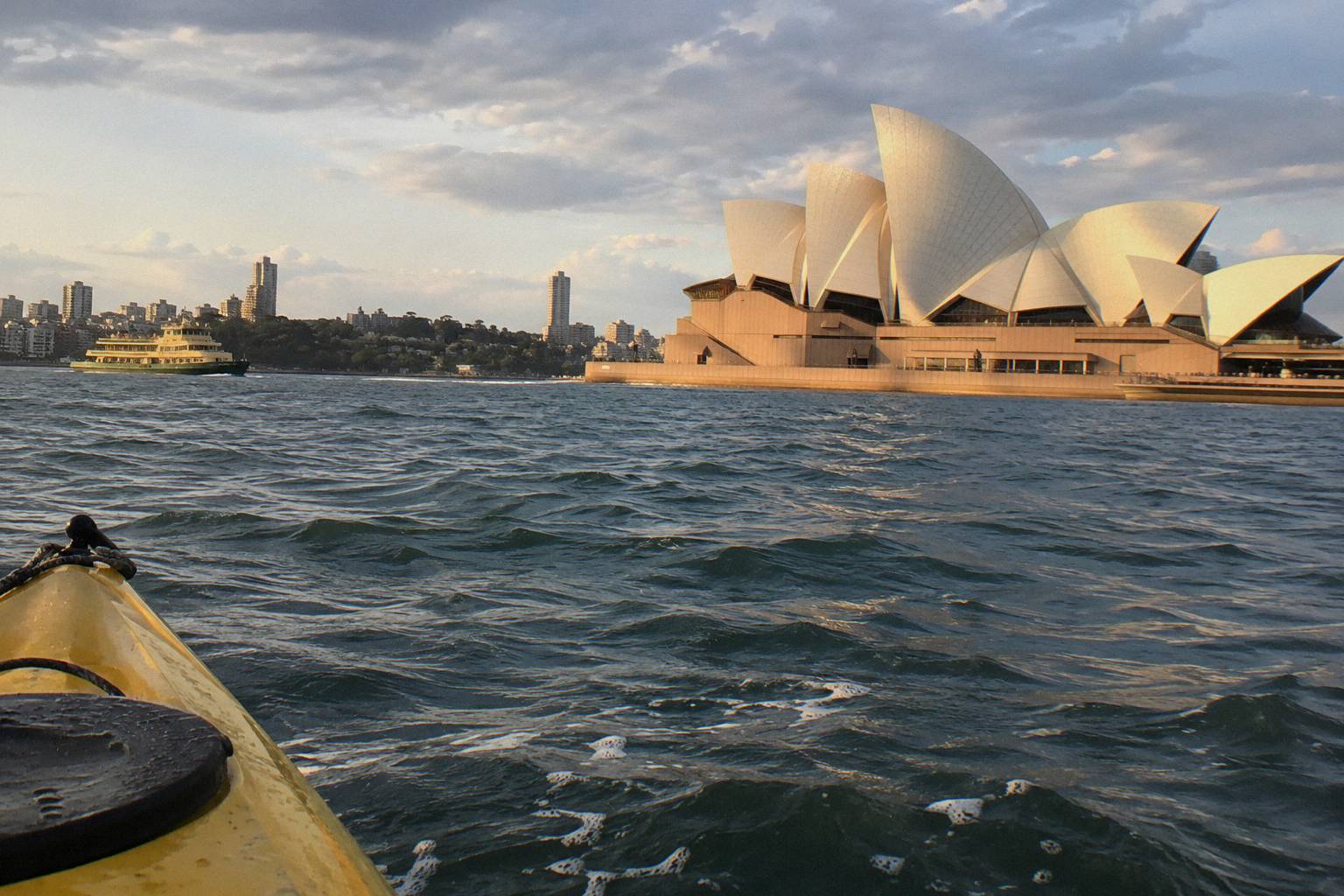
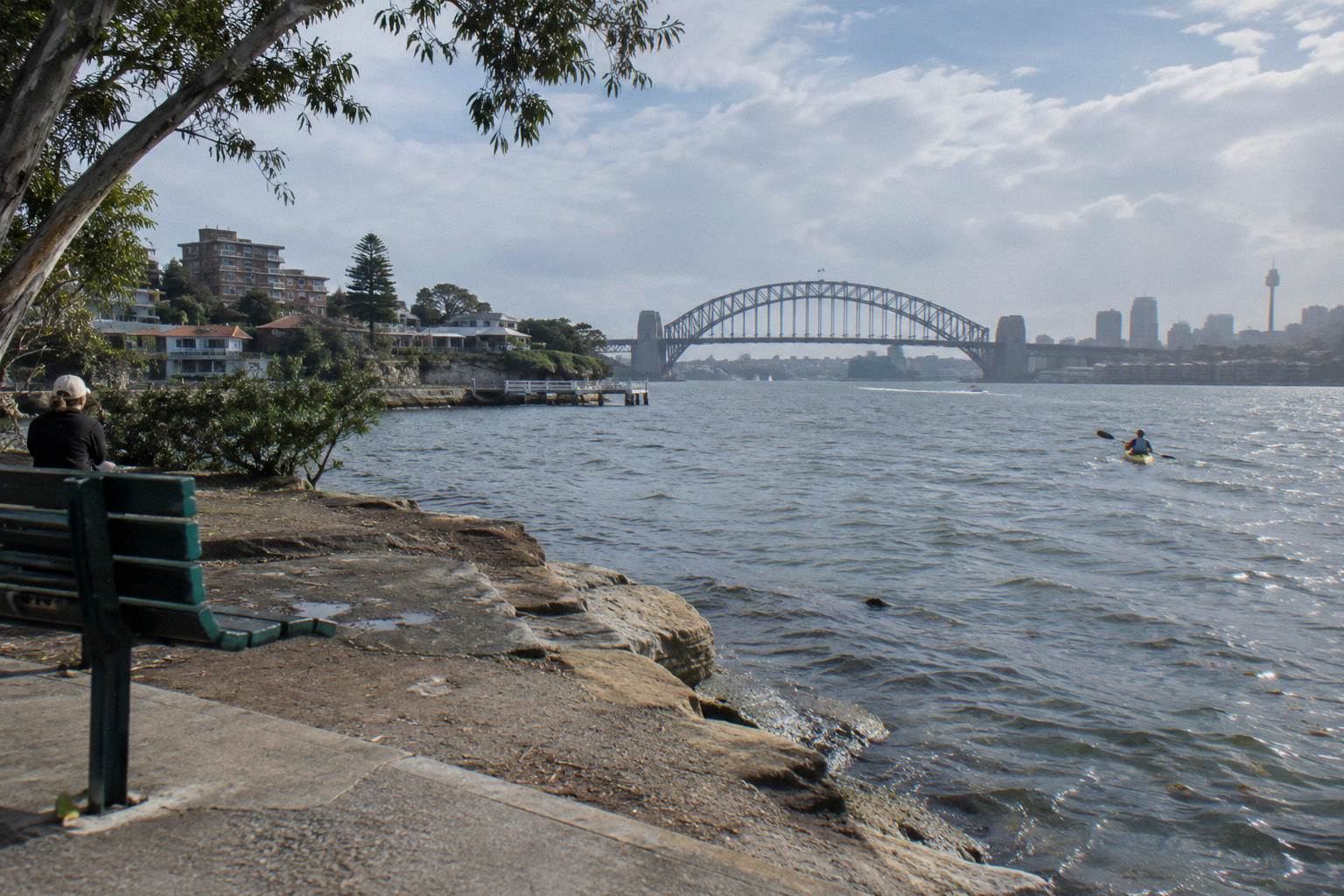
The bridge behaves differently by angle. From McMahons Point and Lavender Bay launches, the steelwork rises over the kayak, and the arch reads as a curve to be framed against sky, per the official description of the structure on the Harbour Bridge page. Remember the rule that shapes every bridge picture: vessels must not stop, anchor or drift under the bridge, per the official Sydney Harbour boating rules. Shoot the arch in transit or from beside it, never plan a pause underneath. The same page calls the harbour an extremely busy waterway, so ferries will cross frames; treat their wakes and their lights as content, not interference.
A small-group cap changes the photography math. The Small-Group Opera And Bridge Paddle, rated 4.9 across 105 reviews, caps its group at five with a minimum age of 16, which means fewer kayaks in your frame and more room for the guide to position the group for the light. Its booking page also states a weight limit of 110 kg. Contrast that with a group of twelve or fourteen: the crowd becomes the subject whether you want it or not.
Angles by subject, honestly ranked for a low seat:
| Subject | Best window | What the low seat gives |
|---|---|---|
| Opera House sails | Around sunrise, from the north-shore side | Sails against warm sky, water foreground |
| Harbour Bridge arch | Sunrise or mid-morning, from McMahons or Lavender Bay | The arch as a curve, steel against light |
| Skyline and ferries | Around sunset, eastern harbour | Silhouettes, wake trails, reflections |
| Bushland water (Middle Harbour) | Morning | Mangrove and bushland reflections, no landmark clutter |
| Your own group | Any time | Genuine low-angle kayaking frames no shore camera gets |
Middle Harbour deserves a separate paragraph because its pictures are quieter. The 4-Hour Middle Harbour Eco Paddle from Ferguson's Marina follows tides and weather toward Scotts Creek, Sugarloaf Bay and the Bantry Bay mangroves when tides allow, per the operator, and routes cannot be guaranteed. For a photographer that uncertainty is fine: the subject is water and bushland, not a timetable of landmarks. The Middle Harbour depth is covered in the Spit Bridge area paddling guide.
Why Do Sunrise Tours Deliver The Strongest Frames?
Sunrise tours align three things no other slot does: the softest computed light, the lowest boat traffic of the day on the water the tour actually paddles, and a start time already matched to the sun by the operator. The tours here launch from Lavender Bay, McMahons Point, Kirribilli and Rushcutters Bay, and every one allows free cancellation up to 24 hours before the start, which lets a photographer wait for the right morning rather than accepting a bad sky.
The full case is laid out in is a sunrise kayak on Sydney Harbour worth it, and the photography half of that argument is simple: the light at around 5:44am in November exists for roughly half an hour, and a tour already on the water for it needs no improvisation from the photographer. Sydney by Kayak states its sunrise tour spends 90 minutes on the water, 3 hours in all with breakfast, and passes under the bridge on peak-season and weekend sunrise trips only, per its own page, so the under-arch frame is a seasonal possibility, never a promise.
The breakfast-included 3-hour sunrise tour from Quibaree Park in Lavender Bay, rated 5.0 across 365 reviews, is built for a slow morning, group capped at 12. For photography, the breakfast window doubles as a rest window: a stationary kayak, food in hand, and the sun climbing through the frame behind the bridge. The tour does not promise a stop under the bridge, and no tour can, given the Transit Zone rule. Review context for every departure is gathered in the harbour tour reviews overview, though numbers describe satisfaction, not light.
Do Operator Photos Replace Your Own?
Partly, and only in one direction: Sydney by Kayak and Paddle Pirates both state their photos are free, and one roster tour puts free photos in its own title, so on those departures you land home with usable images without touching a camera. But an operator cannot give you your own frame: the low angle from your seat, your group's kayaks, or pictures taken at the moment you chose, so treat operator photos as the safety net, not the plan.
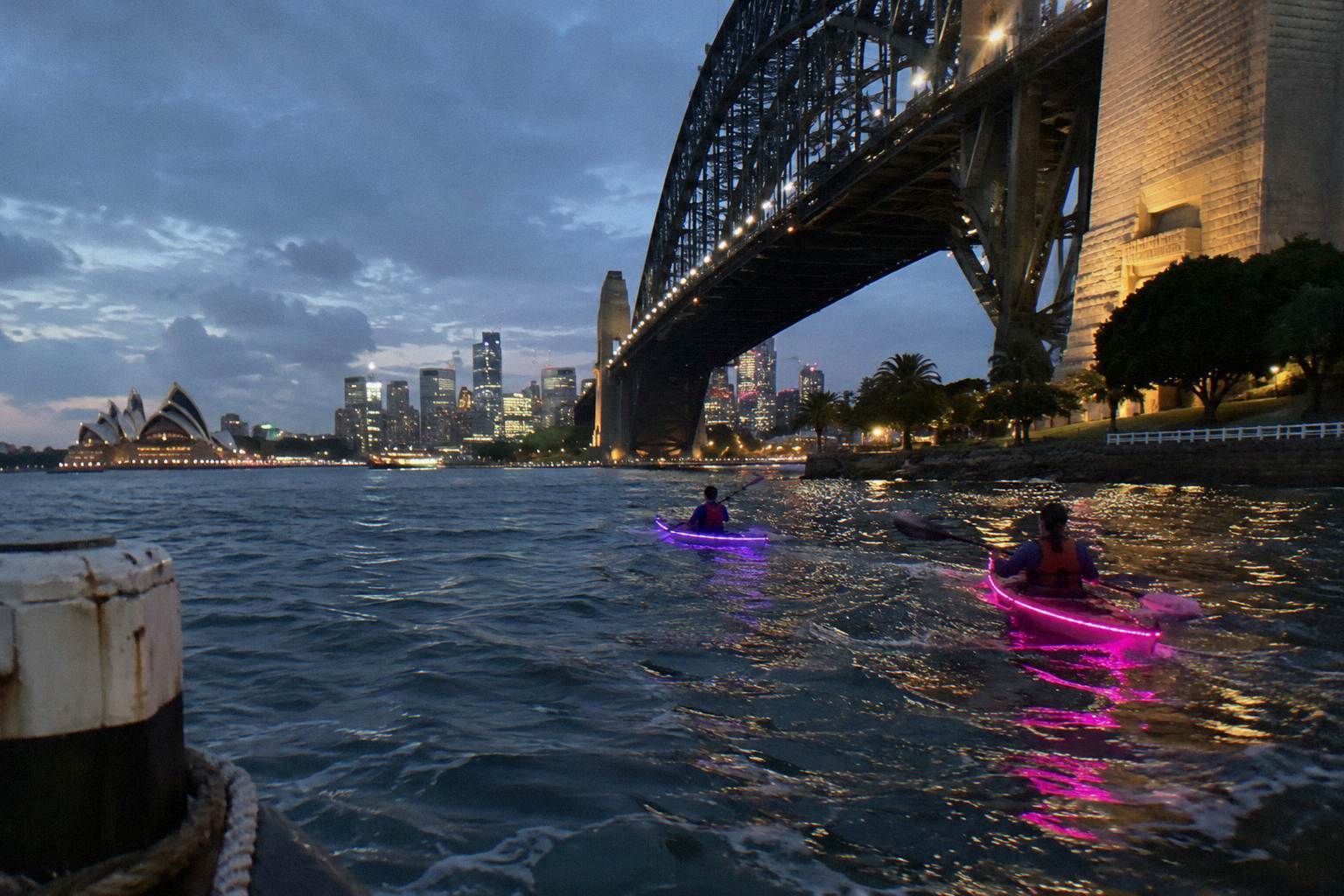
The Sunrise Kayak From Rushcutters Bay illustrates the split. Rated 4.9 across 2,776 reviews, it launches from the eastern harbour and opens skyline and water frames a north-shore tour never reaches. If its guide supplies images, and the booking page says what is included, those photos cover the wide story. Your camera covers the rest: the paddle silhouetted against the rising sun, the water texture at your hull, the group strung out across the frame. Reviews are shown on the booking page where a count is not stated, so read the inclusions there before counting on images.
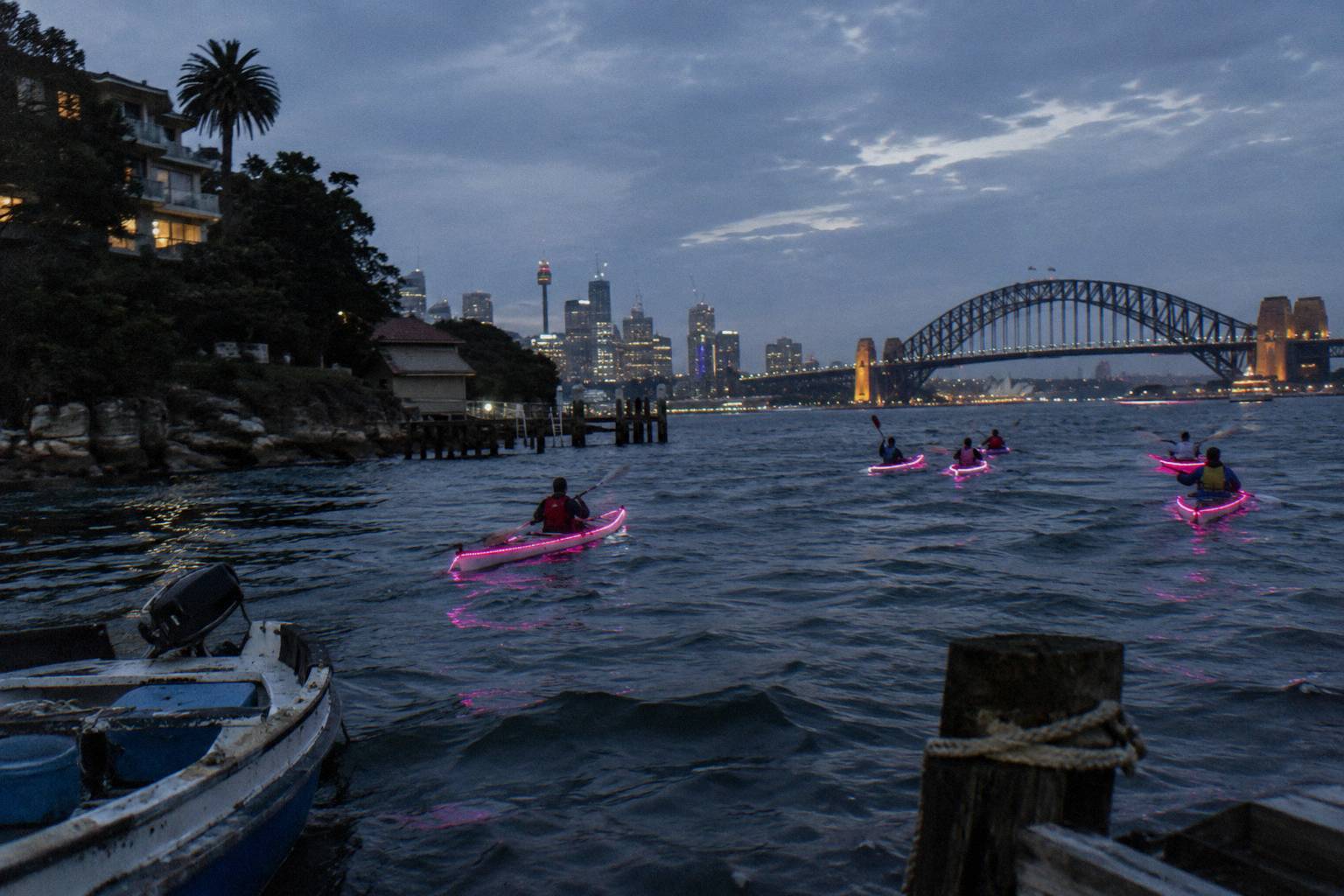
Sydney by Kayak's separate sunset product adds pink LED lights on the kayaks, per its page, which photographs as colour trails on dark water once the sun is down around 8:08pm in January or 4:52pm in June. A lit kayak at dusk is one of the few frames a phone handles as well as a big camera, because the subject is a glow, not detail. Night and dusk photography also carry a rules dimension: paddlecraft must carry a torch or lantern ready to display a white light, per the NSW lights rules, and night paddling means a worn lifejacket on enclosed waters. Book a lit-evening tour rather than improvising one, and read night kayak sessions on the harbour before chasing the after-dark frames.
Common Mistakes When Photographing From A Kayak
The recurring mistakes are planning the wrong hour for the season, packing more camera than the kayak can manage, and expecting a bridge stop that the rules forbid. Computed sunrise shifts by well over an hour between June and December, dry bags only protect gear that stays closed while paddling, the Bridge Transit Zone means the under-arch frame only ever happens in transit, and untethered gear plus ignoring the operator's own free photos explains most missed frames.
The fix list is short. Book against the computed sun table above, not a memory of last summer. Carry one camera and use the operator's photos for the wide shots. Ask the operator directly about dry storage size before assuming it fits a lens. Read the cancellation terms on the booking page for the specific tour, since the tours here state free cancellation up to 24 hours before the start but operator-site bookings with Sydney Harbour Kayaks follow the operator's own ladder instead, with a full refund, transfer or multi-year credit only when that operator itself cancels. And shoot the water, the wake and the kayaks around you: those are the frames that only exist from a kayak.
One more planning layer is transport, since a photographer's kit makes a crowded peak-hour trip harder, and the options are laid out in getting to harbour kayak tours by public transport. Free parking up to 2 hours on Lavender Crescent, as Sydney by Kayak states for its meeting point, is the kind of detail that decides whether you arrive calm or rushed, and rushed hands drop cameras.
Common Questions About Photographing Sydney Harbour From A Kayak
When Does The Light Work Hardest On Sydney Harbour?
Around sunrise and sunset. Computed sunrise runs from about 5:38am in December to about 6:58am in July, and sunset from about 4:52pm in June to about 8:08pm in January, plus or minus 2 minutes.
Which Kayak Tours Give You The Best Photo Backdrops?
Lavender Bay, McMahons Point and Kirribilli launches put the bridge and Opera House in frame; Rushcutters Bay covers the eastern harbour and skyline; Middle Harbour from The Spit offers bushland and mangrove water with no landmarks, as Sydney Harbour Kayaks states.
What Camera Gear Should You Bring In A Kayak?
The smallest camera you will actually use, in a dry bag you can open one-handed. Sydney Harbour Kayaks states electronics are at your own risk, and some tours include dry storage; ask the operator about size.
How Do You Keep A Camera Dry On The Water?
Seal the camera during paddling stretches and shoot only when steady. The realistic risk is paddle drip and spray, not capsize. Route straps around, not under, your lifejacket, which NSW requires you to wear when paddling alone or at night on enclosed waters.
Can You Stop Under The Harbour Bridge For Photos?
No. The official Bridge Transit Zone rule forbids stopping, anchoring or drifting under the bridge except in an emergency; vessels may only transit. Tours paddle past or pass under where the operator says so, and no photo stop is possible.
Do Any Operators Give You Free Photos?
Yes. Sydney by Kayak and Paddle Pirates both state photos are free, and one sunset tour puts free photos in its own title. Use them as the safety net and shoot your own low-angle frames alongside.